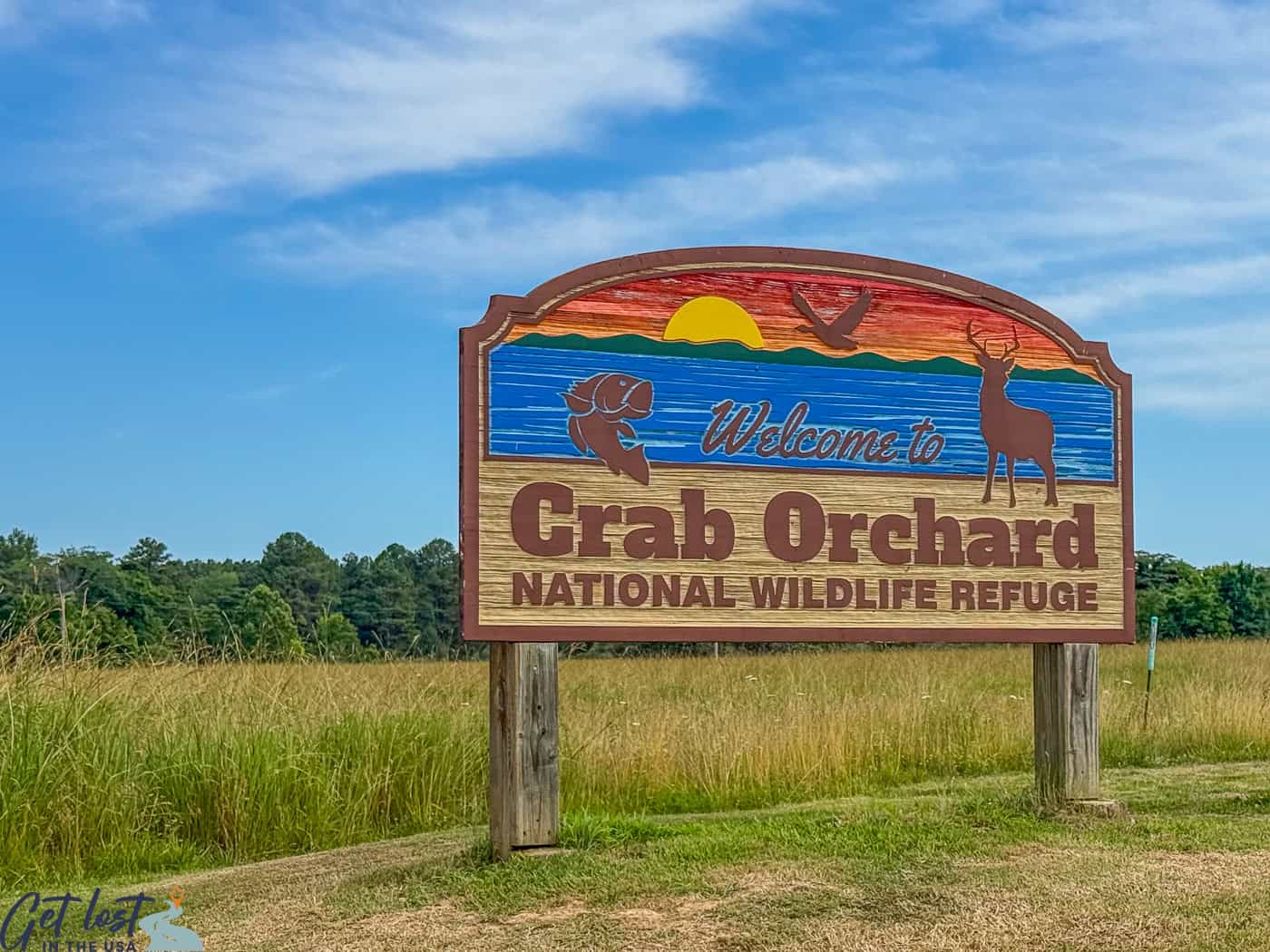
In Southern Illinois, Crab Orchard National Wildlife Refuge spans 44,000 acres of forest, bluffs, lakes, and wetlands. It’s a protected habitat for wildlife, offering visitors opportunities to hike, fish, camp, birdwatch, or take a scenic wildlife drive.
I partnered with VisitSI to arrange my solo road trip, and my experiences are entirely my own.
I went into my visit to Crab Orchard National Wildlife Refuge with two goals: spot some wildlife (obviously) and squeeze in a hike with a view. I kicked things off at the new Visitor Center to get the lay of the land. Staff answered my questions, but the exhibits were still mid-installation, so I just stepped out onto the back patio for a quick look around before heading out.
One practical note: there’s a $2 day-use fee per vehicle (or boat). You can pay with cash at the Visitor Center or use a credit card online by scanning the QR code posted there.


Wildlife Drive
I figured I’d start with the Rocky Bluff Trail, but the wildlife drive is close to the Visitor Center, so I gave in to convenience. I didn’t exactly have a driving plan (no map, no strategy, zero regrets), just me winging it around the loop like I knew what I was doing.
Some pullouts have signs about the refuge’s wildlife, history, and ecology, but you can also just crawl along and see what turns up. Turns out, that approach works, and I ended up spotting plenty. Beginner’s luck, maybe, but I’ll take it.
The first place I stopped though was a parking area for two trails I hadn’t planned on hiking: the Harmony Trail and the Chamnesstown School Trail.

The Harmony Trail is an easy 0.8-mile loop that winds from piney forest to wetlands and a photo blind. The Chamnesstown School Trail marks the site of a one-room schoolhouse that once held eight students. The school is gone, but the old storm cellar is still visible. I didn’t hike either one this time since I had the longer Rocky Bluff Trail on my list for later.

I hopped back in the car and almost immediately spotted a group of egrets in the distance. They were gathered at the edge of the wetlands. I stopped to watch them for a while before moving on.

As I kept driving, the wildlife kept showing up. First, a white-tailed deer peeked out from the tall-grass prairie, and a second one bolted across the road a moment later. Then a group of turkeys decided to cross in front of me. Good thing I was driving at the pace of a parade float!

Best of all was a great blue heron waiting on the side of the causeway. I pulled over to admire him until he flew off, those legs trailing like streamers in the most ungraceful, graceful way.


With the heron sighting under my belt, I figured the trip was already a win. So I headed to the Rocky Bluff Trailhead. It’s in another part of the refuge, about 15 minutes away.
Rocky Bluff Trail Hike

Note: Parking at the trailhead is limited. I had it to myself when I arrived, but another car pulled in not long after me.
The map shows a 2.2-mile loop with a shorter 0.5-mile loop if you’d rather not do the whole thing. I wasn’t about to miss the scenery, so I stuck with the longer loop. You can start in either direction from the trailhead; I went left, for no real reason.

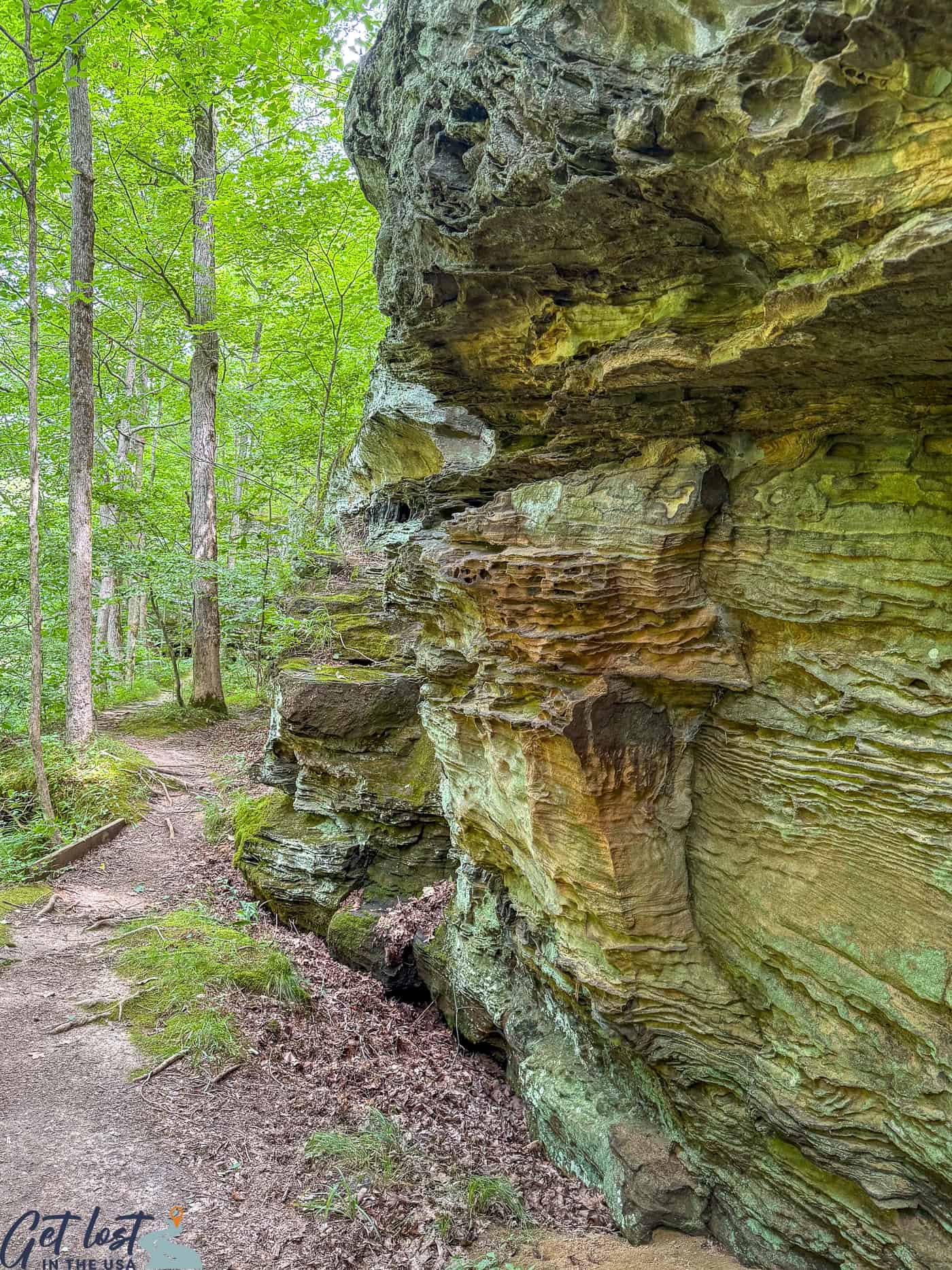
The trail goes through the forest, over bridges, and past sandstone bluffs. It’s a mix of packed earth, rugged terrain, and some stairs.

I doubted I’d catch much waterfall action since it was mid-summer, in the upper 90s, and dry across most of the country. Even so, the spot where the falls typically flow was still strikingly scenic.

From there, a set of steps led down to the base for another view. It must be especially stunning when the water is flowing.

Not far beyond, I passed the shortcut trail sign—the one that loops you back to the trailhead if you wanted a shorter hike. Bonus for wildflower fans: this stretch is supposed to be especially colorful in the spring.

I kept going along the main trail and still found a few wildflowers hanging on, even at the tail end of June, along with some other curiosities.


All in all, the Rocky Bluff Trail far exceeded my expectations. The sandstone bluffs and natural caves were so scenic and fun to explore. Definitely worth the hike.
I’d love to come back in the spring, when the waterfalls are running and wildflowers are in full bloom.
A few things to note:
- The trail earns its name. Expect a rocky path with a mix of packed earth, rugged stretches, and stairs. With about 150 feet of elevation gain, I’d call it moderately difficult but very doable. Sturdy shoes are a must, and trekking poles wouldn’t hurt.
- Be sure to stay on the marked trails as there’s a large section of private property within the refuge.
- Since the trail is shady, mosquitoes are out in full force (and ticks too), so be sure to bring insect repellent. I’d forgotten my heavy-duty spray and only had a natural balm with me, which made me an easy target for a few bites and nonstop buzzing in my ears. A good reminder to pack both next time.
Final Thoughts
Crab Orchard National Wildlife Preserve gave me exactly what I was hoping for: wildlife sightings and a scenic trail that didn’t wear me out. I’d like to come back in spring, when the waterfalls are running and the forest floor is full of wildflowers, but even in the dry season, it was worth the stop.
You can contact visitSI.com for more information about a Southern Illinois getaway.




Leave A Reply!