I thought I knew what loud meant. I thought I understood what fast looked like. But nothing, absolutely nothing, prepares your body for the physical sensation of sitting in the grandstands at Lucas Oil Indianapolis Raceway Park for the legendary NHRA U.S. Nationals.
They call this annual event “The Big Go,” and you don’t just watch this sport with your eyes; you feel it in your bones. It’s the most intense four seconds I’ve ever experienced, and it made my first time at a drag strip unforgettable.
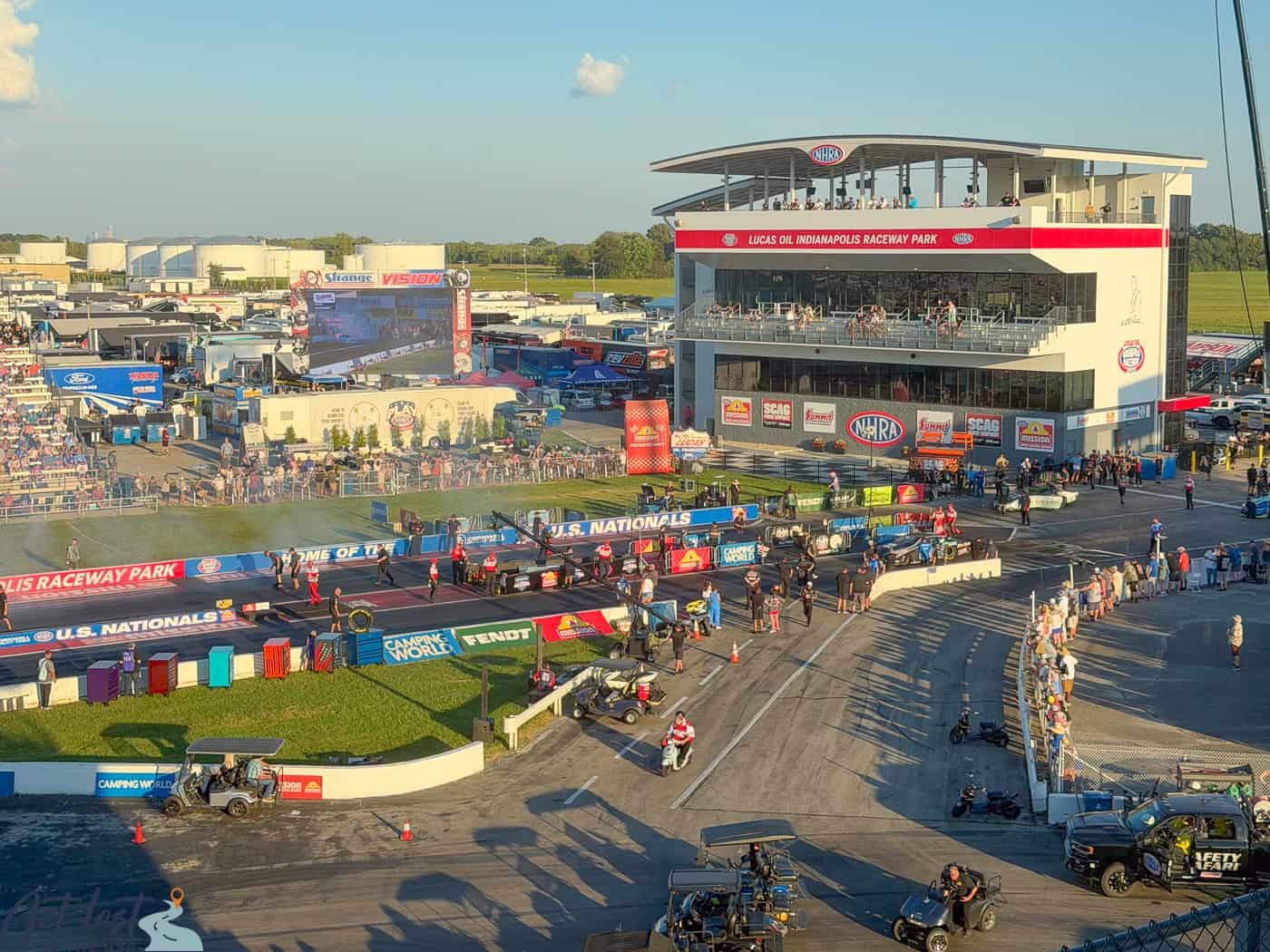
A big thank you to Visit Hendricks County for hosting me and helping this drag-racing newbie understand what I was watching.
Why the NHRA U.S. Nationals Is Such a Big Deal
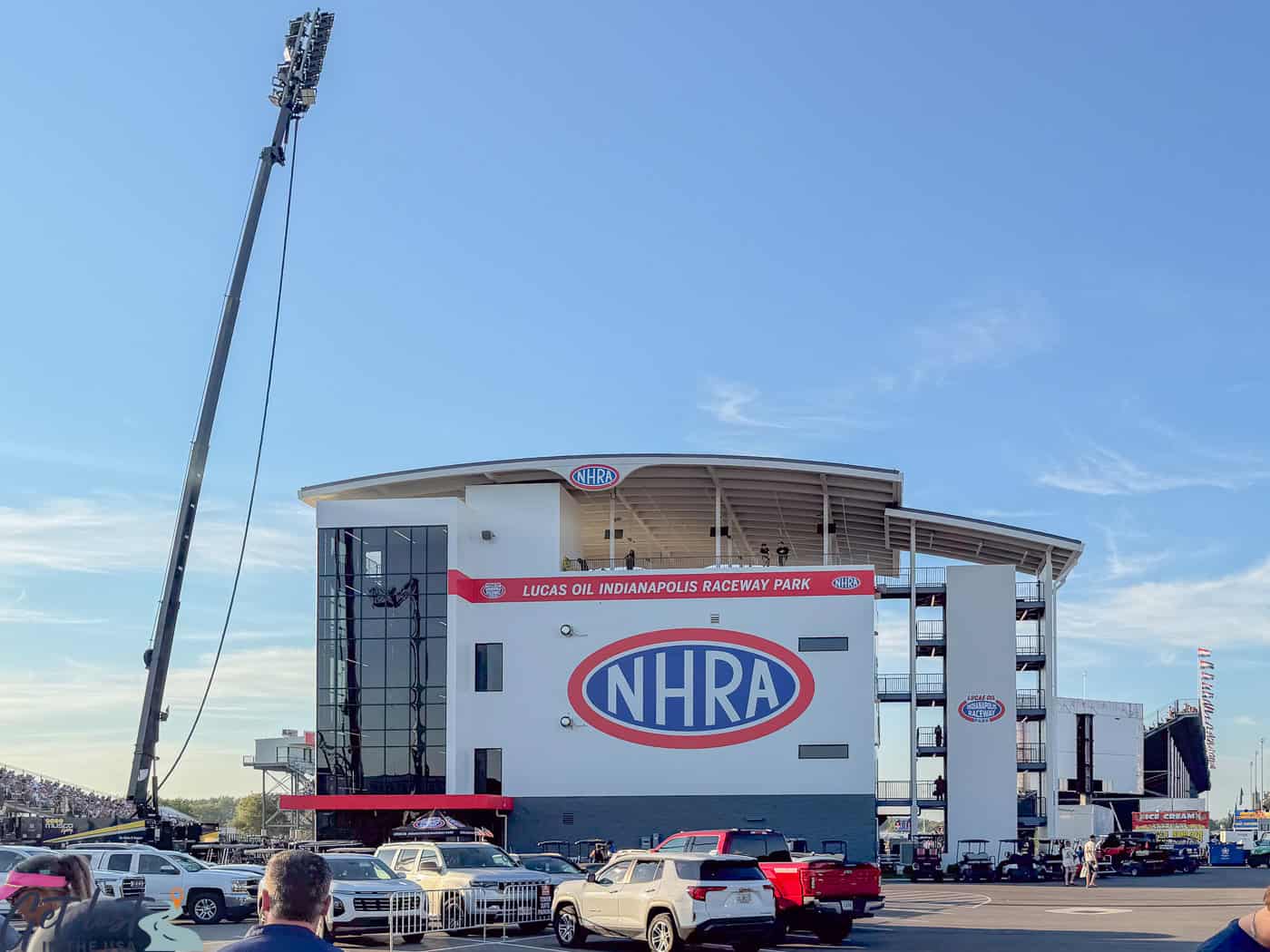
NHRA bills the U.S. Nationals as the biggest, oldest, and most prestigious drag race in the world. The event has been held at Lucas Oil Indianapolis Raceway Park since 1961, and it’s one of the races drivers most want to win.
I attended the Friday-night qualifying session. Although two cars lined up side by side, each driver was racing the clock, trying to post one of the quickest elapsed times and qualify for the elimination rounds, which take place on Labor Day.
Learning What Happens Before a Drag Race
From the outside, drag racing looks fairly simple. Two cars line up, the lights change, and they take off. But there’s a lot of prep going on. The track is continually inspected for debris, and a traction compound is applied, so there can be long pauses between runs depending on what needs to be done.
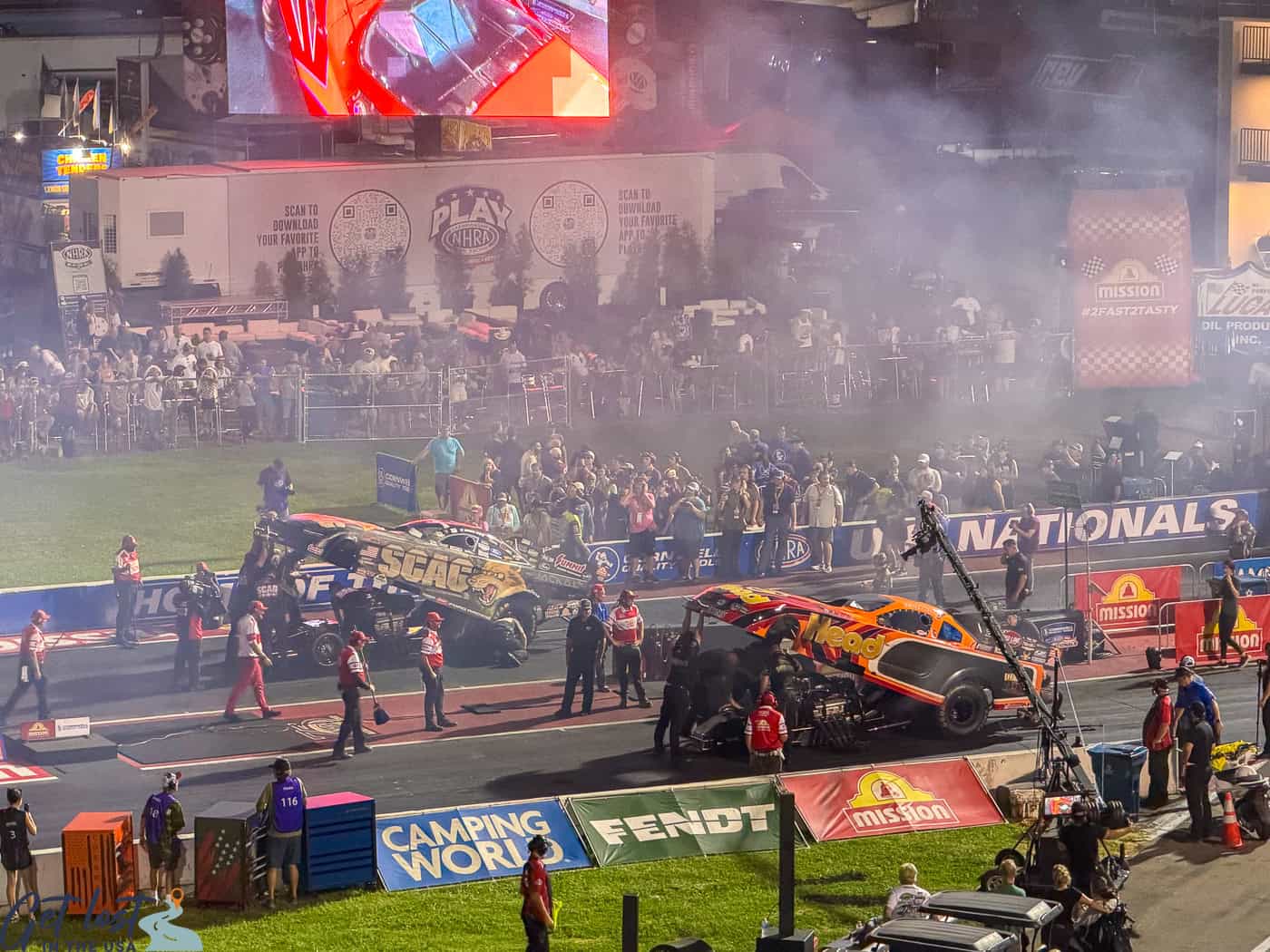
As each pair of Funny Cars comes forward, their body shells are tilted up so the driver can get in and crew members can access the engines and chassis for final checks. Then the shells are lowered, secured, and it’s time for the burnouts.
Each driver spins the rear tires at high speed while the car moves slowly forward, creating clouds of smoke. Doing this heats the tires so they grip the track more effectively. Then they back toward the starting line and get into position for the run. When the lights turn blue, they launch.
What a Funny Car Launch Feels Like
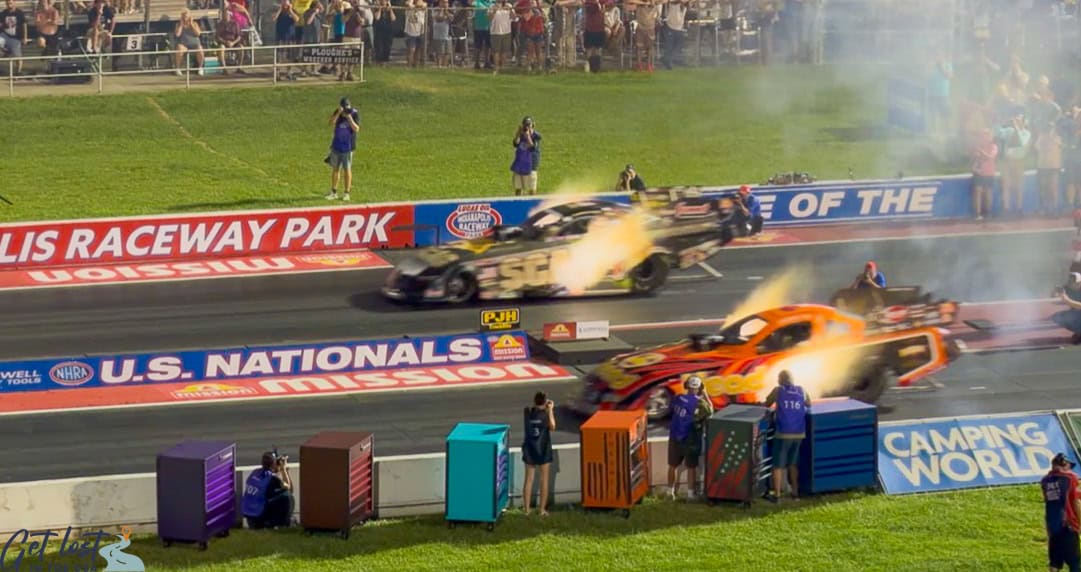
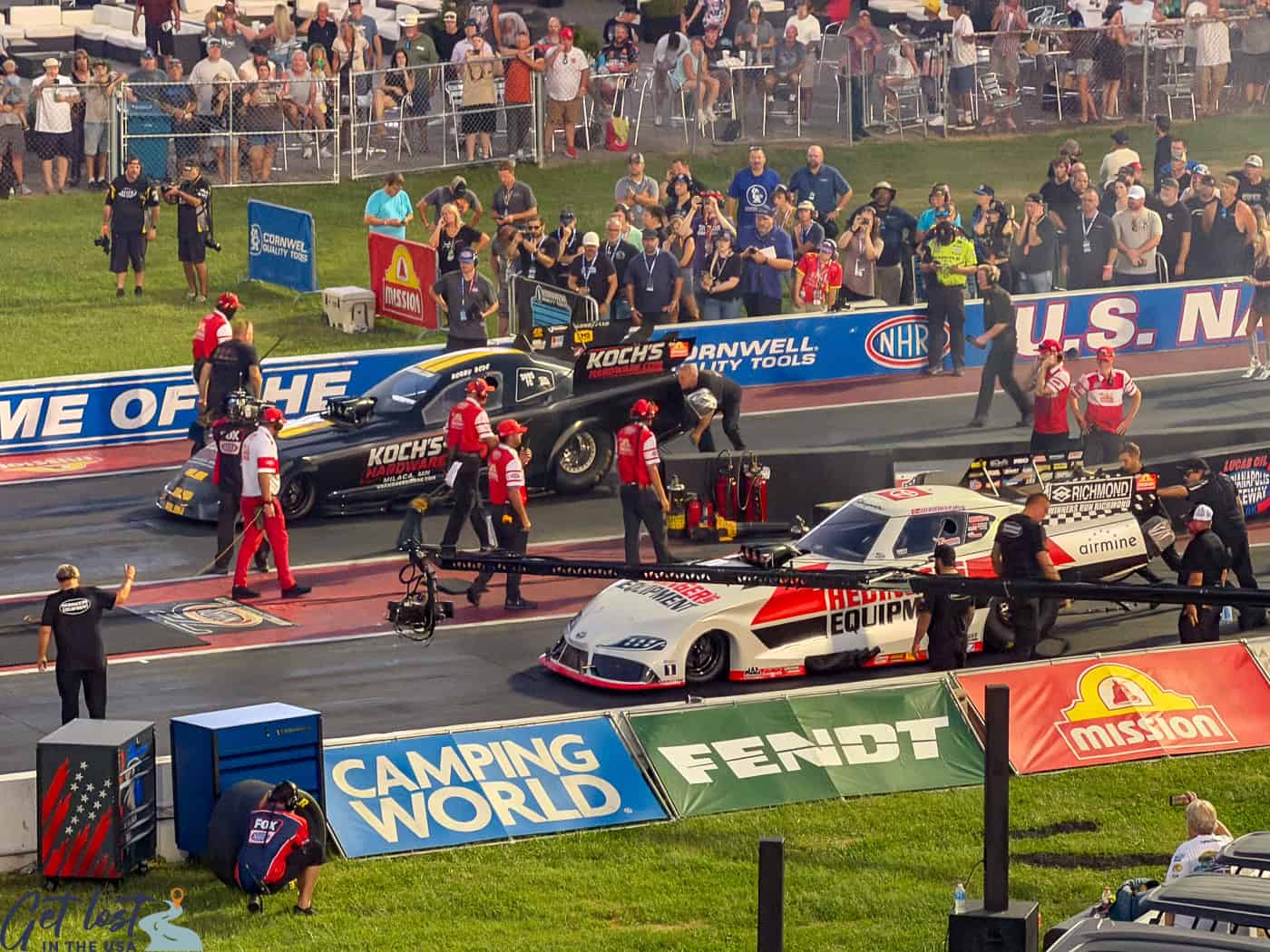
I began in a box above the starting line, where I had a close view of the Funny Cars preparing for each run. The sound was muffled inside, so I later put in my earplugs and moved into the outdoor grandstands to experience the runs from there.
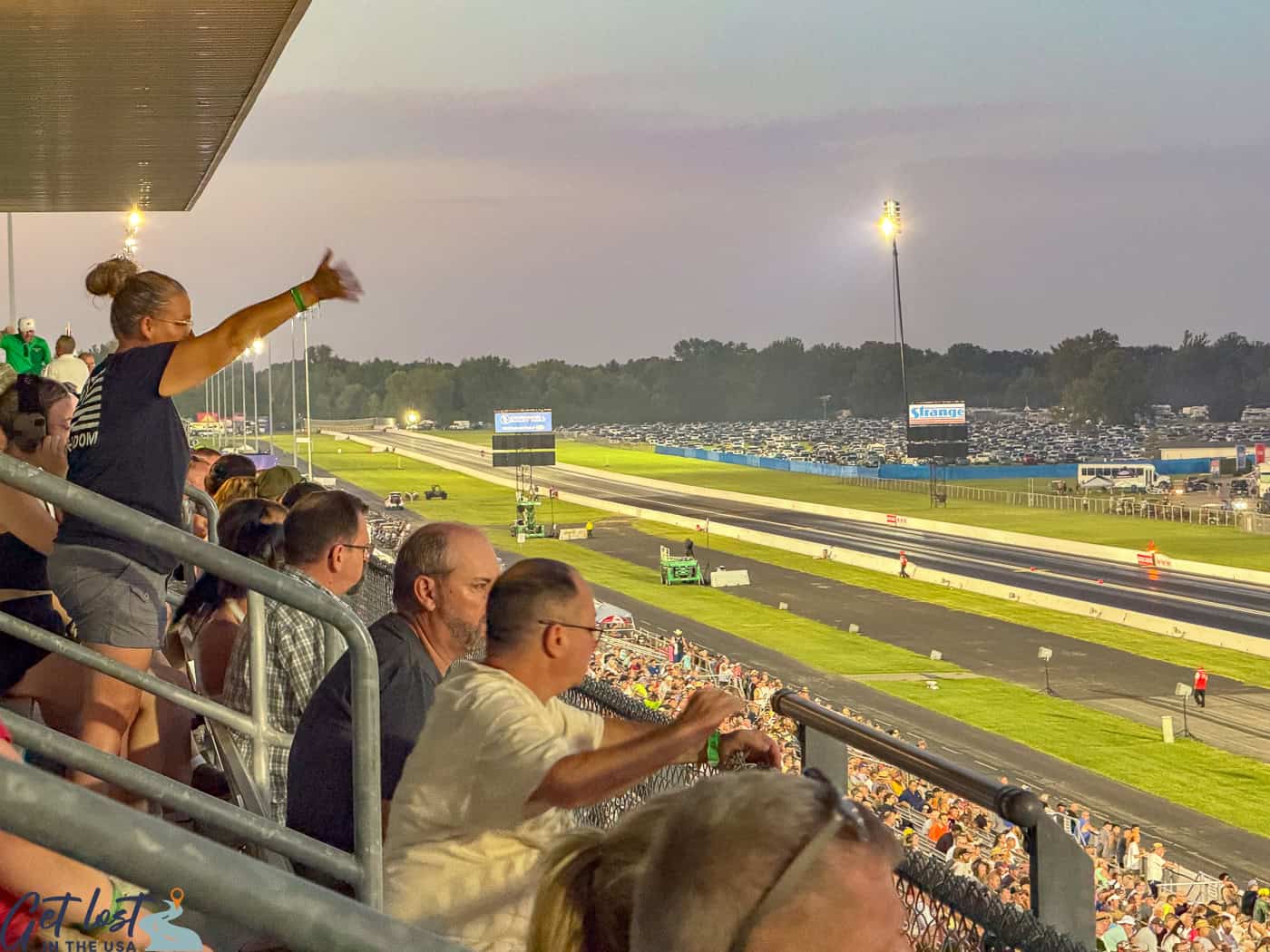
I’d attended a NASCAR race at Charlotte Motor Speedway and worn ear protection, but drag racing was in a world of its own. Even with earplugs, the noise was beyond deafening. And I didn’t just hear the launches. I felt them. The sheer force caught me completely off guard.
Each launch shook the grandstands and sent heavy vibrations through my chest and the rest of my body, rattling even my teeth. The strange part was that, as physically uncomfortable as it felt, all that power was oddly exhilarating. Turns out, drag racing is one hell of a good time.
Seeing Cars Reach More Than 300 MPH
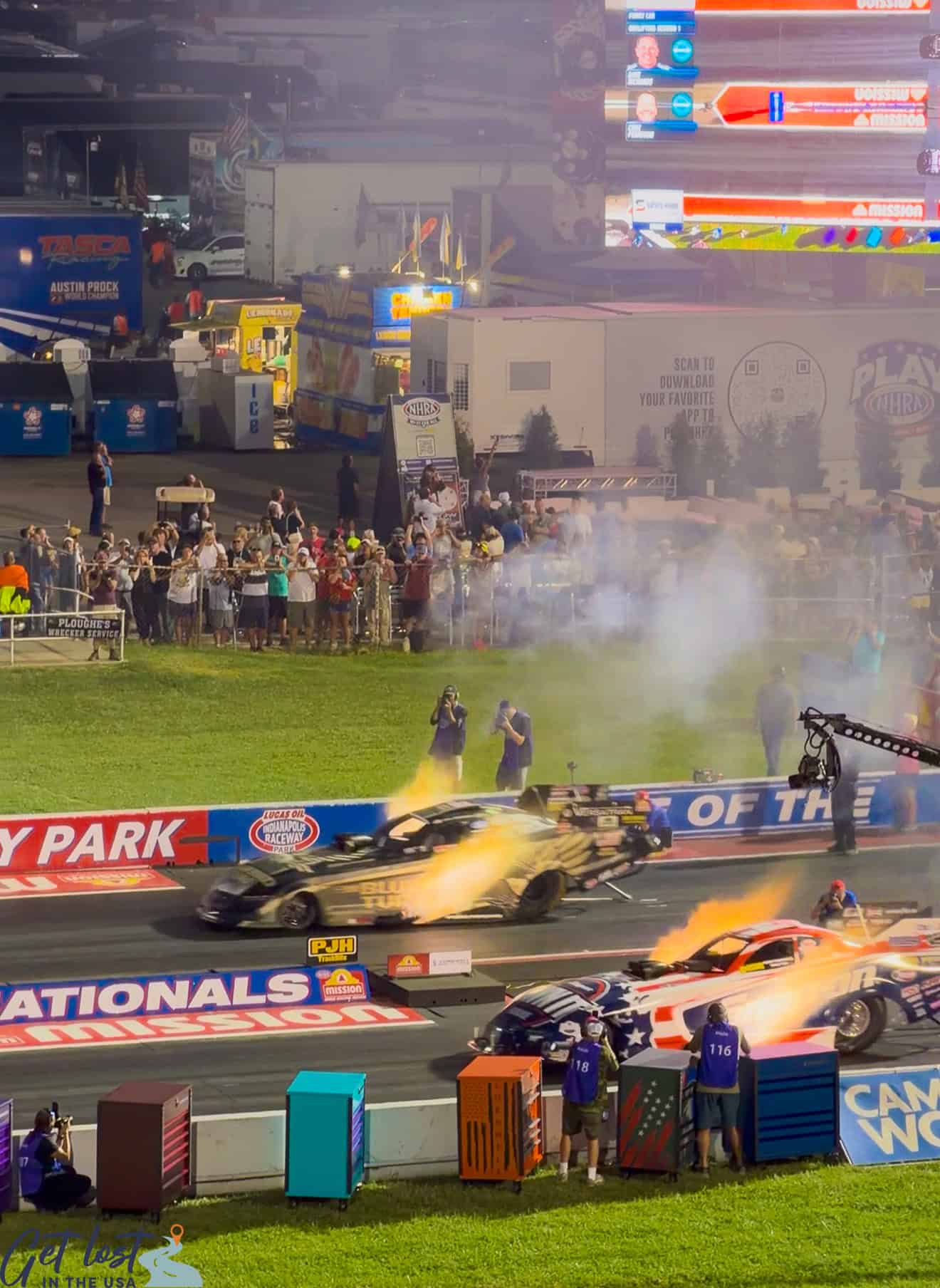
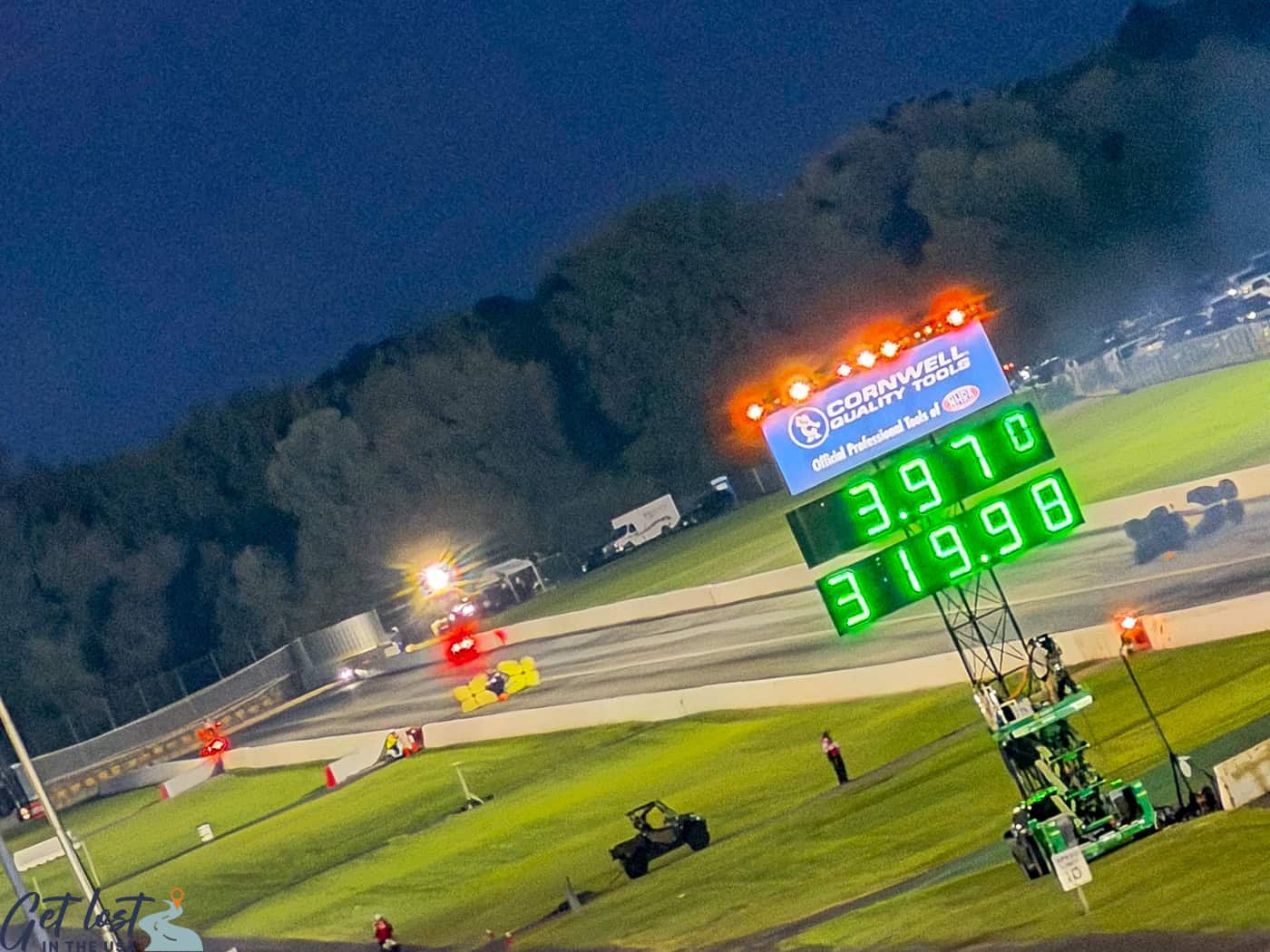
The fastest cars can travel more than 300 mph in roughly 4 seconds, so the runs were over almost immediately. Trying to film made it even harder to watch. I wanted footage, of course, but following a car moving that quickly with a phone ain’t easy. Also, videos can show the speed, flames and smoke, but they can’t recreate the vibration of a launch or the sound of the engines.
After a few runs, I just put my phone down and took it all in as a fan.
Can You Enjoy the NHRA U.S. Nationals as a Beginner?
You don’t need to follow drag racing to enjoy the NHRA U.S. Nationals. I had never watched it before, and a short explanation of the basics was enough to help me understand what was happening.
Knowing these few things helped the most:
- The burnout heats the tires before a run.
- Track preparation helps the cars maintain traction.
- The blue starting lights tell you when the cars are staged and ready.
- During qualifying, drivers aim to record their best times, not race each other.
- Ear protection is essential, but you will still feel and hear the cars…intensely.
I can’t claim to understand every class or technical detail after one visit. I did leave knowing why people want to experience drag racing in person, though. The speed is impressive, but the sensation of the cars launching is what I’ll never forget.
Know Before You Go
- Address:Lucas Oil Indianapolis Raceway Park, 10267 East U.S. Highway 136, Indianapolis, IN 46234. The raceway is in Hendricks County, just west of Indianapolis.
- When to go: The NHRA U.S. Nationals is traditionally held over Labor Day weekend. Sessions vary by day, so check the schedule before buying tickets. I attended Friday-night qualifying rather than the elimination rounds.
- Hearing protection: Bring proper ear protection and put it on before the cars run. I wore earplugs, and it was still incredibly loud.
- Where to sit: Seats near the starting line provide a closer view of the burnouts, staging, and launches. Seats farther down the track make it easier to follow the cars after they launch.
- What to bring: Prepare for sun and changing weather. Check current rules for permitted bags, drinks, seat cushions, and other items before packing.
- Tickets and event information: Visit the Lucas Oil Indianapolis Raceway Park website and NHRA schedule for current dates, tickets, parking instructions, gate times, and policies.
More Things to Do in Hendricks County
If you’re spending more time in the area, my guide to fall fun in Hendricks County covers more seasonal activities around the county. You can also read my complete guide to Beasley’s Orchard, including what you can pick, eat, and do during different parts of the season.





Leave A Reply!