A ship that’s designed to stay in one place? Doesn’t that kind of defeat the purpose of having a ship? Well, not if it’s a floating lighthouse!
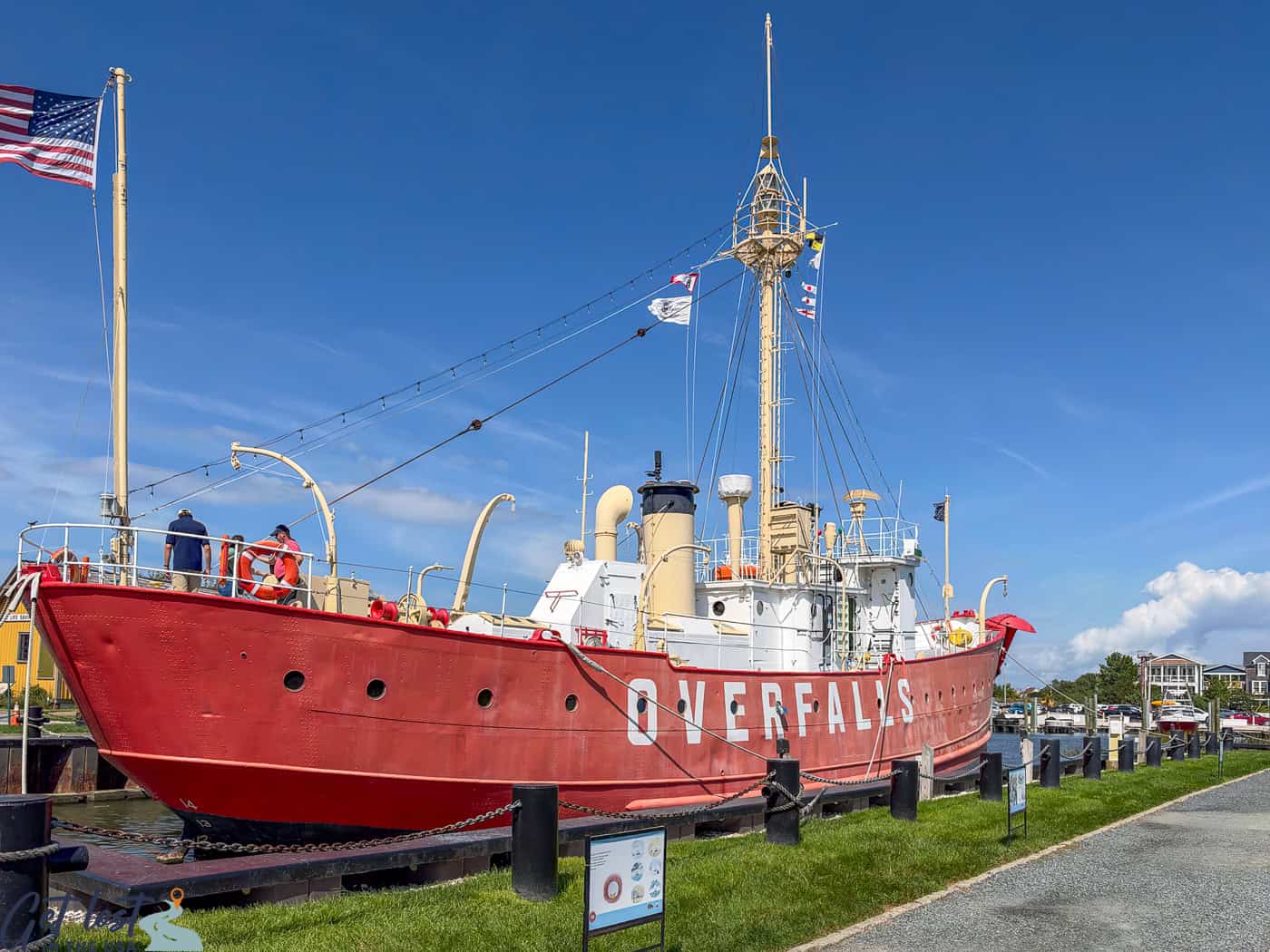
During my visit to Lewes, Delaware, I toured the Lightship Overfalls, a former working lightship that’s now a museum.
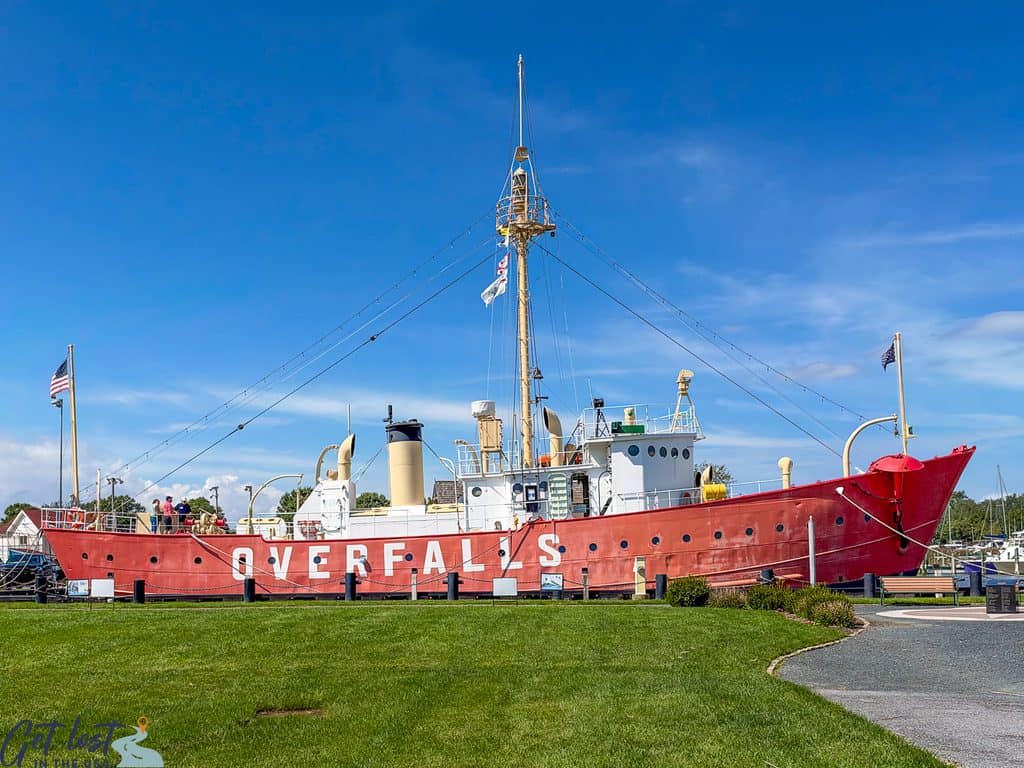
What Is the Lightship Overfalls?
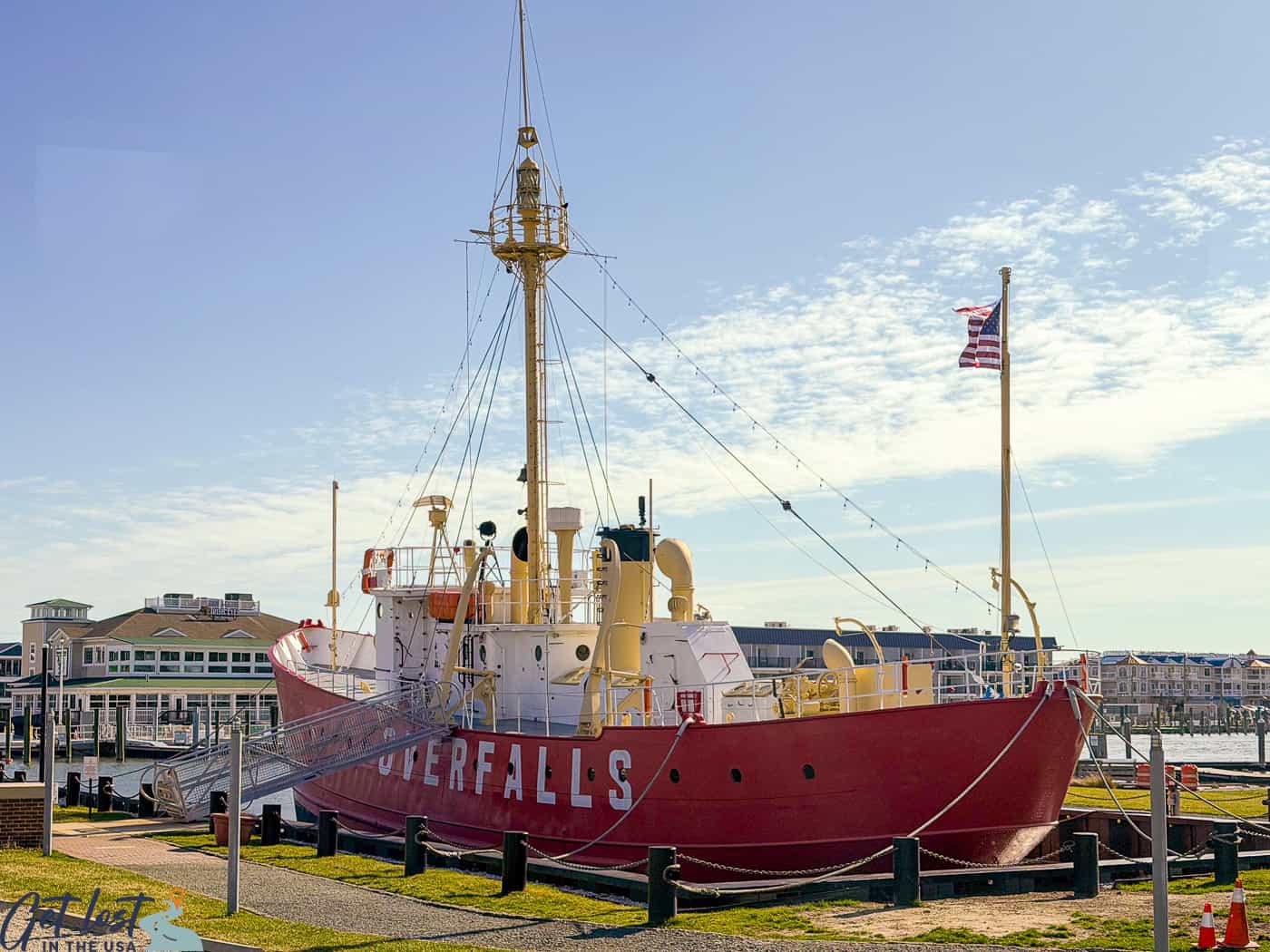
Before it became a museum, the Lightship Overfalls anchored offshore to warn passing boats away from shallow sandbars and underwater hazards. Basically, lightships were floating lighthouses used where building a regular lighthouse on land or on a rock just wasn’t possible.
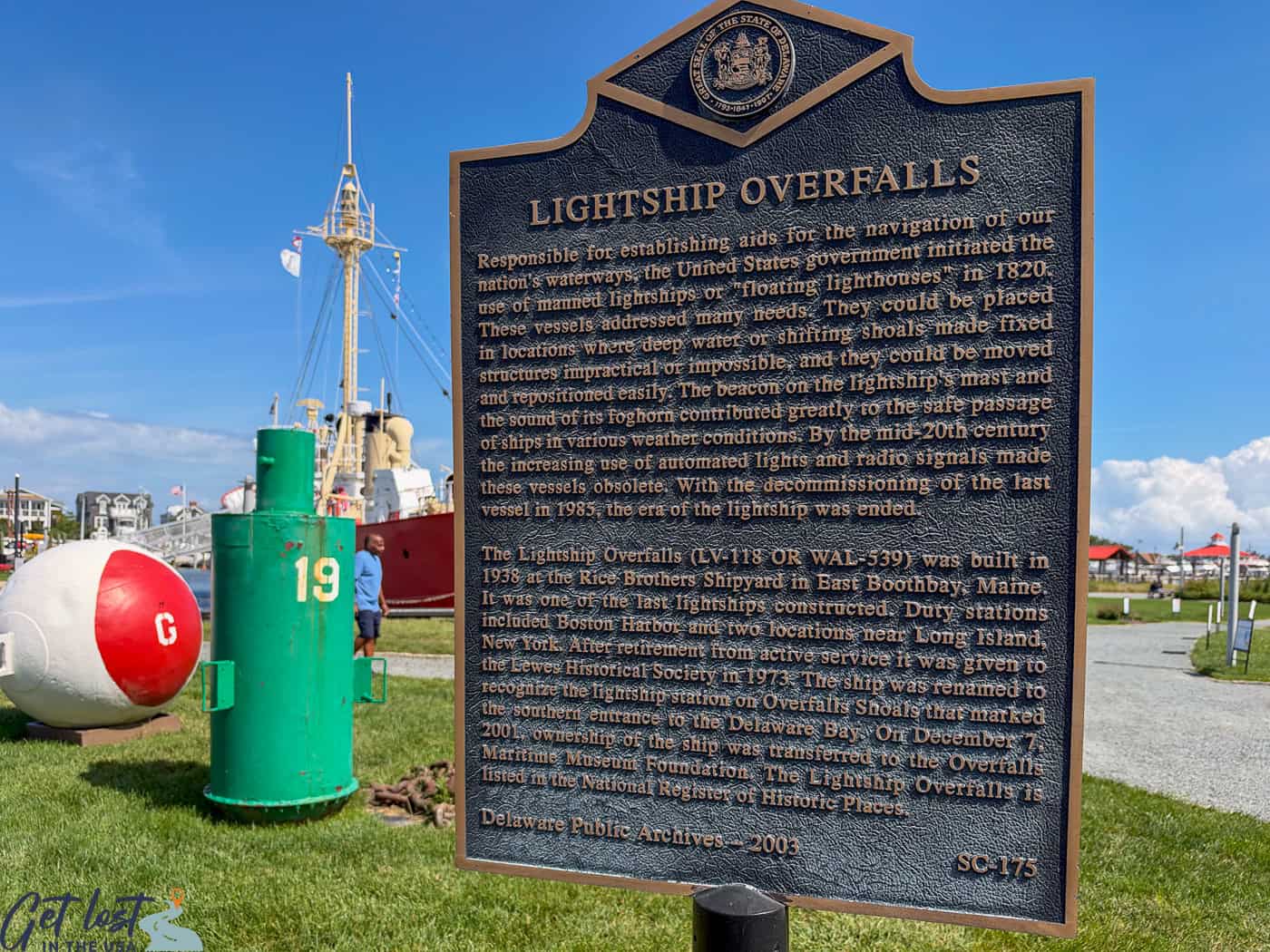
Officially designated Lightship LV-118, the Overfalls was built in Maine in 1938 for the U.S. Lighthouse Service. It was one of the last lightships built for the agency before it was absorbed by the Coast Guard in 1939.
Lightships displayed their assigned station names on their hulls, so you’d assume the Overfalls served at Overfalls Shoal in Delaware Bay, right? Nope. LV-118 spent its working years in New England. When it was donated to Lewes in 1973, it was renamed Overfalls to honor the nearby lightship station.
Today, the Lightship Overfalls is a National Historic Landmark.
Why Is the Bow So High?
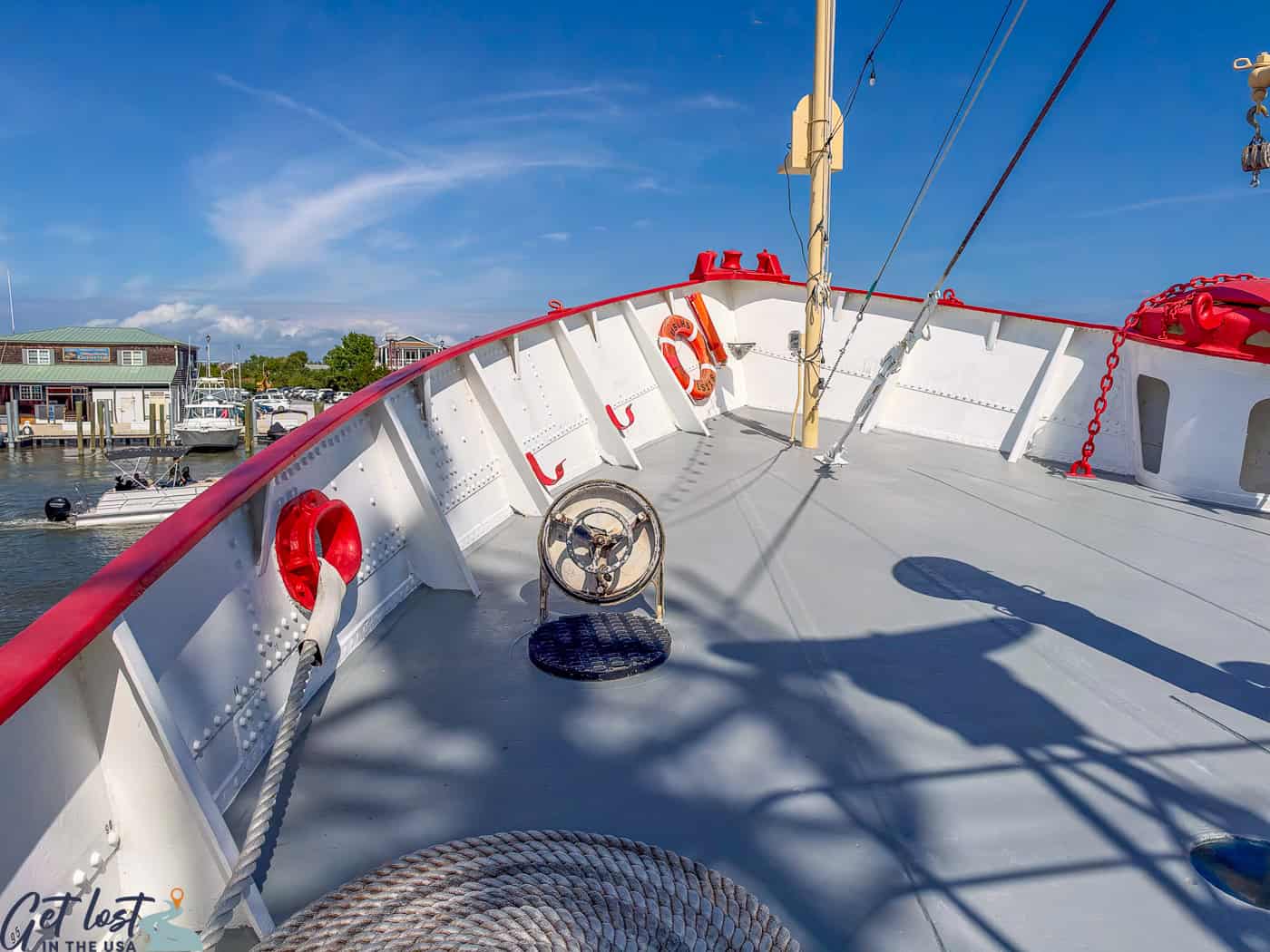
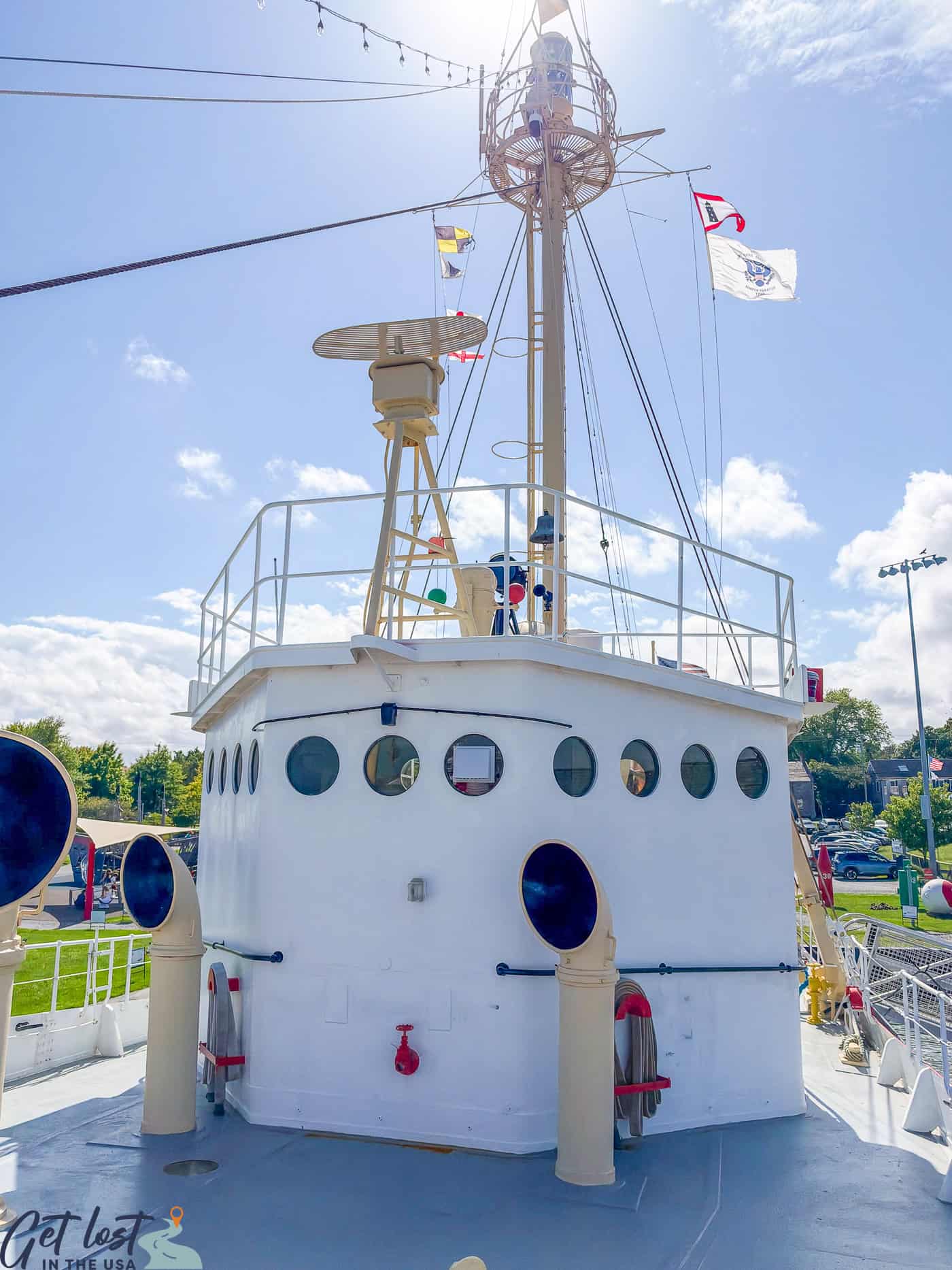
After we walked up the gangplank onto the deck, our guide pointed out how high and curved the bow is. It was designed that way to keep waves and spray off the deck when the ship faced into the wind. Pretty clever, except for one little problem. The helmsman couldn’t see straight ahead.
To get around that, a crew member stood up on the flying bridge, the open deck right above the wheelhouse, with a compass binnacle and called out steering directions if the ship needed to move.
10,000 Pounds of Anchor
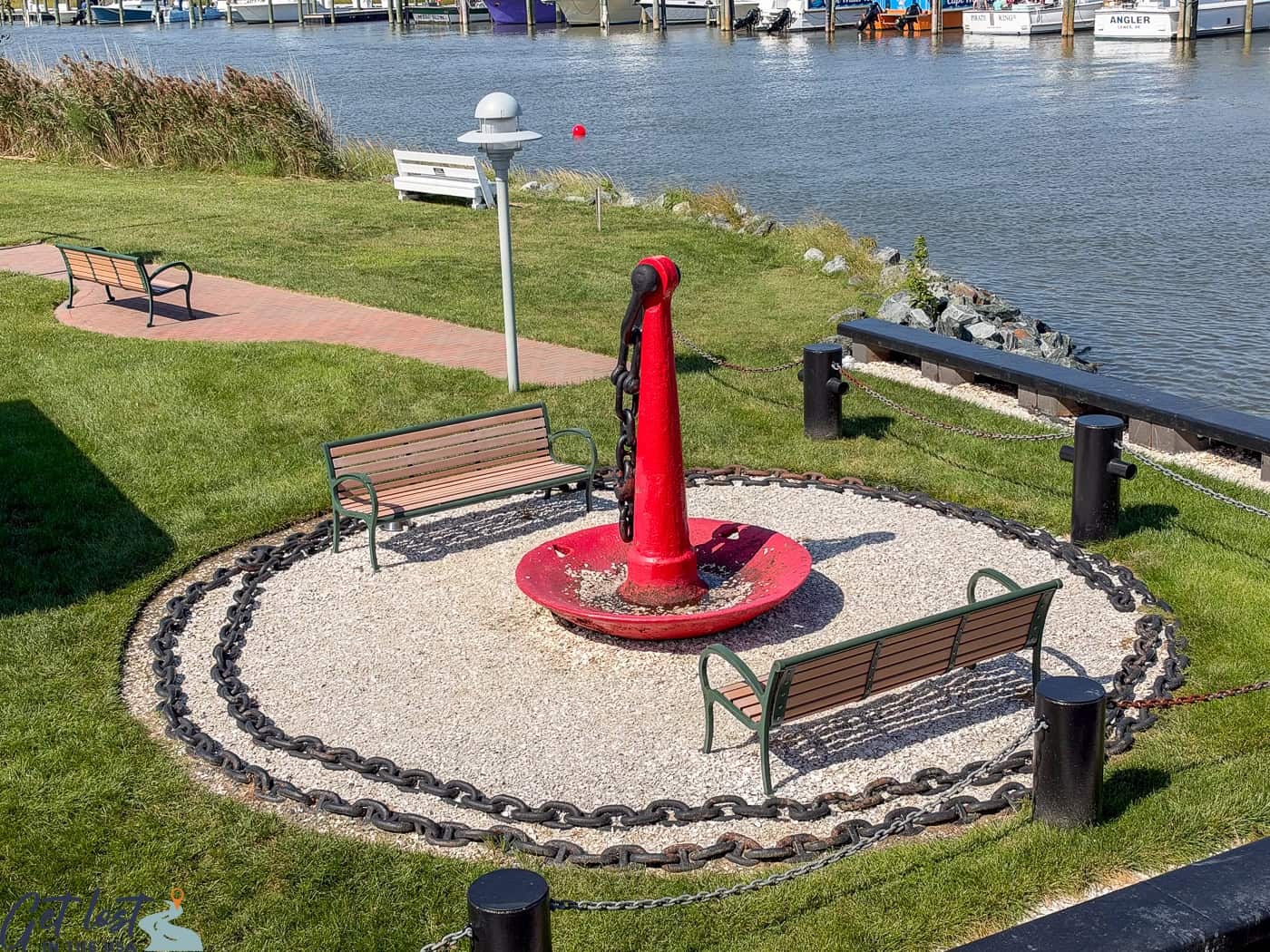
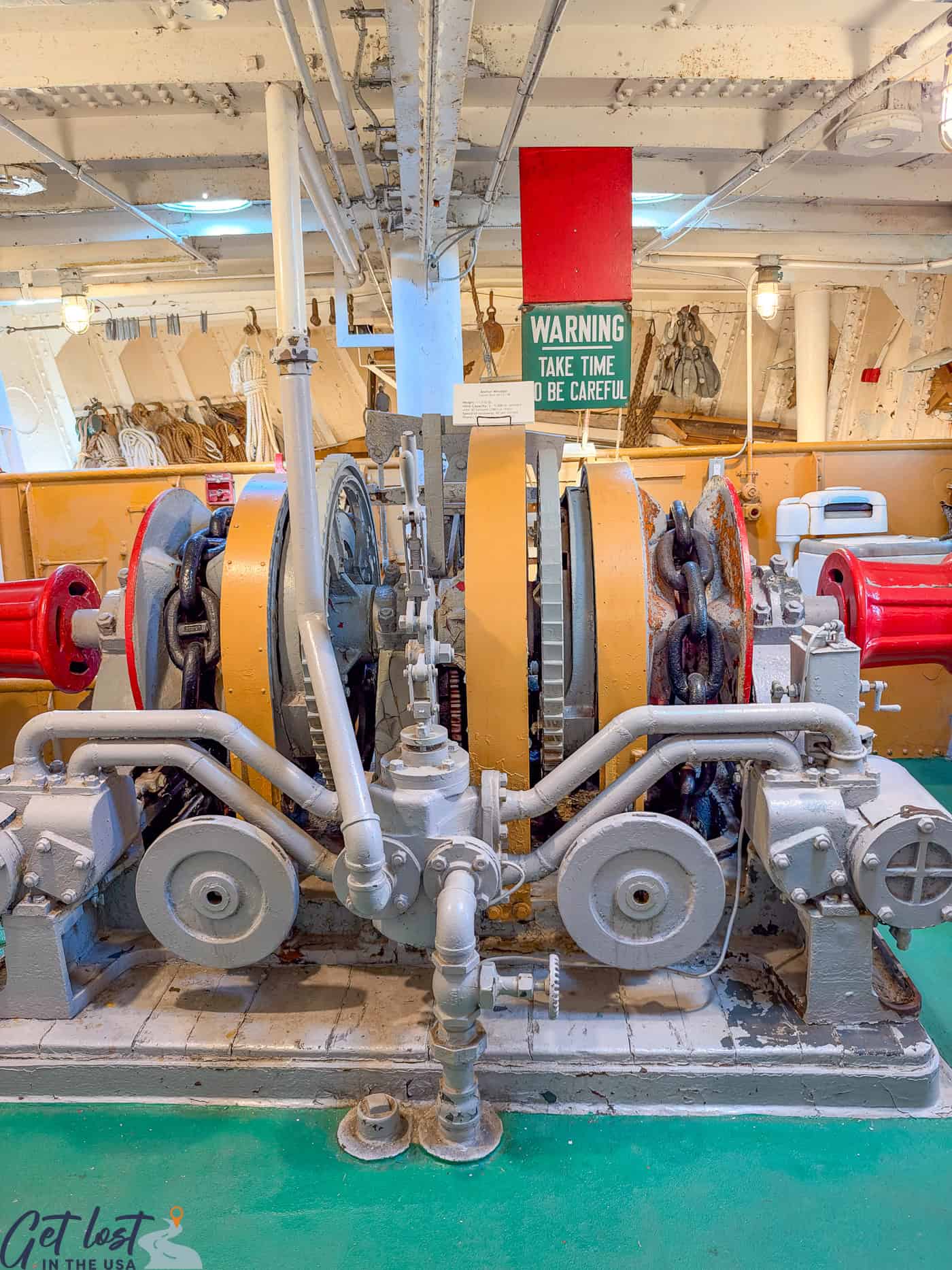
The ship had two enormous anchors: a 7,000-pound main anchor and a 3,000-pound auxiliary anchor to keep it in place. The crew used a compressed-air-powered windlass, which worked much like an old steam locomotive, to raise and lower them. They even inspected the chain link by link for damage.
Despite those massive anchors, a powerful storm could still drag the lightship miles off station.
Technically, the Lightship Overfalls only floats part of the time now. Silt has built up underneath it, so it sits on the canal bottom at low tide. The tide was coming in during my tour, and you could tell the ship was starting to lift as the mooring lines pulled tight.
How Did Other Ships Know Where the Lightship Was?
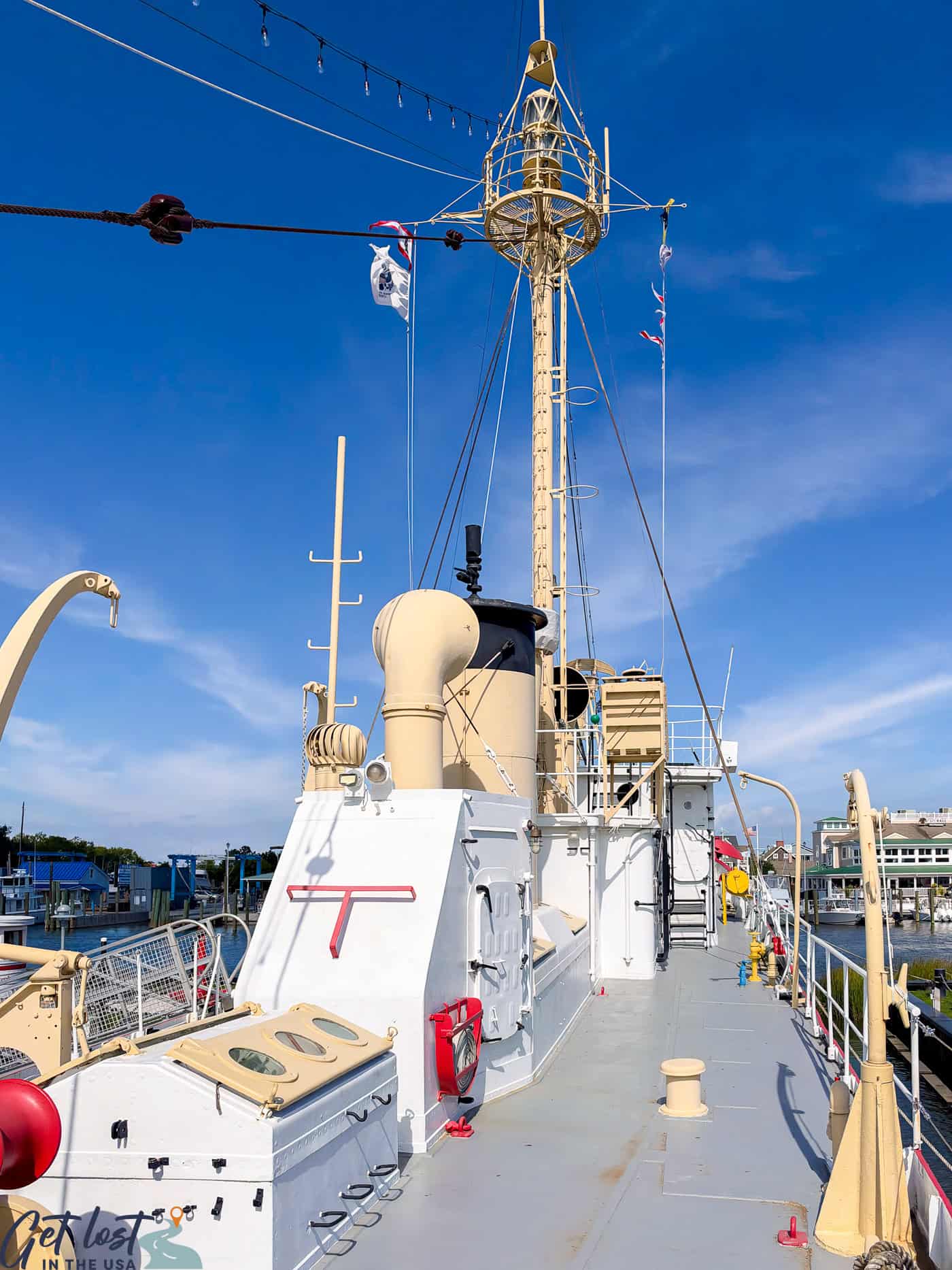
Like a traditional lighthouse, the Overfalls had a powerful light to help sailors spot it at night. If fog rolled in and visibility fell below 2 miles, the crew sounded the foghorn every 30 seconds, in sync with a radio signal. Since radio waves travel faster than sound, sailors could time the gap between the radio signal and the foghorn to figure out how far away the ship was.
Working and Living Below Deck
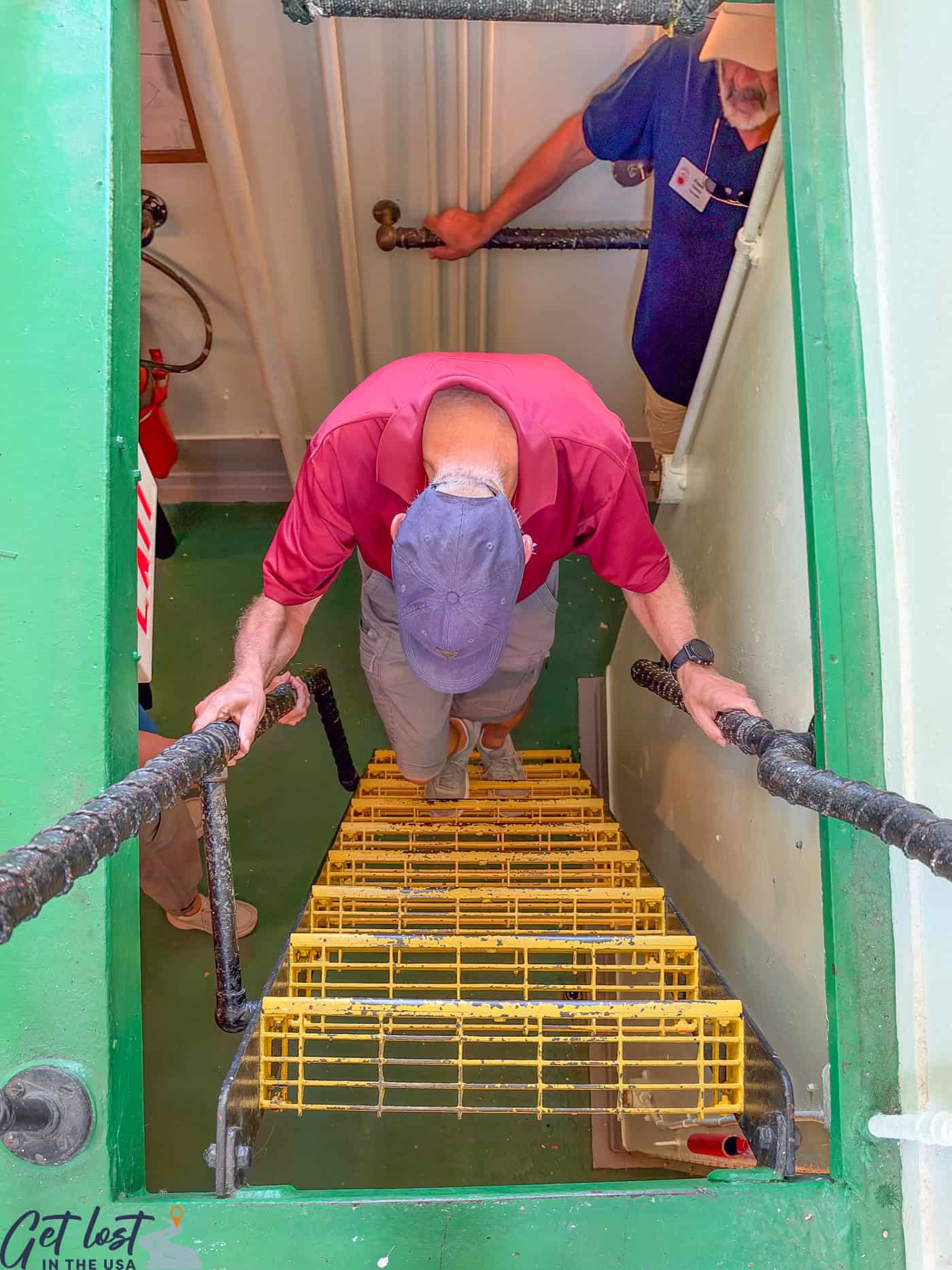
According to our guide, the Lightship Overfalls had a crew of about 14 men, with 7 to 10 aboard at a time. They worked two weeks on and one week off. Supply boats delivered groceries and mail, dropped off replacement crew members, and took the others back to shore for their time off.
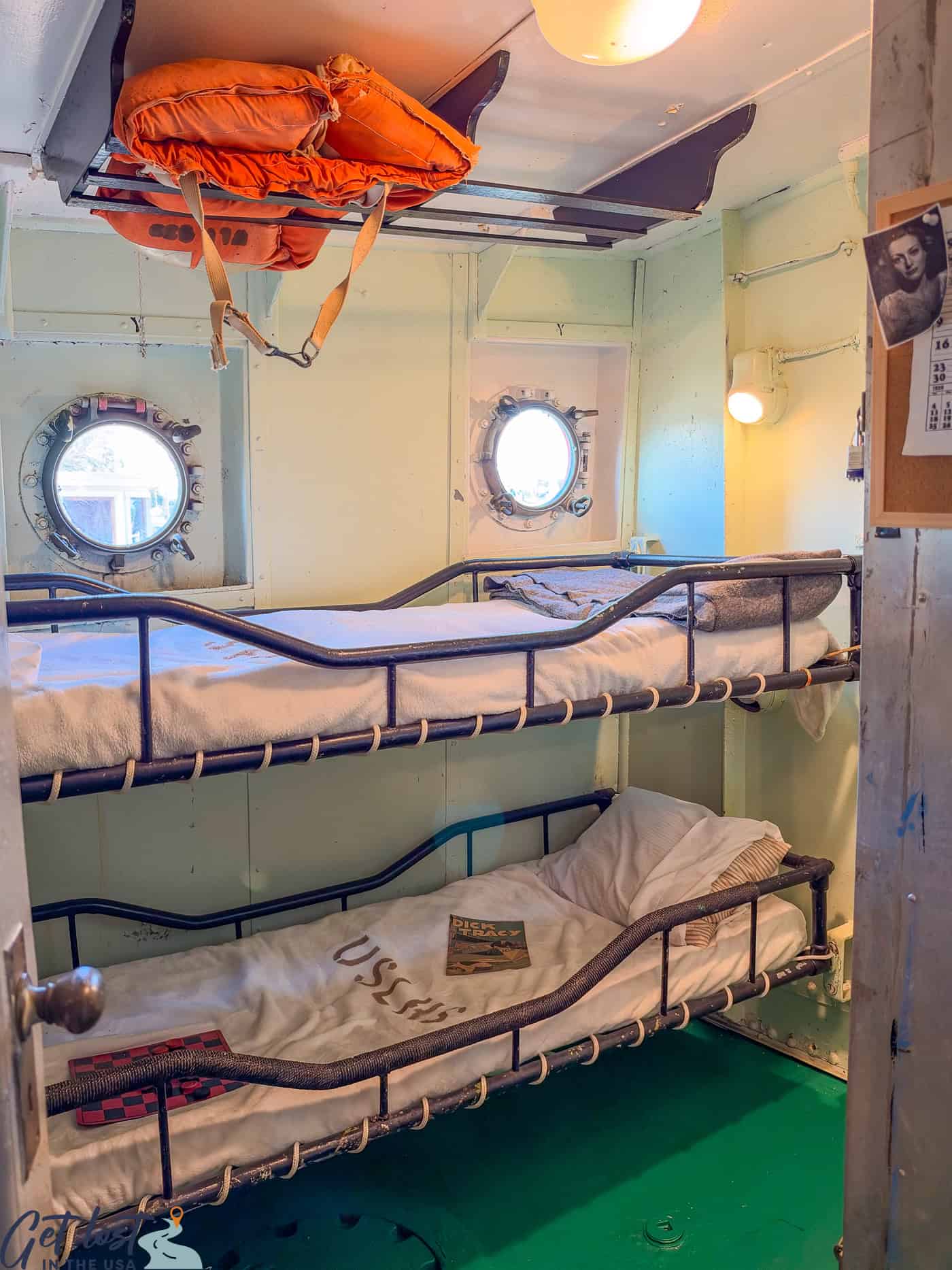
The enlisted men’s crew quarters had eight bunks in a shared sleeping area, so privacy was pretty limited. There were radiators for heat, but no air conditioning. Crew members relied on open portholes and electric fans to stay cool. Summer must have been miserable!
Cooking and Eating Aboard the Ship
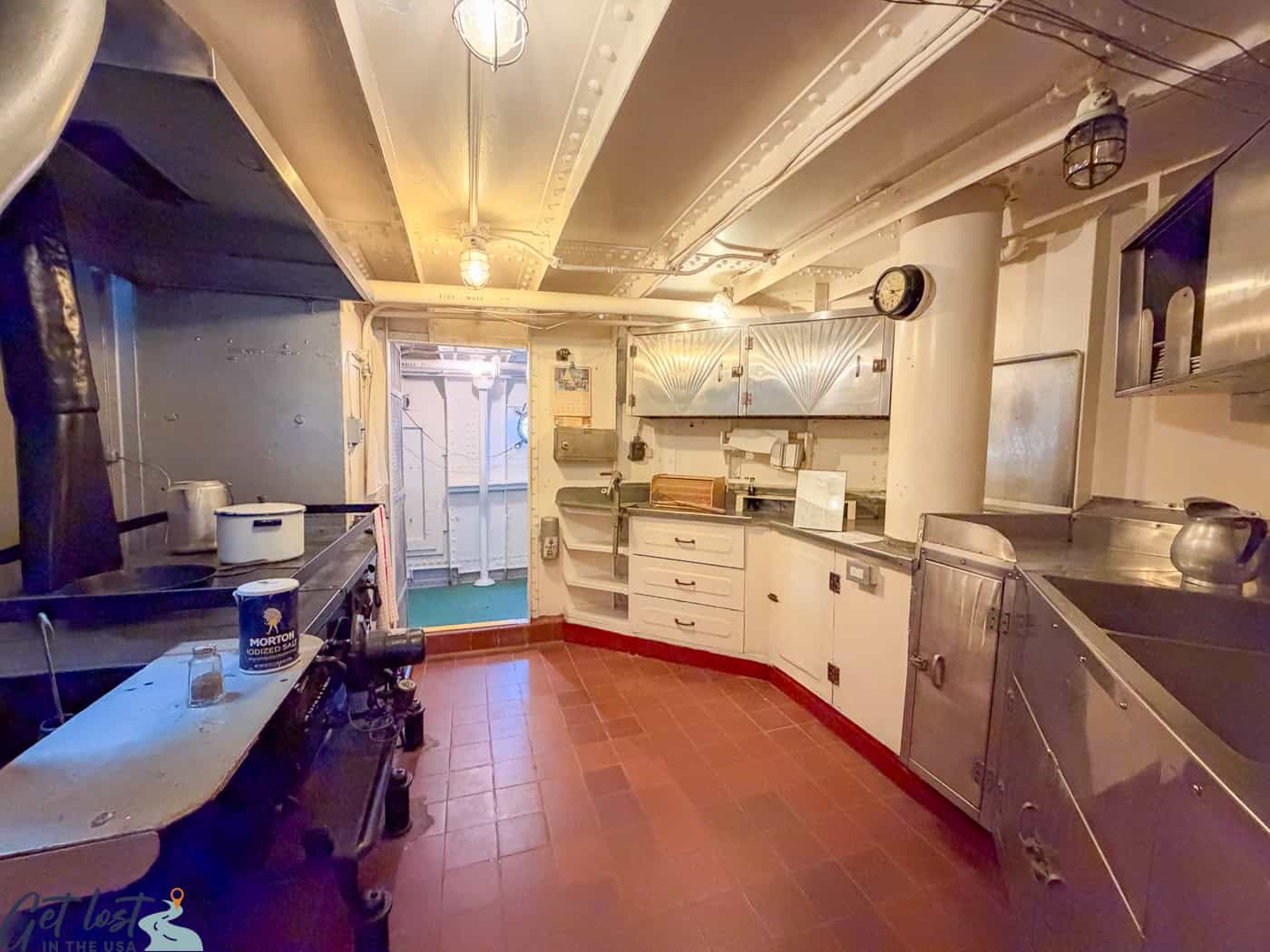
The galley still has its original Art Deco-style cabinets and a stove that was converted from coal to diesel. One crew member worked as the cook, with a backup taking over during his time off.
One of my favorite details in the galley was the display with a sample weekly menu and an old Christmas dinner menu, complete with roast turkey and cranberry sauce.
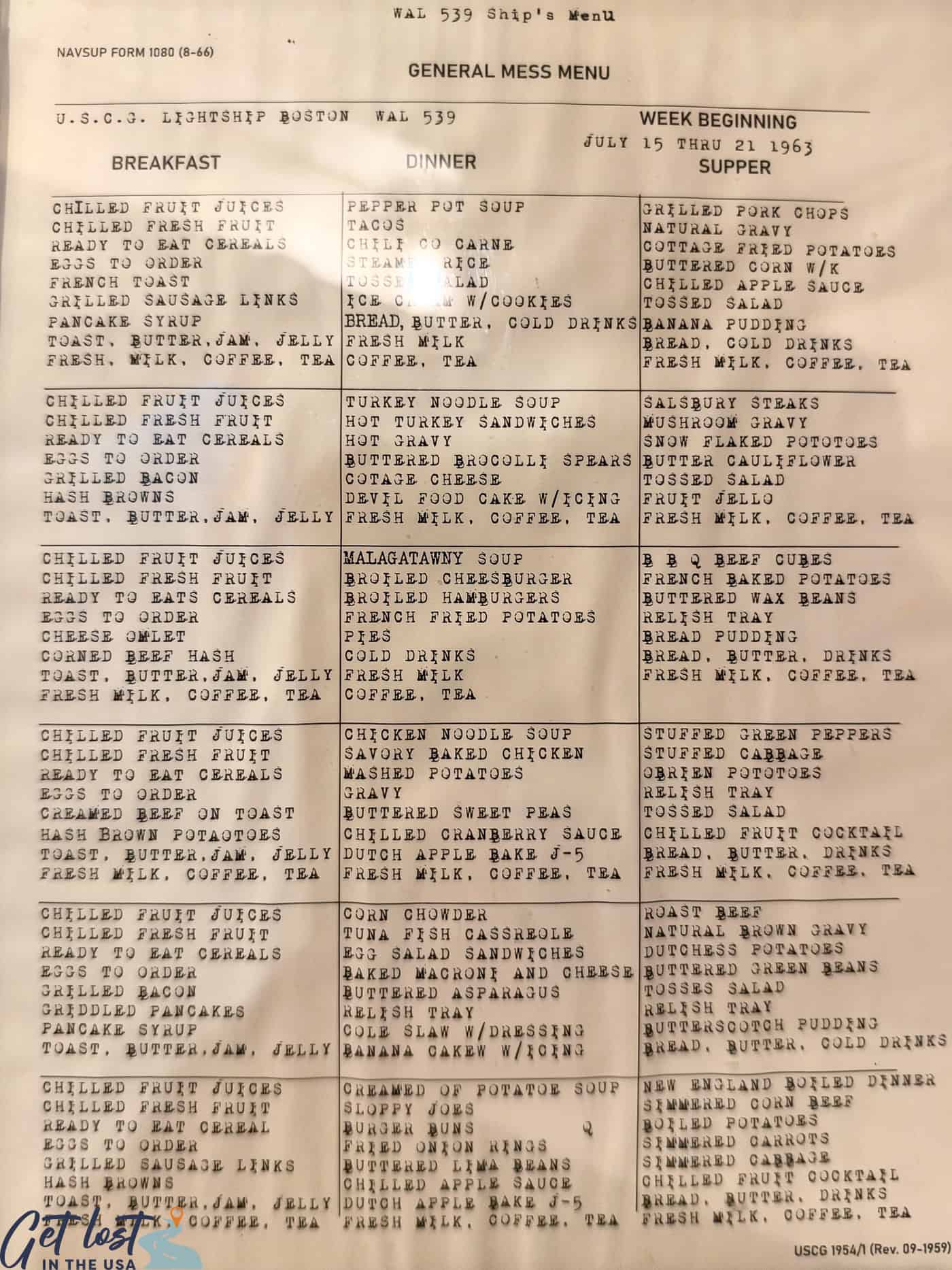
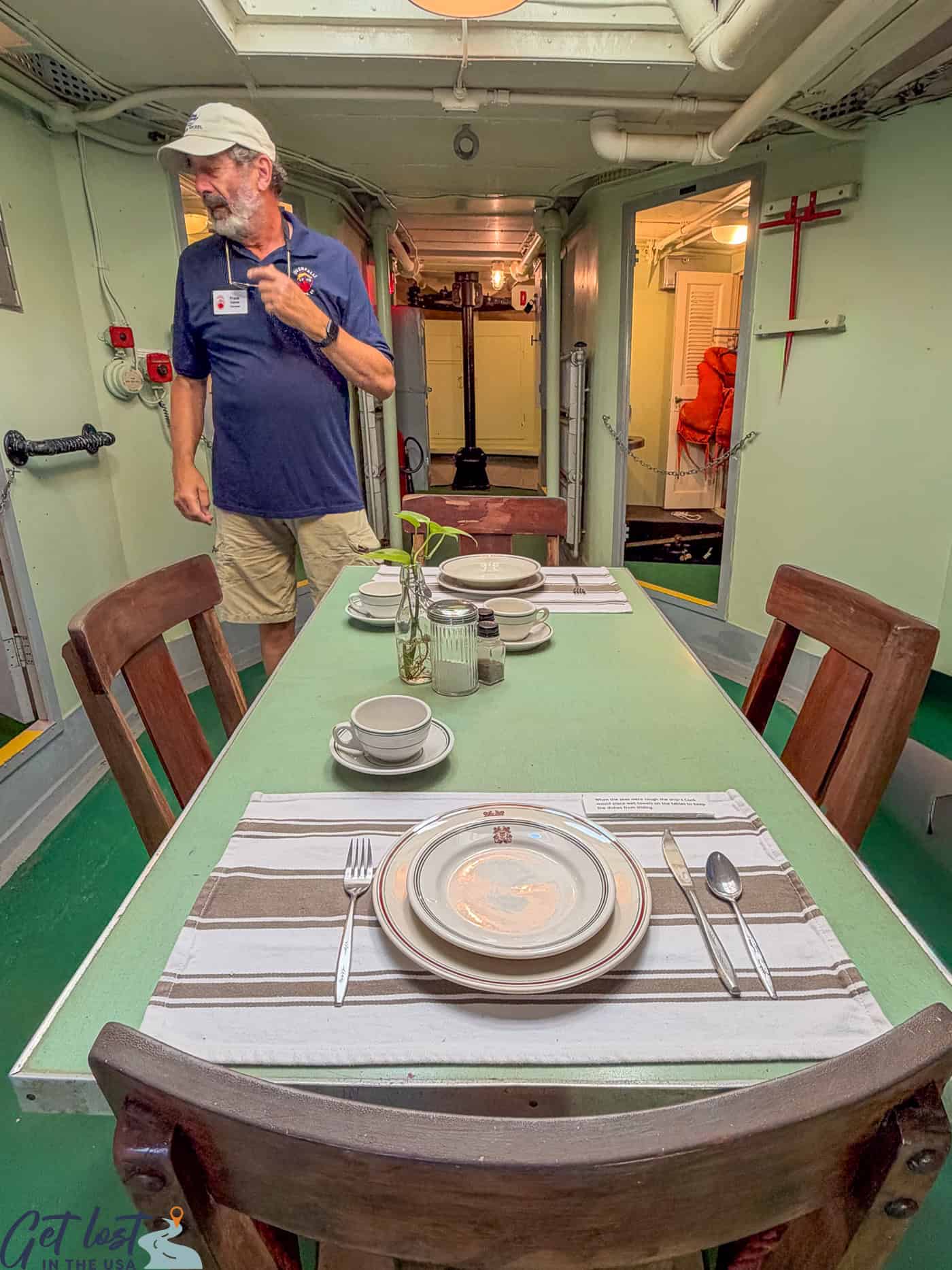
The enlisted men and officers had separate dining areas, and the crew used wet tea towels beneath their plates to keep them from sliding around when the ship rocked.
Inside the Ship’s Wheelhouse
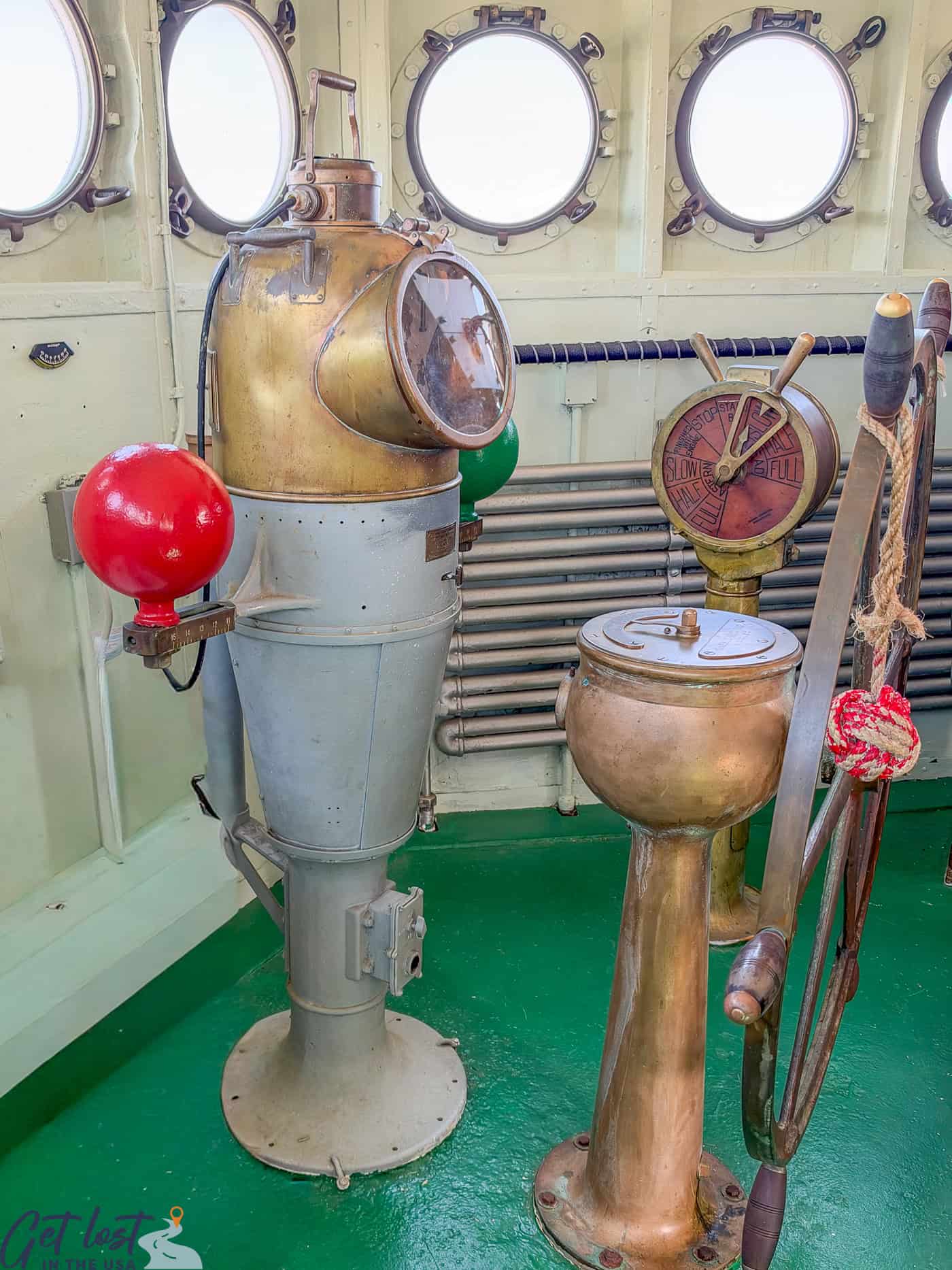
Our tour ended in the wheelhouse, where we got a closer look at the steering equipment and compass binnacle. The compass was mounted on a gimbal so it could stay level as the ship rocked back and forth.
We also saw some enormous old radios. It’s pretty funny to think that today’s handheld radios can do what once required cabinets full of equipment!
The Ship’s Original Bell Found Its Way Home
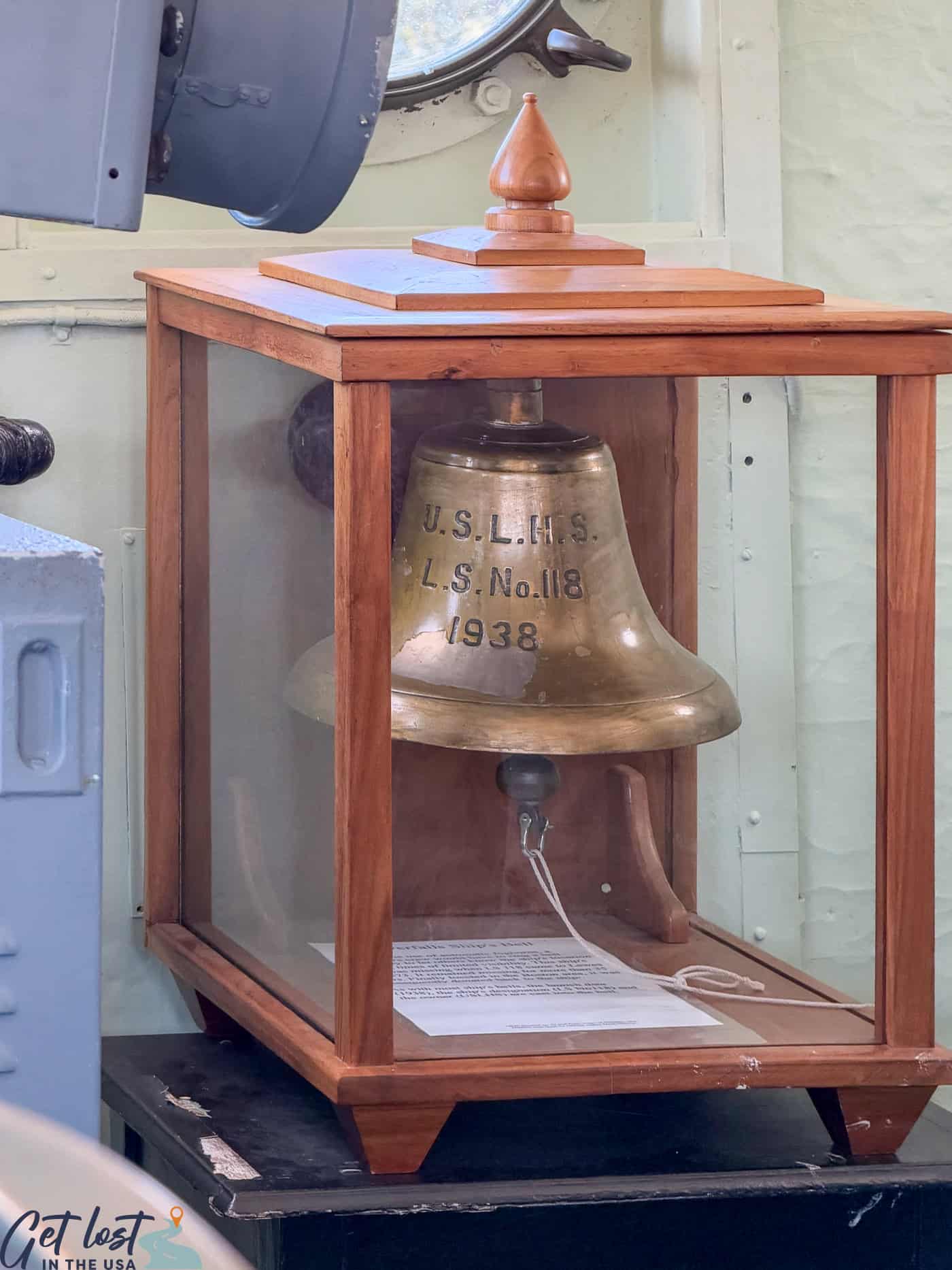
The ship’s original bell was missing when it arrived in Lewes, but years later, someone in Massachusetts discovered it. The Overfalls Foundation retrieved the bell, marked U.S. Lighthouse Service, LS-118, 1938, and put it on display rather than reinstalling it.
Planning Your Visit to the Lightship Overfalls
The Lightship Overfalls is docked along the Lewes-Rehoboth Canal, right next to Lewes Canalfront Park. You can see the ship from shore year-round, even when guided tours aren’t running.
If you’re spending a few days exploring coastal Delaware, I stayed at the Boardwalk Plaza Hotel in nearby Rehoboth Beach, right on the oceanfront.
- Address: 219 Pilottown Road, Lewes, DE 19958
- Admission: $5 for visitors ages 15 and older; free for children 14 and under.
- Tour season: Generally May through mid-October, with special openings on certain dates.
- Tour hours: Typically 10 a.m. to 3:30 p.m. on scheduled tour days. Allow about 45 minutes for the tour.
- Accessibility: Expect steep, narrow shipboard stairs, raised thresholds, and tight spaces. Contact the Overfalls Foundation to ask about accessible areas and possible accommodations.
- Website: https://overfalls.org/



Leave A Reply!