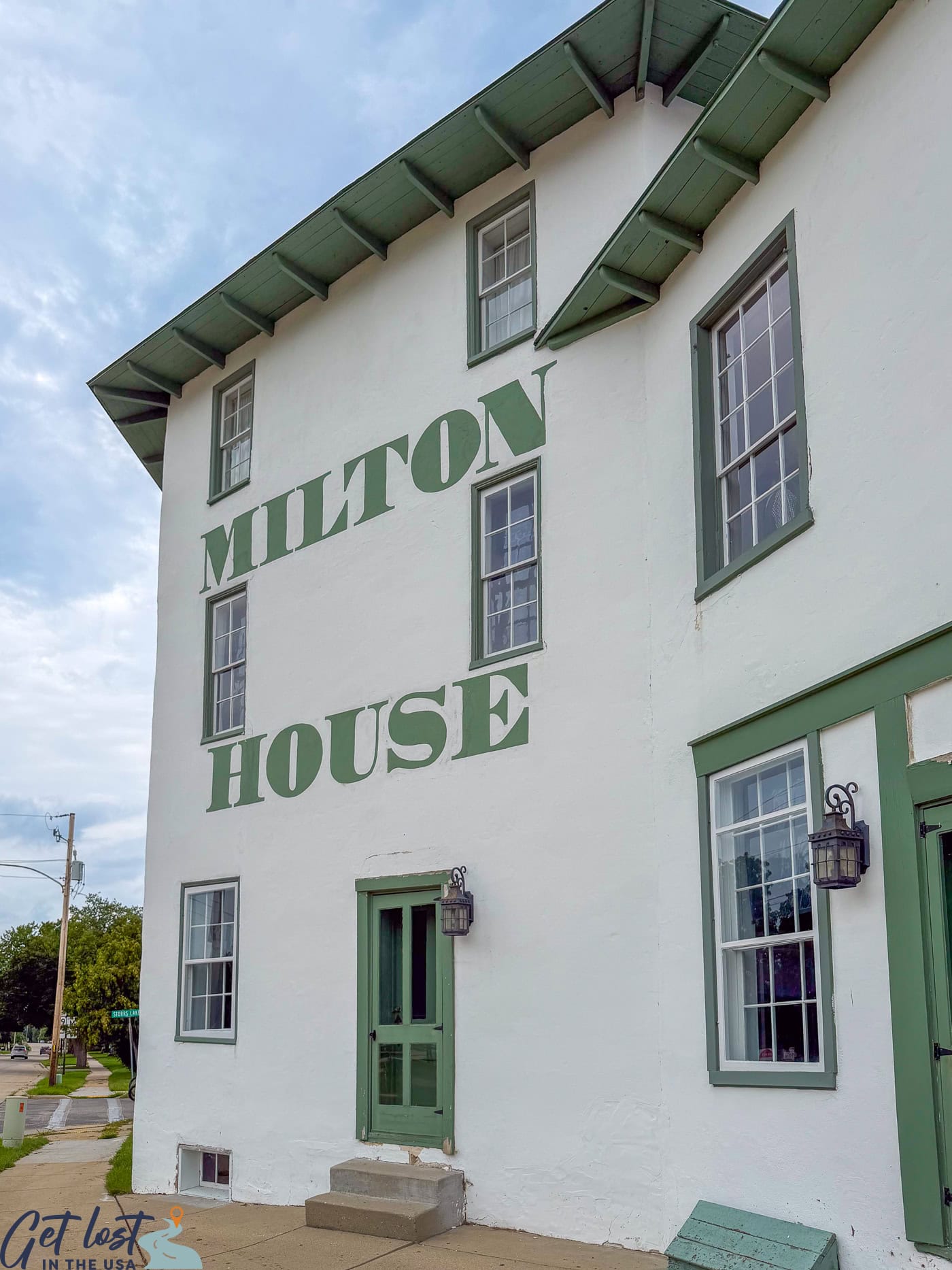
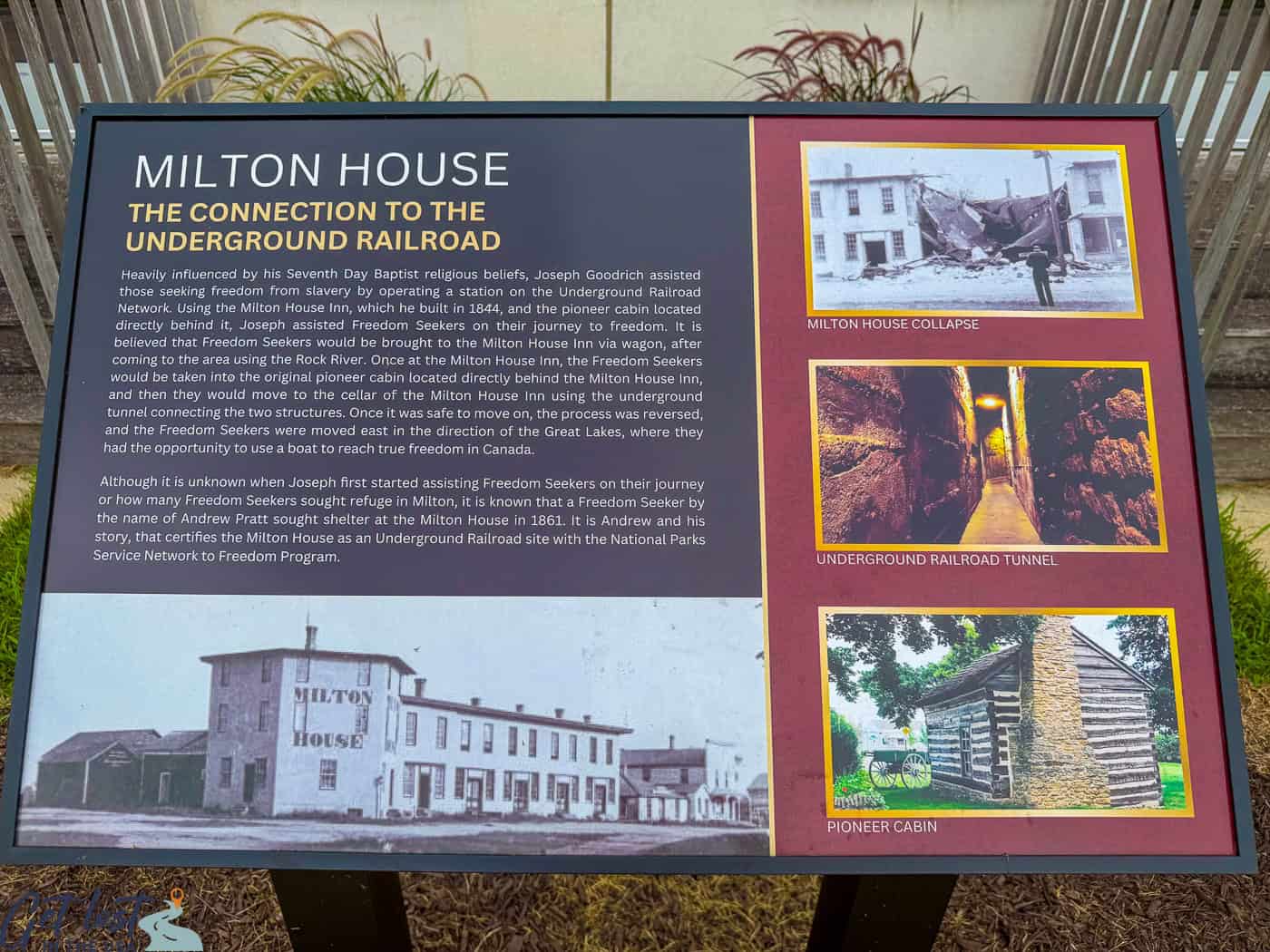
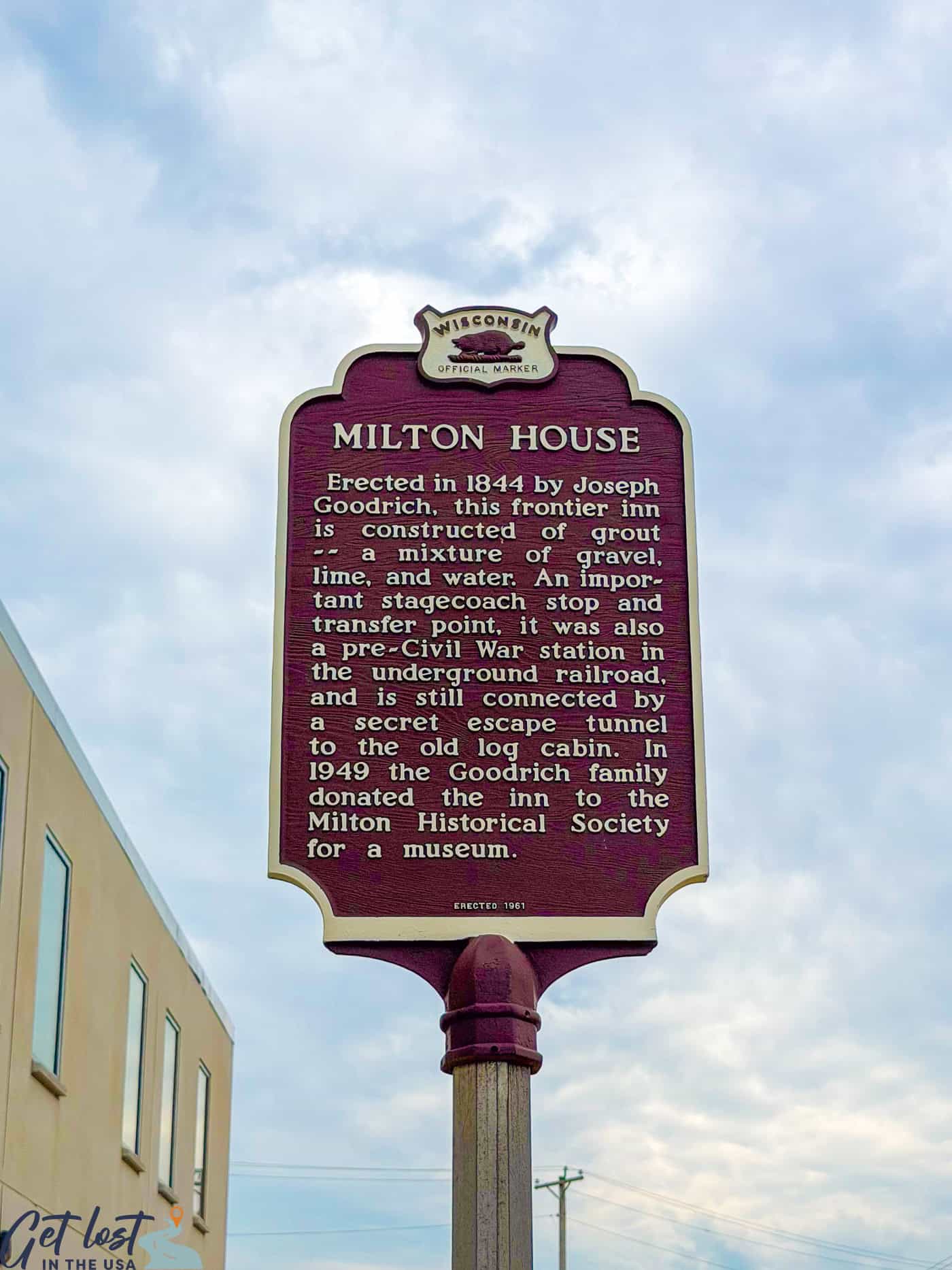
The Milton House Museum in Milton, Wisconsin, looks unusual before you even know its history. Joseph Goodrich built the hexagonal stagecoach inn in 1844, but the most important part of its story is hidden beneath it.
Milton House served as a stop on the Underground Railroad. Its guided tour begins with everyday life at a busy stagecoach inn before revealing how the Goodrich family used the property to help freedom seekers traveling north.
I first toured Milton House nearly 10 years ago and recently returned to see how the experience had changed. This time, I learned more about its Underground Railroad history and saw a mural I hadn’t seen before. But following the route freedom seekers once traveled was still the part that stuck with me most.
Starting in the Goodrich Block
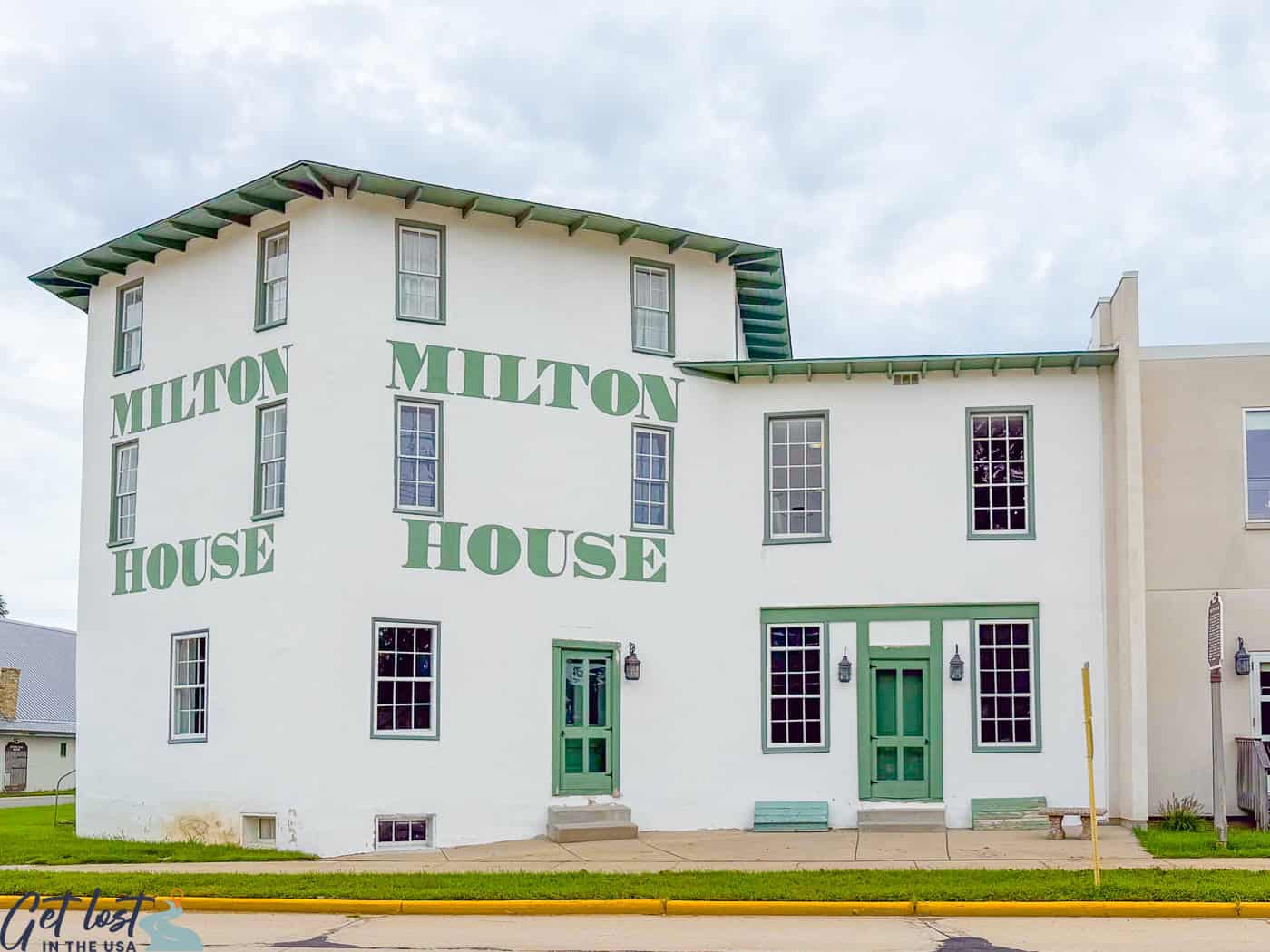
The tour began in Block One, the only original section of the five-unit Goodrich Block still standing. Blocks Two through Five collapsed in 1948, prompting the Milton Historical Society to purchase the property from the Goodrich family for $1 and begin restoring it.
Block One primarily operated as a storefront, so the room is set up like a general store with goods and equipment from the period.
This was where I learned more about Joseph Goodrich and how his family came to Milton. Goodrich arrived from New York in 1838, looking for a fresh start after an economic depression hurt his businesses back home. He operated a small inn and store before building Milton House.
The Goodrich family belonged to the Seventh Day Baptist Church and opposed slavery. Other Seventh Day Baptists settled in the area, and Milton developed into a strongly abolitionist community.
Curious Artifacts Inside the Goodrich Block
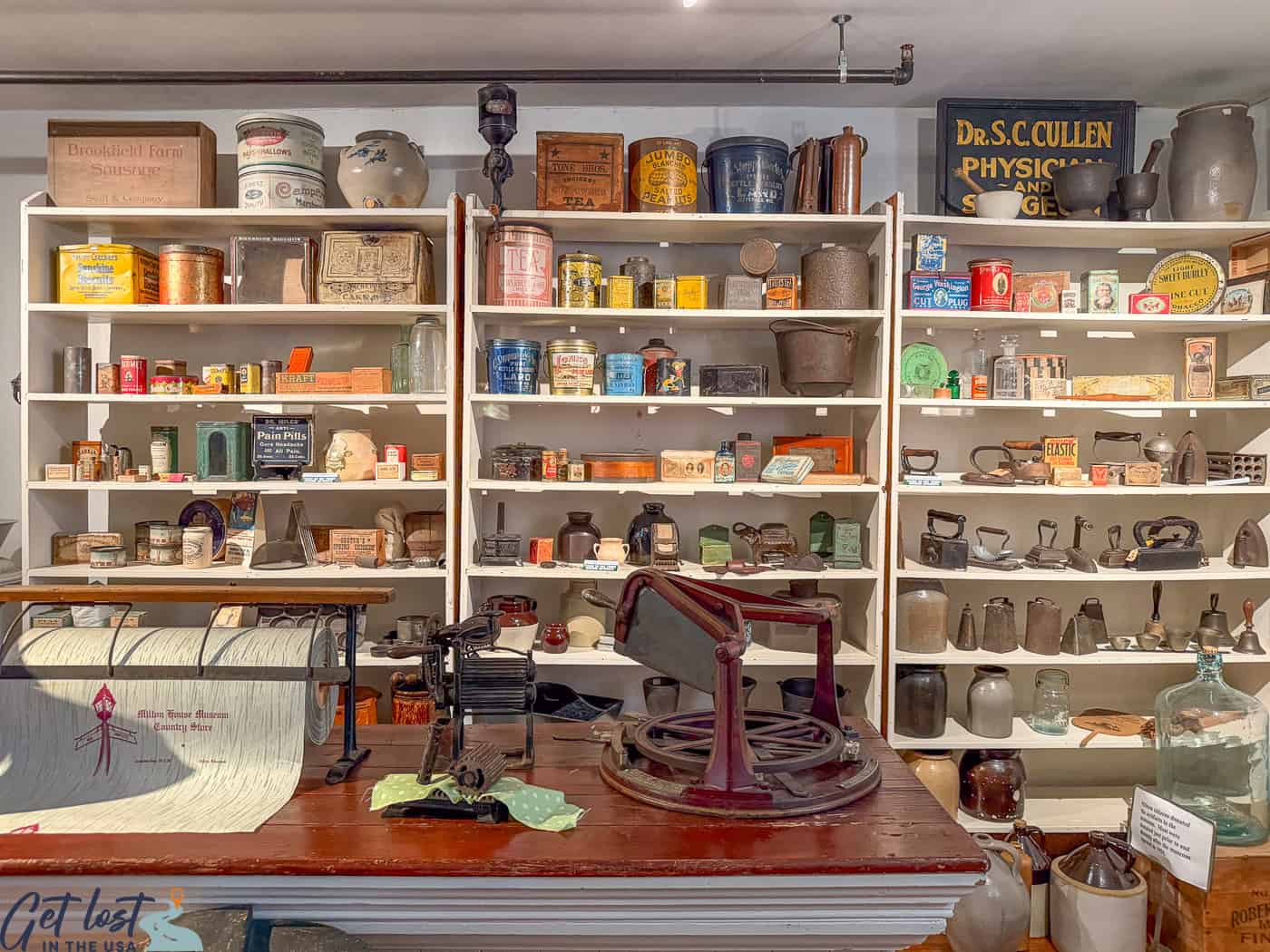
I’m always curious about the odd everyday objects inside historic buildings, and the Goodrich Block had several that caught my attention.
One of the first was a cheese-wheel cutter. How Wisconsin is that?
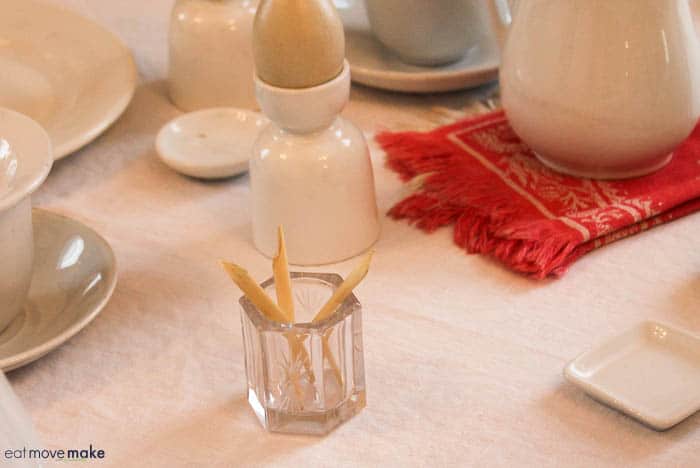
The communal toothpick stood out for all the wrong reasons. Made from a quill, it was reusable. Our guide told us that people passed it from one person to another around the table.
No, thank you.
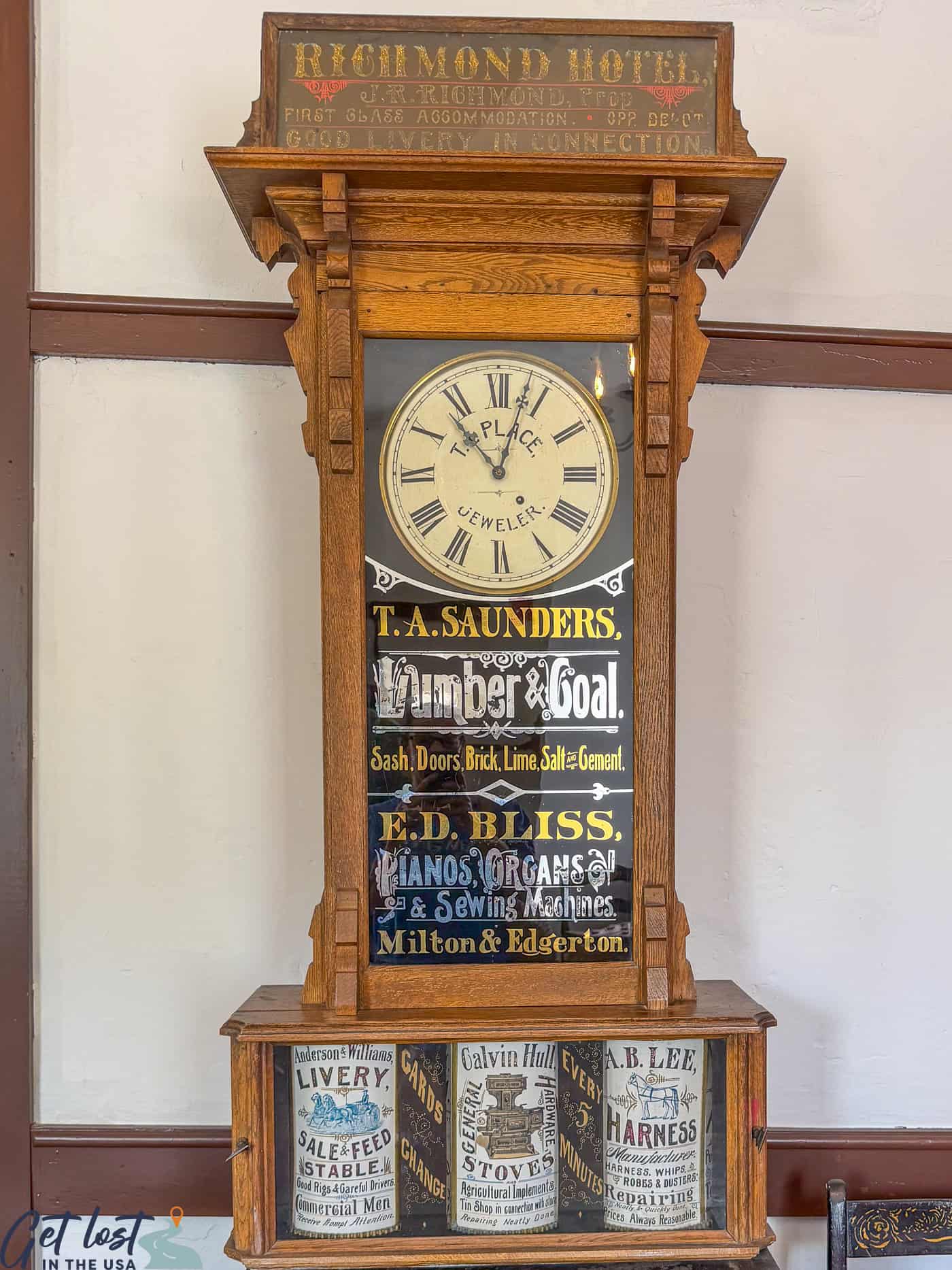
I was also interested in an advertising clock with rotating cylinders that displayed different business ads. One promoted the harness business owned by Arthur B. Lee, a Black Civil War veteran who moved to Milton and established a successful shop with help from Ezra Goodrich.
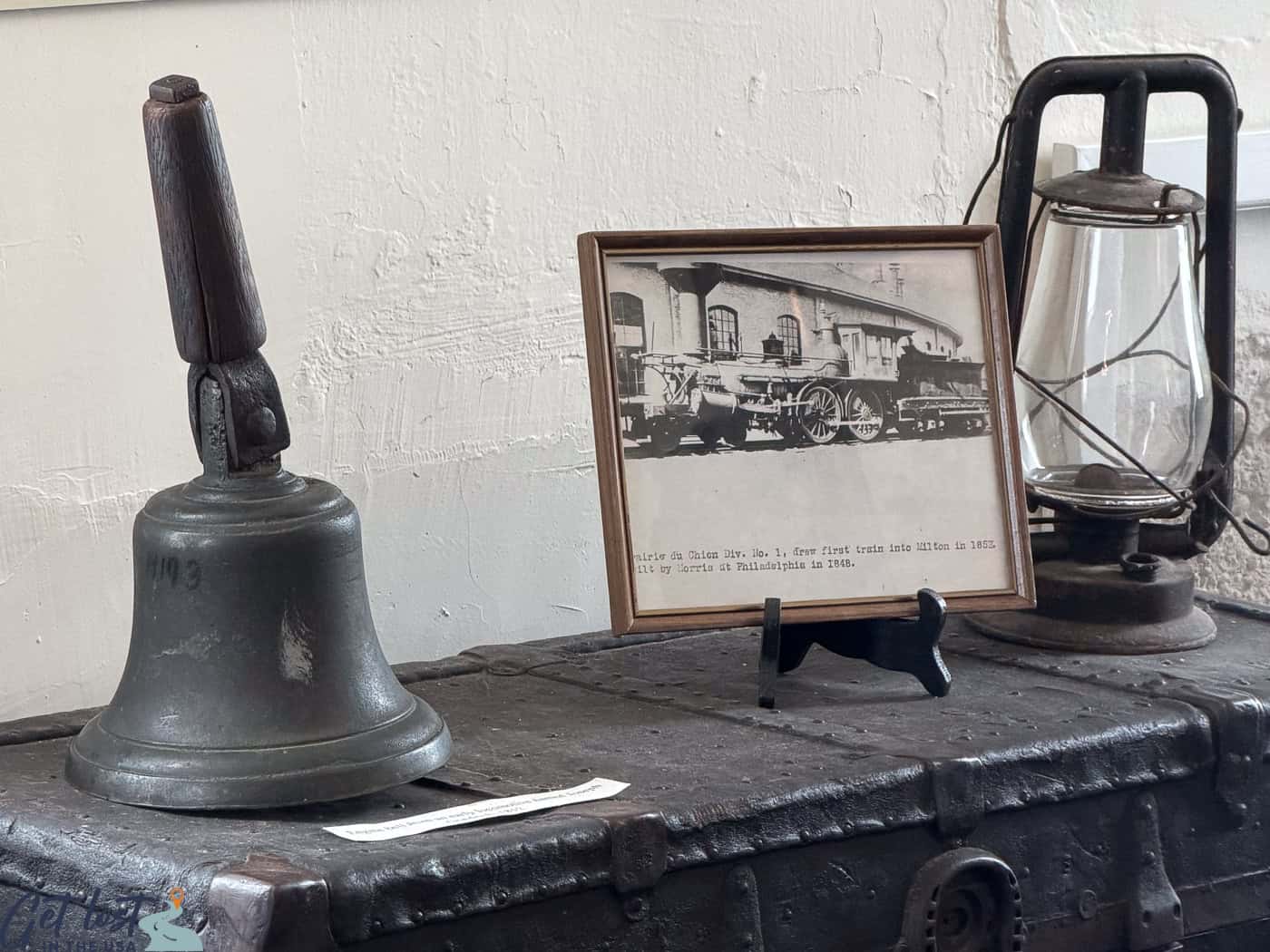
Another artifact was a bell from a locomotive named the Joseph Goodrich. Our guide rang it so we could hear what people would have heard when the train came through town.
It was shockingly loud.
Touring the Hexagonal Stagecoach Inn
From the Goodrich Block, we continued into the hexagonal stagecoach inn. Its six-sided shape made it distinctive, but the design was practical too.
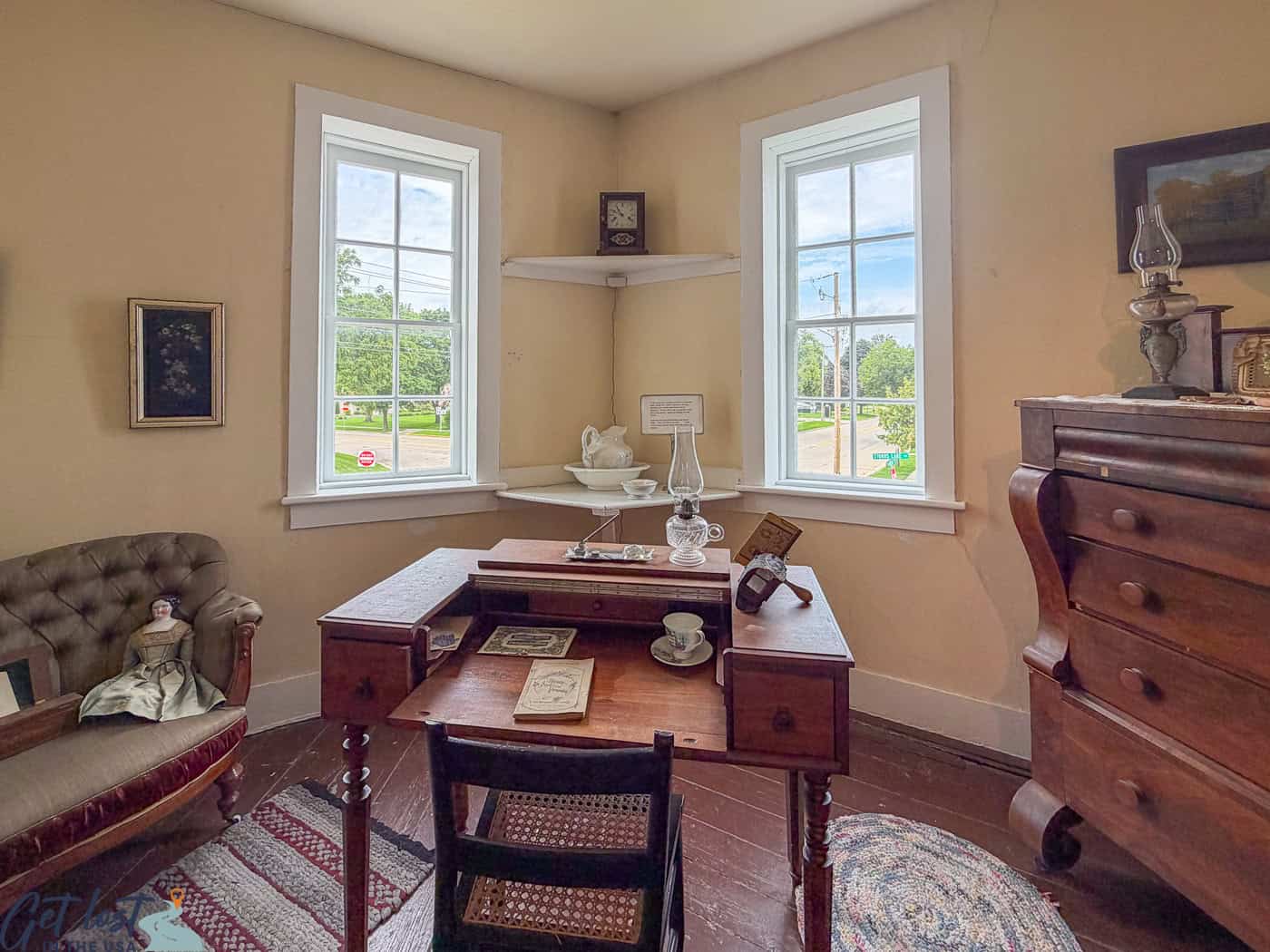
Six guest rooms occupied each floor and shared a central chimney. Most rooms had two windows, which helped with light and airflow during humid Wisconsin summers.
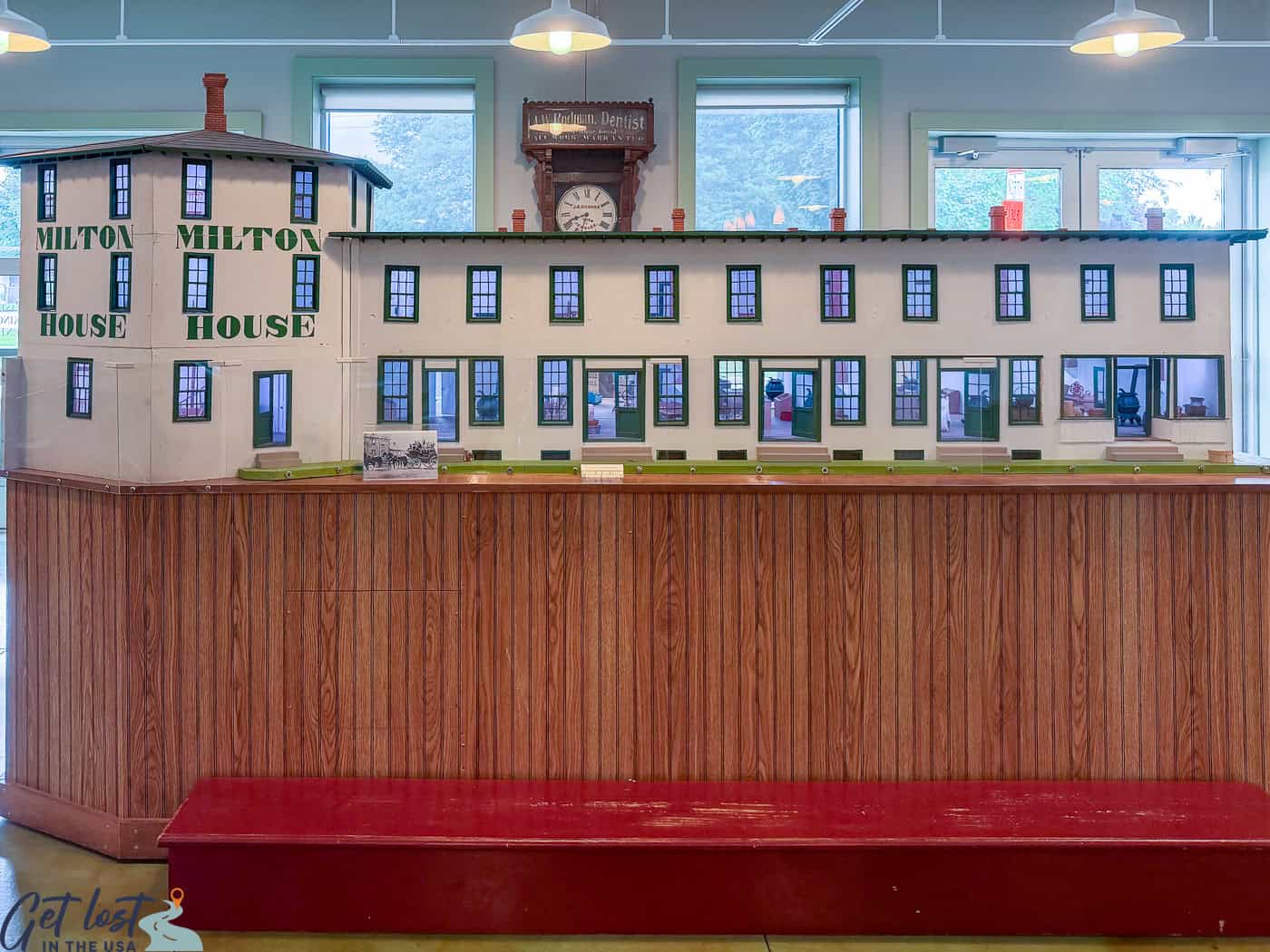
Goodrich built the inn from grout, an early concrete-like mixture of lime and aggregate. A model inside the museum provides a better look at the original property and how its different buildings connected.
What Was It Like Staying at Milton House?
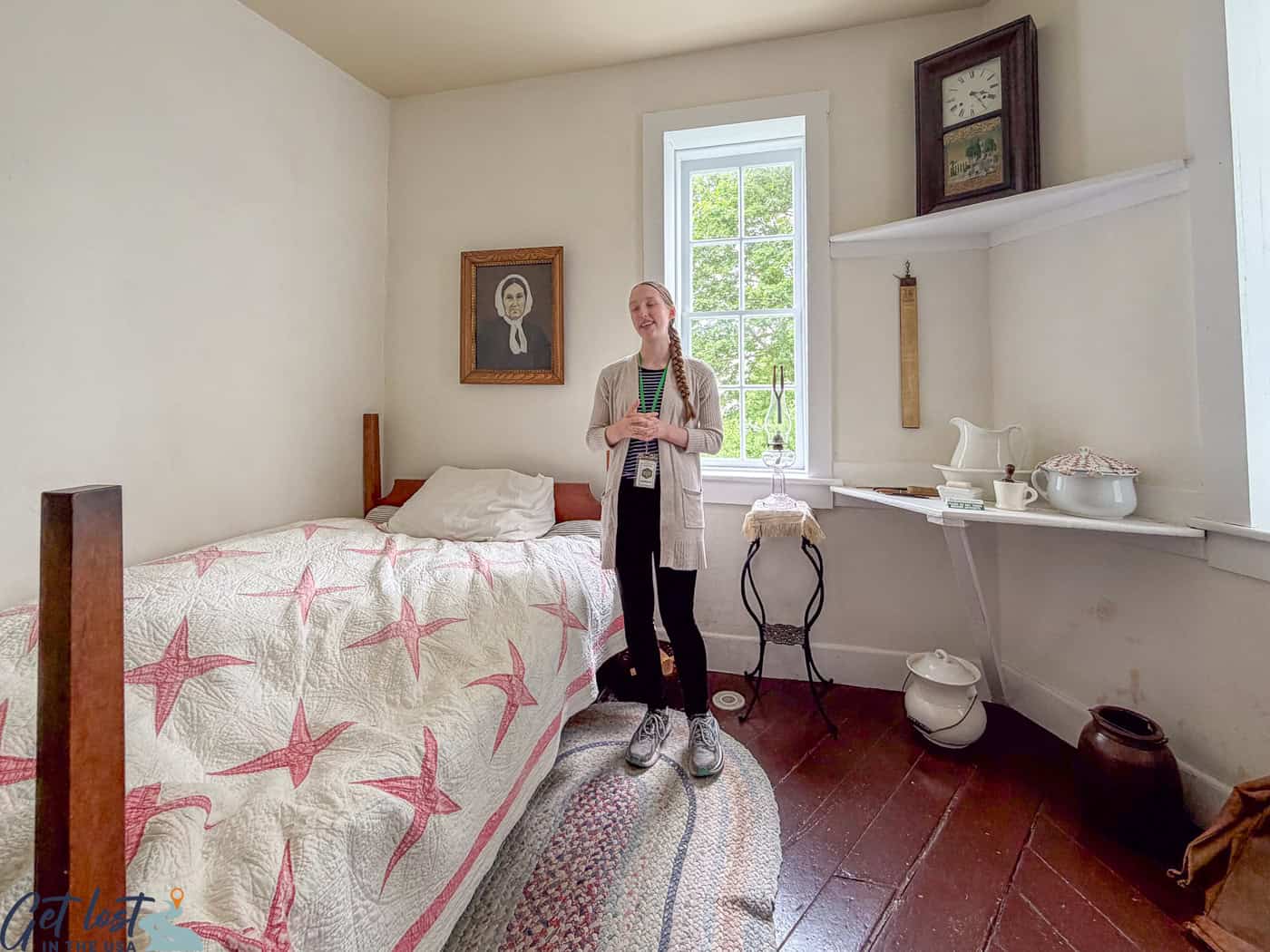
Personal space apparently wasn’t part of the deal at a 19th-century stagecoach inn. Our guide told us that four to six strangers typically shared one guest room. On especially busy nights, as many as 12 people squeezed into the same space, sharing beds or sleeping on the floor.
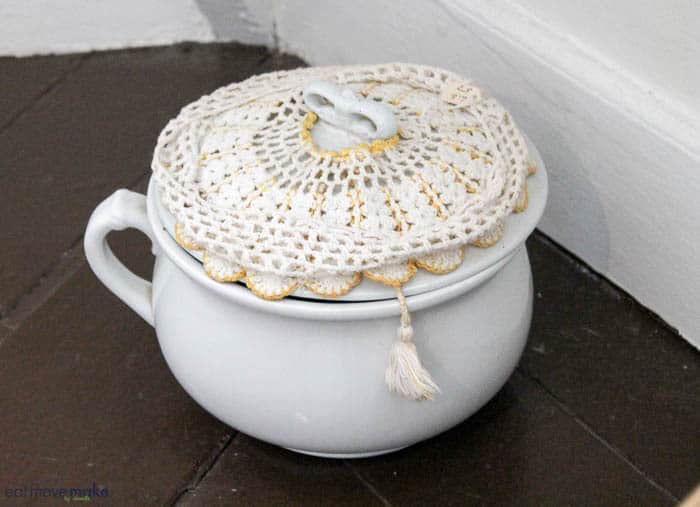
Then there was the middle-of-the-night bathroom situation. Each room had chamber pots, which guests used without the benefit of privacy. The ceramic lids made enough noise that the inn provided “chamber pot hushers,” small pieces of fabric that muffled the clanging. But still…
Milton House and the Underground Railroad
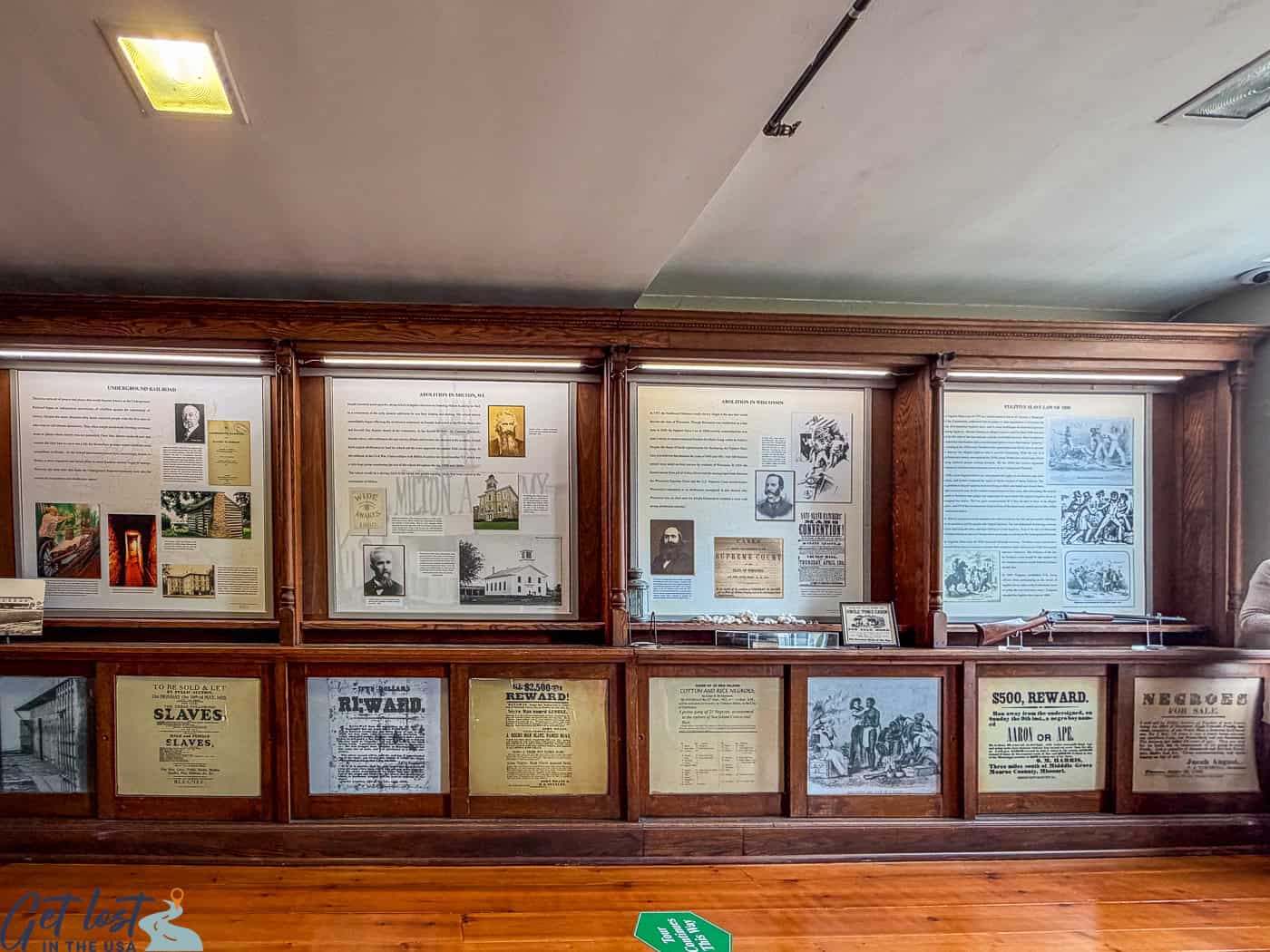
After touring the inn, we entered a room with panels explaining the Fugitive Slave Act, abolition, and the Underground Railroad. I don’t remember this exhibit from my first visit, and it helped explain why reaching Wisconsin didn’t necessarily mean a freedom seeker was safe.
Under the Fugitive Slave Act of 1850, freedom seekers could be captured in Northern states and returned to slavery. People who helped them also faced serious legal consequences.
I learned about another congregation willing to take that risk when I toured Town Clock Church in New Albany, Indiana, a site connected to Indiana’s Underground Railroad history.
Even in strongly abolitionist Milton, Joseph Goodrich had to keep his Underground Railroad activities secret. Strangers regularly came and went from the busy stagecoach inn while freedom seekers hid in a root cellar underneath it.
Following the Mural Downstairs
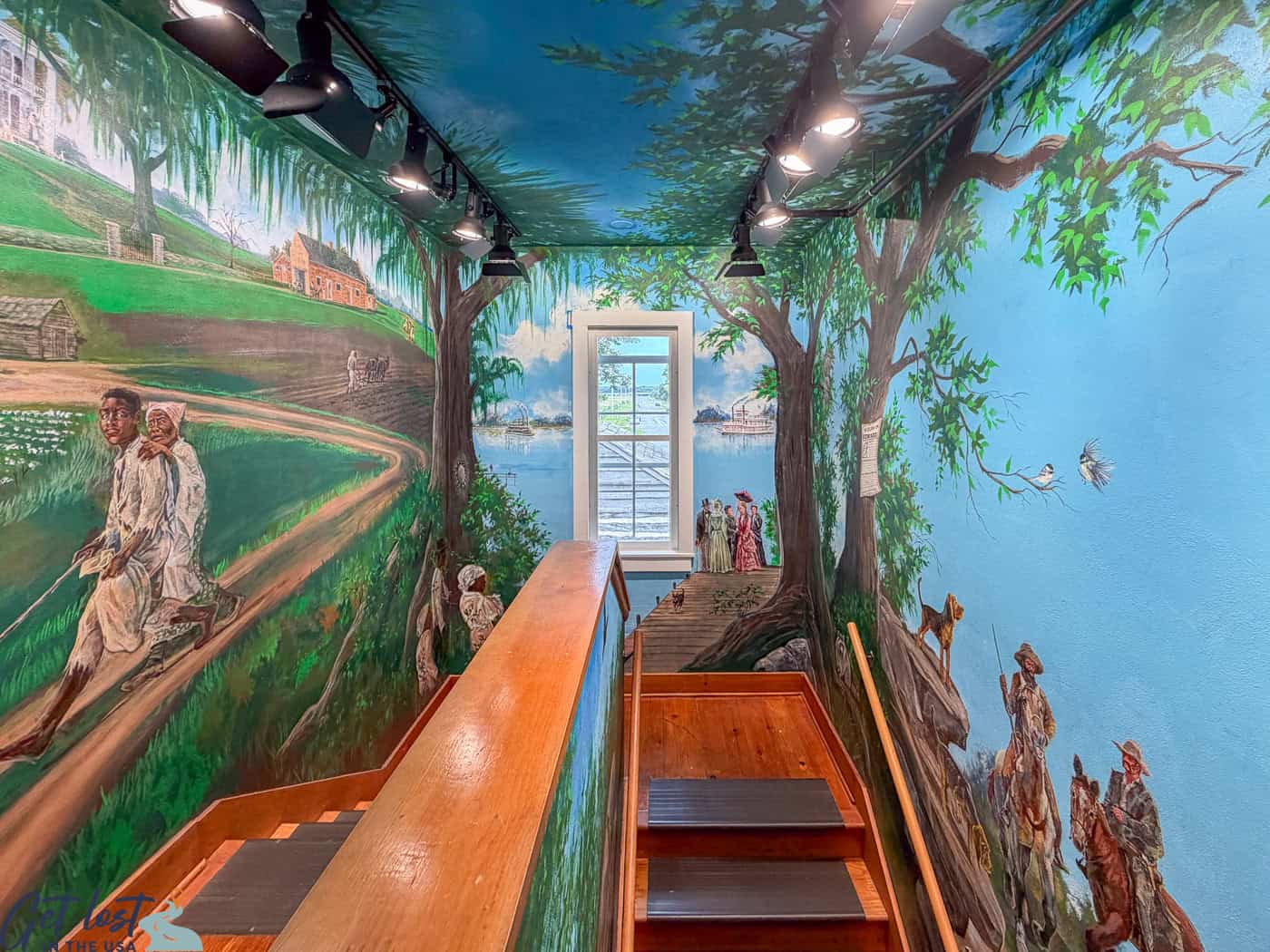
I didn’t know the museum had added a mural until I started down the staircase and saw it wrapping around the walls.
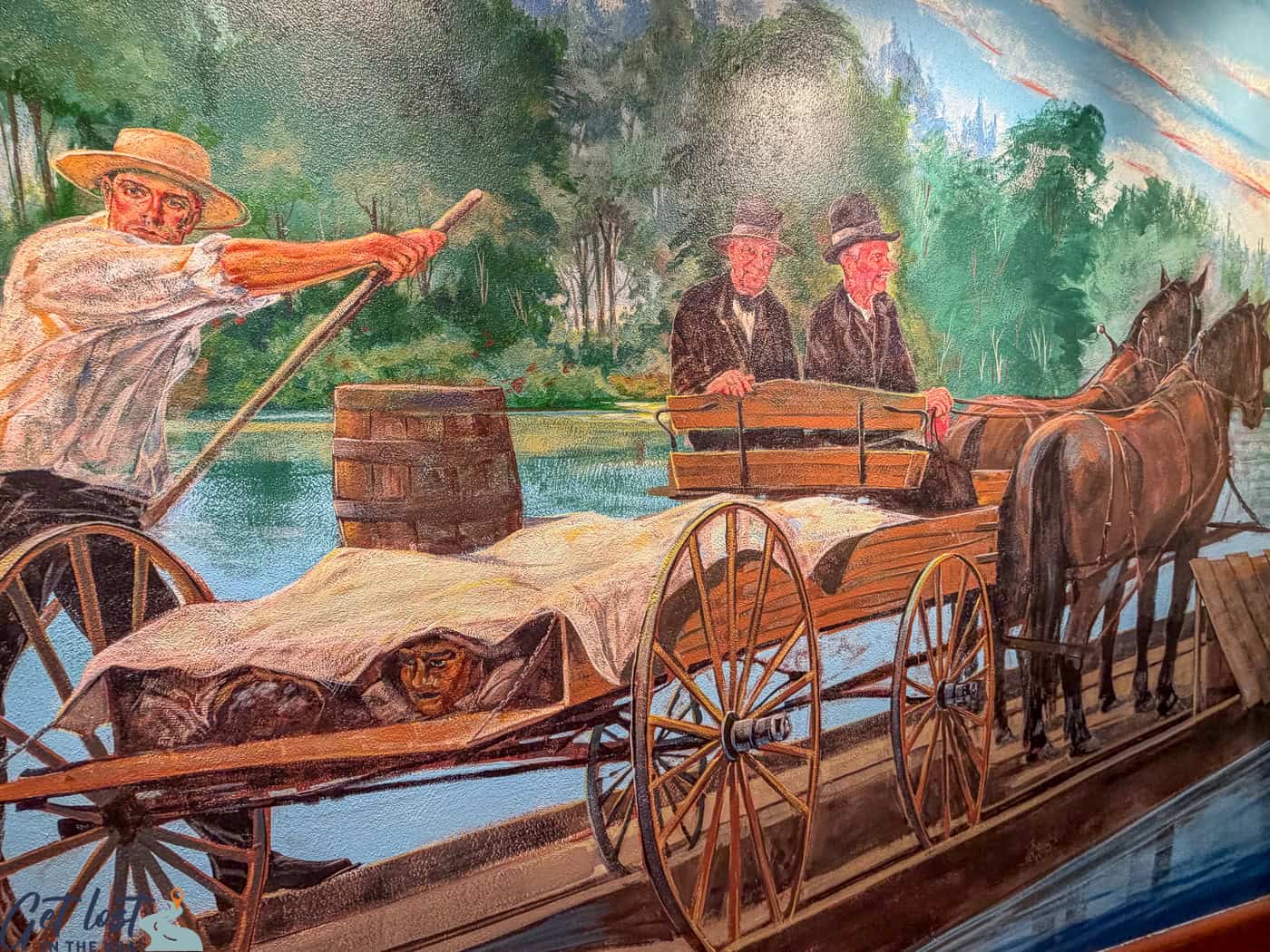
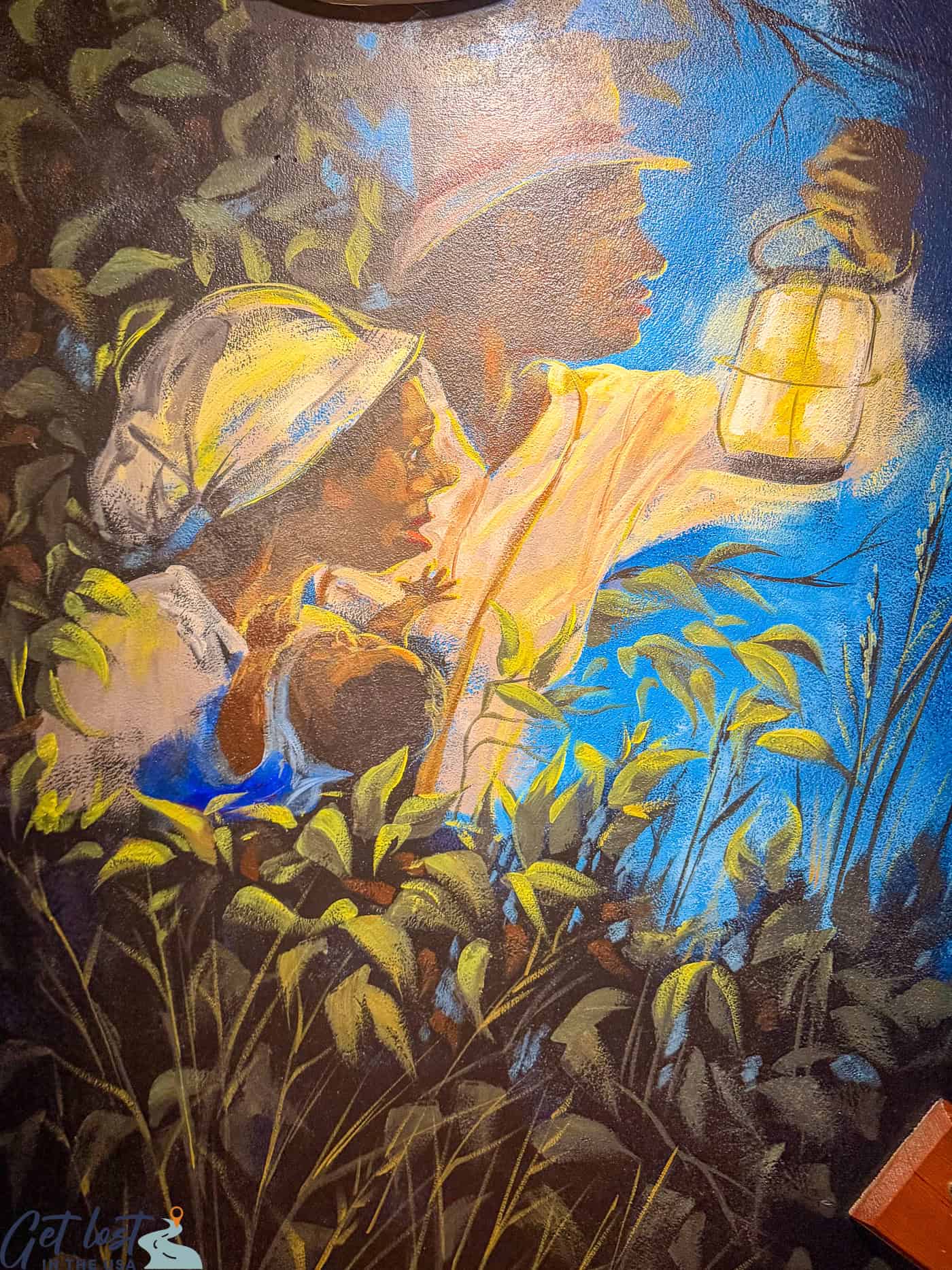
Commissioned in 2018 and completed in 2019, the mural follows a freedom seeker’s journey north. The story begins on a Southern plantation and continues down the stairs, showing freedom seekers, people who provided help along the route, and slave catchers.
Inside the Root Cellar
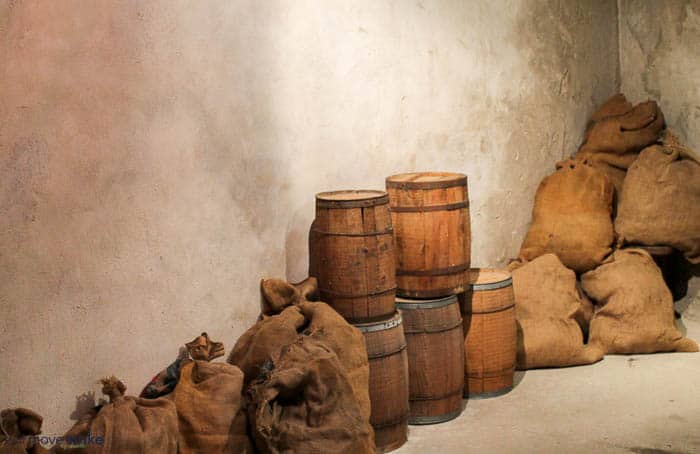
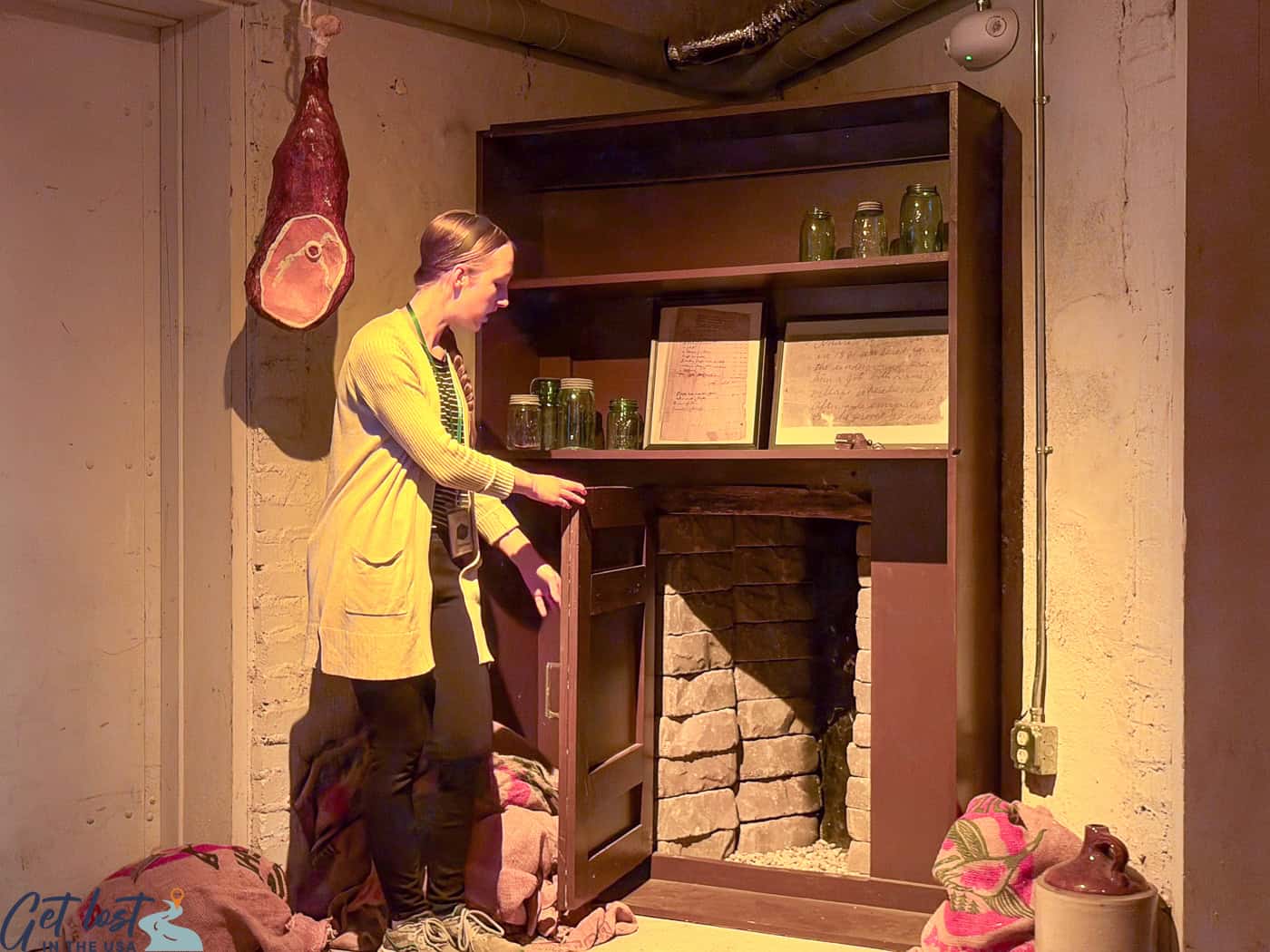
The cellar sits directly beneath the former ladies’ sitting room and dining area. People could be eating, talking, and conducting business upstairs while freedom seekers remained hidden below them.
Our guide told us the Goodrich family likely provided potato sacks rather than blankets for warmth. Blankets stored in a root cellar could raise questions if someone came downstairs, while potato sacks wouldn’t look unusual.
This was also where we learned about Andrew Pratt, the only freedom seeker known by name to have received help at Milton House.
Andrew Pratt’s Story
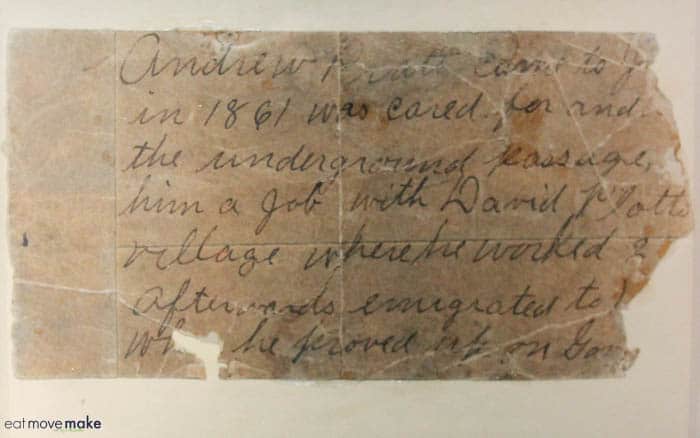
Because Underground Railroad activities had to remain secret, written records are limited. Andrew Pratt is the only freedom seeker helped at Milton House who is known by name. He escaped slavery, reached Milton with assistance from William Anson Goodrich, and became part of the community.
Pratt joined a local temperance organization called the Good Templars. Some members objected to admitting a Black man and worked to force him out. Ezra Goodrich defended Pratt and publicly challenged the organization over its actions. The group expelled Ezra, and several other members left in protest.
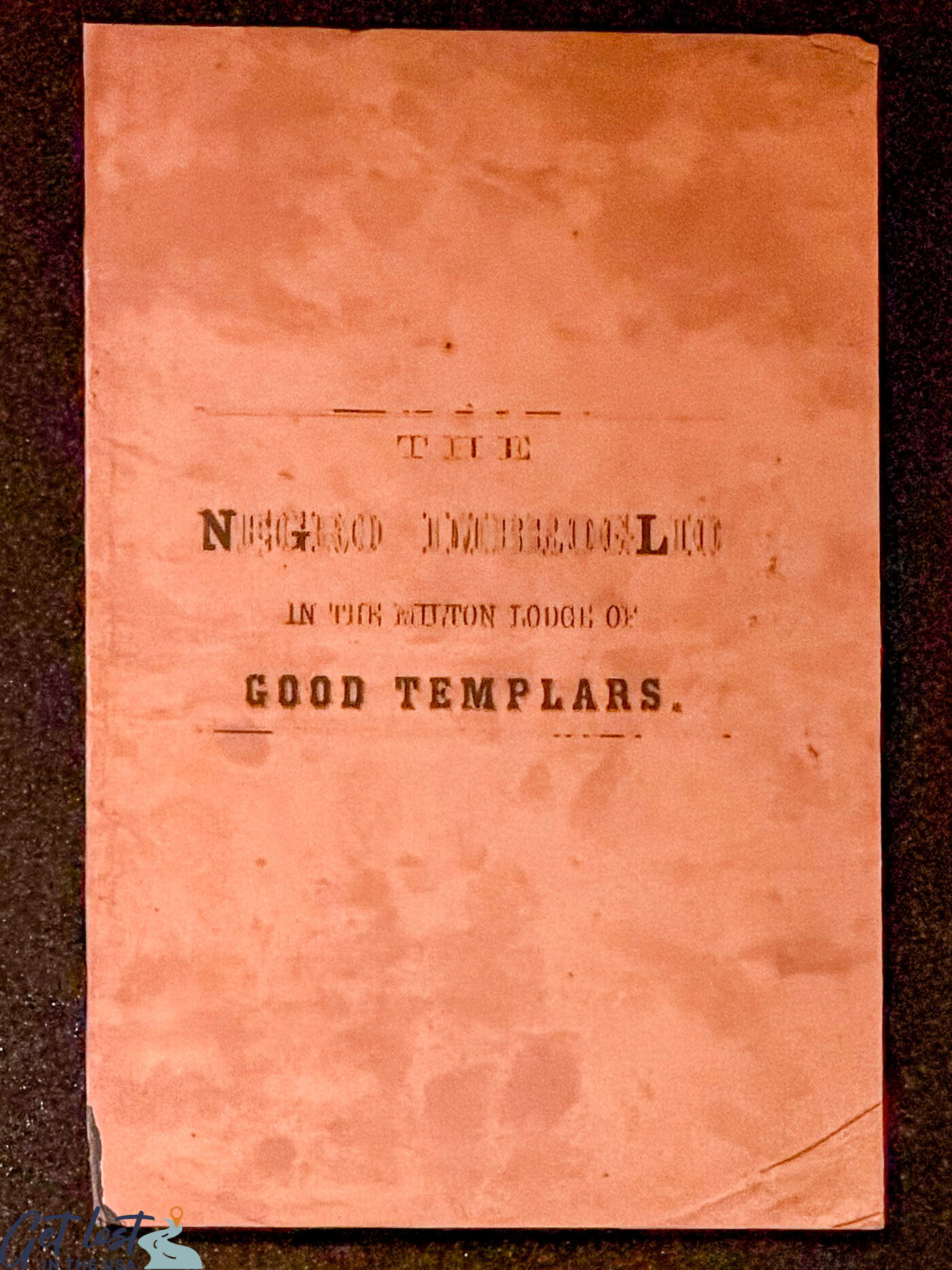
Pratt’s treatment showed that opposing slavery didn’t necessarily mean someone believed Black people deserved equal treatment.
Pratt eventually moved to Minnesota, where he owned land, operated a barbershop, married, and raised a family. I was glad the tour followed Pratt beyond Milton House instead of ending his story in the cellar.
That broader look at Pratt’s life reminded me of following Harriet Tubman’s story through Auburn, New York, where the historic sites focus on the home, family, and community she built after gaining her freedom.
Walking Through the Underground Passage
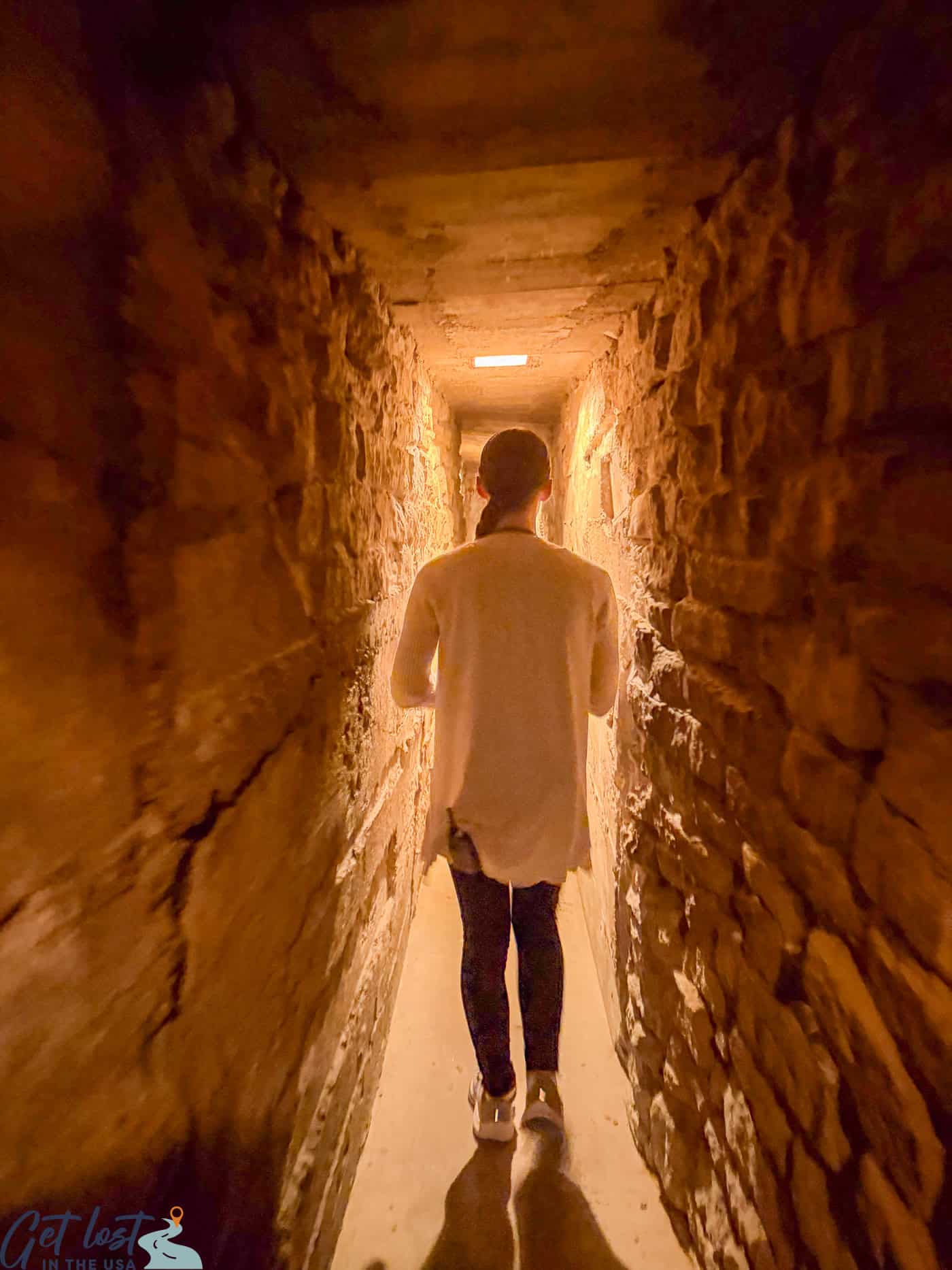
The passage between the cellar and pioneer cabin is about 45 feet long. National Park Service documentation describes the original tunnel as roughly three to five feet high.
The museum doesn’t know exactly when the tunnel was built or its original purpose, but its use as part of the Underground Railroad is documented.
During the museum’s restoration in the 1950s, workers enlarged the passage and lined it with masonry so visitors could walk through it. I could stand upright, but our guide showed us the original opening height at the doorway. You can still see the outline of how low it once was.
Even though the modern passage was lit and tall enough for me to walk through, I still hesitated for a second before entering. Following the route felt sobering after seeing how low the original passage had been. Freedom seekers would have traveled through a much tighter, darker space while trying to avoid capture.
Emerging Inside the Pioneer Cabin
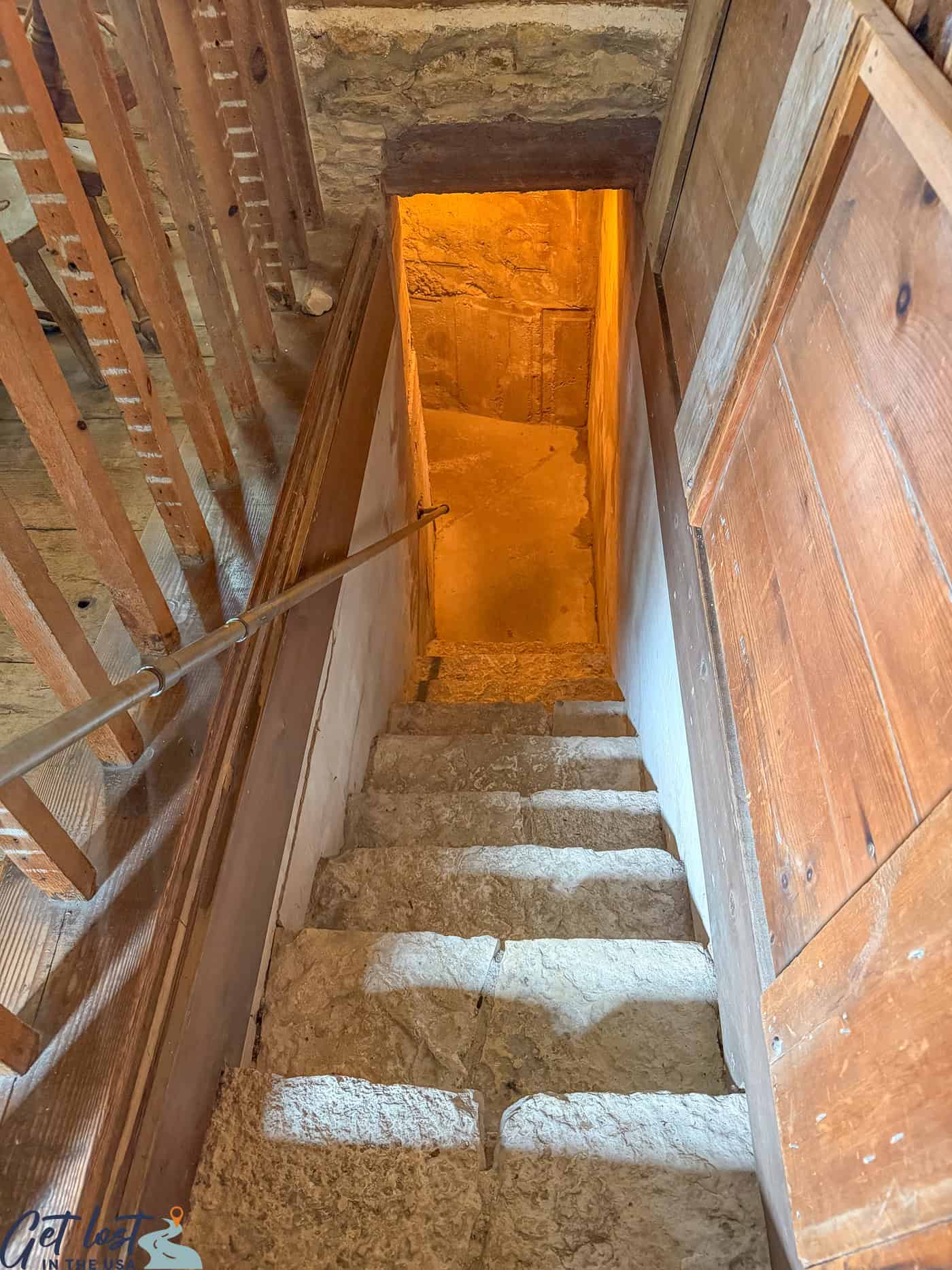
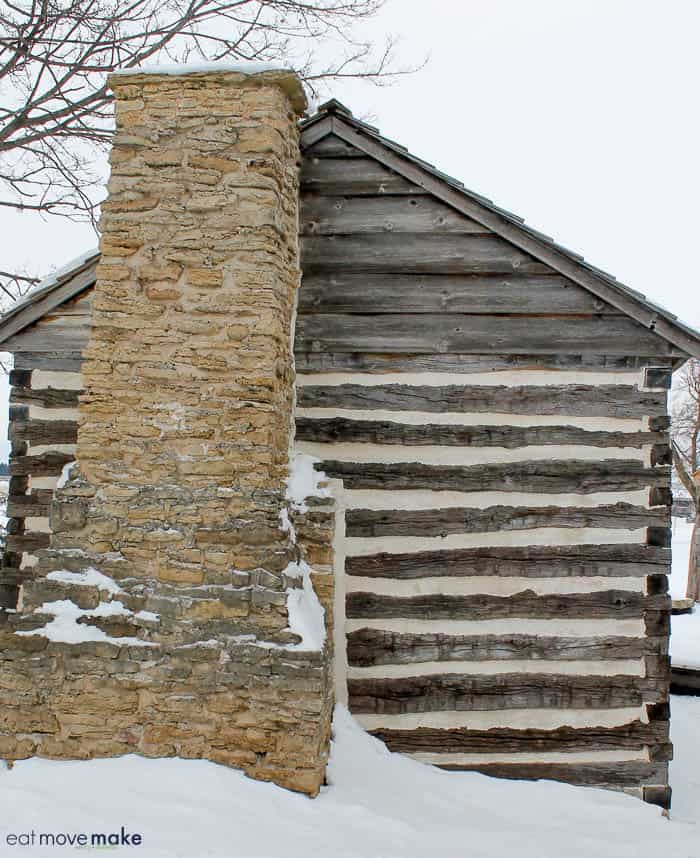
The underground passage ends inside the pioneer cabin behind Milton House. The cabin predates the inn, was moved to the property before 1844, and later served as the inn’s kitchen.
Our guide explained how the cabin provided a discreet way for freedom seekers to enter and leave the property. A wagon arriving near a working kitchen was less likely to attract attention.
Is Milton House Museum Worth Visiting?
Yes, especially if you’re interested in Underground Railroad history, Wisconsin history, or unusual historic buildings. You don’t have to be a serious history buff to find the tour interesting, though.
The stagecoach-inn portion has enough quirky details to keep the tour from feeling like a history lecture, but what happened beneath the inn is the real reason to visit.
Milton House is a National Historic Landmark and part of the National Park Service’s Network to Freedom. I wouldn’t stop with an exterior photo of the hexagonal building. Take the guided tour so you can see the cellar and follow the passage for yourself.
Know Before You Go
- Address: 18 S. Janesville Street, Milton, WI 53563
- Website:miltonhouse.org
- Admission: Adults $20; seniors 62 and older and youth ages 6–17 are $15; children 5 and younger are free. Active-duty military members and veterans receive free admission.
- Tour length: Allow approximately one hour for the guided tour.
- Tours and hours: Hours and tour availability vary seasonally. Summer tours generally run Tuesday through Sunday, with walk-ins welcome. Fall and winter tours require an appointment at least 24 hours in advance. Check the museum’s website for current dates and hours.
- Audio tours: Self-guided audio tours may be available, although guided tours receive priority.
- Accessibility: All areas of the museum are accessible except the underground tunnel.
- Parking: Free parking is available beside the museum.
- Restrooms: Available.
- Gift shop: Yes.





Comments & Reviews
That is so cool! I love seeing history up close and personal like that. I have NEVER heard of a chamber pot husher before.
Milton House sounds amazing. I love to learn about history like this, and I love to think of people doing good in the world even then.
That is s cool. We have tons of Underground Railroad stations around here and I love to see them. I would love to visit this museum someday.
Wow, what a cool place. I like sites like this that take you back in time to learn about the history of our nation. So my thing.
This would make a neat and educational trip. I would love to visit the Milton House Museum if I am ever in the area.
This is so cool! I’d love to see this because I love museums and history. This would be good for my kids to do as well. Teach them more about history.
This is honestly the best way – for me, personally – to learn about history. I prefer experiences like this than actual museums. Makes you more invested.
It is amazing how some of the original house pieces were preserved through all these years. Just by looking at the door you’d have an idea of how people from the 1800s lived their lives.
I love going to museums like this. I like anything that is actually Panera because it makes you feel so much closer to it and want to learn more about it.
I have to get a chance to visit the Milton House Museum. The underground railway is something I’d like to see in my lifetime. So much of history can be learned in this one place alone.
The pick your torso portraits sounds interesting. The communal toothpicks are gross. The underground rail road basement is moving. Overall it sounds like a good place to visit.
Im such a history nerd so I love stuff like this. What a cool and interesting place to visit!
This would be a super cool place to visit, love that you were able to share your experiences. The Milton House Museum really does have a great selection of things to see 🙂
I am going to visit family for the first time in WI, I would love to visit the Milton House Museum! How interested about the pot pusher!
Wow, this place has such cool architecture! I would have not been able to go through that passageway though!
This is something right up my alley. I LOVE historical spots, and I love randomly designed buildings even more. A hexagon shape seems to be pretty awesome to explore.
That must be such a feeling to be standing where on a spot where history took place. I’ve never heard of a chamber pot husher either. The Goodyear name – any relation to the tires?
I love visiting places like this when I travel! I want to visit an Underground railroad site!
This is a really neat museum. I imagine that it would be really emotional to visit.
I am adding this to my list of places to take our children when they are a bit older. I love how well you captured your visit in your photos.
One of my favorite parts about traveling is visiting museums to see what is on display. What a lovely place to visit. Would love to check this place out.
A little slice of history! that’s my favorite part about traveling… immersing myself in the history and culture.
What an amazing experience. It is amazing what you can feel in places like this.
This is really cool. I would like to take the kids to something like this since they have been learning a lot about the underground railroad and other American history in school.
Wow, that’s fascinating and I’m going to try to visit when I’m in Wisconsin later this summer. I love learning more about history.
I love hands on learning and this sounds like such a cool piece of history. I would love to visit the Milton house.
I love history and visiting historic sites. I am lucky to live near many of them. I would love to visit the milton house museum.
Wow, love historical and significant places. That clock is REALLY cool as well as is the scrap of note. Thanks for sharing!
What a unique experience. Walking through the tunnel must have been so emotional.
Oh wow. This place is so rich in history. I’d love to take my whole family for a visit! Awesome post!
What an interesting bit of history there. I had no idea that the Milton House was just a few short hours from my own home. Maybe we’ll make a day trip to visit sometime soon.
i grew up in WI and have never been there. looks like fun.
I love museums like this! Focused on one certain thing or era, and full of education. I’m loving that clock that doubled as advertising too – very neat!
This would be a great place to visit. There is so much history to be seen here.
I enjoy learning about history and would love to visit this site. I can just imagine how emotional it would be.
This would be such a fascinating place to explore in person. I love to learn the history of places I go to.
What a cool place to visit. I have been to other places on the underground railroad and can’t imagine the fear these people endured. Although my own ancestors had to escape from Europe.
Great way to experience history in real time. It would definitely make a great stop on vacation.
I was just teaching a lesson to my class on the Underground Railroad. I love knowing there were people who stood up for what was right. I’d love to see the Milton House in person!
I am such a history buff as well as museum-a-holic. Thanks for introducing me to the Milton House Museum, it sounds fascinating.
Oh wow, what an incredible little house! I love discovering unique places like that to visit and learn about. Thanks for sharing!
This certainly looks like an interesting destination. My father-in-law would love that clock!
You took some great pictures in general.
What an awesome place to visit and learn about our country’s history. I am pretty sure I would be overcome with emotion in the basement.
I love how everything has an old look and feel. I simply love history. What a great trip.
This is so cool! I love learning about historical figures and seeing how they lived in the past before electronics and electricity took over. I think its cool that they were able to survive with it and its always a great reminder to appreciate the small stuff.
Wow, I have not heard of this before, I live in Wisconsin and somehow missed this museum. It seems like a great one with interesting history. I love seeing the old letters, such a neat relic to have of the past.
I would love to visit the Milton House Museum! I gagged a bit at the thought of the communal toothpicks. Ugh.
Wow what a neat little place. I love the idea of the hexagonal building, it is so different. The historical pieces look so well preserved, communal toothpicks, ha.
Omg what a neat place!! I would love to visit the Milton House Museum one day. I bet the whole family would enjoy it
A stagecoach inn would be an awesome way to spend a vacation. I’m off to convince hubby to take some time off.
So much history in such a small place. My family loves to learn history facts and they are easier taught when the kids can see, touch and be at the physical place. This is amazing! I never knew it existed!