Rogers, Arkansas surprised me in the best way. It turned out to be two cities in one. Downtown brings the railroad roots, historic buildings, and plenty of personality. Uptown brings the shiny new stuff, from restaurants and shops to a major outdoor music venue. Tie it all together with easy access to the outdoors, and you’ve got a pretty convenient base for exploring Northwest Arkansas.
I spent a few days checking out both sides of Rogers, along with some nearby attractions just beyond the city limits. Here’s what stuck with me as I explored it all.
Destination Rogers hosted my stay. Everything I’ve shared is my own take.
Historic Downtown Rogers
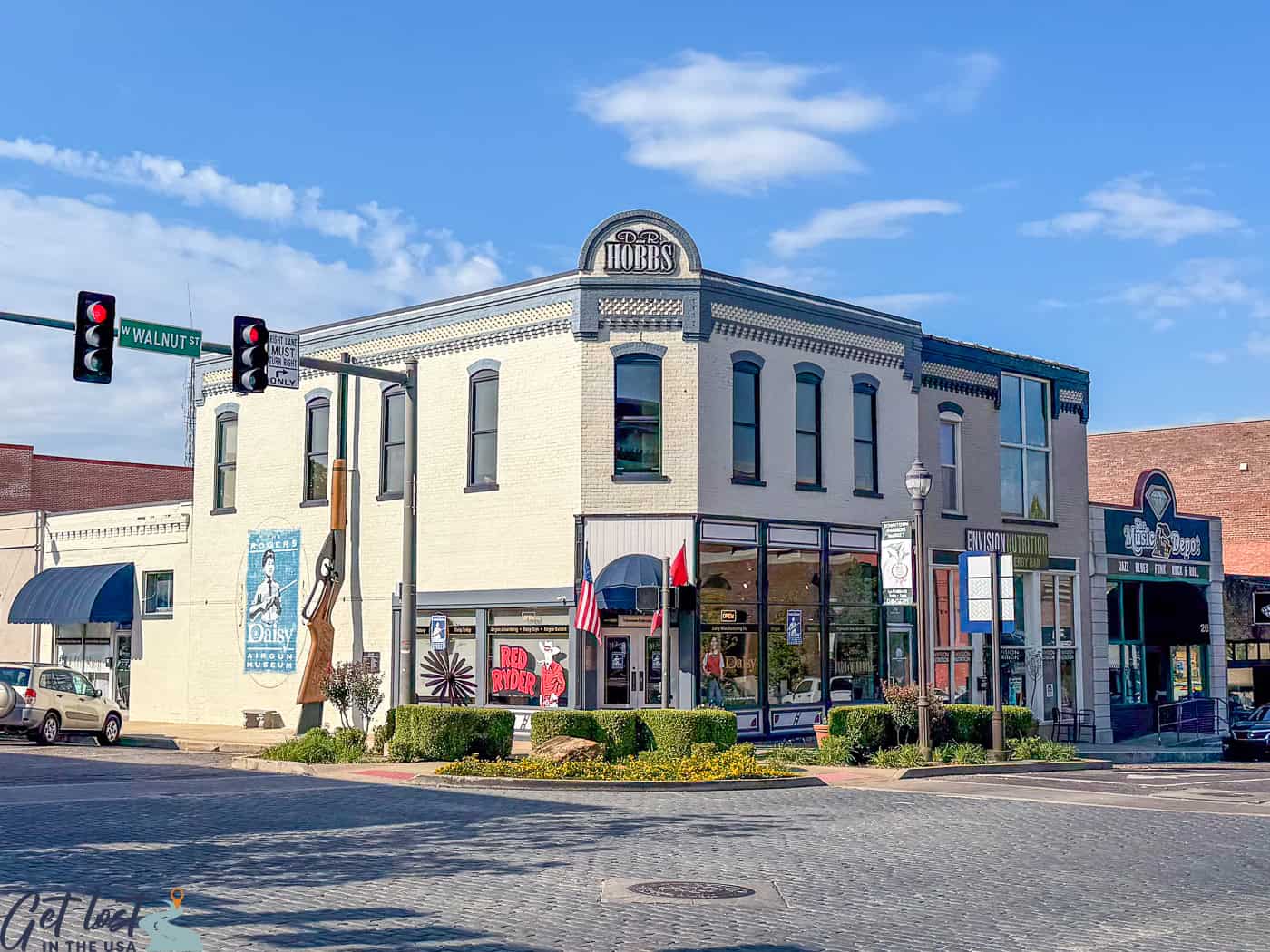
When I walked into downtown Rogers for the first time, the history was impossible to miss. The brick streets, the old storefronts, the 19th-century buildings all tie back to its days as a railroad stop on the old St. Louis and San Francisco line. It’s one of the easiest and most interesting parts of the city to wander.

Daisy Airgun Museum
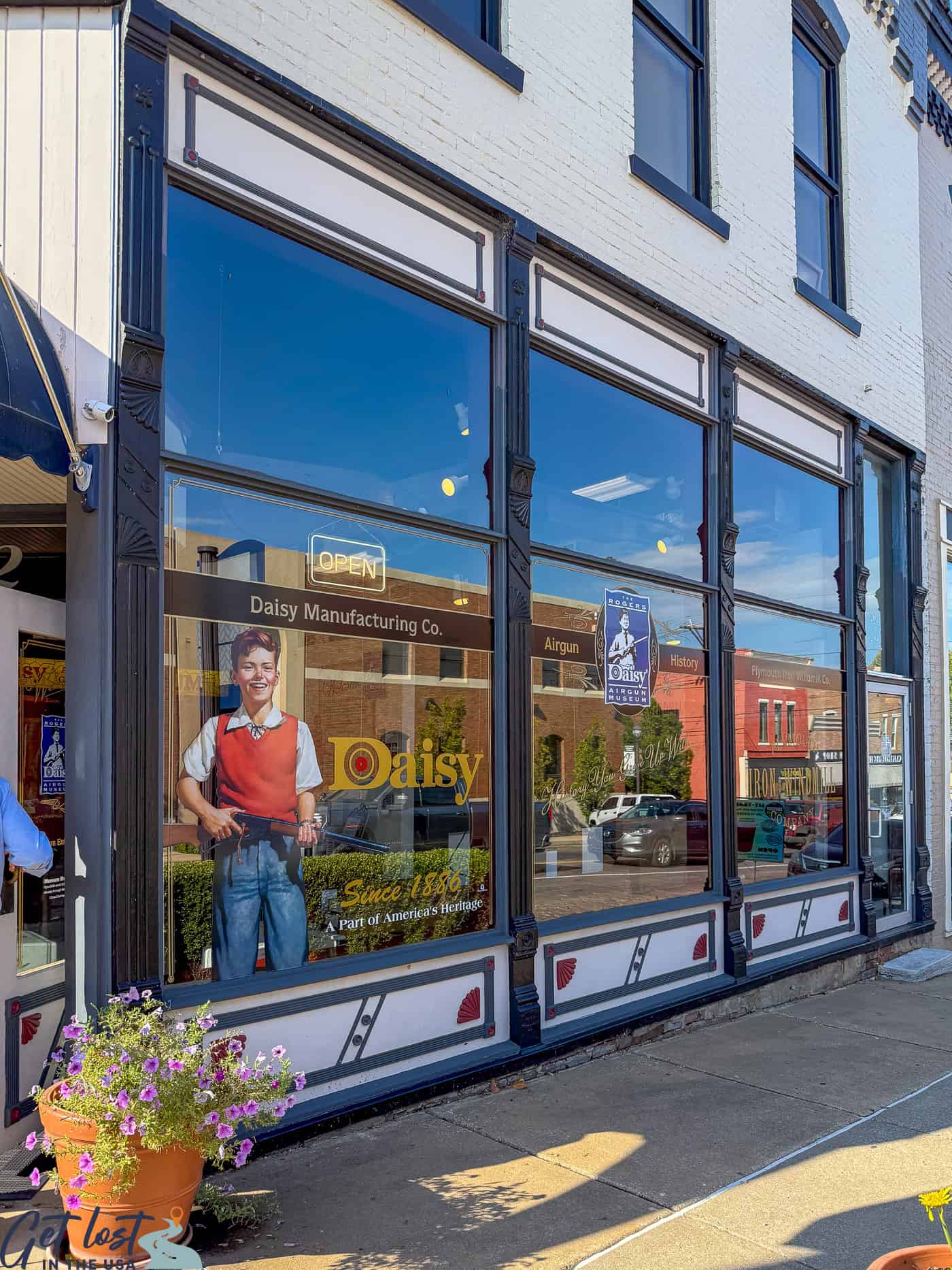
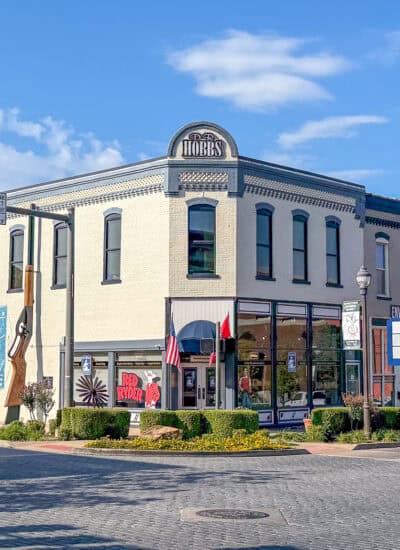
After soaking up a bit of the railroad-era charm, I wandered over to one of downtown’s quirkiest stops, the Daisy Airgun Museum, which is impossible to miss, by the way.
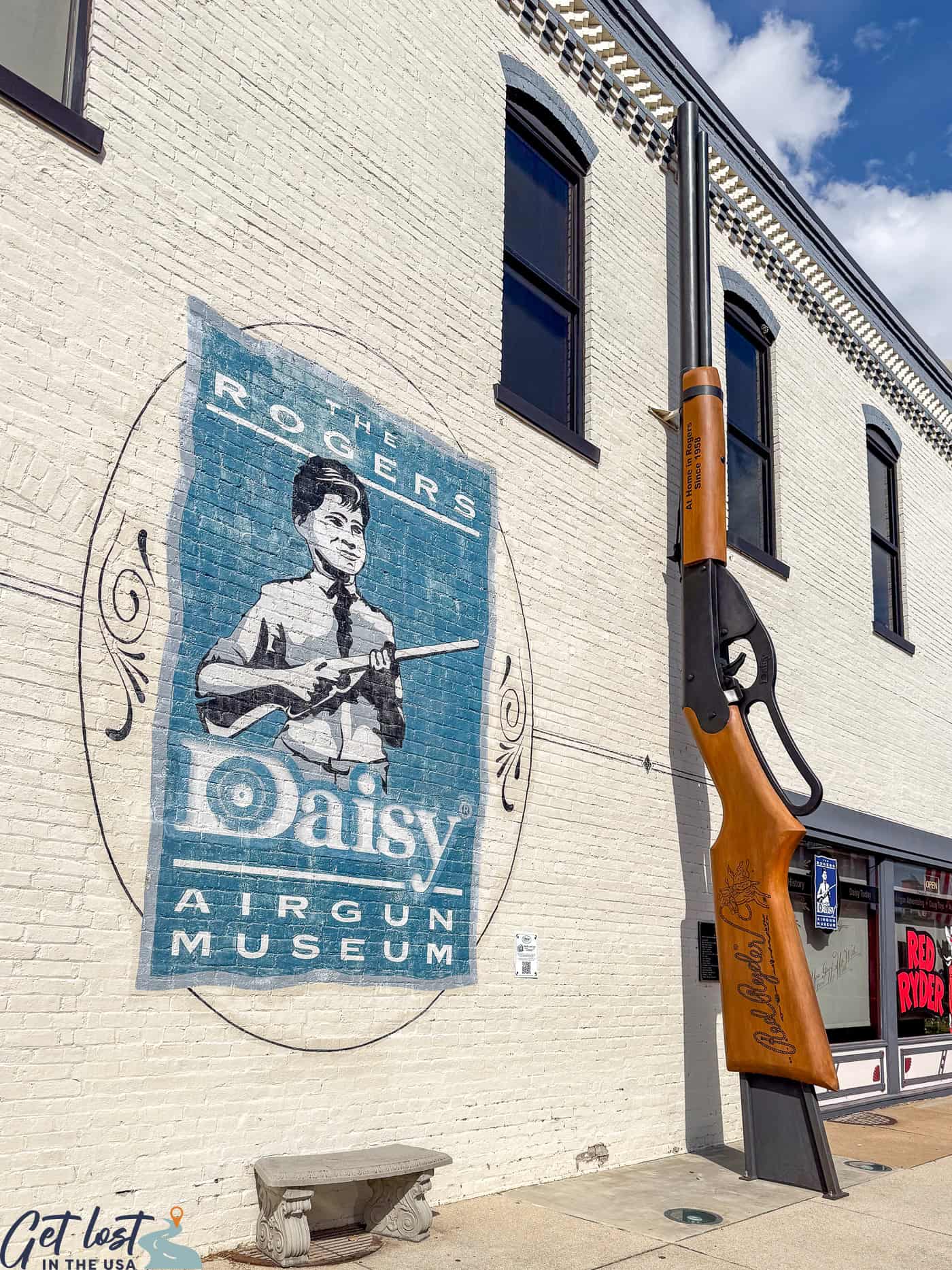
There’s a giant Red Ryder BB gun bolted to the side of the building, pointed toward the sky (where it can’t shoot anyone’s eye out). It’s kitschy in the best way: part roadside attraction, part Americana selfie magnet. Naturally, I stopped to take a picture before I even went inside.
Once inside, our guide told us all about Daisy’s history. I didn’t expect a windmill to be the start of the story, but that’s how Daisy began. Back in the 1880s, the Plymouth Iron Windmill Company tried to sell steel windmills (spoiler: not a hit). To sweeten the deal, they gave away a little air rifle. Someone fired it at a cedar shingle; it snapped, and he shouted, “Boy, that’s a daisy!” The windmills flopped. The BB gun took off.

The guide said that a lot of people come here for one reason. They want to find their old BB gun. When the museum first opened, visitors were searching for models from the 40s and 50s. These days, it’s more 70s and 80s kids having a nostalgia moment.
I never had a BB gun, but my brothers had cap guns, so seeing those on display hit a soft spot. I can still picture the little curl of smoke drifting up after a cap went off. Wild how fast that memory snapped back.
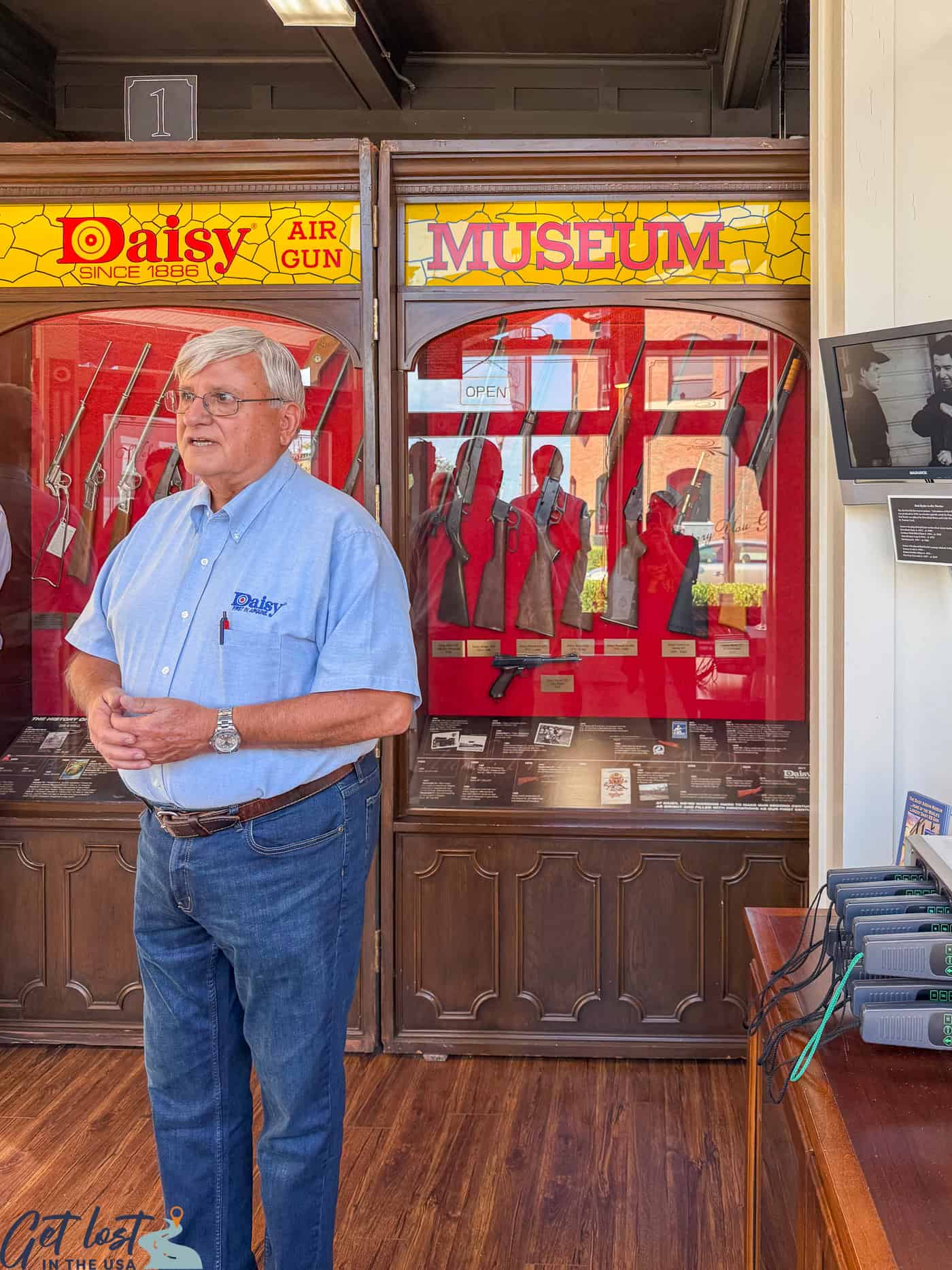
From there, the guide walked us through the bigger picture of how air guns evolved long before Daisy ever showed up. One display case holds antique air guns from the 1600s through the 1800s. They look like old firearms, but they fired without a flash or bang, making them useful for hunting and military scouting. There was even a model identical to the one Lewis and Clark carried. Seeing those early pieces made Daisy’s later designs make a lot more sense.
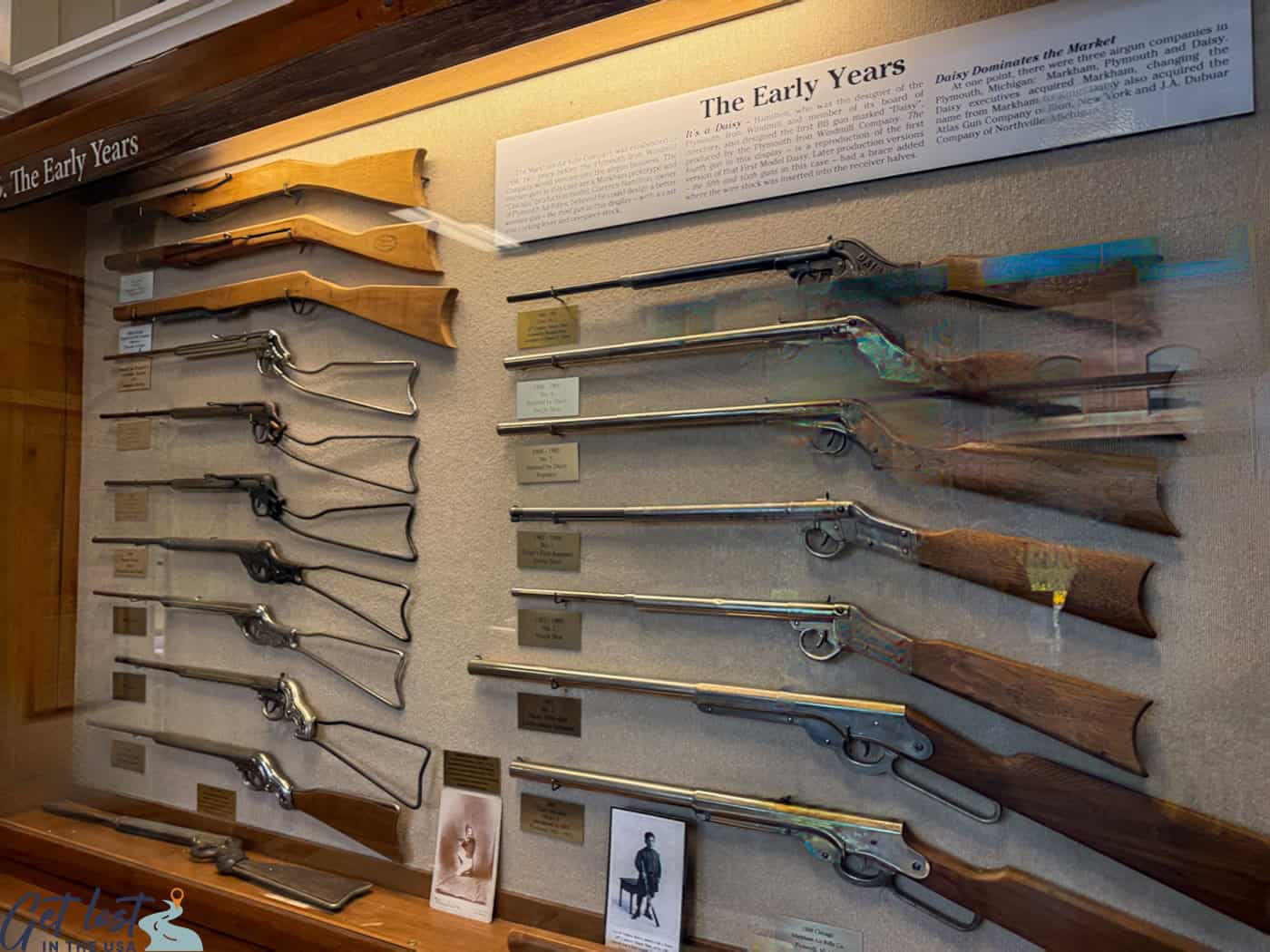
We moved through the company timeline, which starts with those early advertisements and runs through the major design changes over the decades. There’s a whole stretch devoted to classic Daisy packaging, old posters, and the way the brand leaned into pop culture.
My favorite part? The Red Ryder movie connection. I remember seeing A Christmas Story in theaters, so spotting the “you’ll shoot your eye out, kid” gun in real life was so much fun. Oddly enough, the movie version (with the compass and sundial) never even existed until Hollywood dreamed it up and insisted Daisy make it.

There were a few surprises too, like learning about Daisy’s World War II contributions. Metal shortages shut down BB gun production for a while, so the company shifted to making parts for the war effort. And then there were the two Daisy golf balls that went to the moon on Apollo 14.
The Daisy Airgun Museum is a blend of history, Americana, and pop culture, all tied together by one very famous BB gun.

Rogers Historical Museum and Hawkins House

After all that pop culture and BB-gun nostalgia, I headed to the Rogers Historical Museum. When I saw the art deco building with its curved glass showroom windows, I guessed it had to be an old car dealership, and sure enough, it used to be one. Newt Hailey ran Ford and Mercury cars out of this space.

One of the exhibits that caught my attention was about historic Monte Ne, a long-gone resort community just east of Rogers. I hadn’t heard of it before, but apparently Monte Ne was once a fancy-pants getaway where a Venetian gondola, shipped in from Italy, no less, glided across the lake to meet guests arriving by train. The resort had one of Arkansas’s first indoor pools, a golf course, tennis courts, and all the proper lawn games. Guests could watch concerts and plays in the open-air amphitheater and the resort even had its own post office, bank, and shops.
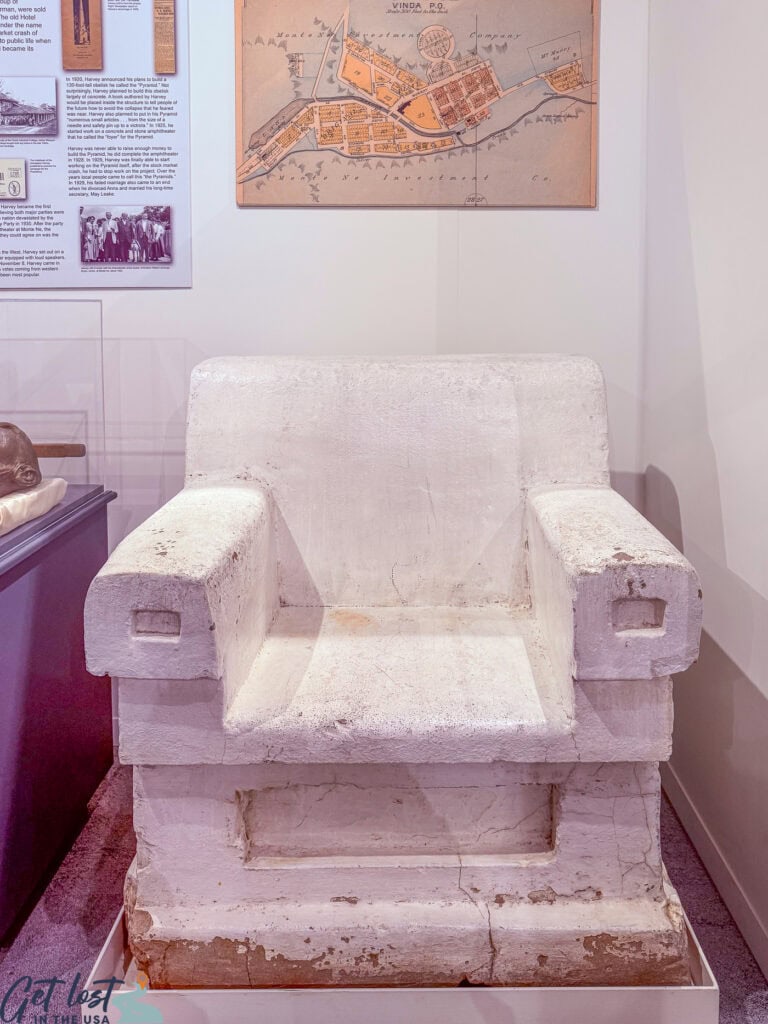
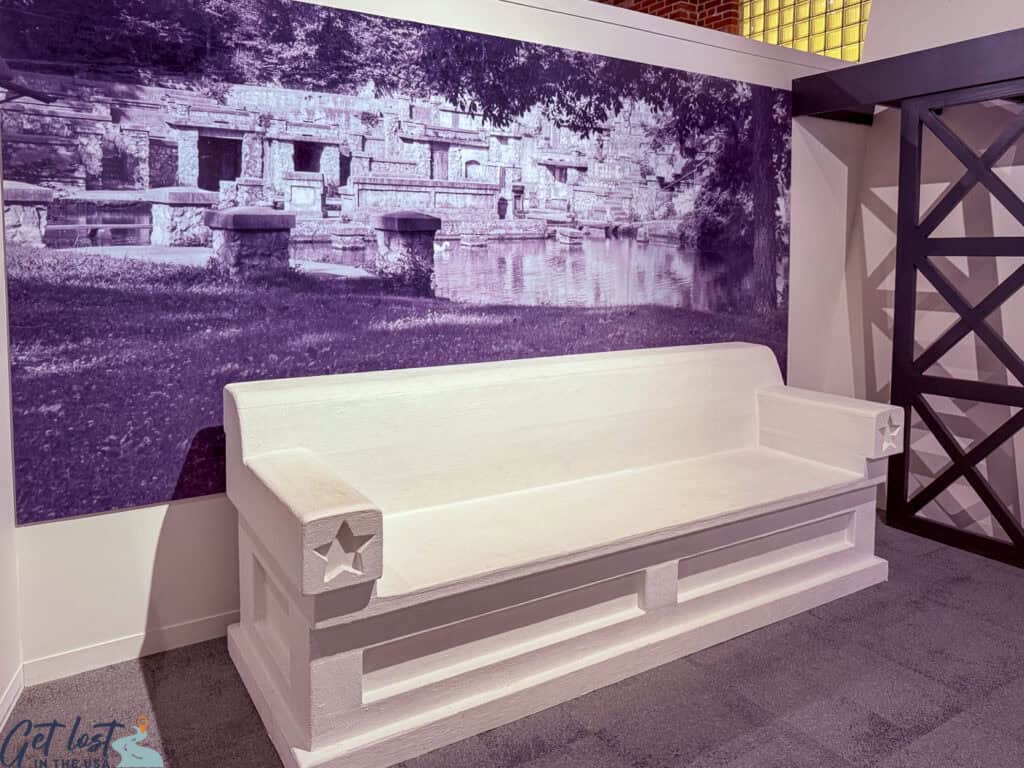
That all changed in the 1960s, when the U.S. Army Corps of Engineers built Beaver Dam to create Beaver Lake for flood control and hydropower. The project flooded most of Monte Ne, leaving only a few traces behind. The museum has one of the original concrete chairs from the amphitheater on display, along with a replica bench.
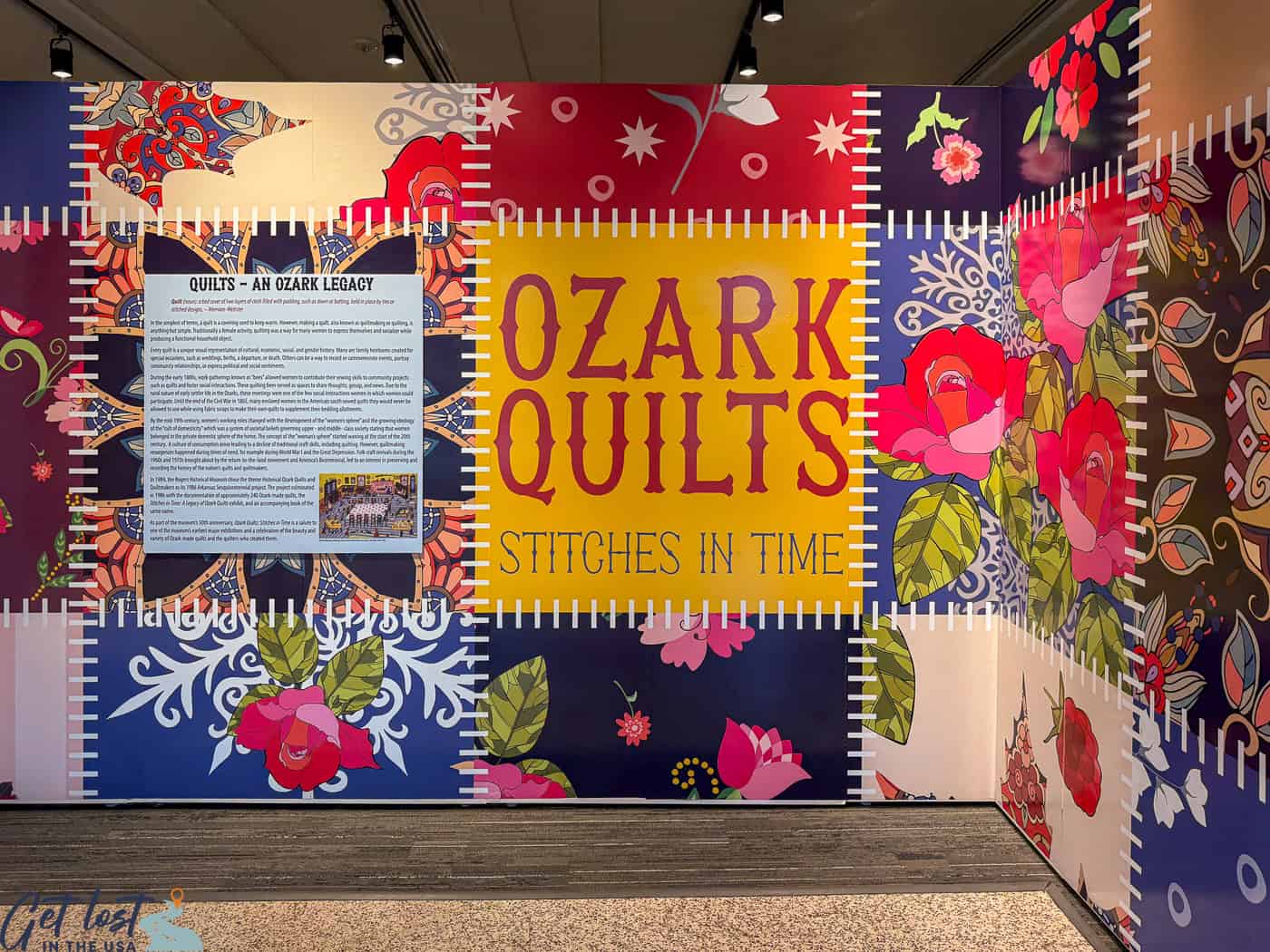
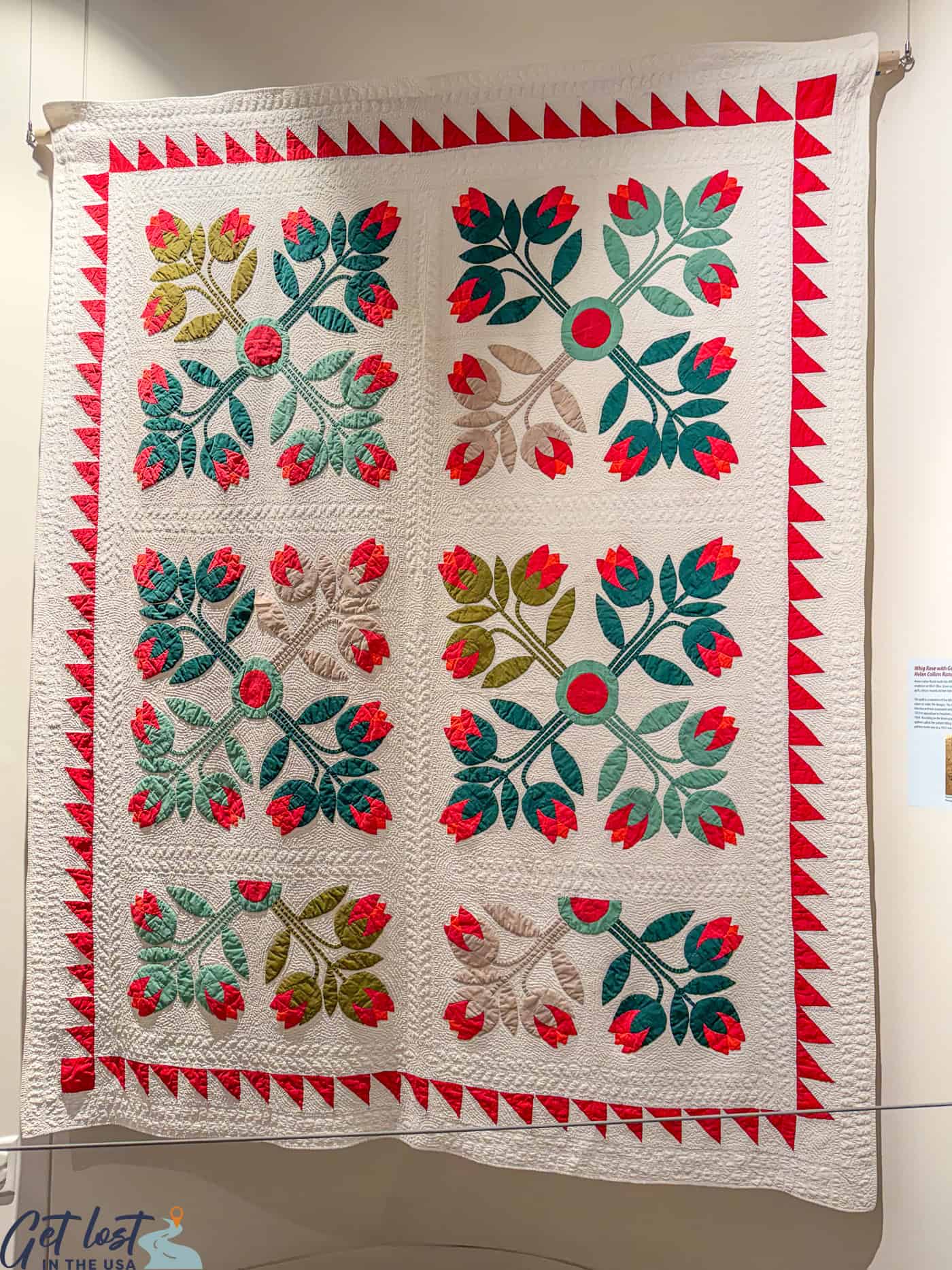
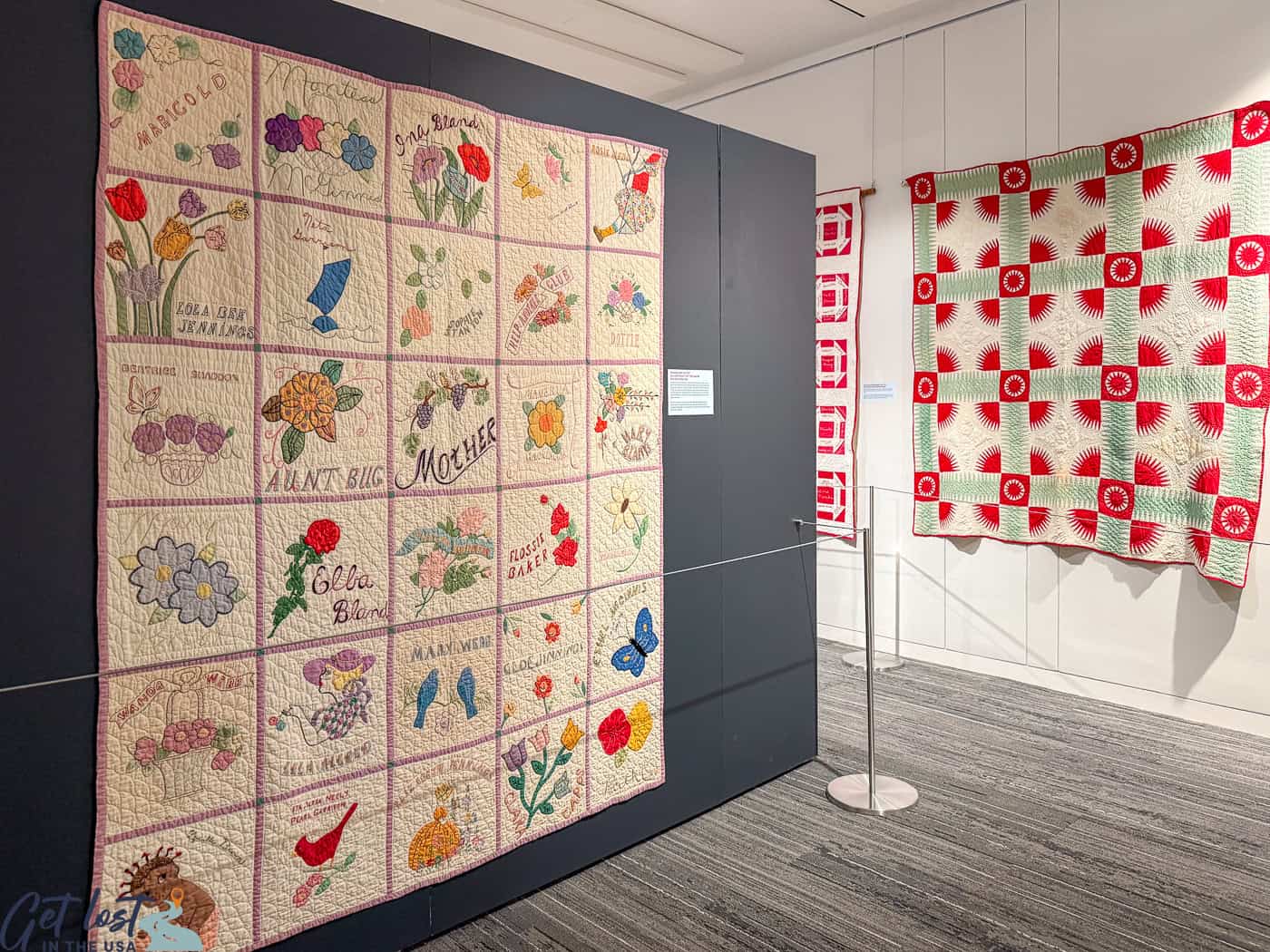
I also loved the temporary exhibit on Ozark quilts (open through March 2026), a tribute to the region’s long quilt-making tradition. Even if you’re not a quilter (I’m not), the pieces on display were stunning, full of color, texture, and stories stitched right into the fabric.


After exploring the museum, we toured the Hawkins House across the street (upon request and included with museum admission). What’s unique about this home is that instead of showing off the life of the wealthy, it tells the story of the middle-class families who made up most of the town. Francis and Elizabeth Hawkins moved in with their two children around 1900, and he ran a livery stable.

Three generations of the family lived in the house, and today the museum has it furnished with period pieces that reflect how a typical Rogers home might have looked in the early 1900s. Only three of the furnishings actually belonged to the Hawkins family: a mirror by the door, a bed, and a matching dresser. Everything else is authentic to the era.
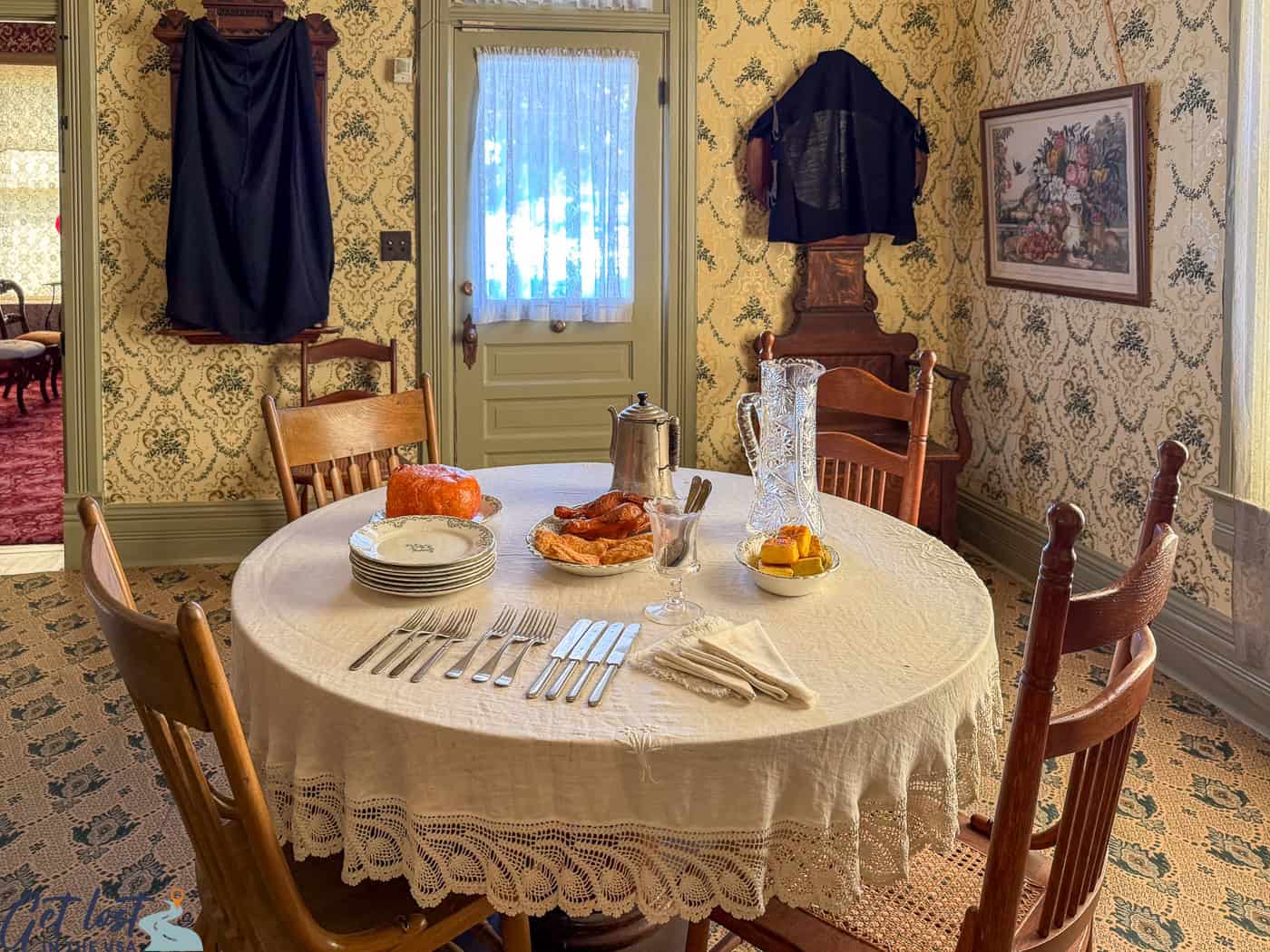
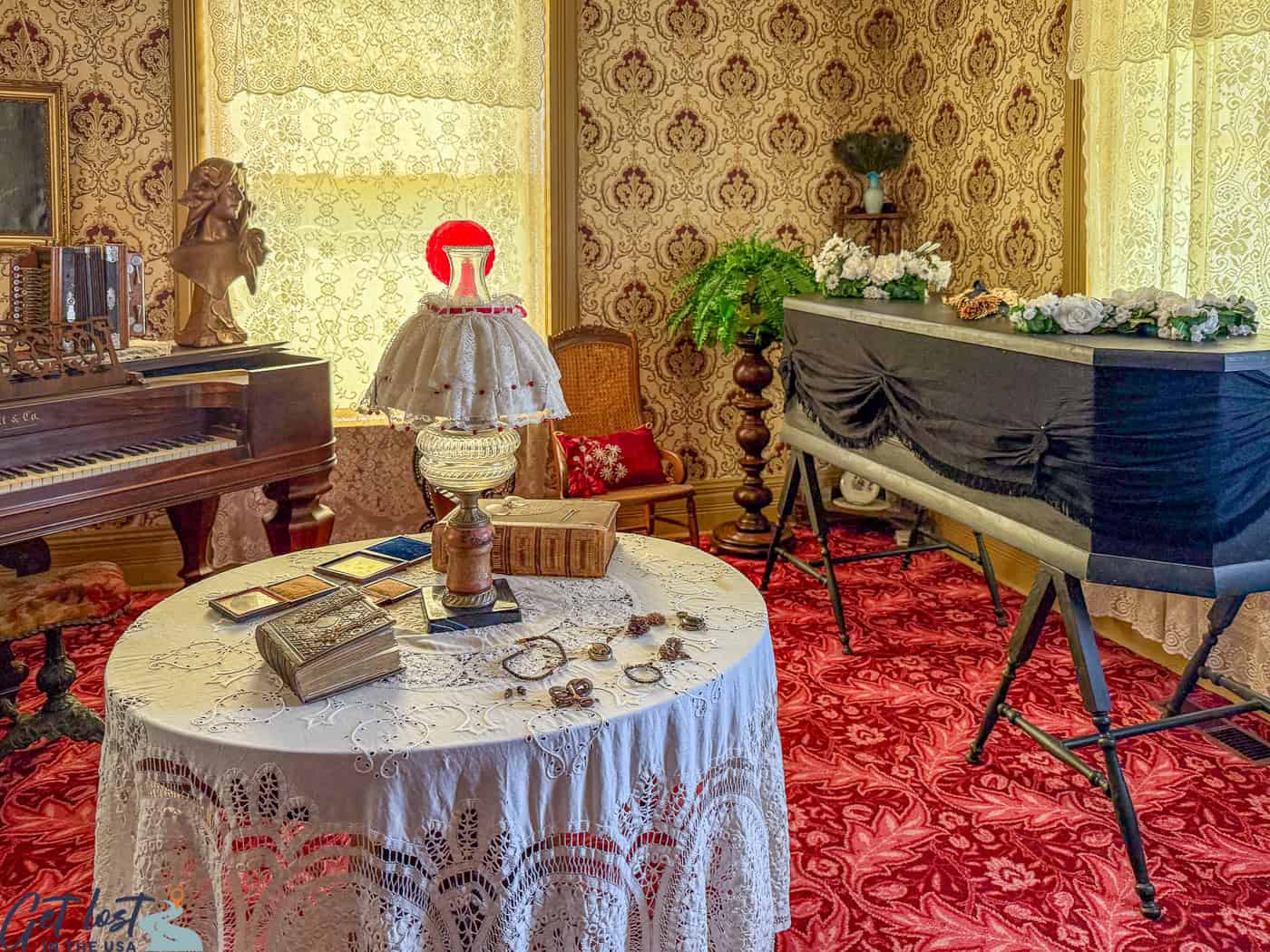
When I toured the house, it was set up for a temporary Halloween exhibit that focused on mourning customs of the early 1900s. The displays showed how families once handled death at home. Mirrors were covered, clocks were stopped, and the coffin was in the parlor, since funerals were often held right in the house. Every room pulled double duty, from the dining room, which doubled as a sewing space, to the parlor, which hosted both weddings and funerals.
Victory Theater
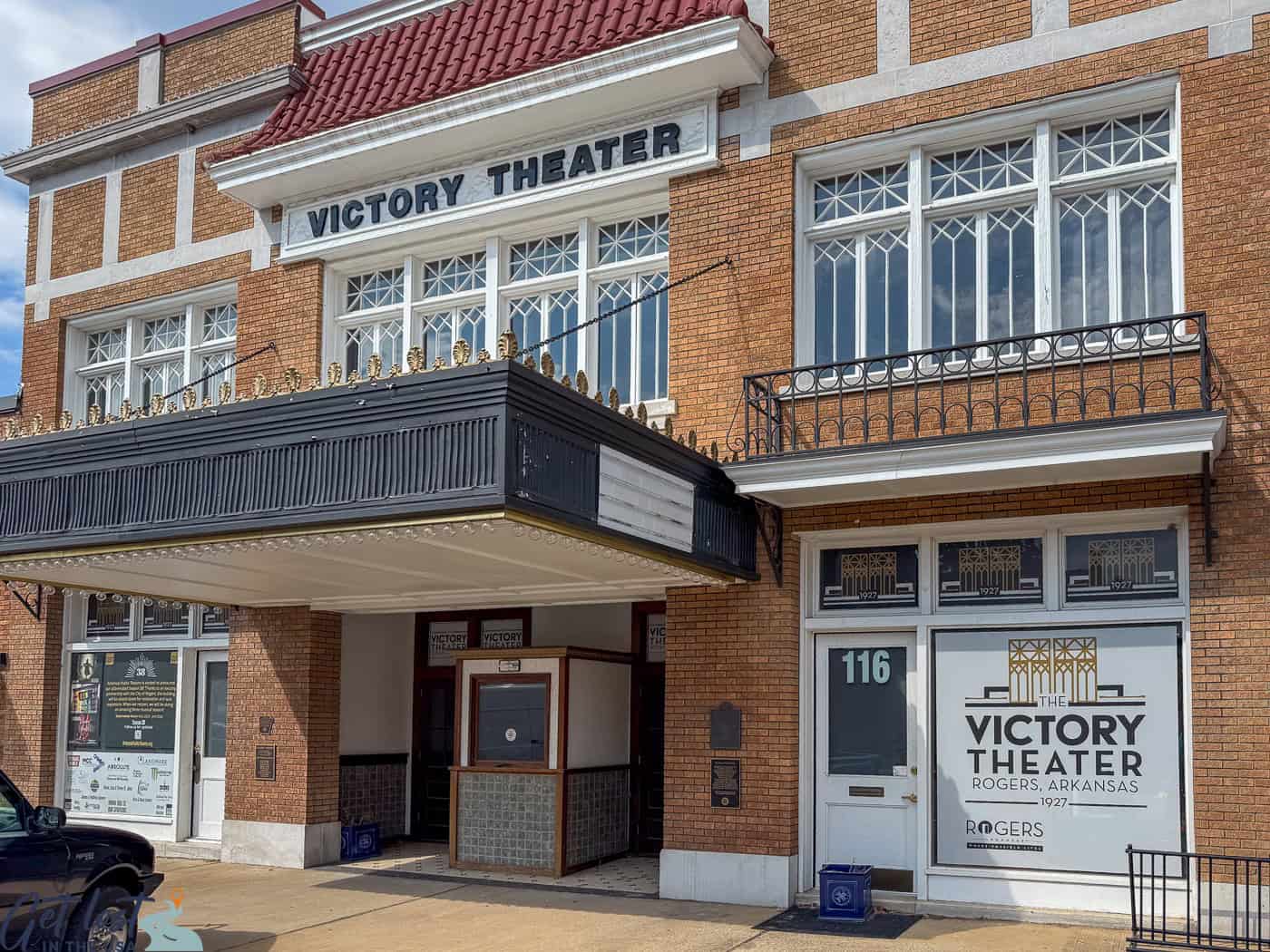
Another landmark that really stood out downtown was the 1925 Victory Theater. In 2024, they had just finished a nearly $2 million restoration when an F3 tornado tore through, caving in the roof and undoing years of work in a single night. The plan is to have it repaired and open again by early 2026.
Modern Uptown Rogers
If downtown is the heart of Rogers, Uptown is the pulse. It’s newer, busier, and has a whole different vibe. The main hub is the Pinnacle Hills area, where restaurants, shops, and entertainment all blend together. The Pinnacle Hills Promenade, an outdoor shopping complex, is a big draw. A few minutes away, Topgolf Rogers lets you practice your swing, grab a bite or just hang out. Even if you can’t golf (me), it’s still a fun stop.
And if you like getting around on two wheels, Uptown connects to the Razorback Greenway, so you can bike or walk between Uptown and Downtown without ever getting in the car.
Walmart AMP
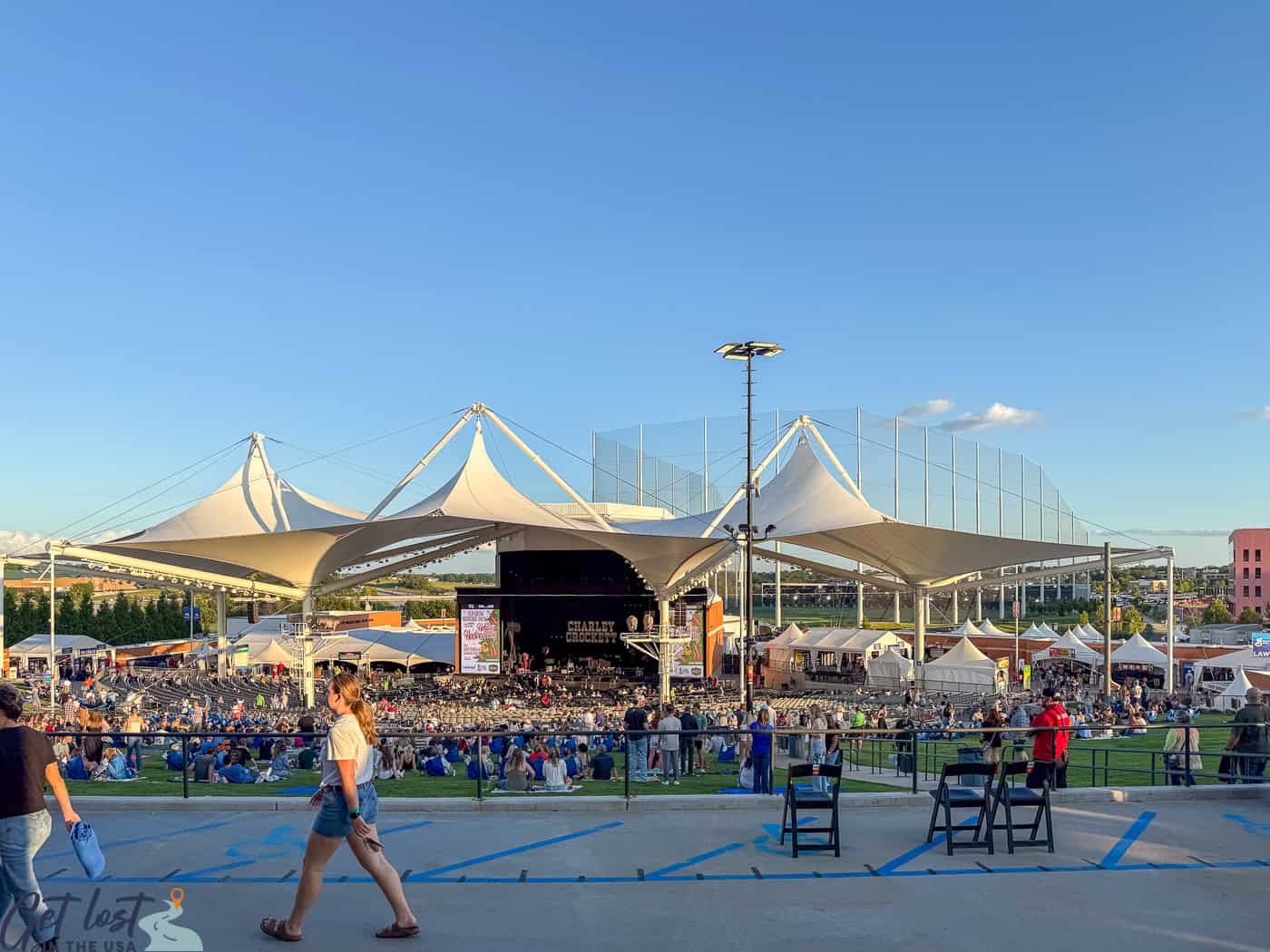
The Walmart AMP is an outdoor venue that pulls in both big names and rising artists, and I lucked out because there was a concert while I was in town.
Before the show, we hung out in the AMP Underground Lounge, an all-ages add-on experience with its own bar and concessions. Our pass came with two drink tickets, or you could trade both for a specialty cocktail, like my spicy margarita, which also came in a souvenir glass. Definitely worth my two tickets.

I’m not sure who the musician was playing in the Underground that night, but he was fantastic. If you know, tell me so I can track down his music.

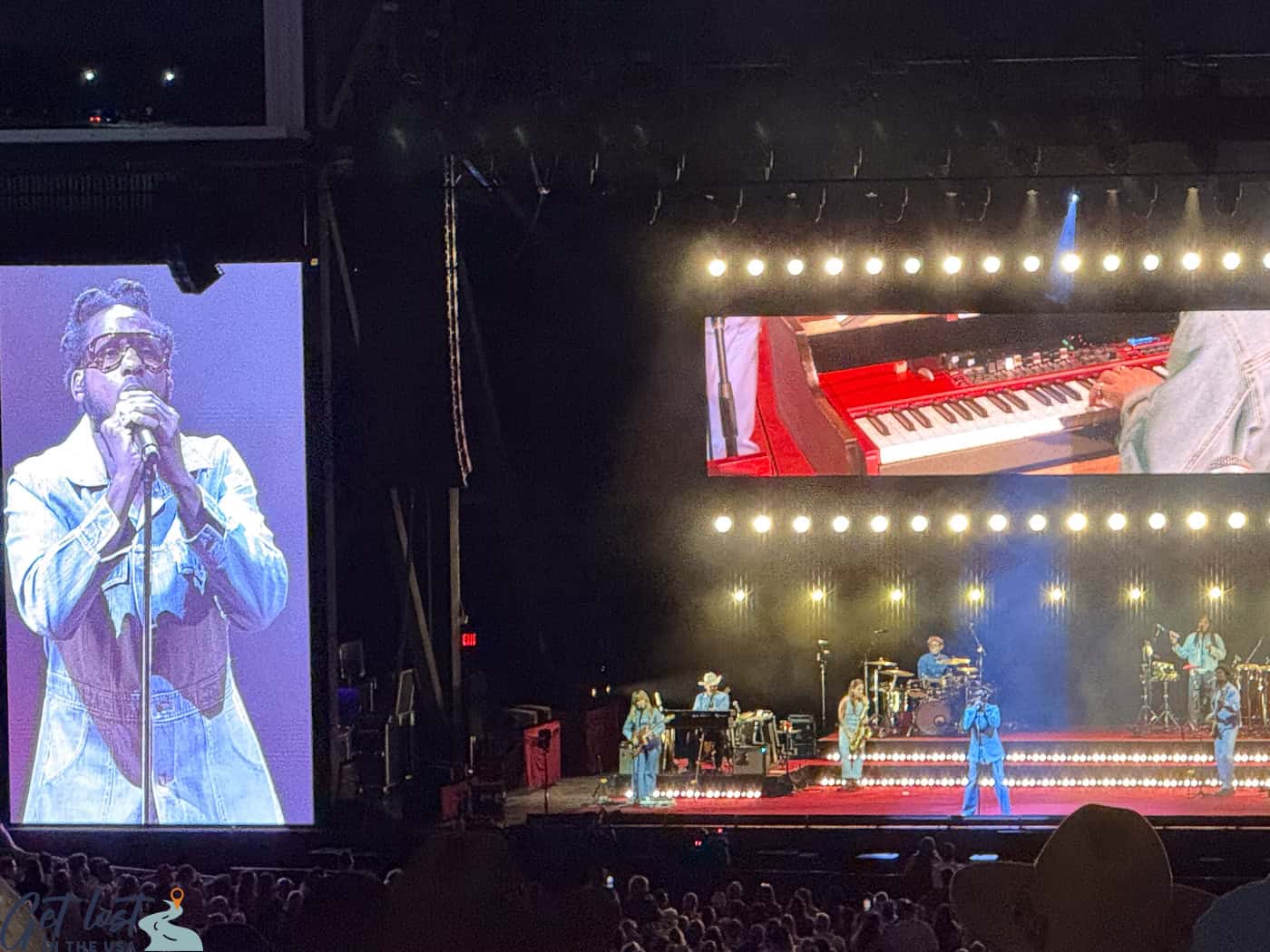
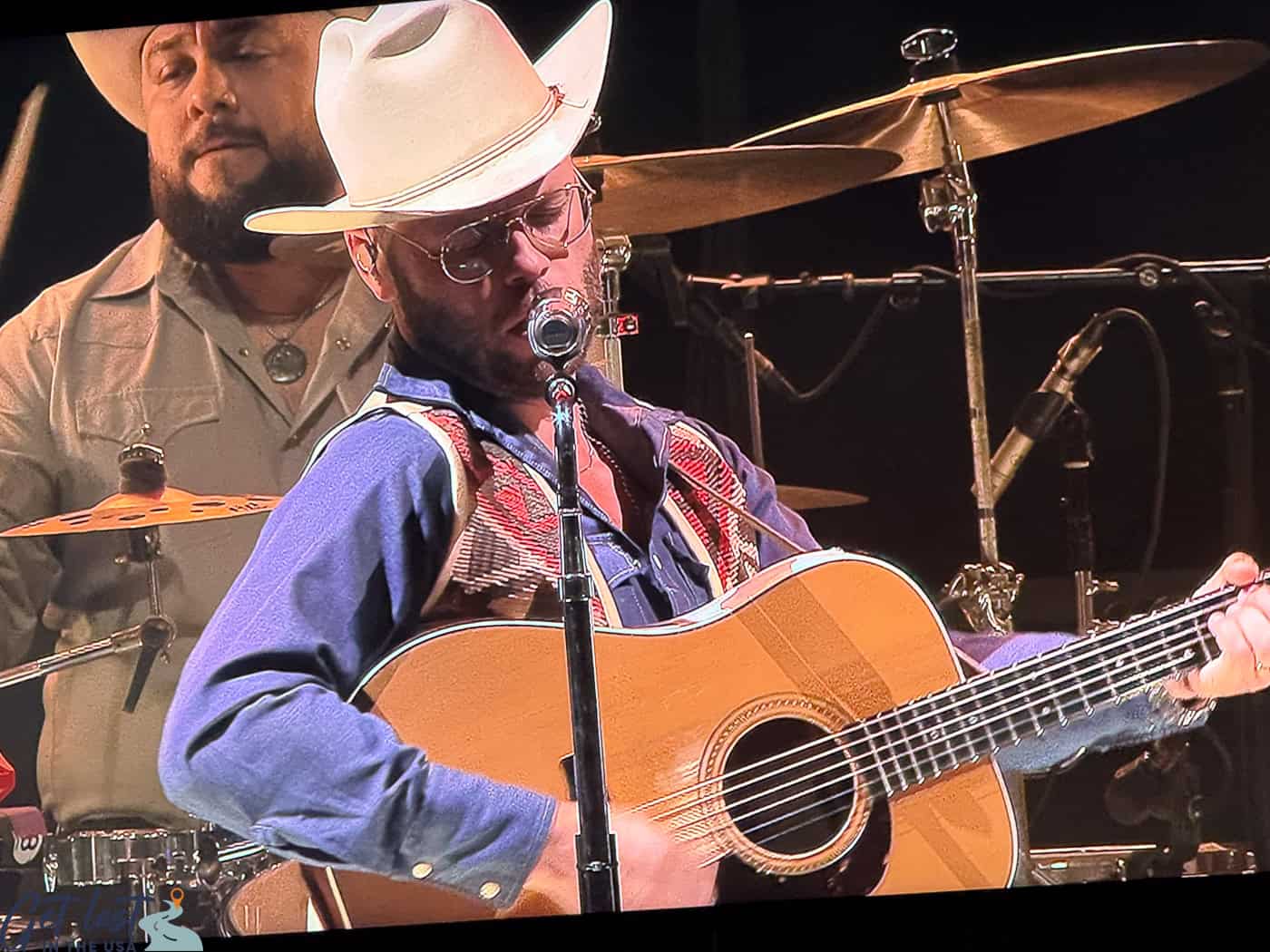
I had VIP seating for the main show: Leon Bridges and Charley Crockett. Bridges brought the smooth soul, Crockett brought the country grit, and it was a great night of music.
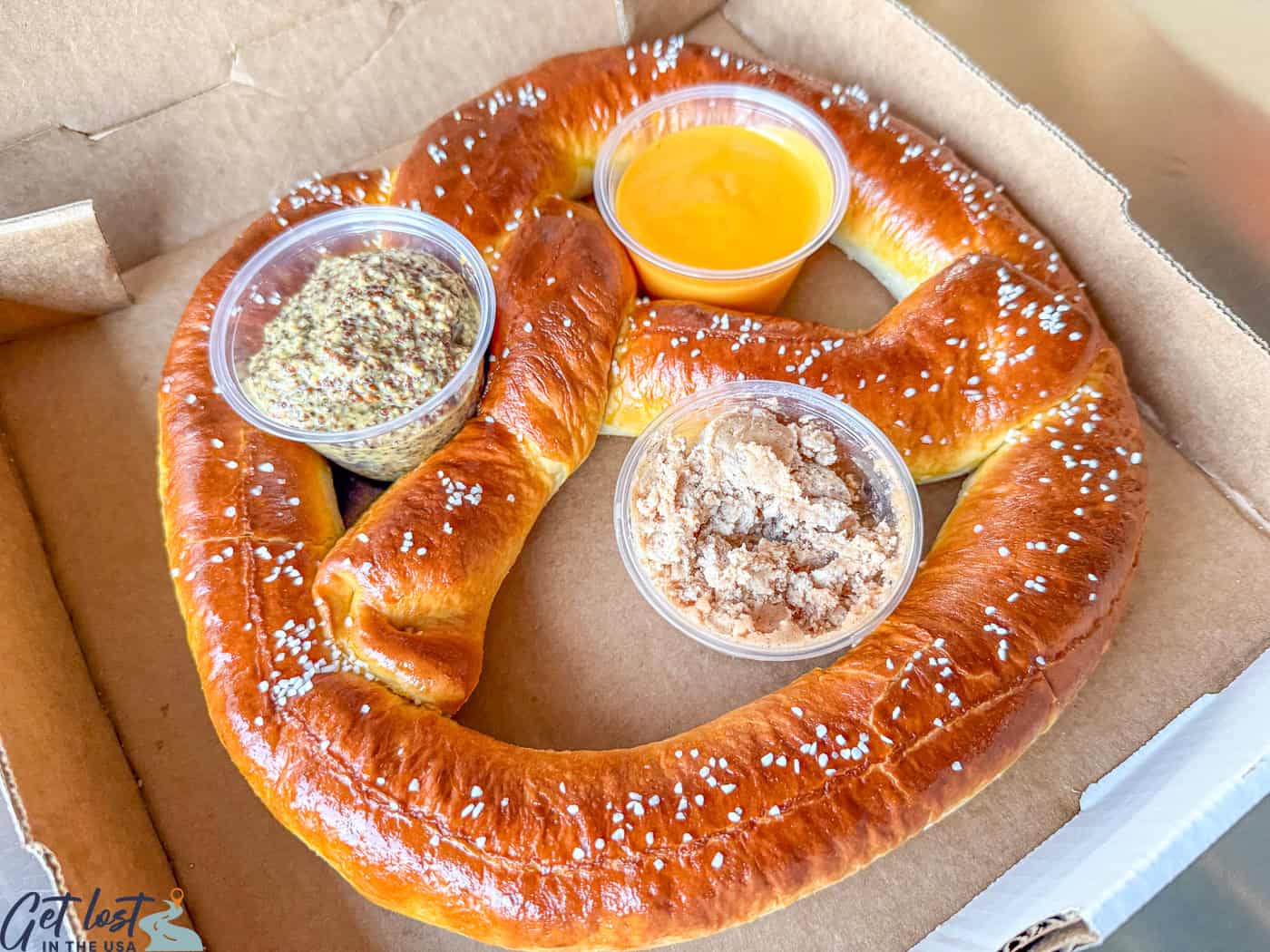
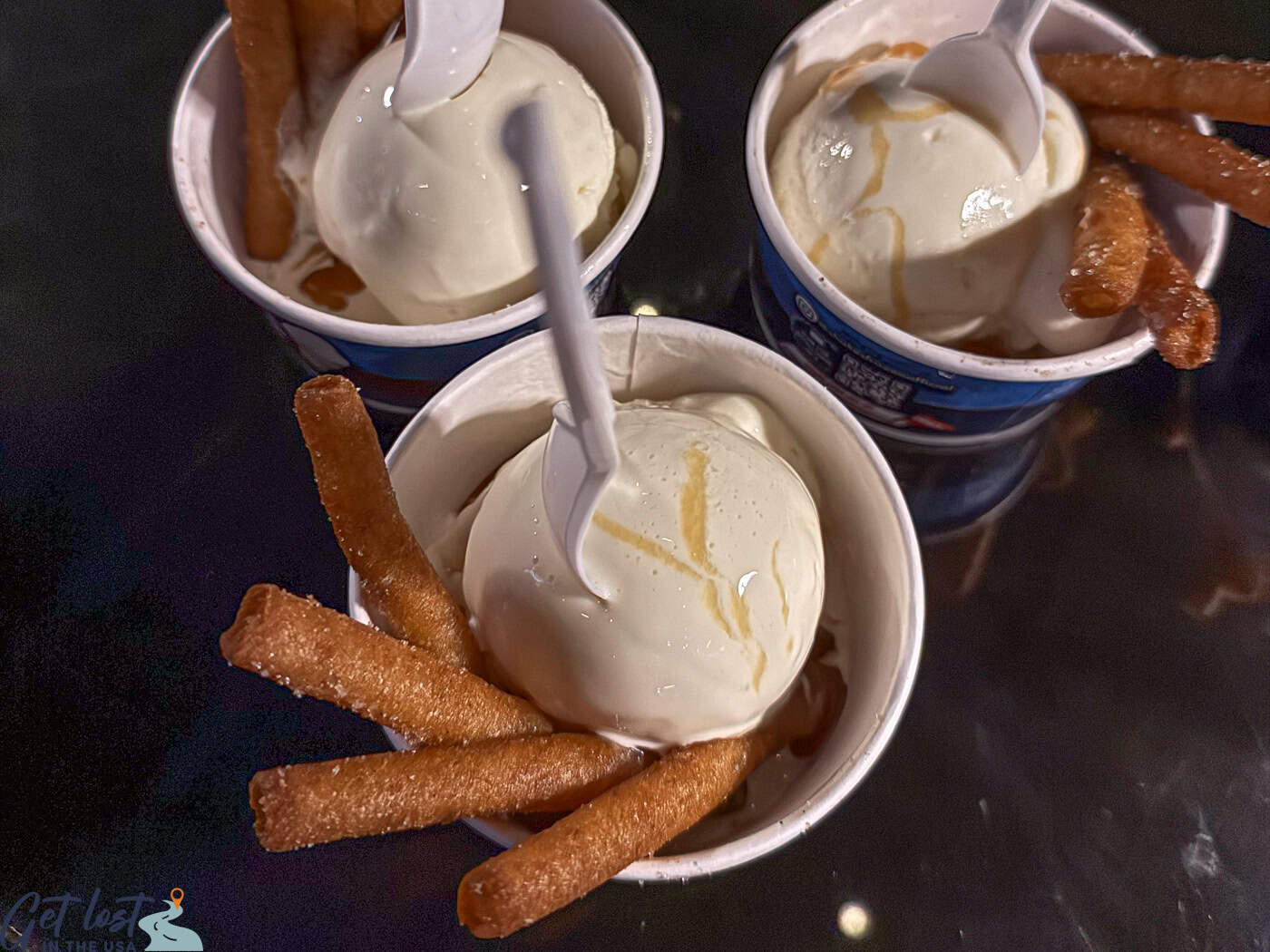
We ordered a little bit of everything to snack on during the show, from mac and cheese bites and pretzels to pizza, churros, ice cream, and fruit whip. Something about concession food hits the spot.




Exploring the Outdoors
The nice thing about Rogers is how quickly you can shift into outdoor mode. One minute you’re in town, the next you’re out on a trail, by the water, or in the middle of the woods.
Biking from Railyard Park to Lake Atalanta

To get a taste of the bike culture, we rented e-bikes from Phat Tire Bike Shop in downtown Rogers. It’s across the street from the artsy Railyard Park, with its colorful water tower and train-car murals.

We hopped on the trail and rode past the Railyard Bike Park, a natural-surface playground full of jumps and obstacles for riders who actually know what they’re doing. Me? I just pedaled on by.

From there, the trail wound its way to Lake Atalanta, where we rode the loop around the water before heading back downtown. If my schedule had allowed, I would’ve gone around a few more times.
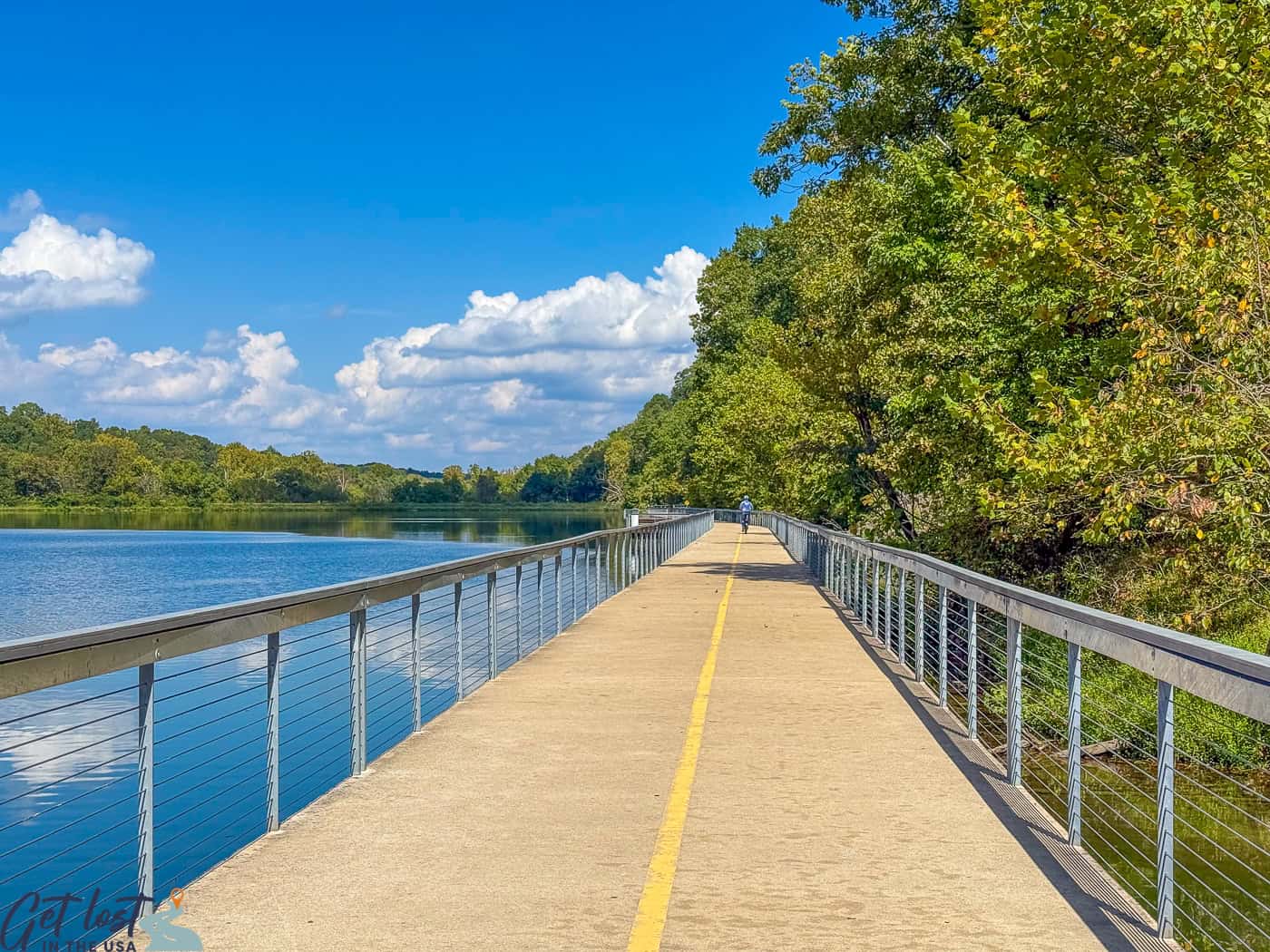
Half the trail is in the sun and half is shaded, with signs along the way about the park’s history and the local flora and fauna. I spotted hiking trailheads too, along with several bump-outs that make easy spots for fishing. The ride to Lake Atalanta is one of the best outdoor activities in Rogers!

Hobbs State Park Conservation Area
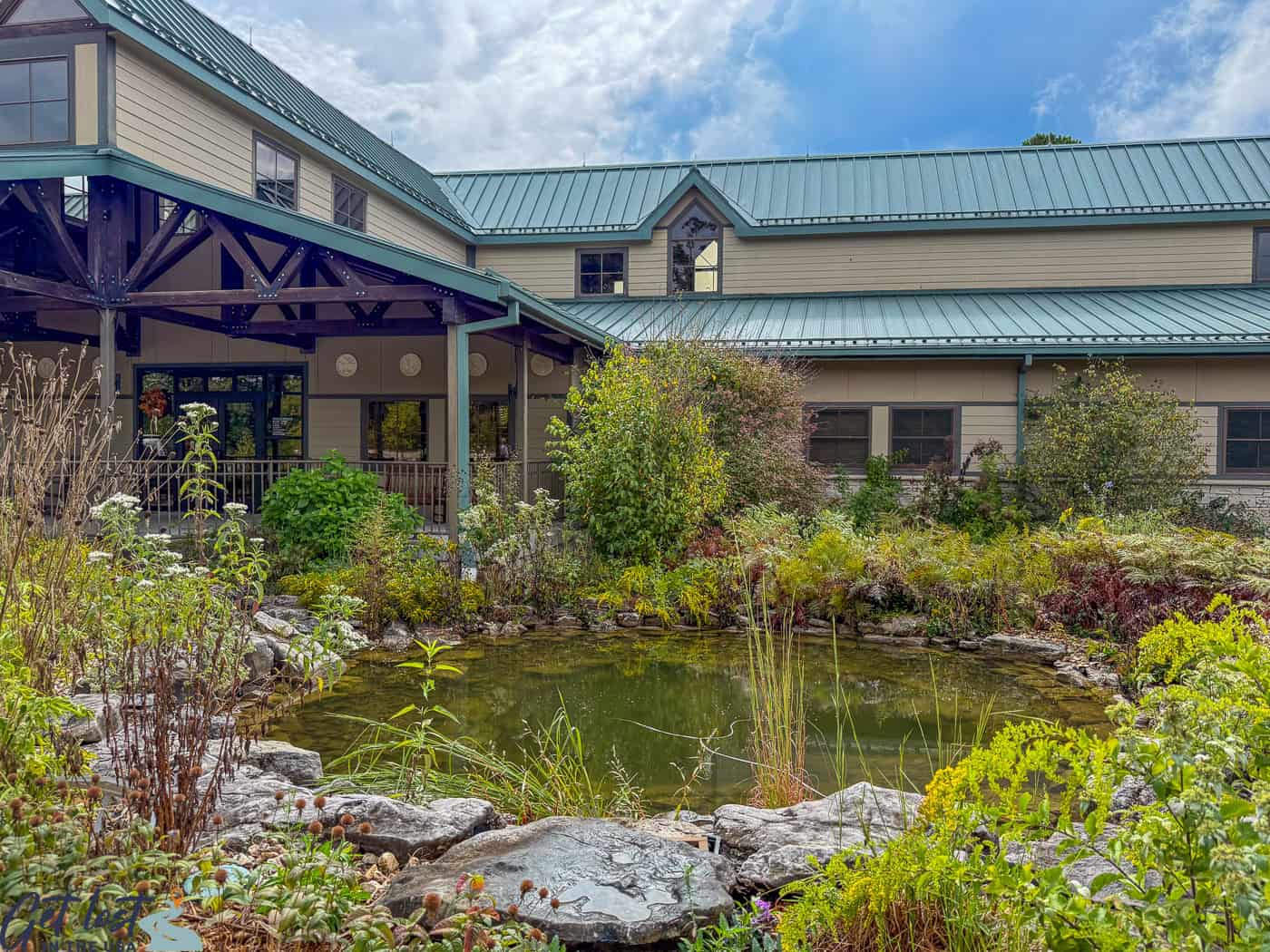
Hobbs State Park is Arkansas’s biggest state park, with more than 12,000 acres of Ozark forest just outside Rogers, and an excellent place for hiking, birdwatching, and getting a taste of Northwest Arkansas nature. What stood out to me was how simple it is. No cabins, no RV hookups, just trails, trees, and quiet.
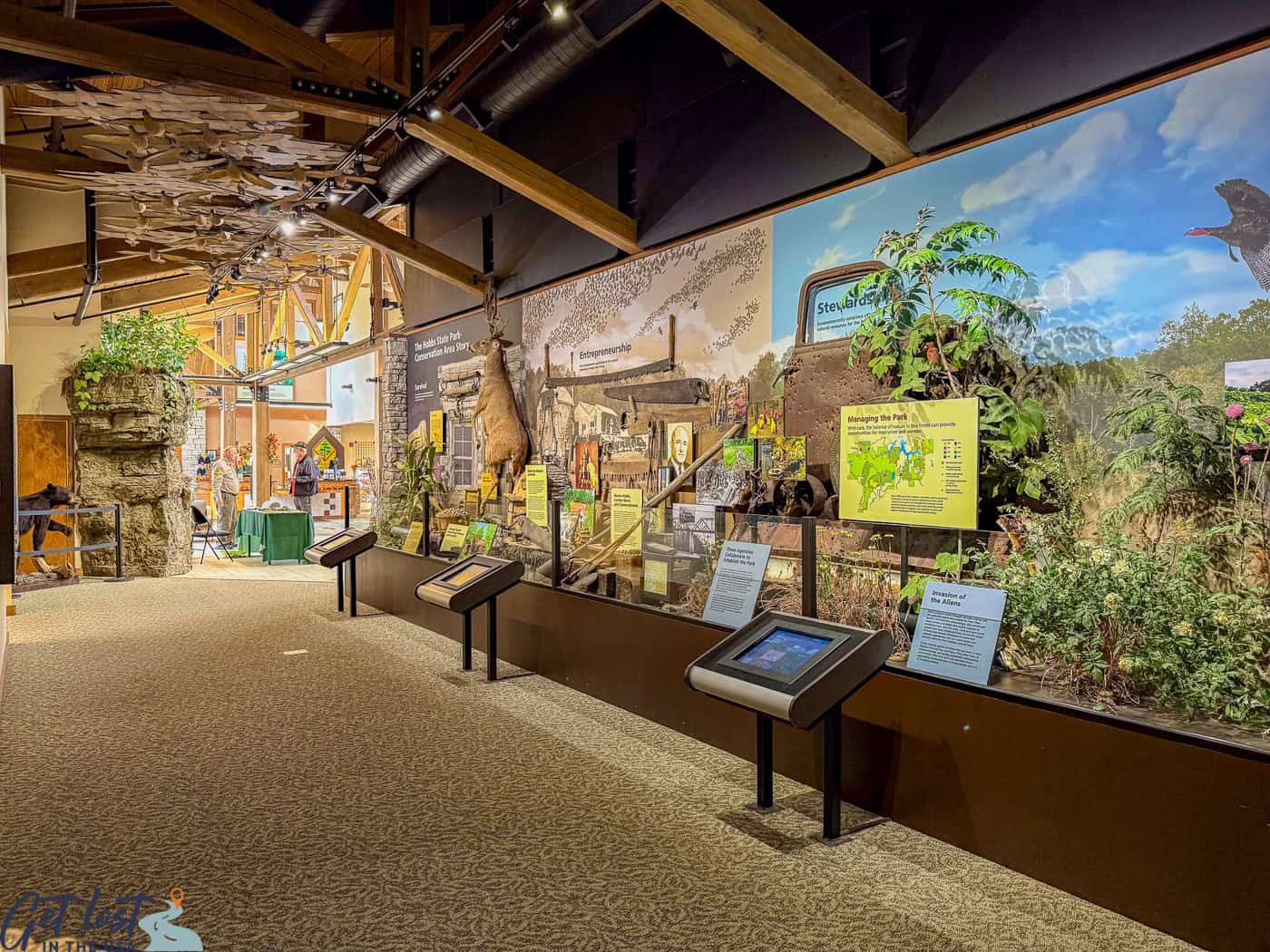
The park’s story starts in the 1850s, when Peter Van Winkle built the first steam-powered sawmill in the Ozarks and clearcut the timber. Decades later, Roscoe Hobbs owned the land and adopted a more conservation-minded approach, avoiding clear-cutting and allowing locals to pick berries, cut firewood, and hunt.
When the state turned it into a park in 1979, residents wanted to keep that tradition alive, so Hobbs is still the only Arkansas state park where you can legally hunt.

Today, more than 50 miles of trails wind through oak, hickory, and pine forest, with plenty of wildlife. Rangers lead hikes, kayaking trips, and outdoor classes, but the real draw is the space itself. It’s a peaceful patch of Ozark wilderness that still feels untouched.

War Eagle Mill

War Eagle Mill has been grinding grain along the War Eagle River since 1832, when the Blackburn family arrived from Tennessee and built the first mill here. Their original cabin still stands across the river. The mill ran on waterpower then, and it still does today, relying on the steady pull of the river to turn an undershot waterwheel, the last working one of its kind in the country.
The Blackburns rebuilt the mill multiple times after floods and the Civil War wiped it out. Confederate troops even burned it down to keep it out of Union hands. After the war, the family returned and rebuilt again, adding a sawmill powered by a turbine engine that doubled the old wheel’s output.

The current structure went up in 1973, built by a retired businessman named Mr. Medlin, who wanted to recreate a true 19th-century working mill. He imported the granite millstones from France, and they’re still used today.
Inside, the miller walked us through a demonstration. He pulled a lever to start the water-powered system, which turned a 25-foot steel shaft under the floor and set a series of belts and pulleys in motion. Corn dropped from the hopper between two granite millstones, and the sound of it hitting the stones was a lot like popcorn popping. He told us he adjusts the stones’ tightness depending on whether he wants cornmeal, flour, or grits (which can be purchased in the gift shop).

Turpentine Creek Wildlife Refuge

As a cat person, visiting Turpentine Creek Wildlife Refuge was an absolute highlight. For more than 30 years, Turpentine Creek has rescued over 500 animals from private owners, roadside zoos, and neglectful situations. Each animal gets a permanent home and lifelong care, with space to heal both physically and mentally in a safe sanctuary.

General admission includes time to explore the Discovery Area on your own and a narrated hour-long open-air tram tour with a wildlife expert. There are also longer behind-the-scenes tours, and the refuge has a variety of overnight accommodations. It’s one of the most unique things to see near Rogers and Eureka Springs, especially for animal lovers.
Many animals come from rough situations, including some from the “Tiger King” facilities. After the Big Cat Public Safety Act passed, Big Cat Rescue in Florida sent 33 cats here, and Turpentine Creek built 44 new habitats to house them. There’s also an on-site vet hospital and an internship program that helps run daily care.

Ozark Highlands Nature Center

If you want to learn more about the local wildlife before heading out on the trails, stop by the Ozark Highlands Nature Center in nearby Springdale. It’s one of the best family-friendly things to do near Rogers, especially for nature lovers. It’s run by the Arkansas Game and Fish Commission and has hands-on exhibits about the plants and animals that call the Ozarks home. There’s also an indoor archery range, walking trails, and an outdoor space for spotting birds and native pollinators.

Crystal Bridges Museum of American Art

Just a short drive from Rogers, Crystal Bridges blends art, architecture, and nature in one of the most striking museum settings in the country. The permanent collection highlights American artists from the colonial era to today, and the surrounding trails feature outdoor sculptures tucked into the Ozark woods. Even if you’re not a big museum person, it’s worth visiting for the architecture and outdoor trails alone.

Where to Stay in Rogers

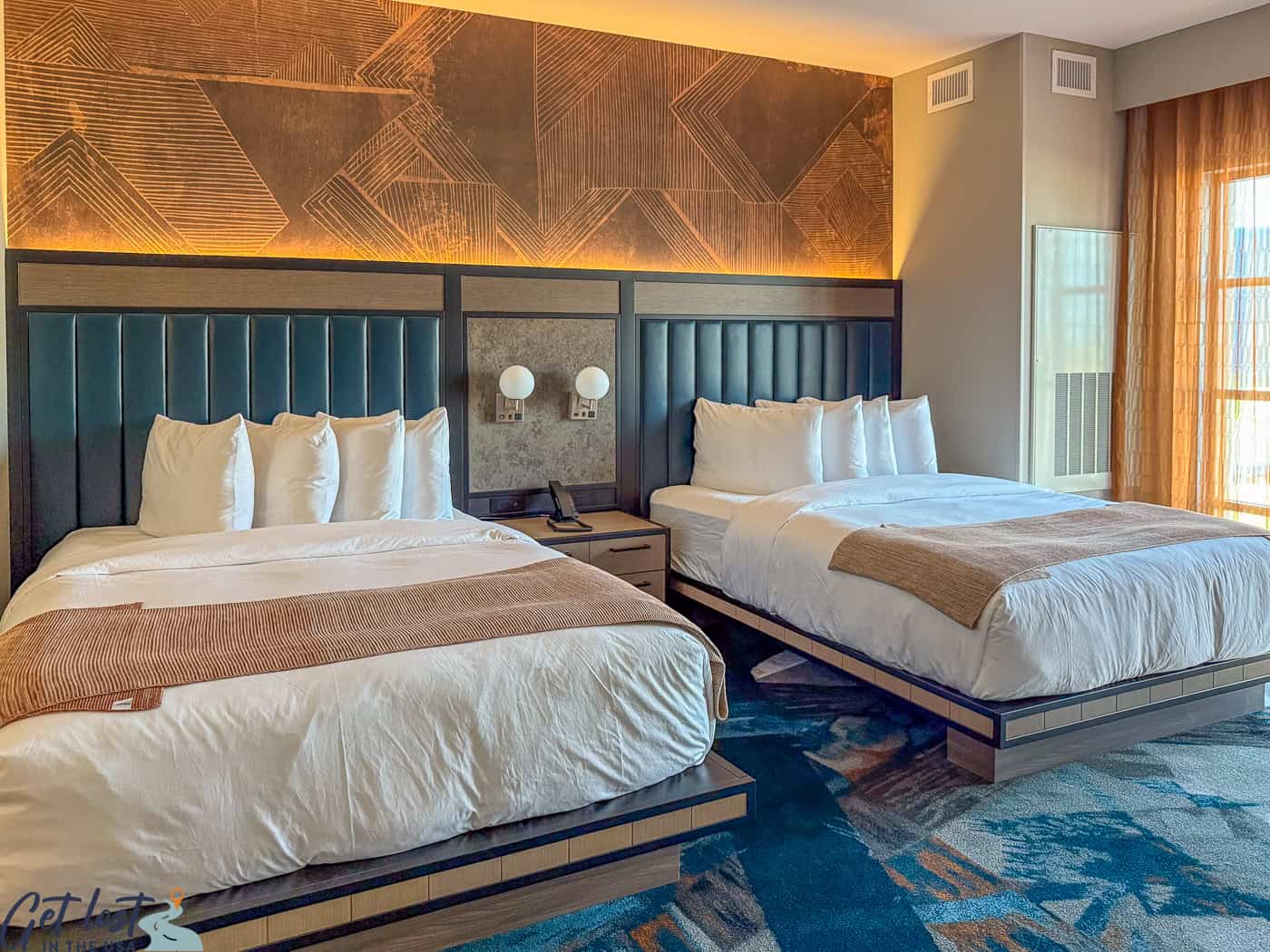
I stayed at Hotel Avail, a Hilton Tapestry hotel that’s modern, comfortable, and an easy walk to restaurants, shops, and the Walmart AMP. My suite had tons of natural light in both the bedroom and sitting room, plus a full kitchenette and a sleek, modern bathroom. It was such a good home base for the trip.

Final Thoughts
Rogers might not be the first Arkansas city that comes to mind, but it should be. It’s the kind of place where you can spend your morning downtown, your afternoon on the trails, and your evening at a concert under the stars. Rogers makes a perfect base for exploring Northwest Arkansas.




Leave A Reply!