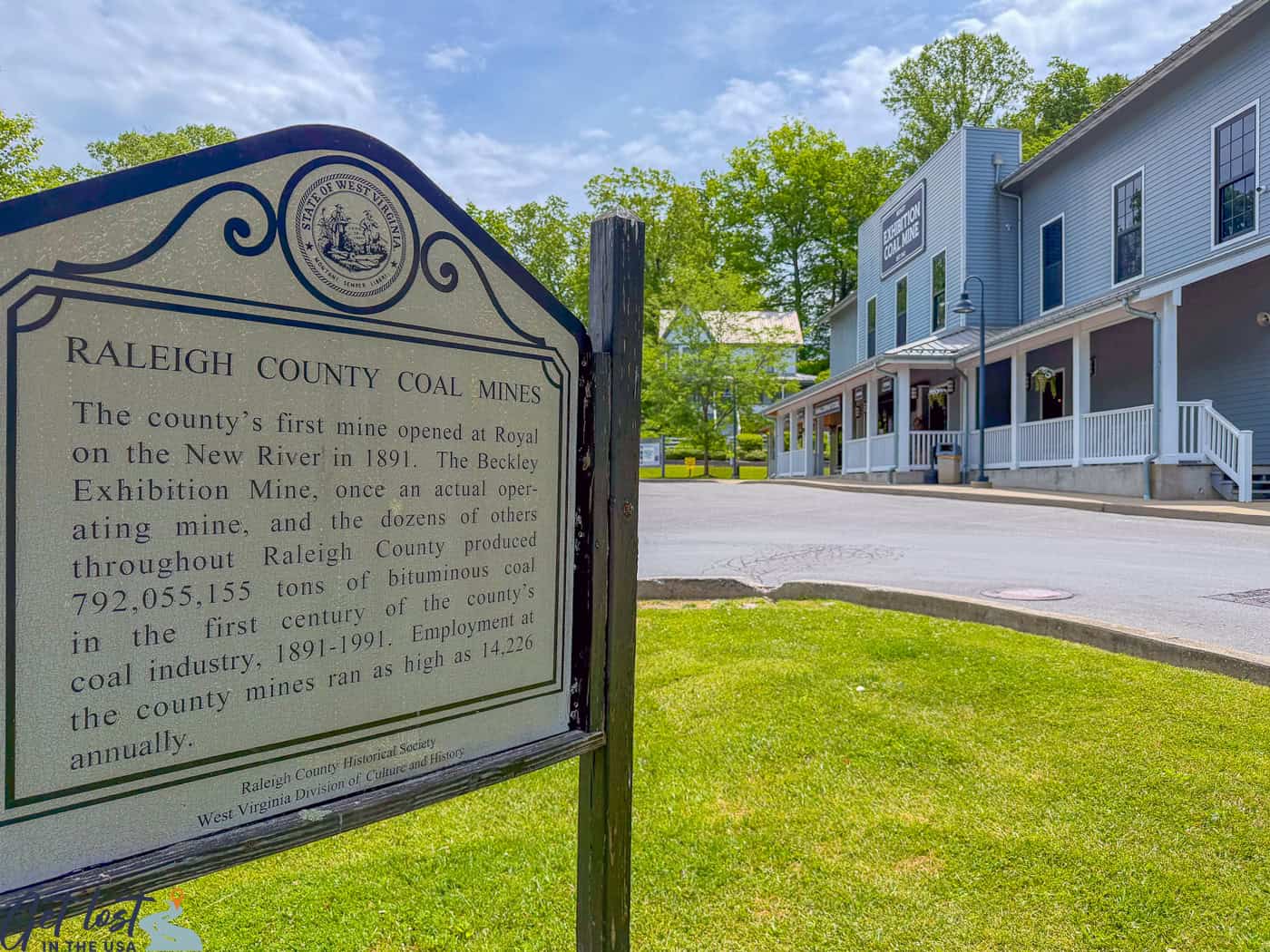
At Beckley Exhibition Coal Mine, you don’t just learn about West Virginia’s coal mining history. You ride 1,500 feet inside a former coal mine with a retired miner as your guide.
And there’s more to the experience once you’re back above ground. You can walk through original coal camp buildings, visit the coal museum, and explore a Mountain Homestead with historic Appalachian structures.
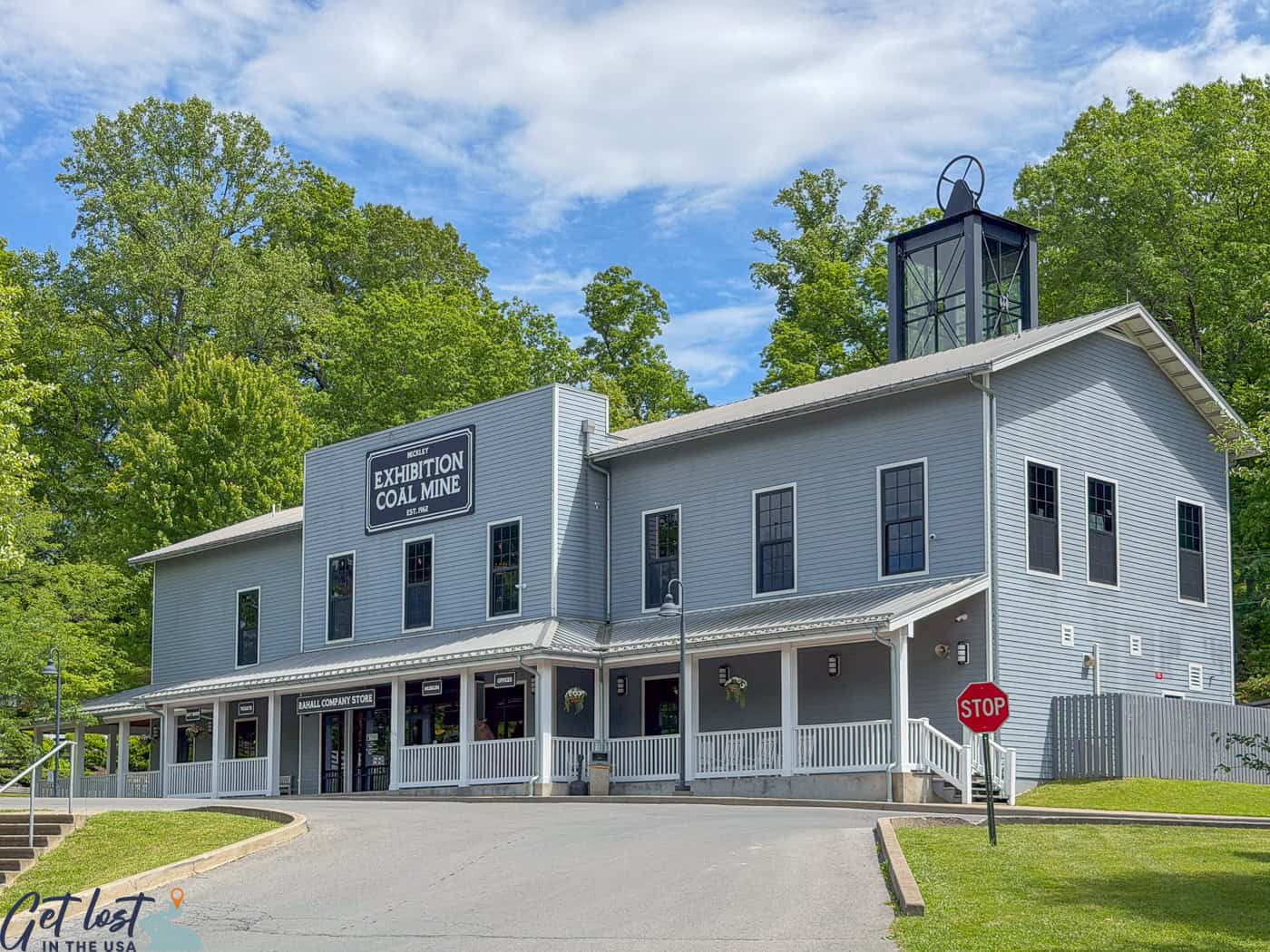
Beckley Exhibition Coal Mine at a Glance
- Address: 513 Ewart Ave. Beckley, WV 25801
- Hours: April 1 – November 1, 10-5 daily
- Tickets: Adults (Ages 18 – 54) $22, Children (Ages 4 – 17) $14, Seniors (Ages 55+) $18, Military (with ID) $18
- Underground tour: About 45 minutes
- Mine temperature: 58°F year-round
- Suggested time: About 2 to 2½ hours to explore the entire complex
- Good to know: You remain seated on the rail car throughout the entire underground tour
- Also included: Coal camp buildings, coal museum, Youth Museum, and Mountain Homestead
- Bring: A jacket or sweatshirt, even in summer
- Website: beckley.gov/coal-mine/
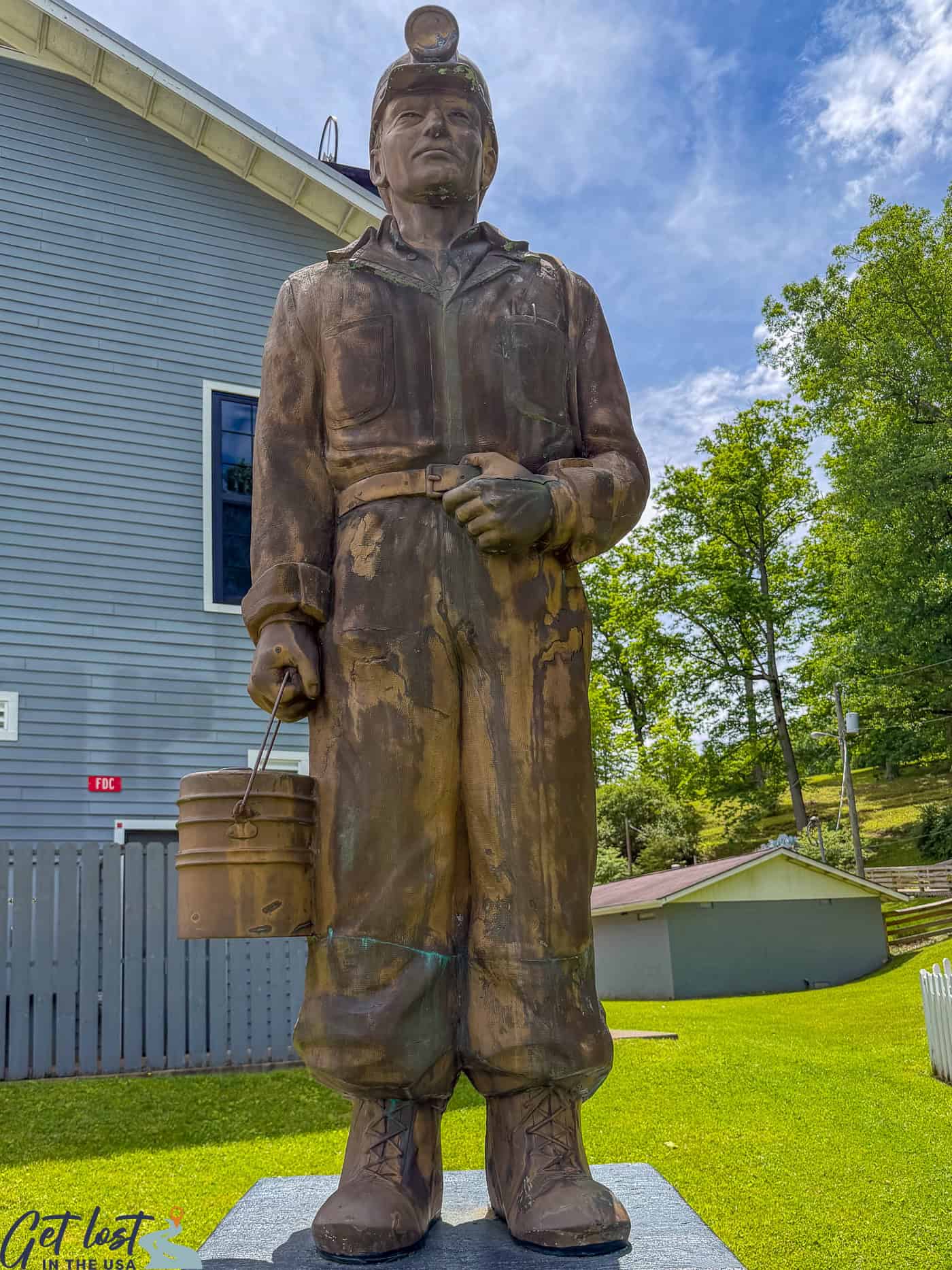
What the Underground Coal Mine Tour Is Like
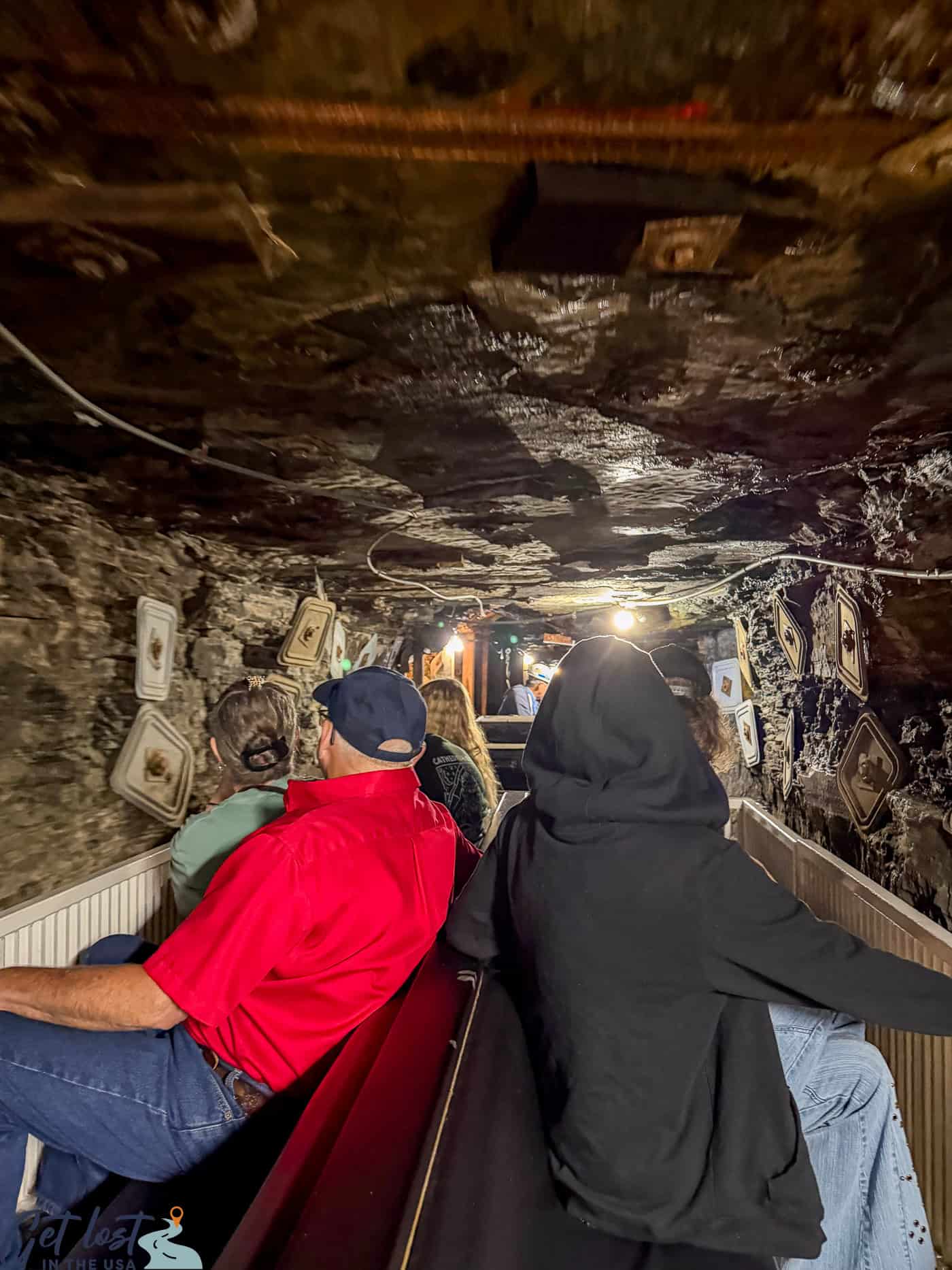
After buying my ticket in the visitor center, I boarded a rail car, and our guide, Wilson, took us on a train ride into the former Phillips-Sprague Mine. Because it’s a drift mine, the track travels directly into the hillside.
The train made three stops underground, and we stayed seated while Wilson got off and used the exhibits around him to explain different parts of mining life. He spent decades working in coal mines himself, and his firsthand stories about life underground were easily my favorite part of the tour.
Stop 1: What It Took to Mine Coal by Hand
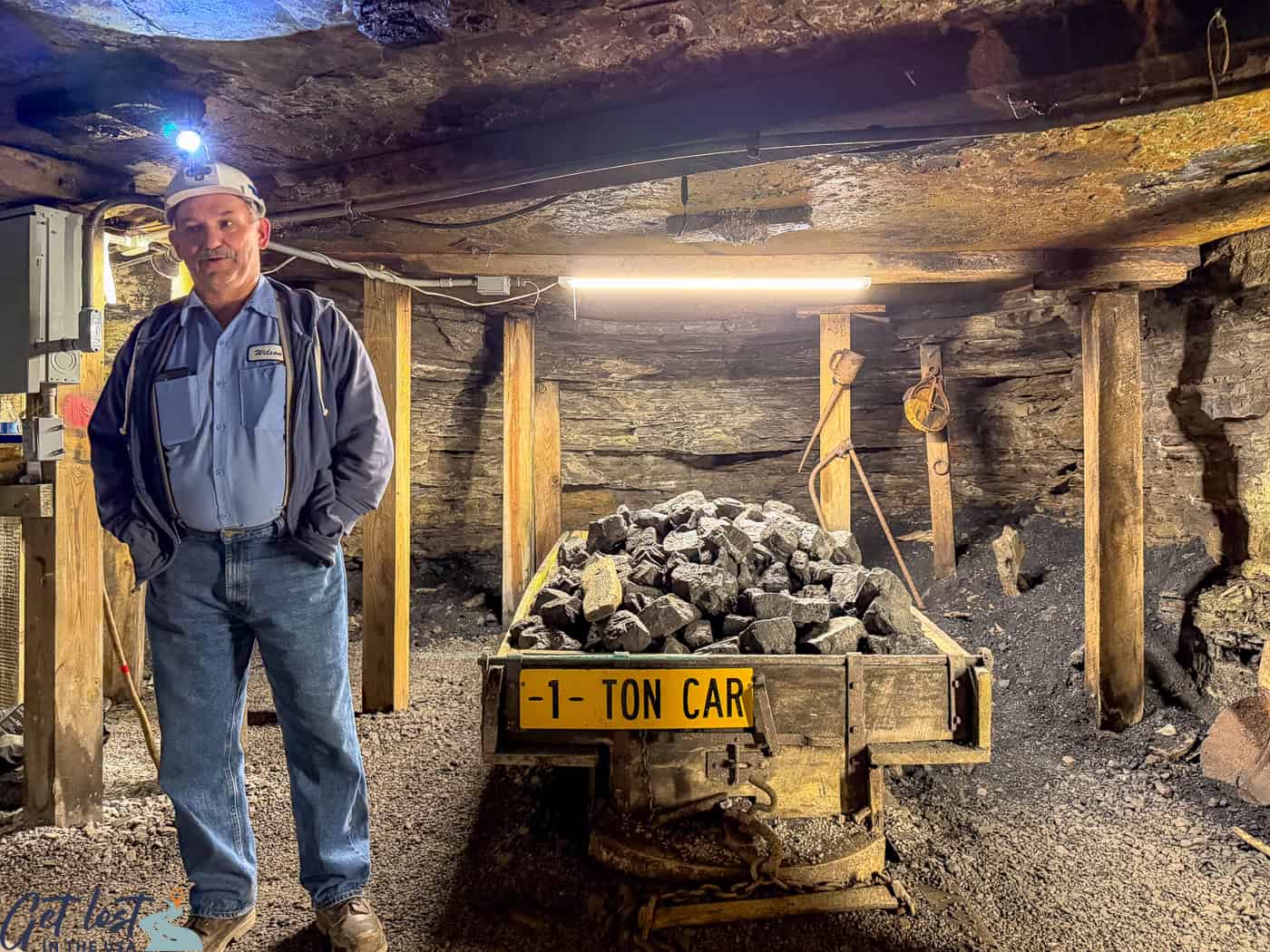
At the first stop, I realized just how tough early coal mining really was.
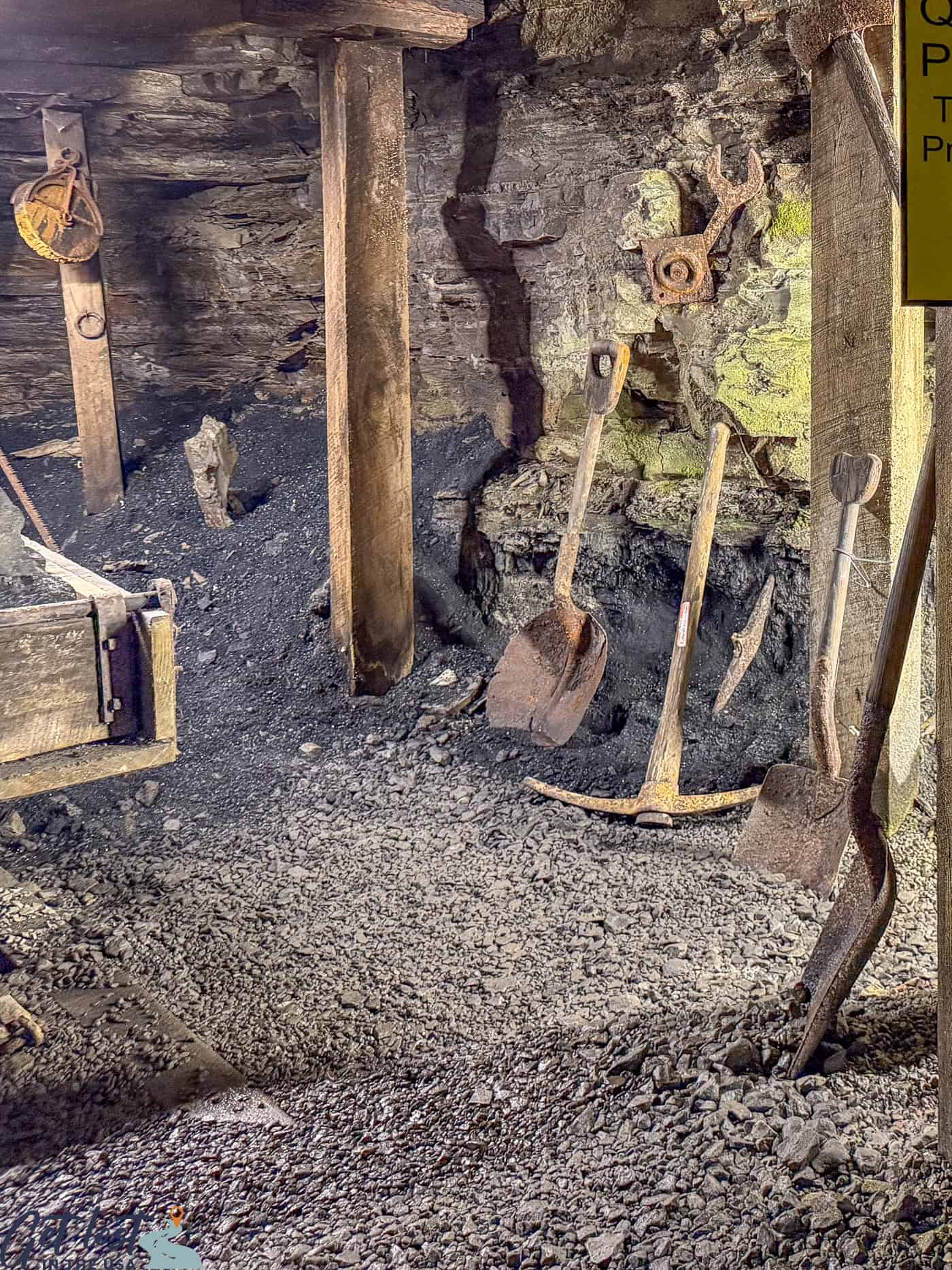
The coal seam here was only about three feet high in places. Because miners followed the coal rather than blasting out extra rock for headroom, they spent entire workdays crouched low or crawling on their hands and knees, swinging picks to break coal loose and shoveling it into one-ton mine cars.
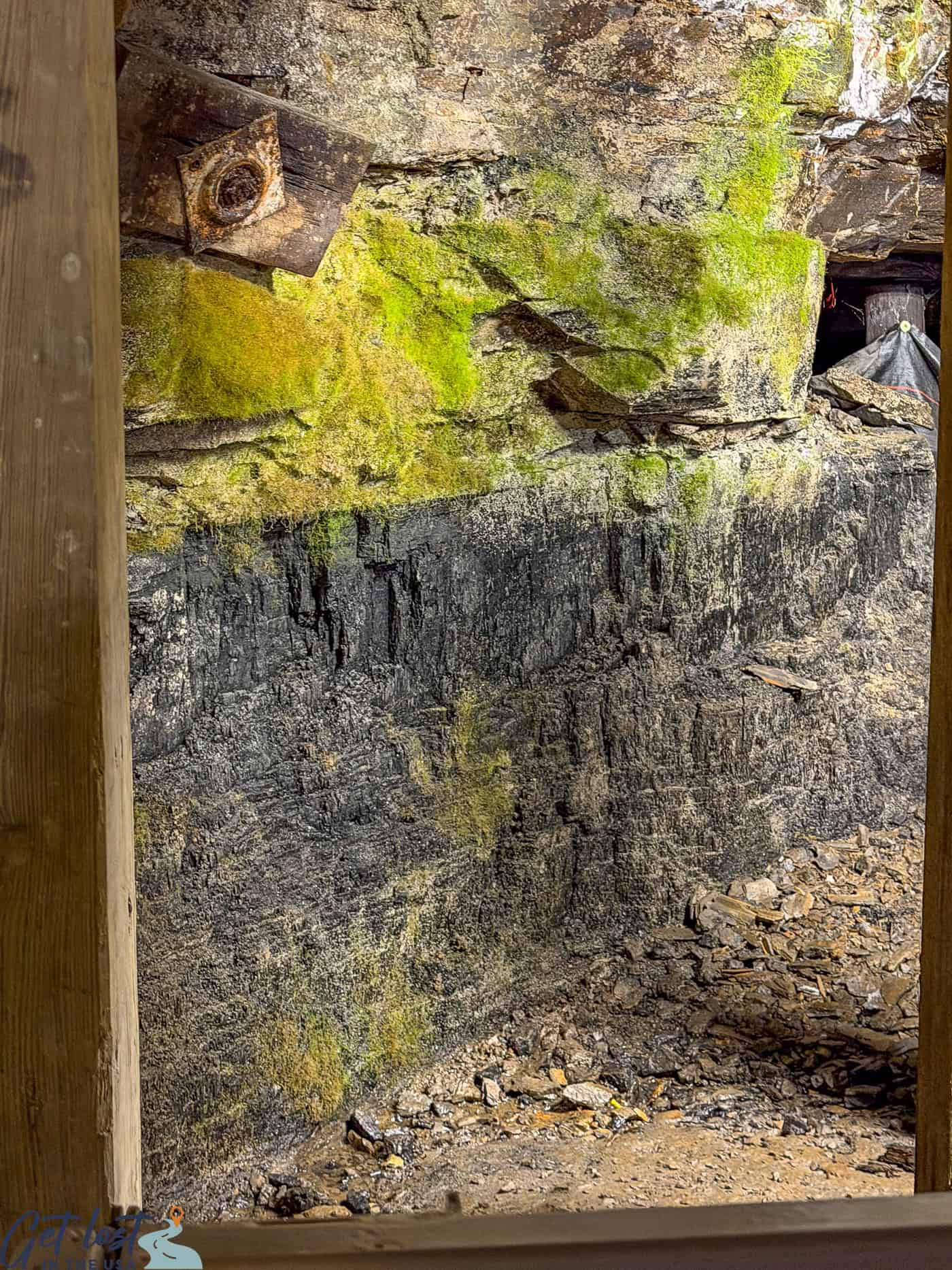
To make matters worse, they were paid purely on production. Around 1900, miners earned about 20 cents per ton. Loading 10 tons of coal a day brought in a grand total of $2.
But how did the company keep track of who loaded which car?
Each miner had an identifying tag, but simply hanging it on the car didn’t work because tags had a habit of “mysteriously” disappearing. To solve the problem, miners attached their tags to blocks of wood, tossed them into the empty cars, and buried them under the coal. When workers dumped the car at the top, the tag was right where the miner left it.
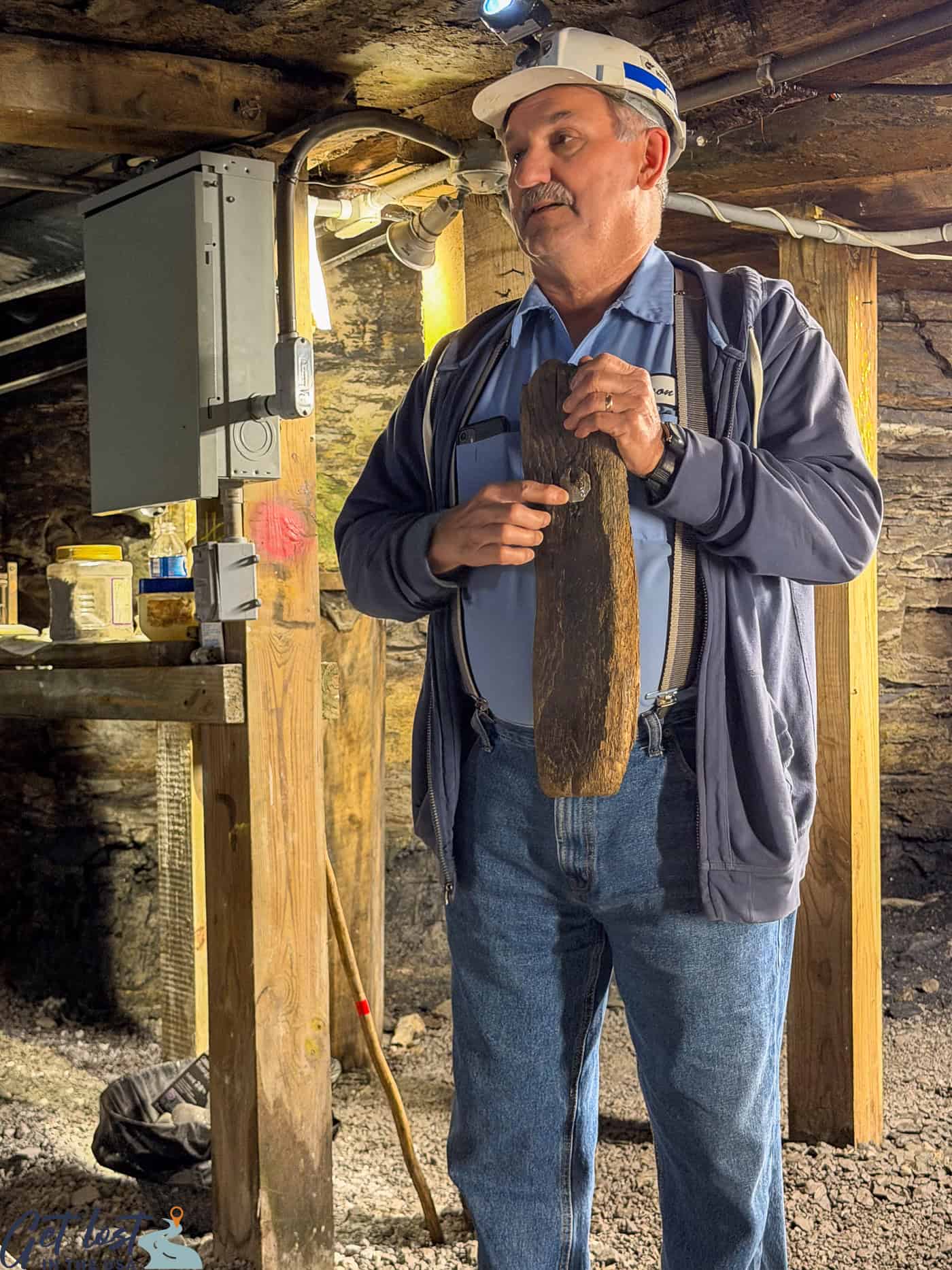
Getting credit for a full ton was never guaranteed. Wilson explained how inspectors used a wooden board to check the height of each car. If the coal missed the mark, the miner lost out. In reality, miners often loaded up to a ton and a half just to secure credit for one ton, and inspectors deducted pay for any stray rock mixed into the load.
Then came the expenses.
Workers had to buy their own tools and supplies, including lamps, black powder, and fuses. They also relied heavily on the company store, using company-issued scrip for food, clothes, and everyday necessities.
When our guide brought up the song “Sixteen Tons,” that line about owing your soul to the company store hit different.
Stop 2: Open Flames, Methane and Canaries
The second stop focused on another major challenge of working underground: lighting the mine without accidentally setting it on fire.
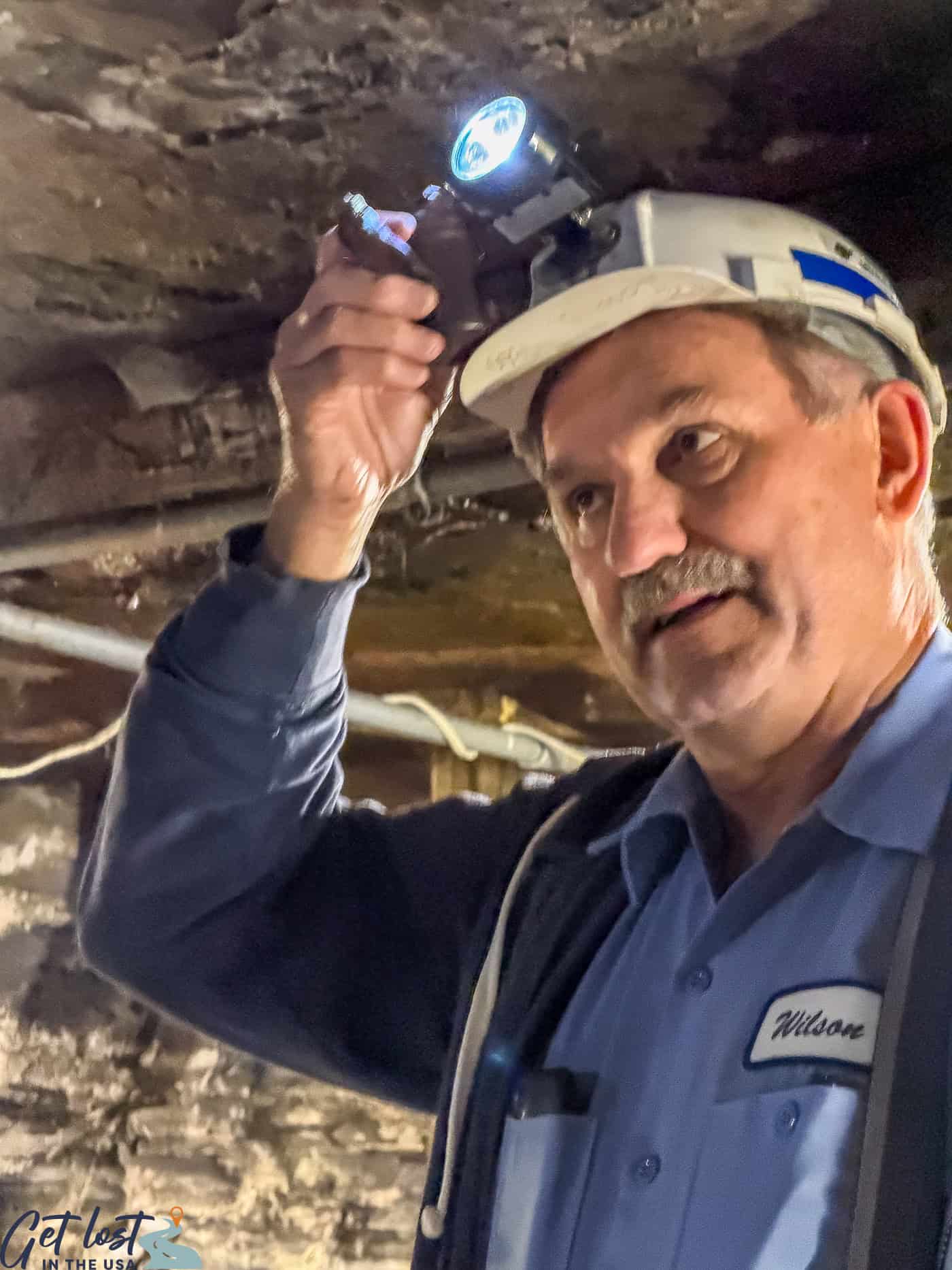
Before electric lights, miners wore open-flame lamps attached right to their hats. Our guide showed us an early oil-burning lamp, nicknamed a “teapot” or “tea kettle,” which provided about two hours of light.
Then he demonstrated a carbide lamp, which came along around 1900. By adding water to calcium carbide inside the chamber, the lamp generated acetylene gas that miners lit for light. To show us just how combustible that gas really was, he trapped a little bit in his hand and set it off.
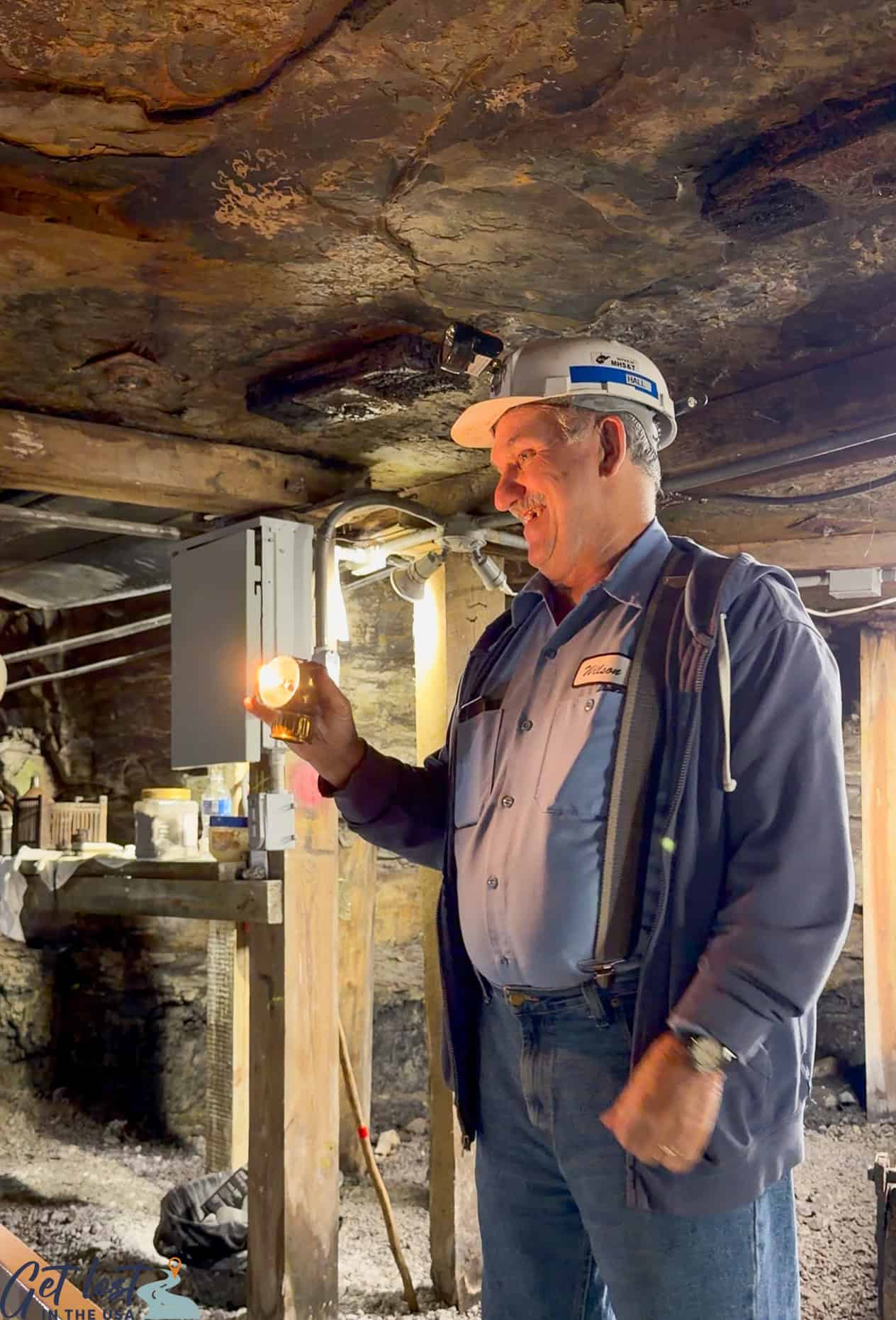
Pop.
Someone asked him to do it again, so naturally, we got an encore.
Carbide lamps burned for about four hours, twice as long as the old oil lamps. But there was still one pretty obvious problem. Miners were walking around with open flames on their hats in a coal mine where methane could be present. Wilson explained that while methane alone might burn out quickly, suspended coal dust in the air turned a tiny spark into a massive explosion.
To combat this, mine bosses carried flame safety lamps to test the air. Unlike the open-flame lamps workers wore, these enclosed lamps allowed trained inspectors to detect methane and oxygen drops safely before sending crews into a section.
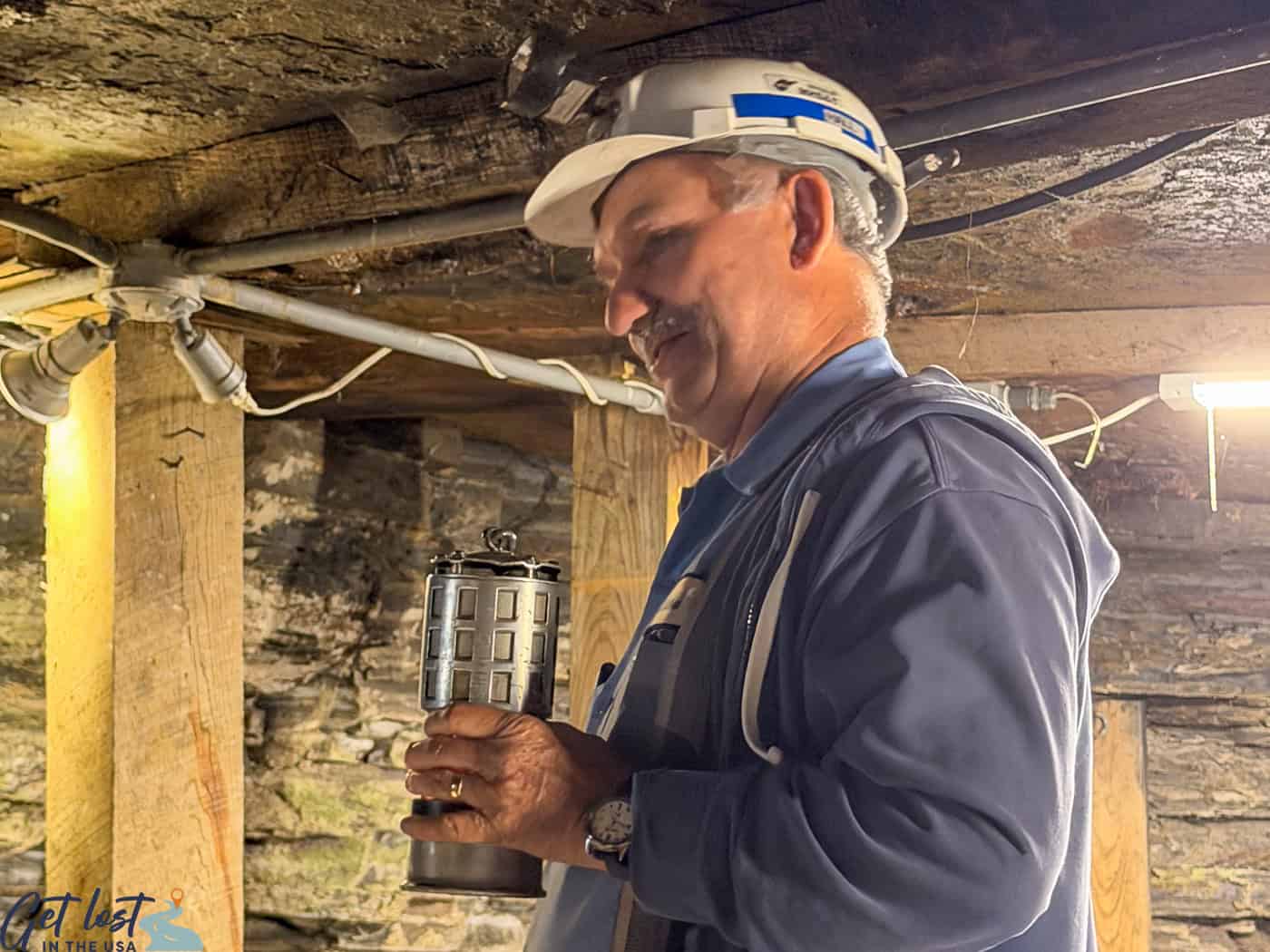
And then there were the canaries.
Miners kept canaries nearby because the birds were more sensitive to dangerous air conditions and could give them an early warning that something was wrong.
One detail I definitely didn’t know: miners had to buy their own canaries from the company store. The company provided the wooden cage, but the bird was on your own dime.
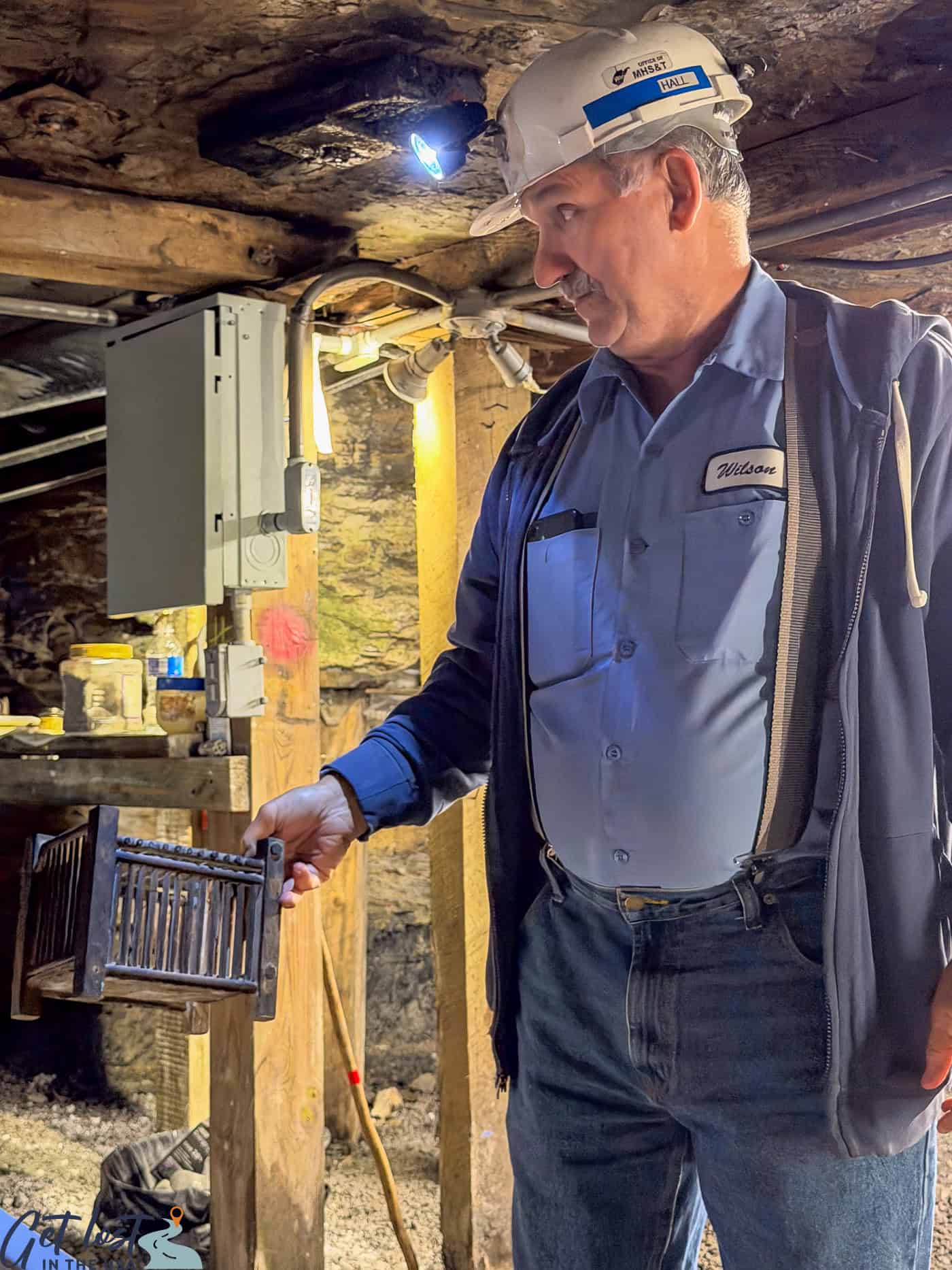
Stop 3: Roof Falls, Kettle Bottoms and Hidden Water
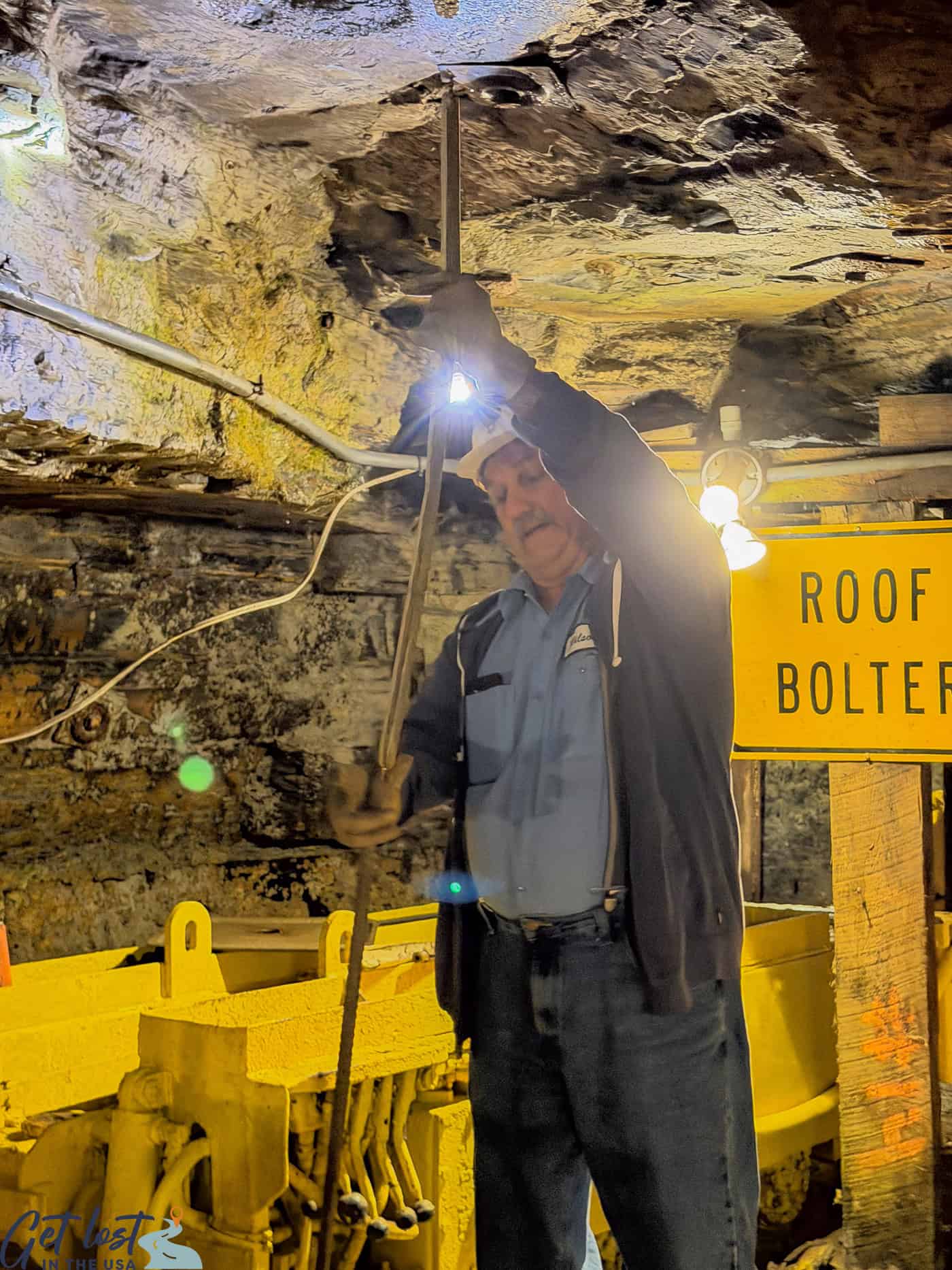
By the third stop, the tour moved into later mining methods and some of the physical hazards that existed beyond bad air and explosions.
Roof falls were a constant threat. Early miners used wooden timbers to support the ceiling above them, while later operations transitioned to heavy steel roof bolts.
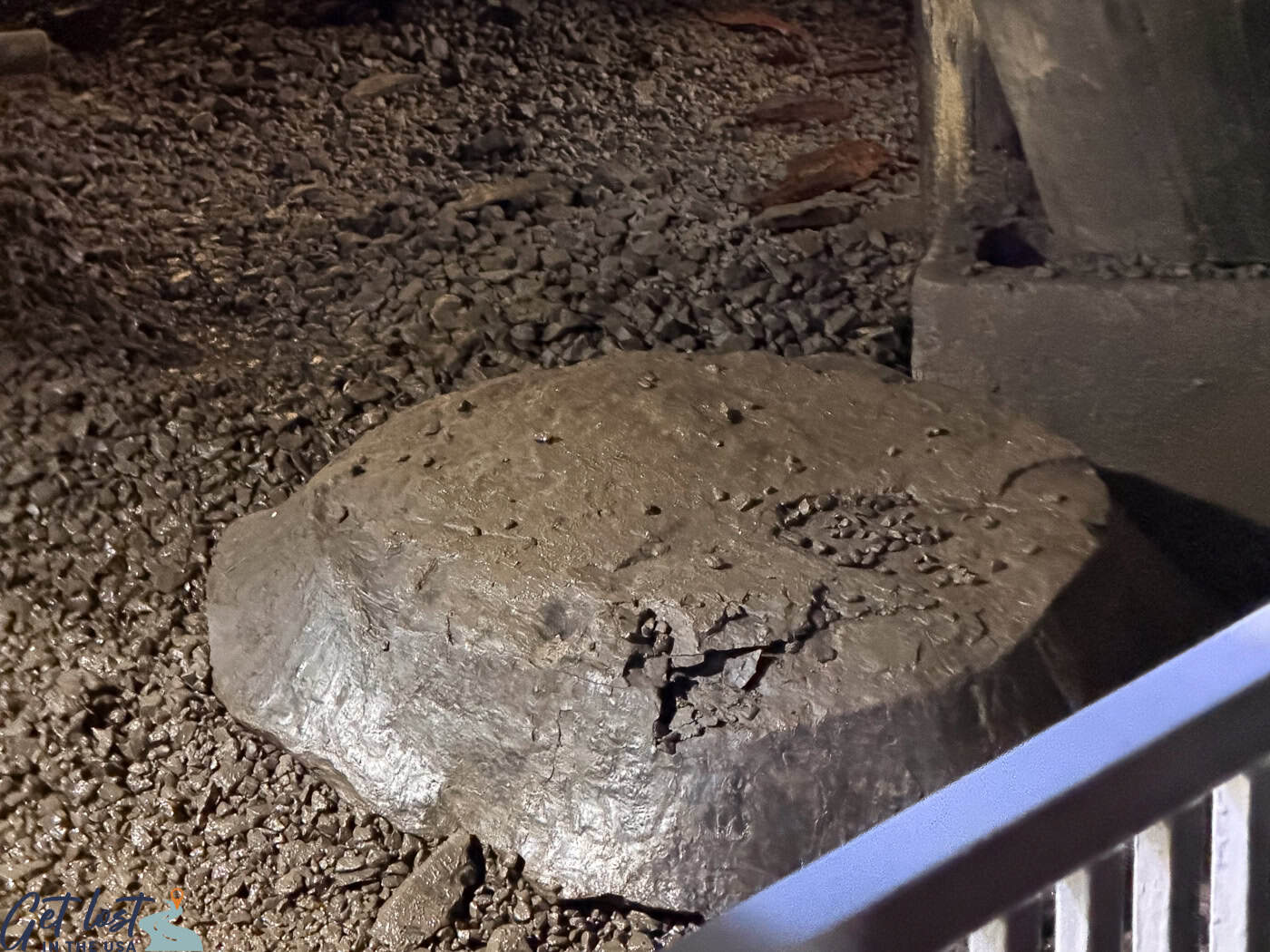
This stop was also where I learned about something called a kettle bottom.
Kettle bottoms are fossilized tree stumps embedded directly in the mine roof. They’re extremely heavy and could fall if they weren’t properly supported. Our guide said miners called them “widow makers,” which tells you pretty much everything you need to know.
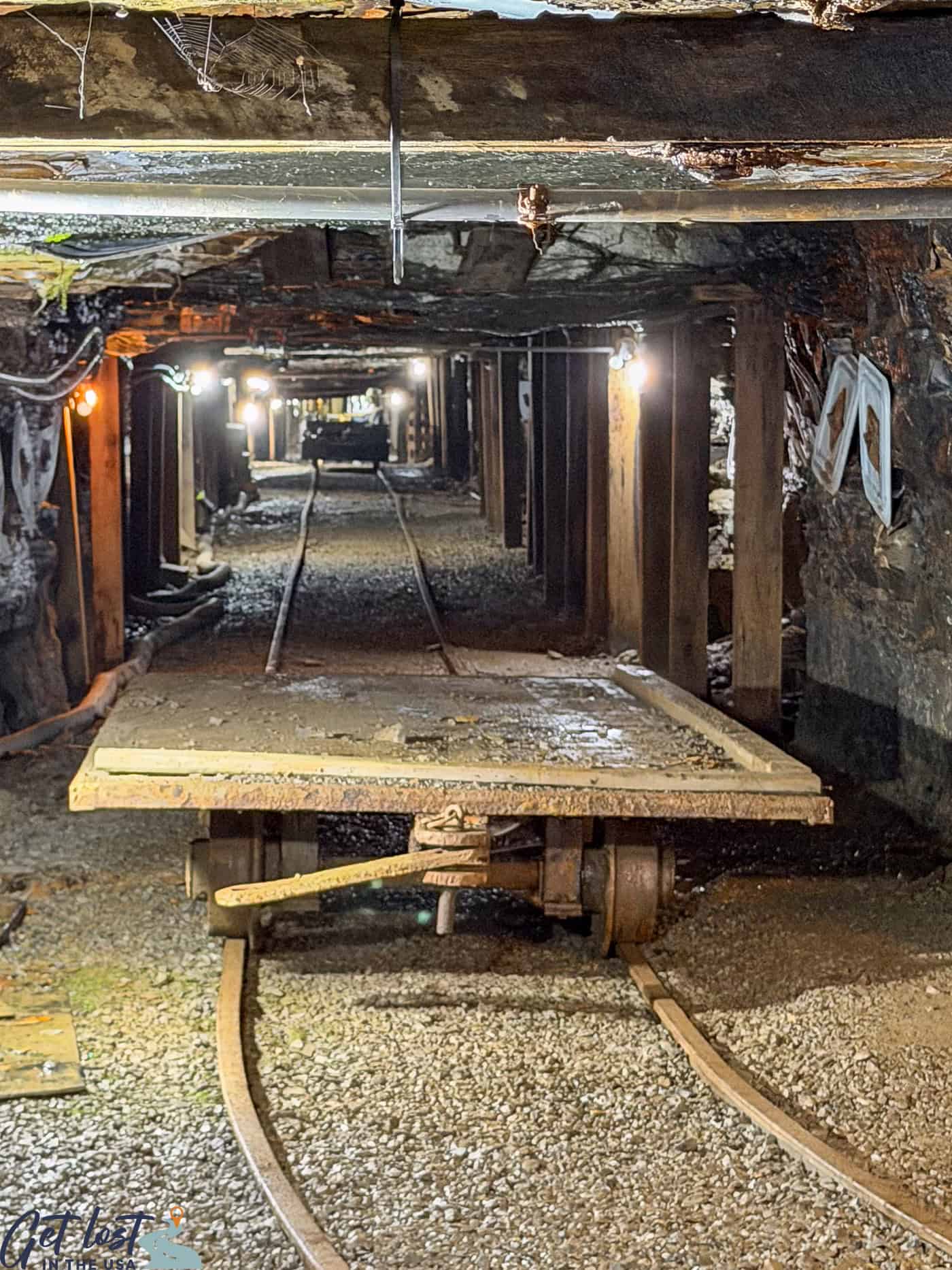
He also brought up rats, which weren’t as unwelcome as you might think. Miners paid attention when rats suddenly started leaving an area because it could be a warning that something was wrong.
Wilson told us that one of his biggest fears underground was accidentally drilling into an abandoned mine filled with water. Companies didn’t always map older workings accurately, and breaking through a wall could unleash trapped water straight into the tunnel.
Between falling rock overhead, flooded chambers next door, and invisible gases all around, I realized just how much miners had to manage on every single shift.
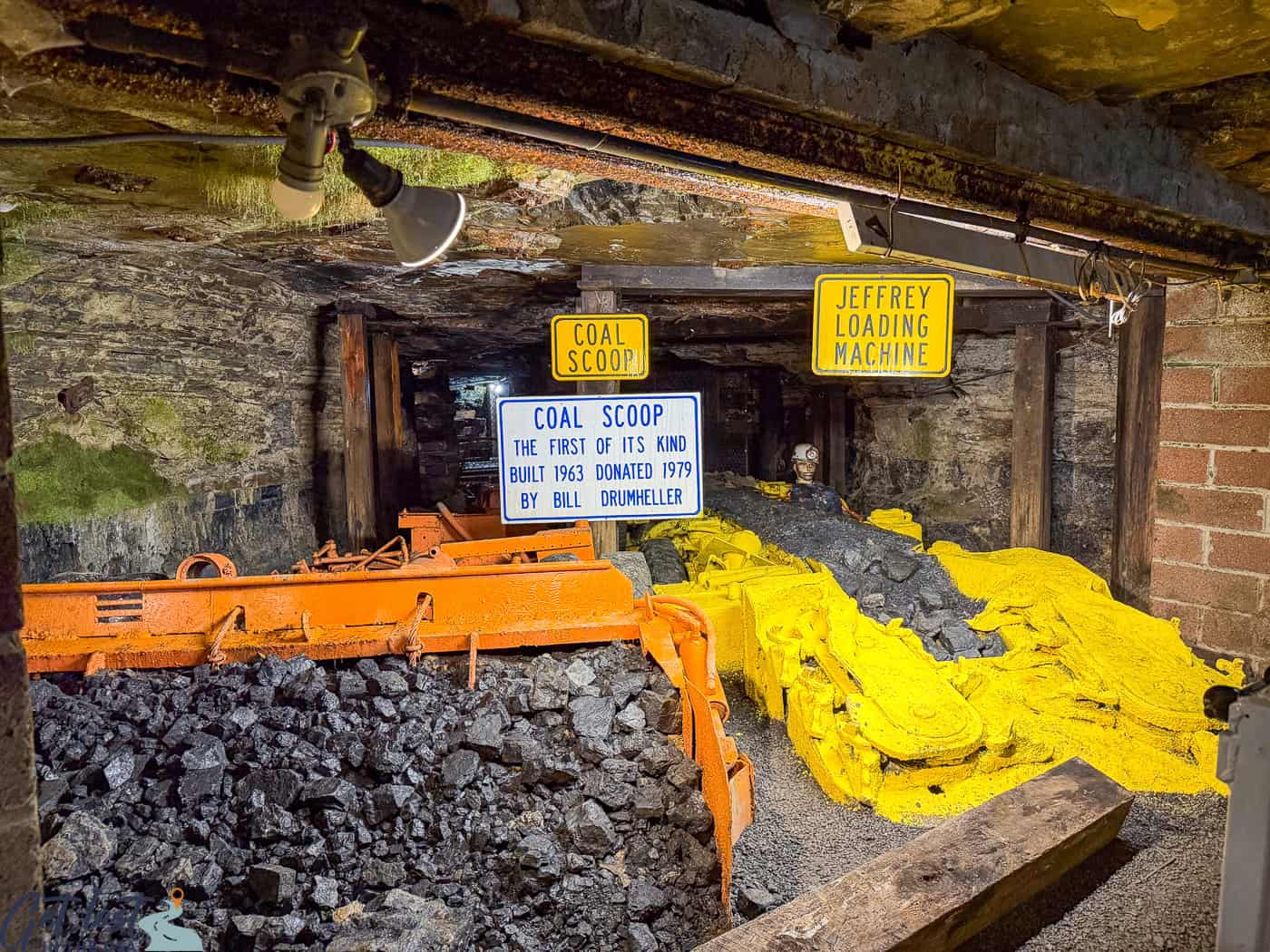
Don’t Skip the Coal Camp Buildings
Once I stepped off the train, I walked over to the historic coal camp buildings. After hearing so much about the miners underground, seeing how they lived above ground felt like the logical next step.
The Bachelor’s Shanty
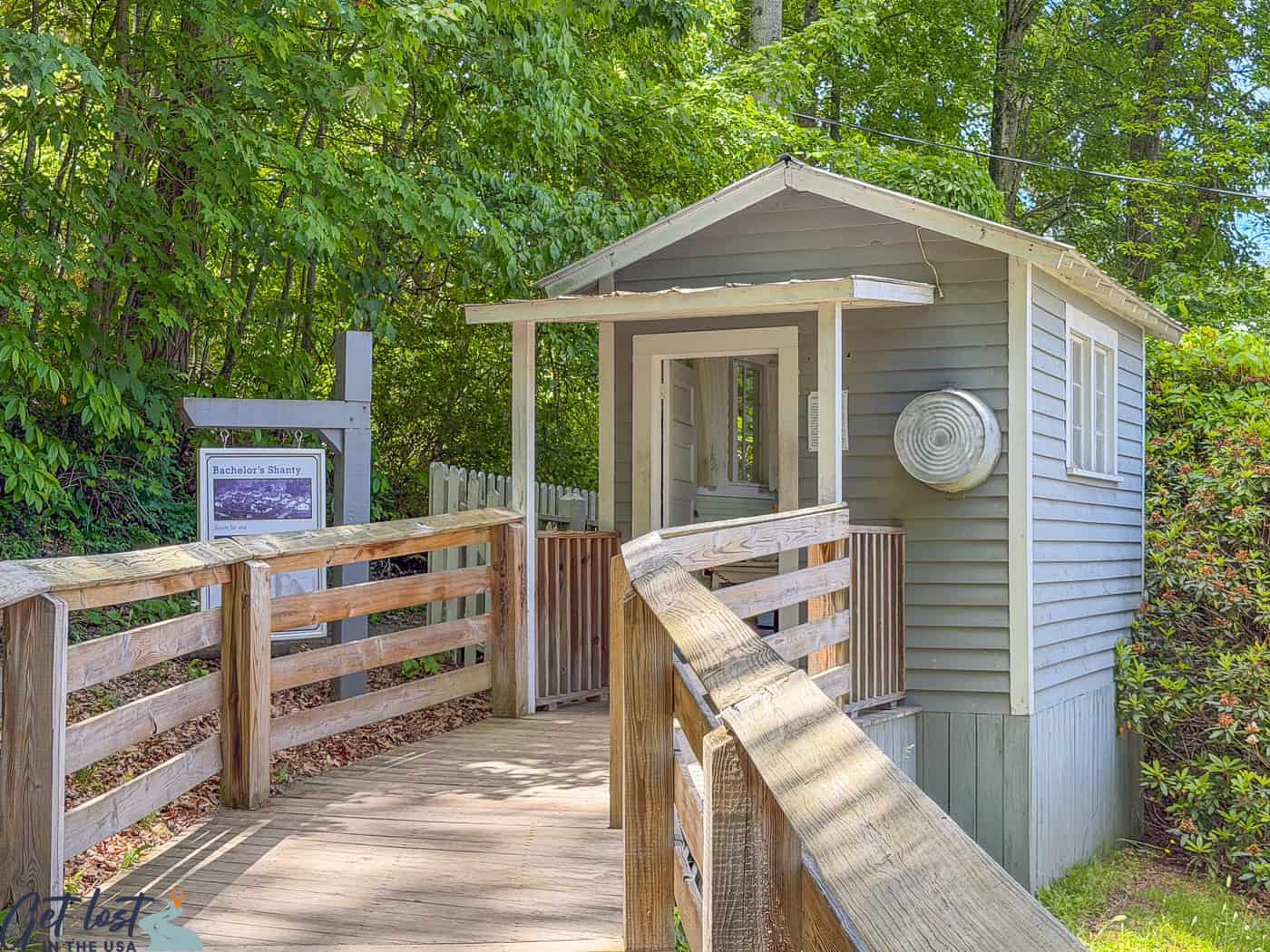
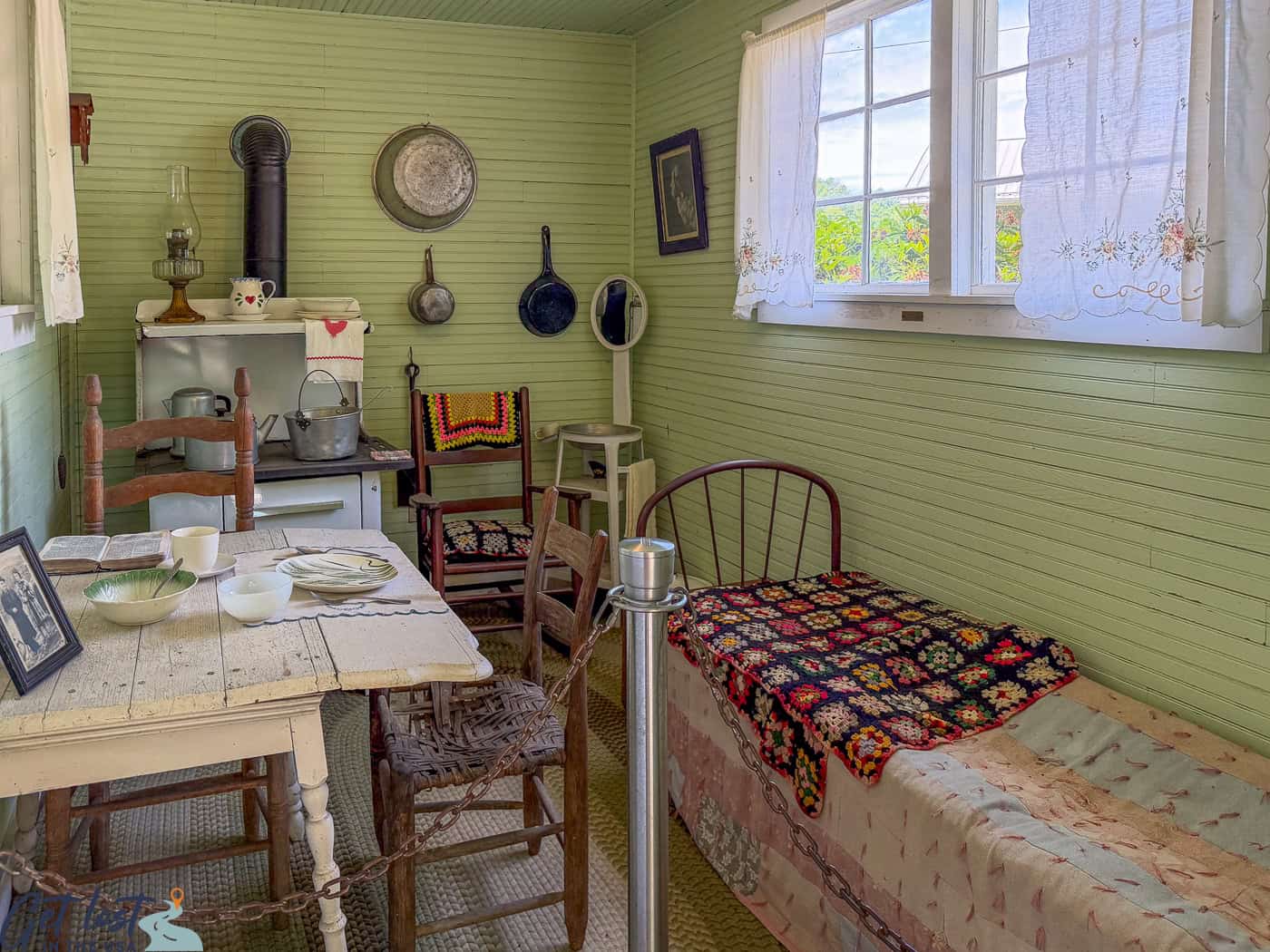
The company built the one-room bachelor’s shanty for a single miner, or for someone who stayed at the coal camp during the workweek and rejoined his family on weekends. Rent cost about $2 a month, which the company deducted directly from the miner’s pay.
The Miner’s House
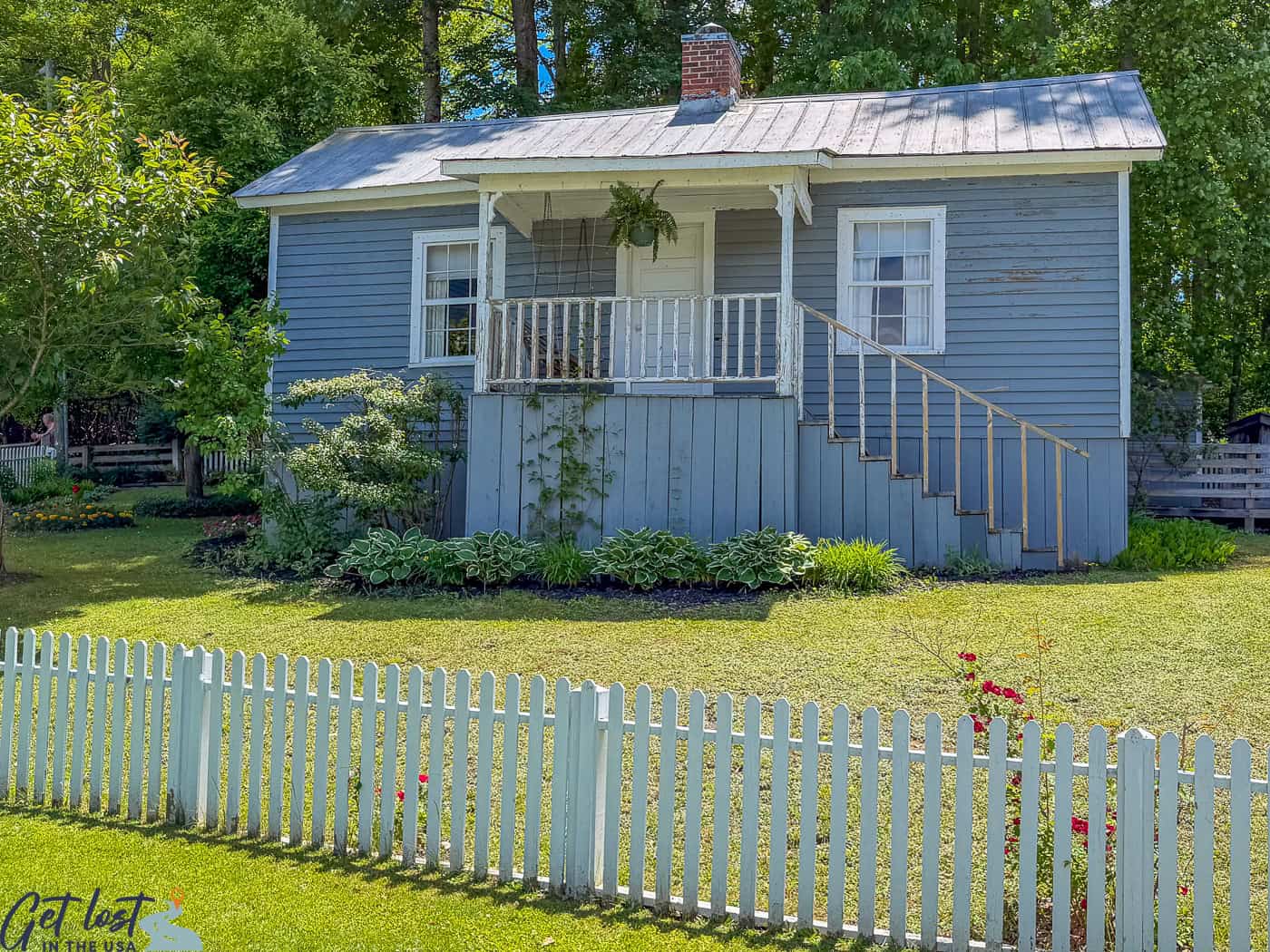
Built in 1906 by the New River Coal Company, this was a typical three-room “Jenny Lind” style house. It rented for $6 a month, which the company deducted straight from the miner’s paycheck. The house came with no electricity, running water, indoor plumbing, or furniture.
This layout had just one bedroom. When families had several children, the kids slept on cots in the living room. To help make ends meet, families often rented out extra beds or floor space to single miners.
Drinking and cooking water came from a nearby well or spring, while rainwater was collected for washing. A bucket of drinking water sat in the kitchen or on the porch, complete with a shared dipper for the house.
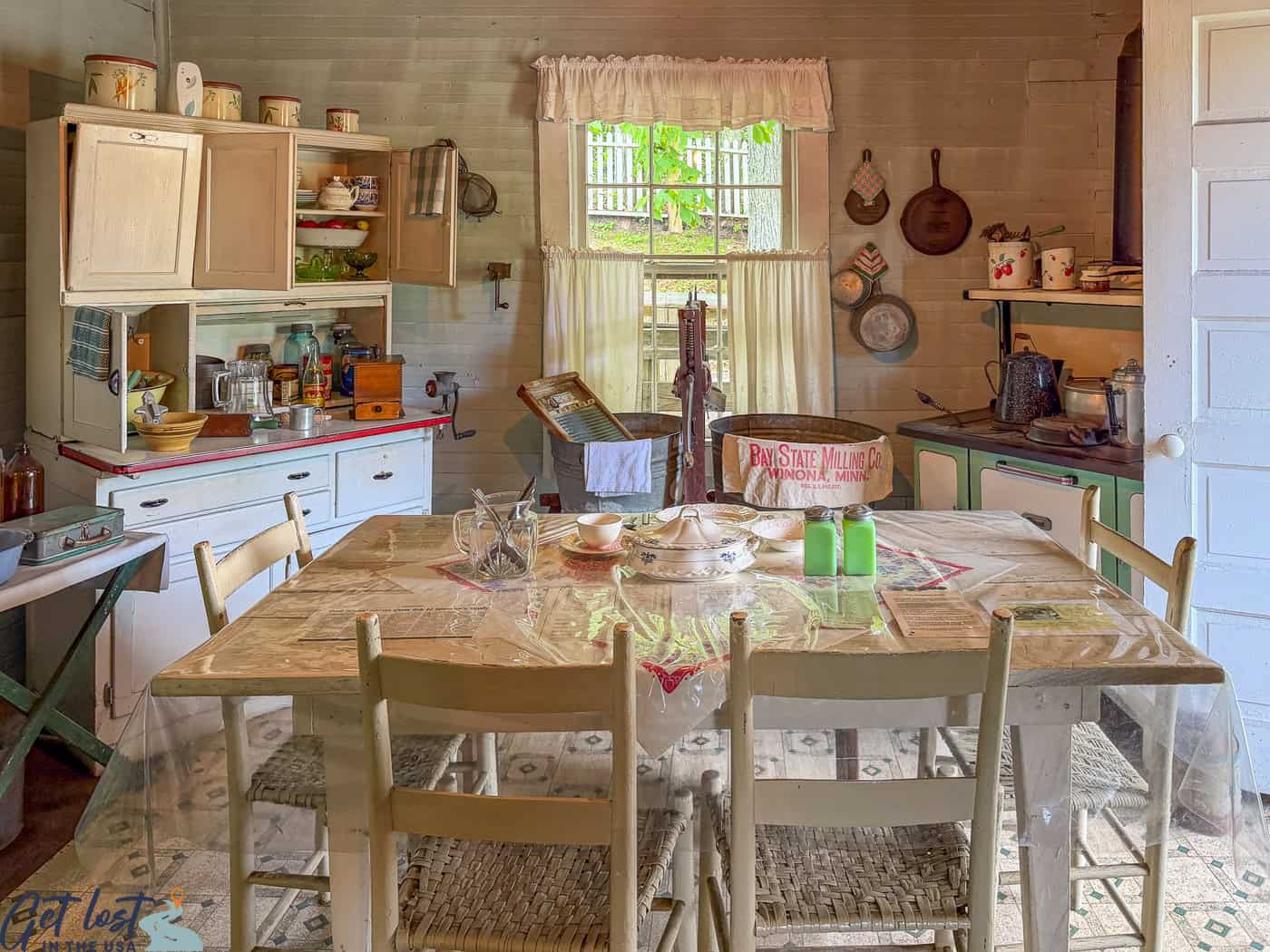
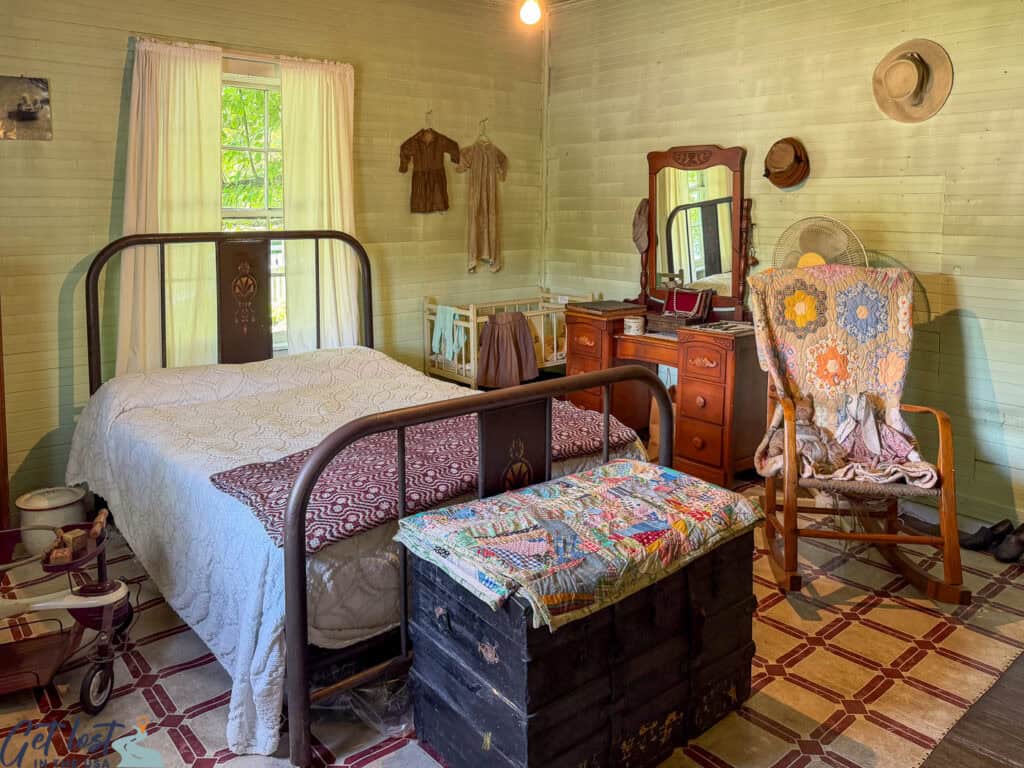
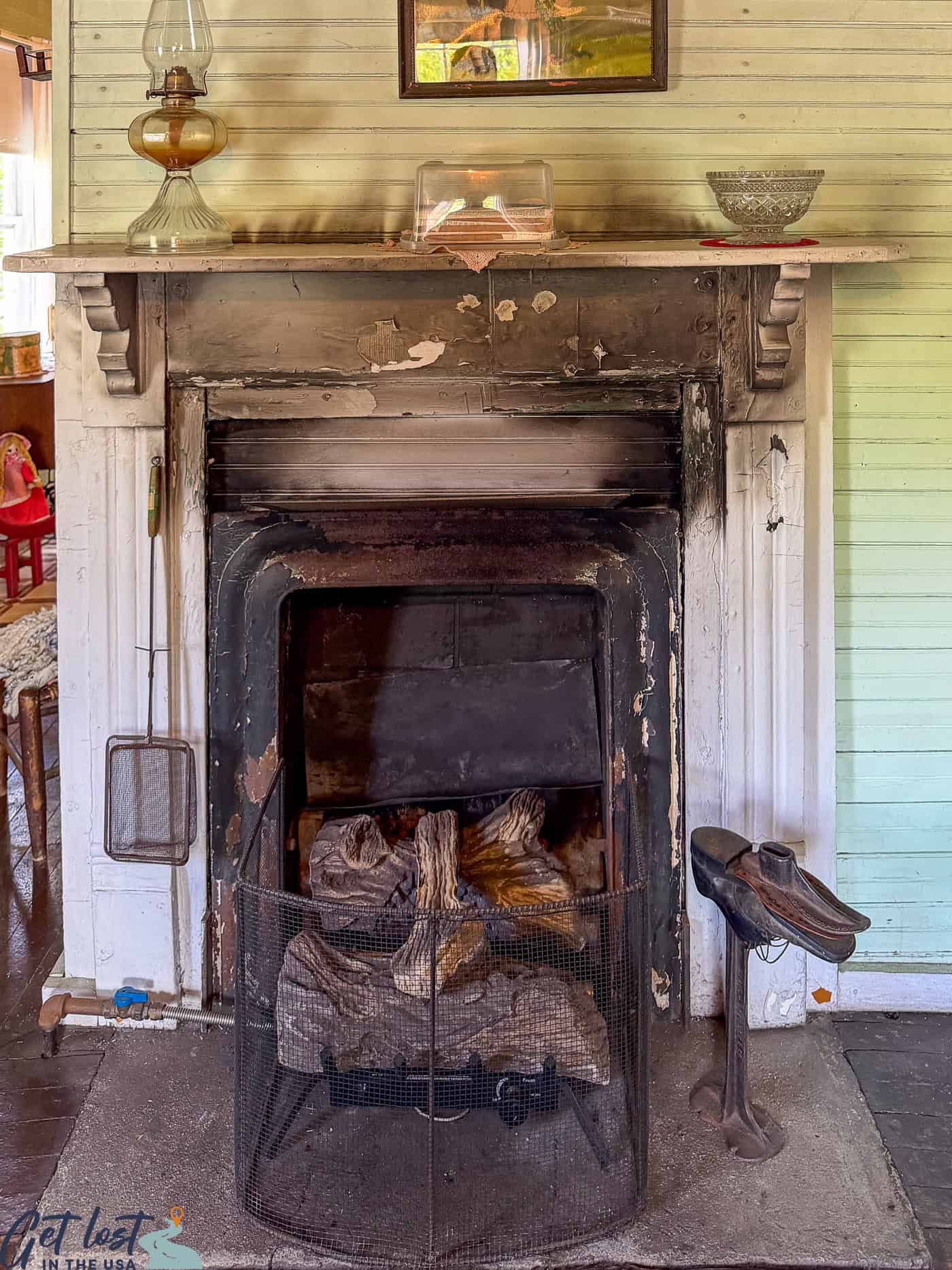
Even though the miner worked in the coal mine, he still had to buy the coal used to heat his own home. You can see the long-term effects by the fireplace, where years of coal smoke noticeably darkened the surrounding wood.
The Superintendent’s House
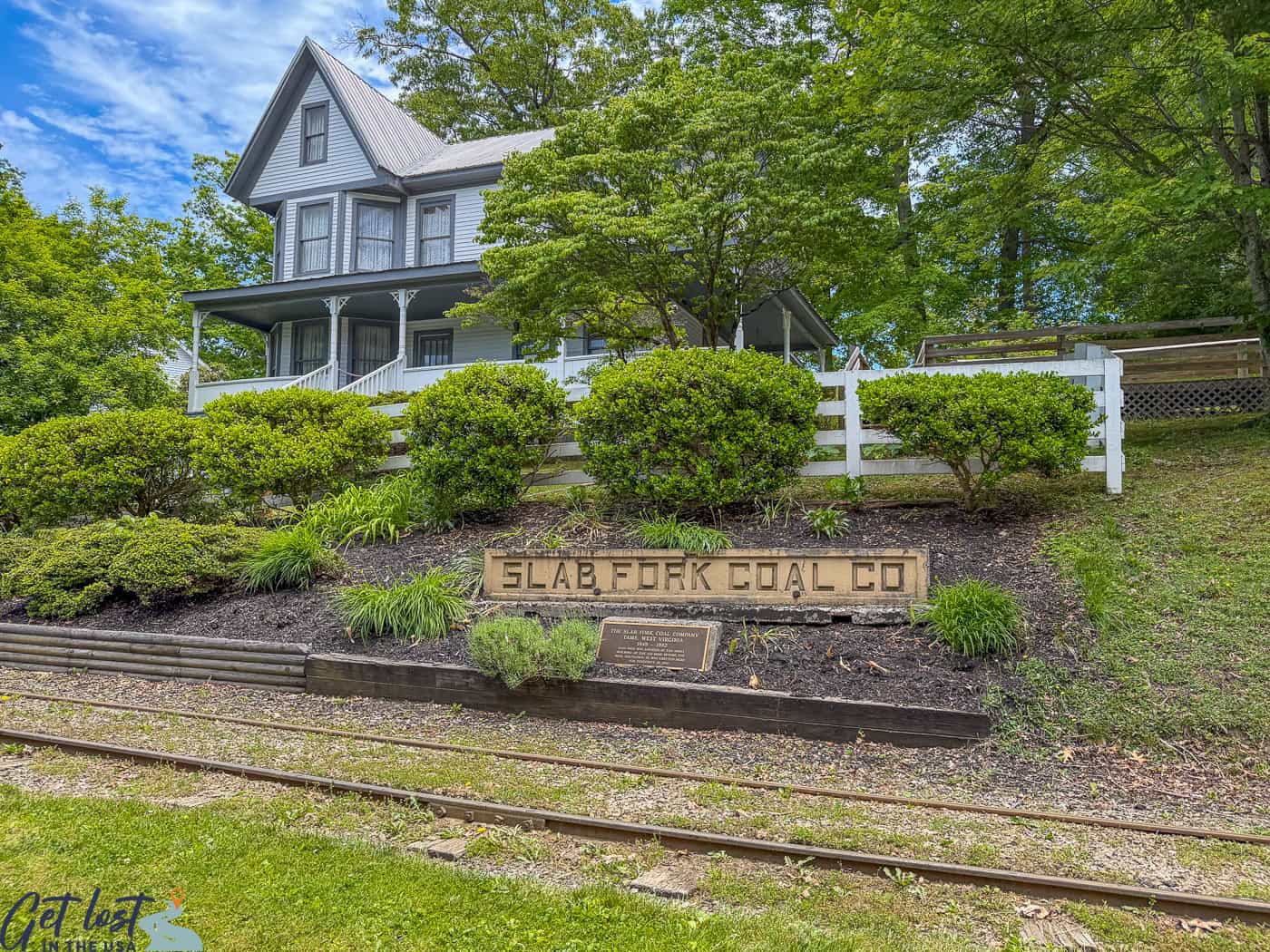
The contrast between the miner’s house and the superintendent’s house is hard to miss.
Built in 1906 in Skelton, West Virginia, the three-story house reflected the superintendent’s standing in the company. The coal company provided the home as part of his salary. At 3,600 square feet with six bedrooms, it was a major step up from the one-bedroom miner’s house down the street.
He needed that extra space for business as well as family. The sign outside explained that superintendents were expected to host visiting company executives, so these homes were intentionally designed to impress. This particular house was modeled after residences the superintendent remembered from his childhood in England.
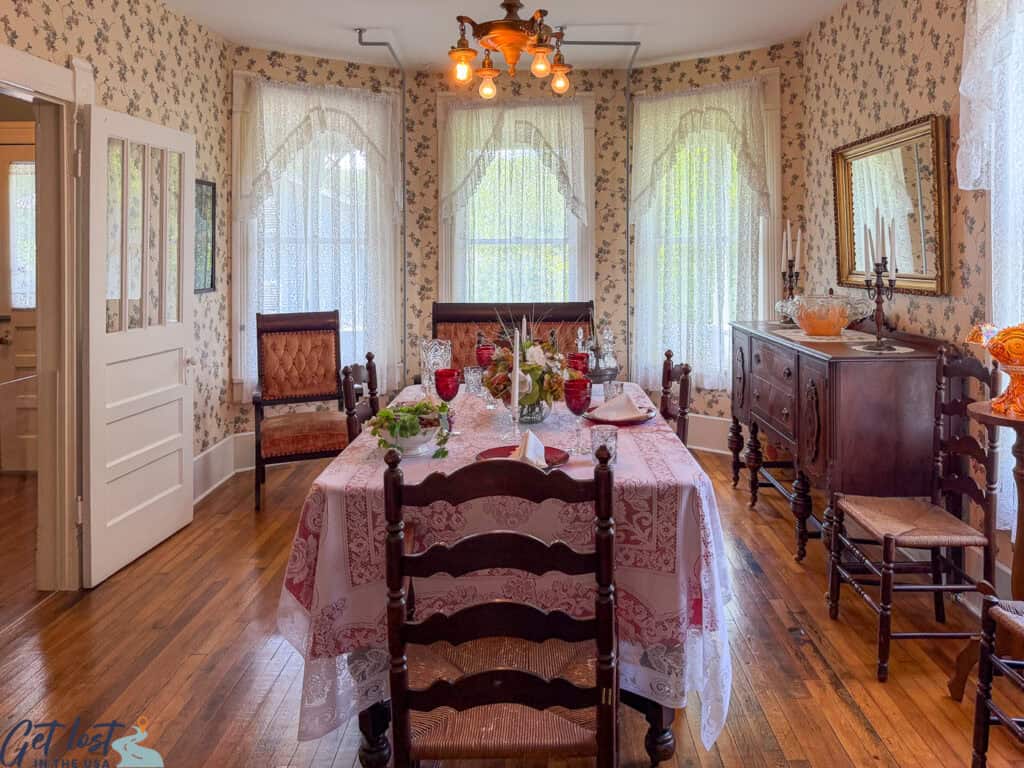
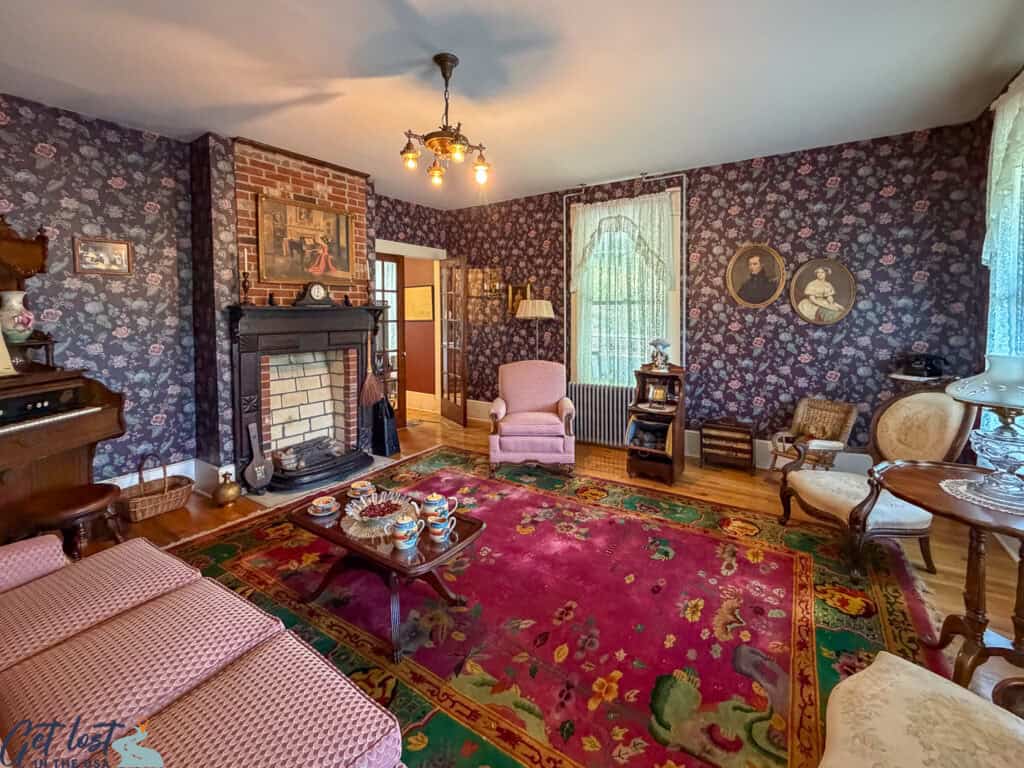
The first floor held a formal living room, dining room, kitchen, and the superintendent’s private office. Upstairs, you’ll find the main bedroom and nursery, along with recreated exhibits for a company doctor’s office, barbershop, and post office. While those businesses never operated inside this actual home, the museum set them up here to display key services from coal camp life.
Interestingly, even with all that square footage and status, the home didn’t receive electricity or indoor plumbing until the 1930s.
The Church and Schoolhouse
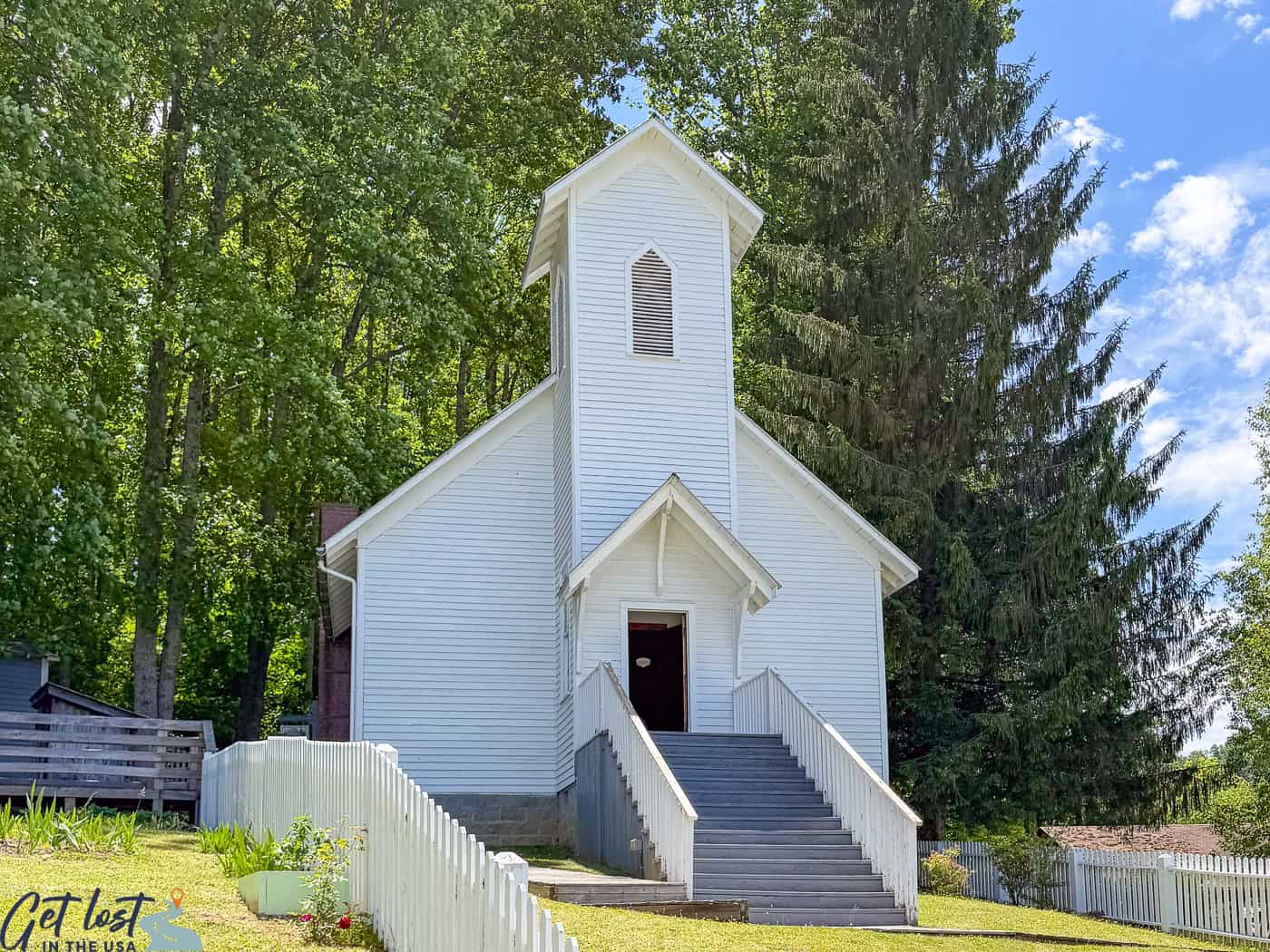
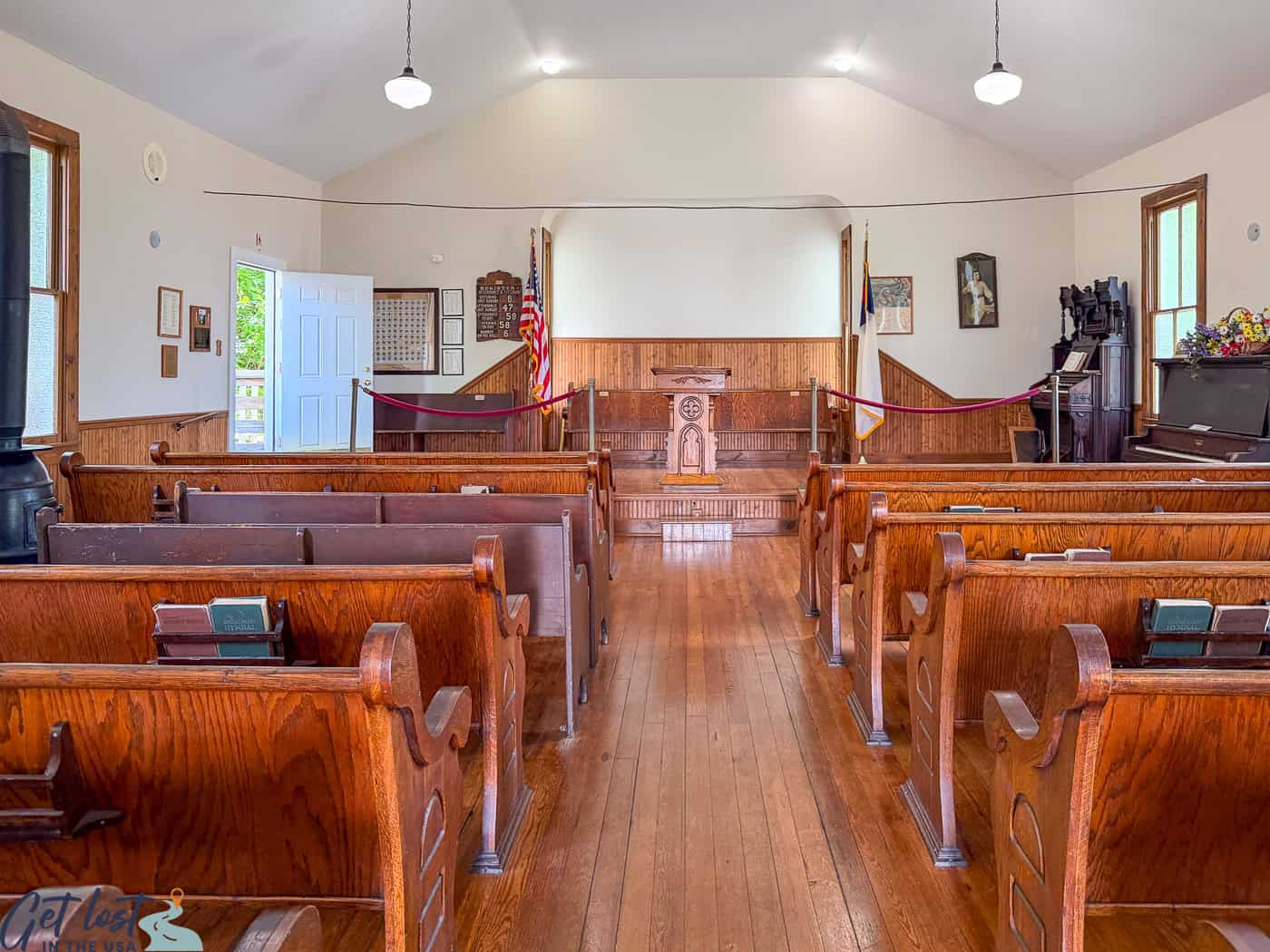
The church was built in 1921 for the Pemberton coal camp, funded by coal baron Thomas Hurst Wickham. Beyond Sunday sermons, it hosted meetings, dinners, and summer Bible school. The minister handled everything from weddings to visiting the sick and conducting funerals.
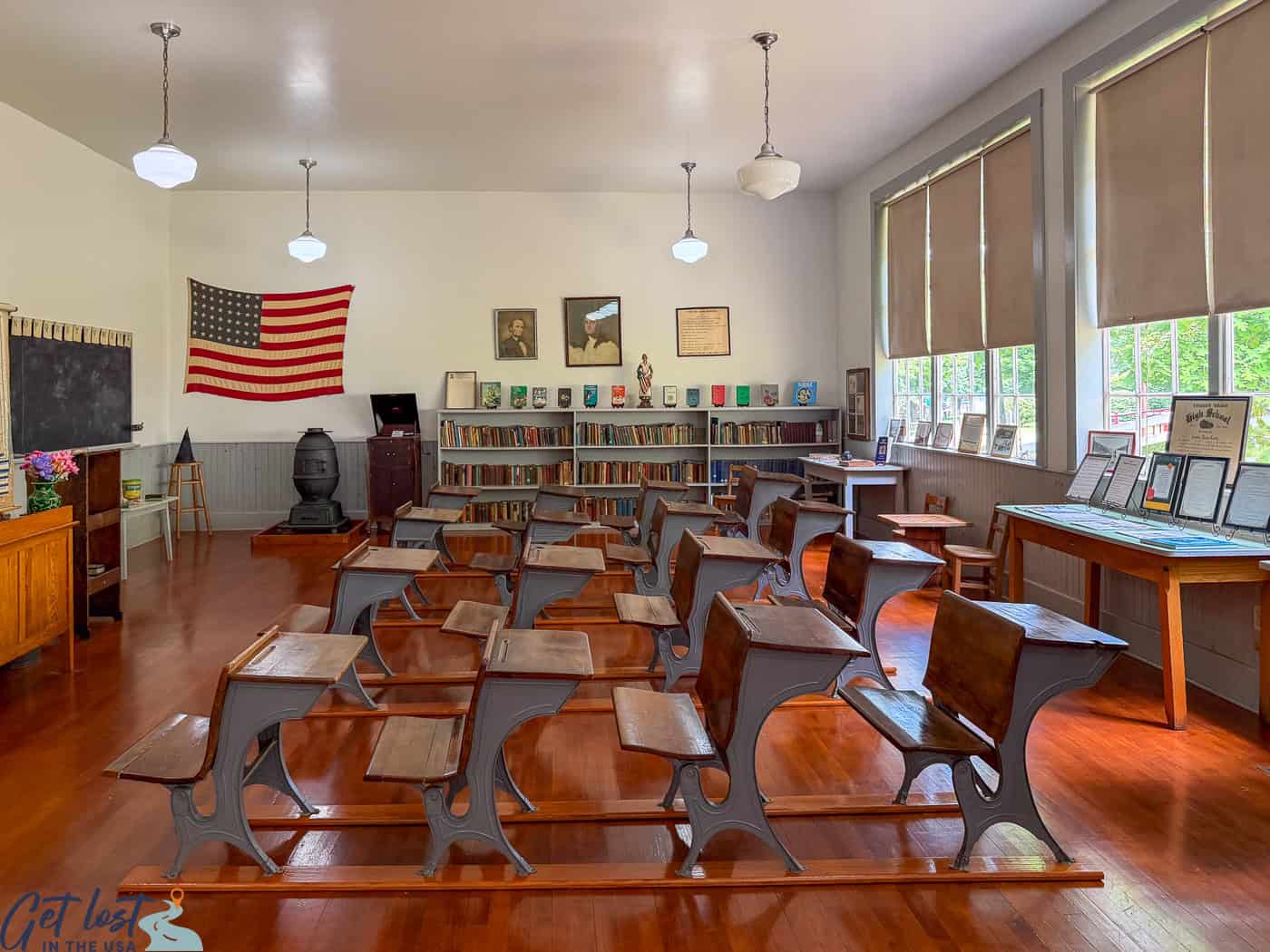
The schoolhouse, built in 1925 in Helen, West Virginia, served the camp’s Black children, while white students attended a separate school. The coal company owned the building, but the local school board ran the classes. Average enrollment was about 30 students, with one teacher per room. Kids sat by grade, with first graders in the front row and the older grades behind them. As enrollment dropped, the two-room school eventually became a one-room school.
Explore the Mountain Homestead
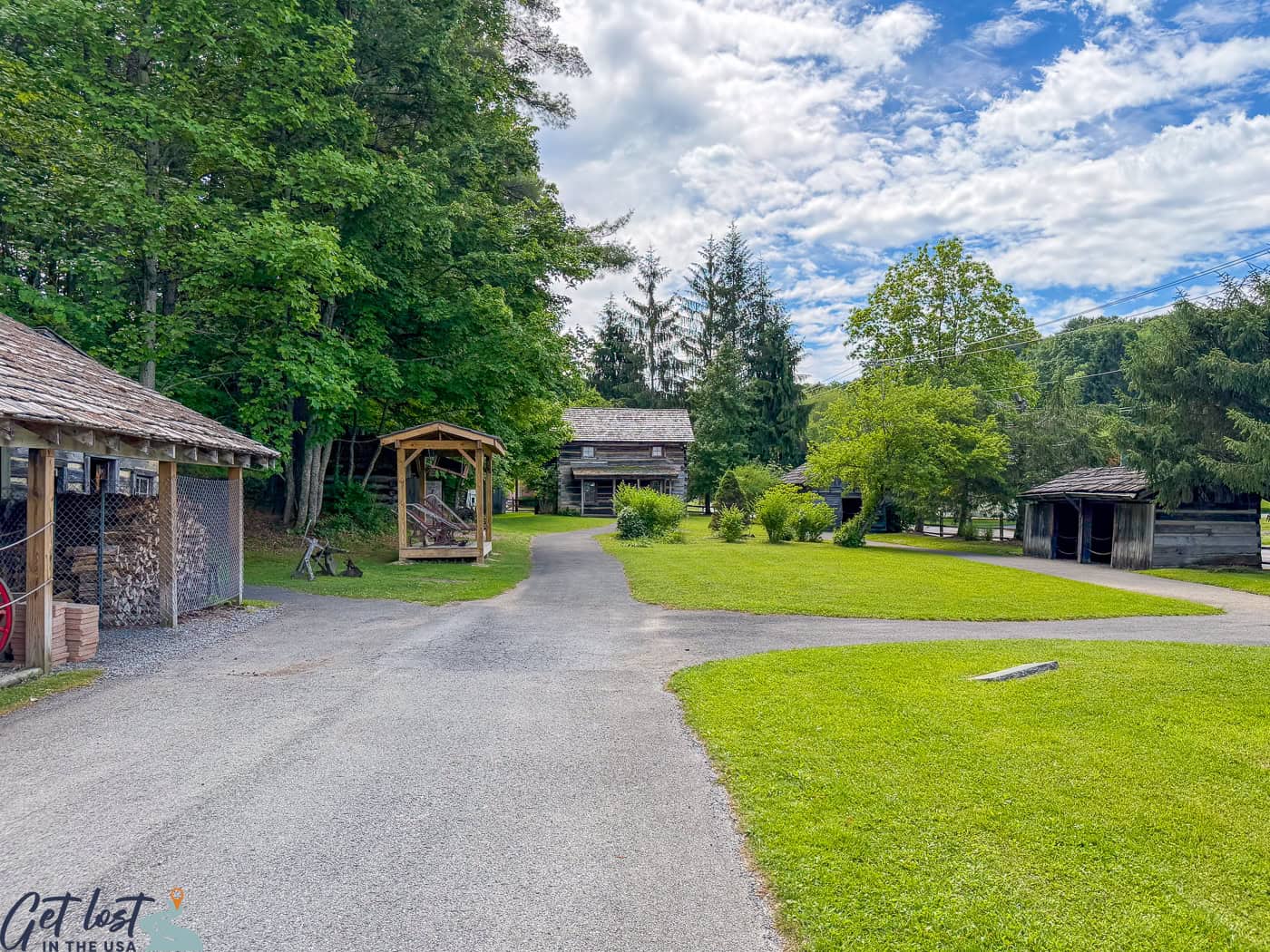
The Mountain Homestead shows what Appalachian life was like before the coal-mining era.
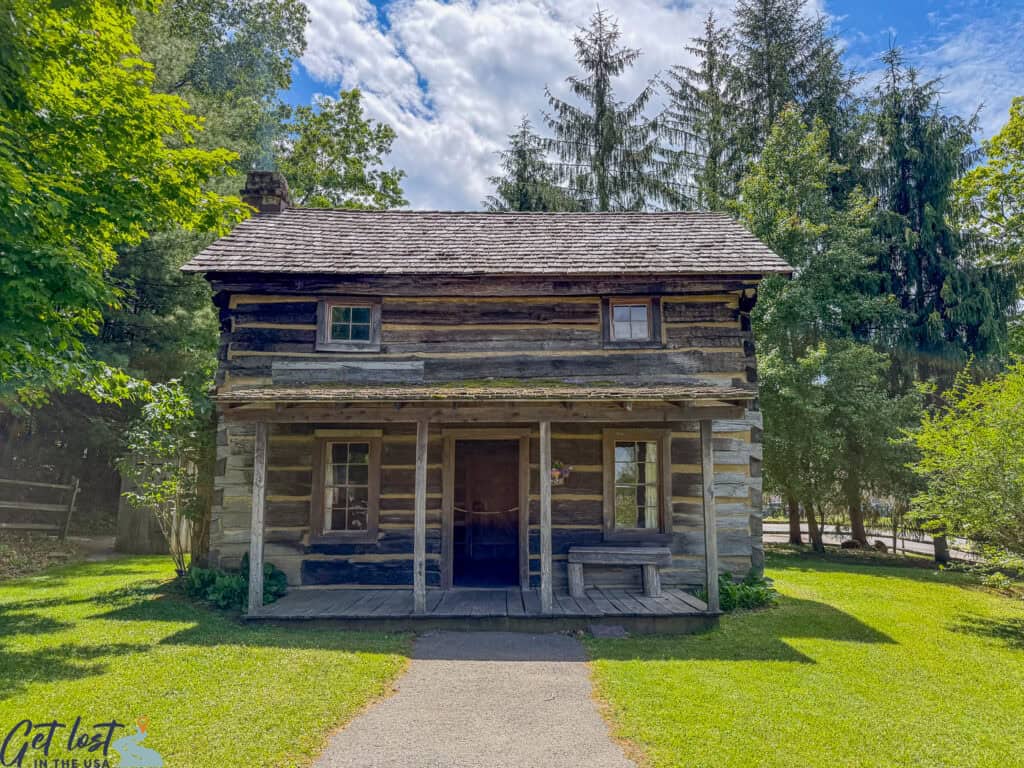
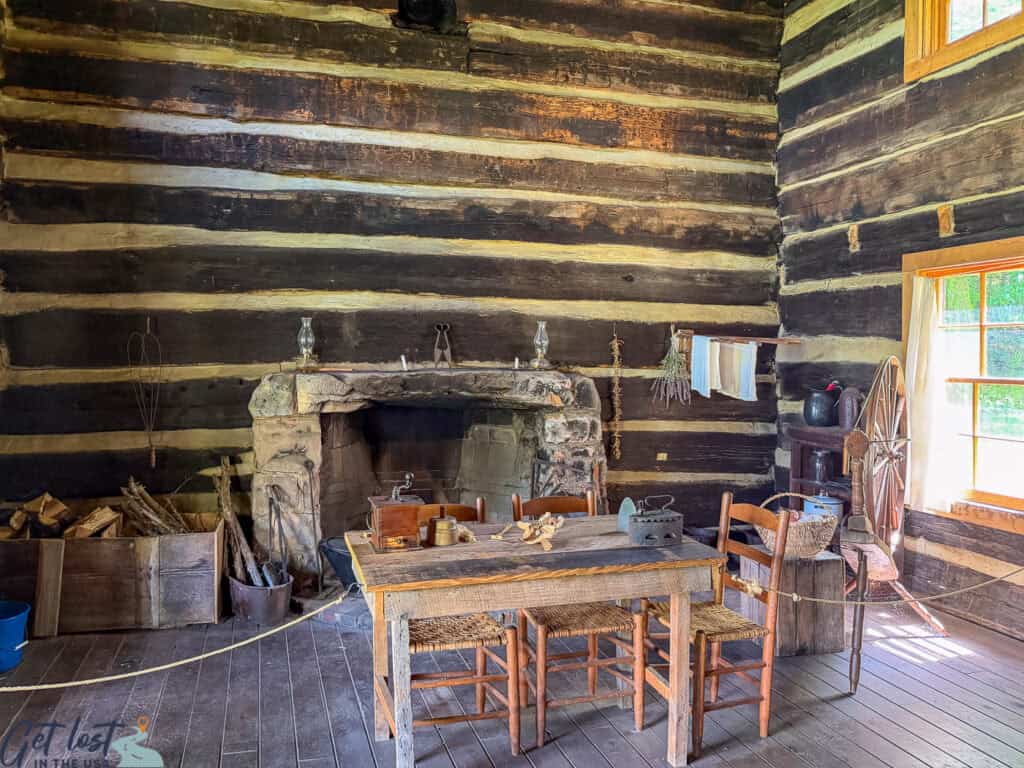
The centerpiece is an 1844 log house moved here from near the New River Gorge. Built from hand-hewn American chestnut, it was originally a two-story, three-bedroom home where the interpreter told me 17 people once lived.
Inside, a large fireplace provided heat, light, and a place to cook. You’ll also see everyday household items, including butter churns, coffee grinders, and irons. One detail I found especially interesting was that mattresses and pillows were stuffed with corn husks and had to be regularly taken apart and beaten to get rid of bugs.
The homestead also includes a one-room schoolhouse, barn, blacksmith shop, weaver’s shed, and a moonshine display.
Visit the Coal Museum
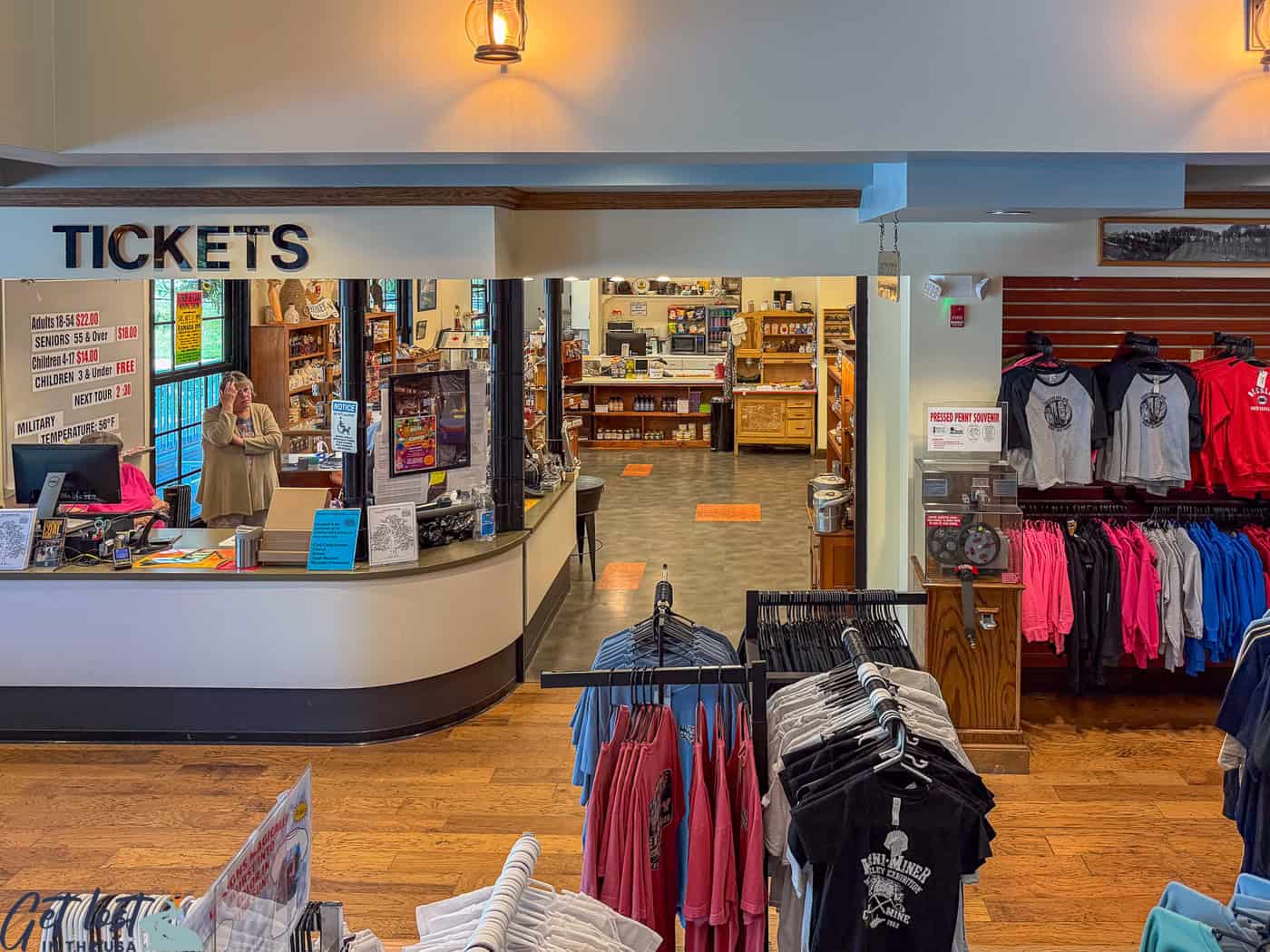
The coal museum sits above the main ticket area and gift shop, adding extra historical context to the equipment and stories you hear underground. Admission also covers the Youth Museum, but I didn’t have time to check that out.
Tips for Visiting Beckley Exhibition Coal Mine
- Pack a jacket. The mine stays around 58°F year-round.
- Budget extra time. The mine trip takes about 45 minutes, but I’d allow 2 to 2½ hours if you want to see the rest of the property too.
- Stick around after the train. Leaving right after the underground tour means missing a huge piece of the story. Seeing the miner’s house and superintendent’s house back-to-back makes the contrast in coal camp life hard to ignore.
- Talk with the interpreters. Several buildings have guides inside who share context, demonstrate trade skills, and answer questions.
- Bring a camera. Photography and video are allowed (and encouraged) during the underground tour.
Is Beckley Exhibition Coal Mine Worth Visiting?
Definitely worth the trip.
I went because I wanted to ride inside the mine, but the experience was so much more than that. Hearing our guide talk about the day-to-day struggles and dangers of coal mining was eye-opening. Reading about it is one thing, but sitting in that dark mine shaft learning from an actual coal miner really drove it home.
If you’re traveling through West Virginia, make time for this stop. You’ll leave with a whole new respect for the people who lived and worked in these mountains.
Where to Stay Near Beckley Exhibition Coal Mine
I stayed at the Hampton Inn Beckley, which was a convenient base for visiting Beckley Exhibition Coal Mine and other attractions in the area. It’s just a short drive from the mine and Tamarack Marketplace.



Leave A Reply!