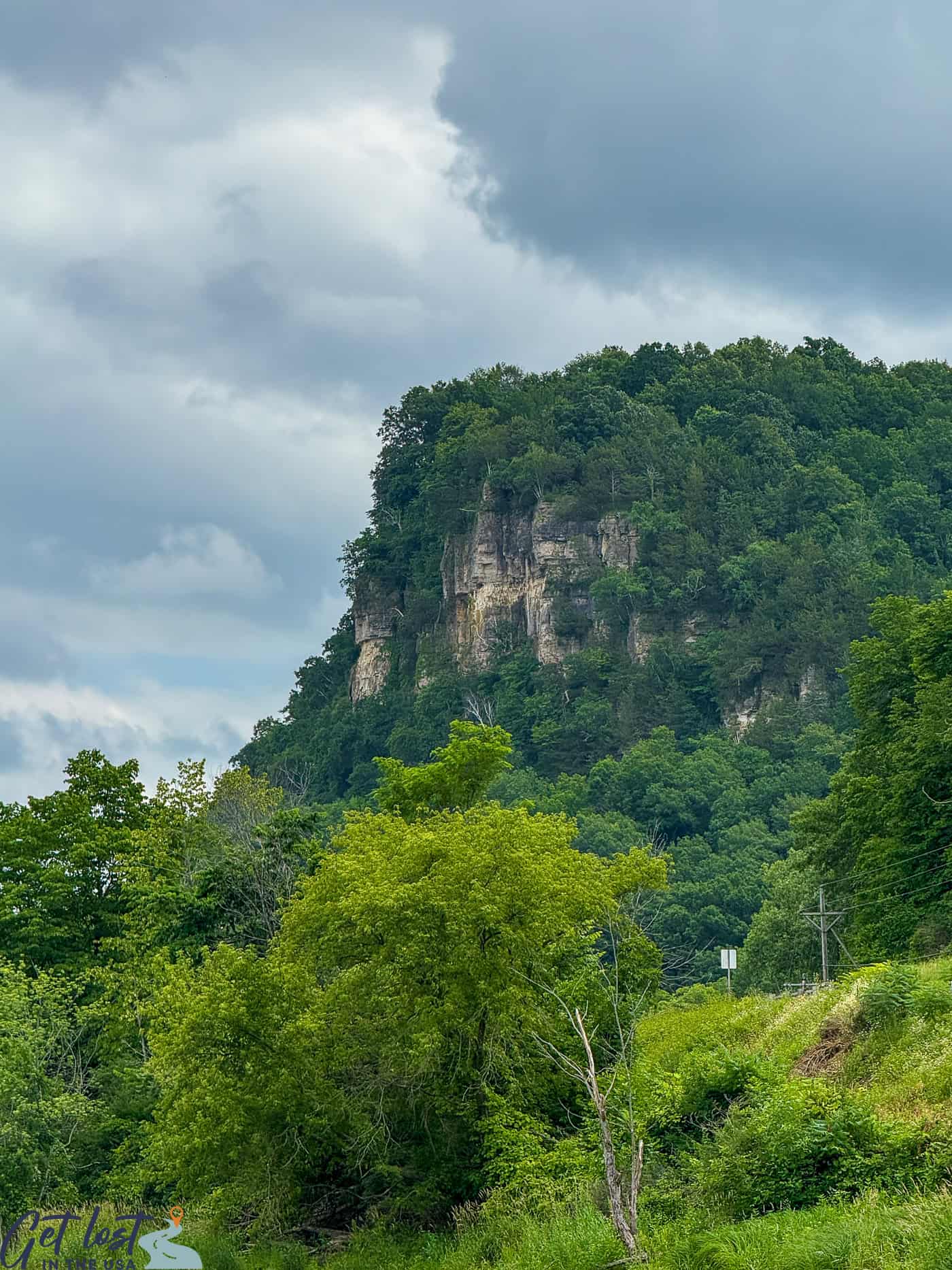
If you picture Iowa as flat fields and endless corn, Allamakee County might just change your mind. In the state’s northeastern corner, the Driftless Region stands out from the rest of Iowa. The glaciers skipped this area, leaving behind limestone bluffs, winding rivers, trout streams, and small towns with plenty of character.
Here are some of the places I loved most during a long weekend in Allamakee County, Iowa.
I worked in partnership with Allamakee County Economic Development & Tourism for my trip to the Driftless Region, but I was on a solo road trip, so my experiences are mine alone.
Driftless Area Education & Visitor Center (Lansing)

If you’re not totally sure what the “Driftless Region” is, this spot is a fun way to get your bearings. The center sits on a bluff above the Mississippi, which means you get the history and science inside, plus big river views outside.
The exhibits guide you through how glaciers bypassed this part of the Midwest, leaving behind the bluffs, valleys, and winding waterways that make the area so distinct. One floor is dedicated to geology and wildlife (yes, there are live critters), while another explores Native American life along the river and quirky local industries, such as mussel-shell button making. Downstairs, you’ll find an aquarium stocked with Mississippi fish and a short film that ties everything together.,
Read my full write-up with more photos and details: Exploring the Iowa Driftless Area Education & Visitor Center

Kayak the Backwaters of the Mississippi

One of my favorite ways to explore Allamakee County is by kayak in the backwaters of the Mississippi. This area is part of Pool 9, surrounded by the Upper Mississippi Wildlife Refuge. We put in at the Village Creek kayak launch, which feeds into the river. The creek is spring-fed, so you can actually feel the temperature drop as you paddle upstream.

As we kayaked under a canopy of trees and past quiet coves, we spotted a fawn along the shoreline, orioles darting between the branches, a woodpecker hammering away on a trunk, and turtles sunning themselves on a log. My guide mentioned that he’s also seen otters, muskrats, and beavers out here from time to time.

Village Creek also has an interesting history. In the steamboat era, passengers stepped off at the creek’s mouth and walked the 17 miles inland to Waukon.

After exploring the creek, we headed out into the main channel, passing limestone cliffs, one of which is home to a peregrine falcon nest. From out there on the wider water, you really notice the scale of the landscape and the river’s energy.

I also picked up a few details about how the river has been shaped over time. In the 1800s, rock jetties known as wing dams were constructed to redirect the current toward the center, thereby deepening the channel from about three to five feet so steamboats could get through. Later, Congress approved the full lock and dam system, which created the calm pools we paddled through, including Pool 9, where we kayaked.

We crossed the main channel to a sandbar, where our guide showed me some mussel varieties once turned into buttons, like the ones I’d seen at the Driftless Area Education and Visitor Center.


Storms on the horizon cut my kayak trip short, but Pool 9 has no shortage of canoe trails, from quick 3-mile paddles to full-day 14-mile treks. Be sure to bring a water trail map or head out with a guide. You can also float the Yellow River or the Upper Iowa River, both known for their scenic limestone cliffs and excellent trout fishing.

Effigy Mounds National Monument (Harper’s Ferry)
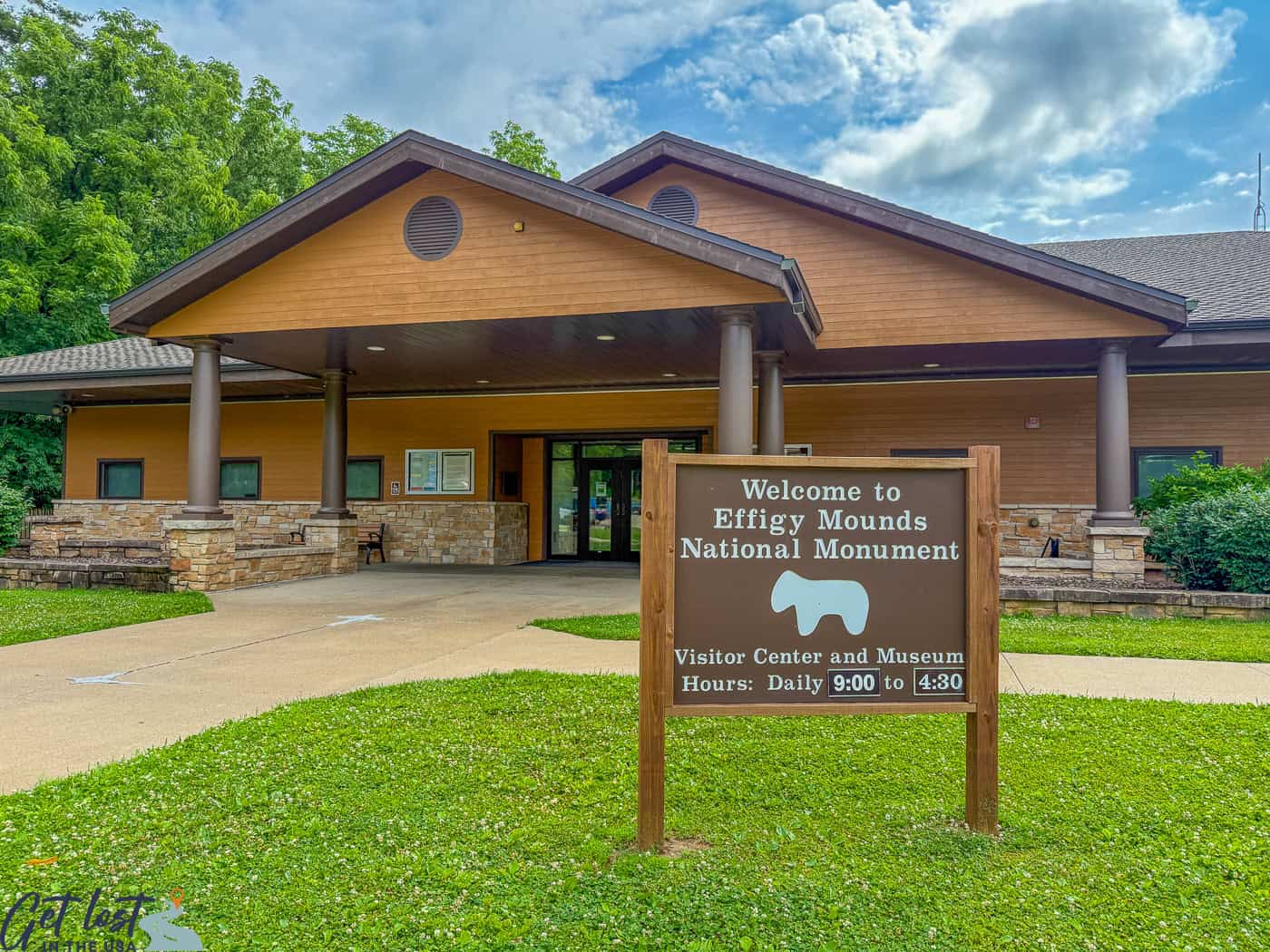
You’ve probably seen photos of Effigy Mounds—the animal-shaped earthworks built by Native Americans more than a thousand years ago. But here’s the thing: standing among them feels totally different than just reading about them. The monument is both a sacred site and a great place to stretch your legs on the trails, with the Mississippi River as a backdrop.
The visitor center is a great place to start, featuring exhibits that explain the various mound shapes and their significance. From there, you don’t have to go far; three mounds sit right outside. But if you’re up for a little climb, the Fire Point Trail winds through forest, past clusters of burial and effigy mounds, and ends with a bluff-top view over the river.
Whether you stroll along the short boardwalk loop, take a ranger-led walk, or venture out on the longer trails, Effigy Mounds is a must-see destination.
Read my full write-up with more photos and details: Exploring Effigy Mounds National Monument (North Unit)

Mt. Hosmer Lookout (Lansing)

I drove up the winding road to Mount Hosmer as clouds gathered overhead, and before reaching the top, I spotted a pull-off with my first sweeping view. Even with the skies turning gray, the panorama of islands and backwaters was worth the stop.

By the time I reached the blufftop—450 feet above Lansing—the rain had started, making the upper lookout a little hazy, but still pretty great in its own misty way.

A landscape diagram highlighted what I was seeing, and other signs shared stories about the park, the town, and the surrounding ecosystem.

My favorite story, though, was the local legend behind the park’s name. Back in 1851, Harriet Hosmer—the only woman on a cargo steamboat—challenged the male crew to a race up the bluff. She ran barefoot to the summit and was already halfway back down before she even saw any of the men. Locals later named the bluff after her, and she went on to become one of America’s most famous sculptors.
Mount Hosmer isn’t just about the view, though. It’s also home to a Veterans Memorial Park, a pavilion, and picnic tables. If you want to stretch your legs, there are also several short trails that loop around the park.

Explore Lansing, Iowa

Lansing is a true Mississippi River town, the kind of place that makes you want to slow down and stay awhile. Main Street is lined with storefronts that invite you to wander in and out, like Horsfall’s Variety Store, a Main Street staple since 1974. This family-run shop has narrow aisles stacked floor to ceiling with hardware, crafts, toys, housewares, and a thousand little odds and ends.

The town’s iconic landmark is the Black Hawk Bridge, often referred to as the “singing bridge” because your tires hum as you drive across. Beloved as it is, the bridge is nearing the end of its life, and is scheduled to close in 2025, with a replacement already under construction.

When I visited, I couldn’t resist driving across the bridge to Wisconsin. I don’t usually get nervous on bridges, but this one is narrow, and I was a little scared! I crossed, turned around, and came right back… one trip was enough for me.
Still, I can officially say I drove the Black Hawk Bridge! If it’s still open when you visit, take the drive just for the experience. And even if the new bridge has already taken over, it’s worth crossing into Wisconsin just because you can.

Lansing also has a creative streak. A mural called Reverse Effigy, painted by artist Erik Burke, shows a peregrine falcon soaring over the effigy mounds. It was my favorite piece of public art in town, though not the only one. I spotted bursts of color on walls here and there, each adding its own surprise to my walk.


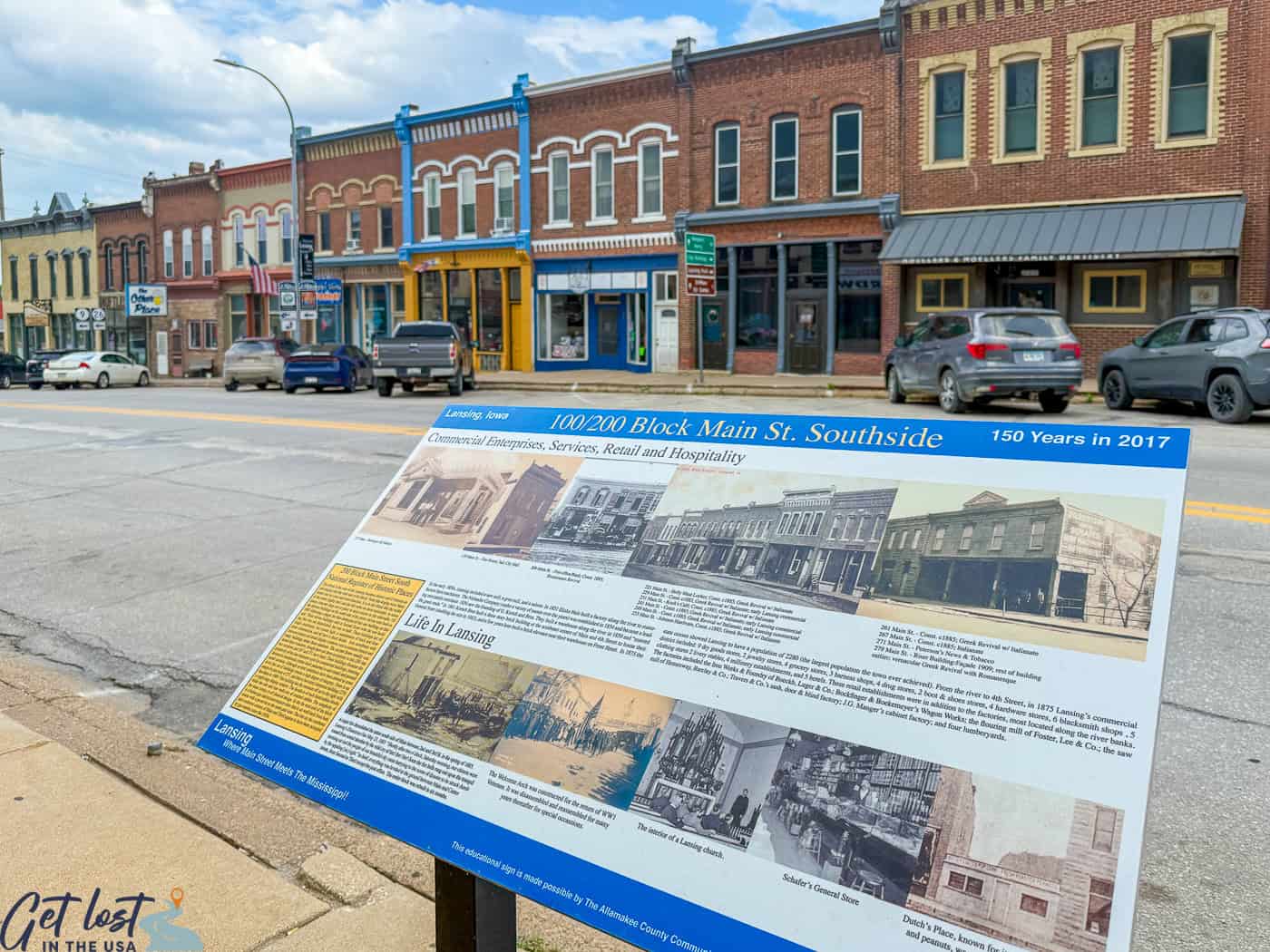
Alongside the murals, a History Walk of wayside panels shares photos and stories from the town’s past, turning an ordinary stroll into a guided tour through Lansing’s heritage.
What really brought Lansing to life for me, though, was the people. Over dinner with locals, including folks from Friends of Pool 9 and Main Street Lansing, I heard the many reason they love the area. They talked about community, their connection to the river, and pride in keeping the town vibrant and its waterways healthy.
City Meat Market (New Albin)

This was an unexpectedly fun stop! The fifth-generation family business started in 1882 as an old-school butcher shop that processed its own meat.

They’re best known for their ring bologna—their oldest recipe—and still make some of the traditional items you don’t see at most places anymore, like dried beef, homemade summer sausage, and ribs.
I even got to step inside the original cooler, which still works! Back in the day, it was chilled with ice blocks stored above.

It was neat to see the ring bologna and summer sausages hanging from hooks, as they have for decades.

When I asked about best sellers, they said it’s probably the bologna by volume, with snack sticks a close second. The sticks are made with pork, beef, and chicken, along with a bit of cheese, and they get their heat from cayenne and crushed red pepper flakes.
They still make most everything on site, except for the hot dogs and a few deli meats. They handle all the sausage making themselves, but they don’t butcher here anymore. These days, they focus on the finishing work: everything comes in from the packing plants, and they process it from there.

One of the coolest parts of the shop is the original smokehouse, still in use since 1906. They use hickory wood for everything, and it’s all done by eye rather than temperature controls. The weather even plays a role—wind, humidity, and pressure can change how long it takes—so it’s part science, part art.

When we peeked inside, whole bone-in pork loins for pork chops were just a few hours from being finished, while bacon hung from rods in the cold-smoke section.


They don’t smoke everything—steaks and brats skip it—but most of the classics are smoked, including bologna, cheddarwurst, summer sausage, and snack sticks. Bologna might only take about three hours, while snack sticks need longer since they’re drier than your typical grocery-store sausage. After smoking, items like bologna and snack sticks are finished in hot water until they hit the right temperature.
Then it’s on to stuffing. They twist natural casings by hand and tie synthetic ones with string. I’ve always found the process fascinating, and it reminded me of visiting LeBleu’s Landing on the Southwest Louisiana Boudin Trail.
I finished my visit by wandering through the market, where I found a cheeky t-shirt. I didn’t buy it, but it sure made me laugh.

Empty Nest Winery (Waukon)

Most of the wines at Empty Nest Winery are fruit-based, made in small batches with whole fruit and real sugar rather than juice—a process that gives them a fuller, more natural flavor. Grapes for the dry wines are sourced from California, while the featured fruits are grown locally whenever possible.
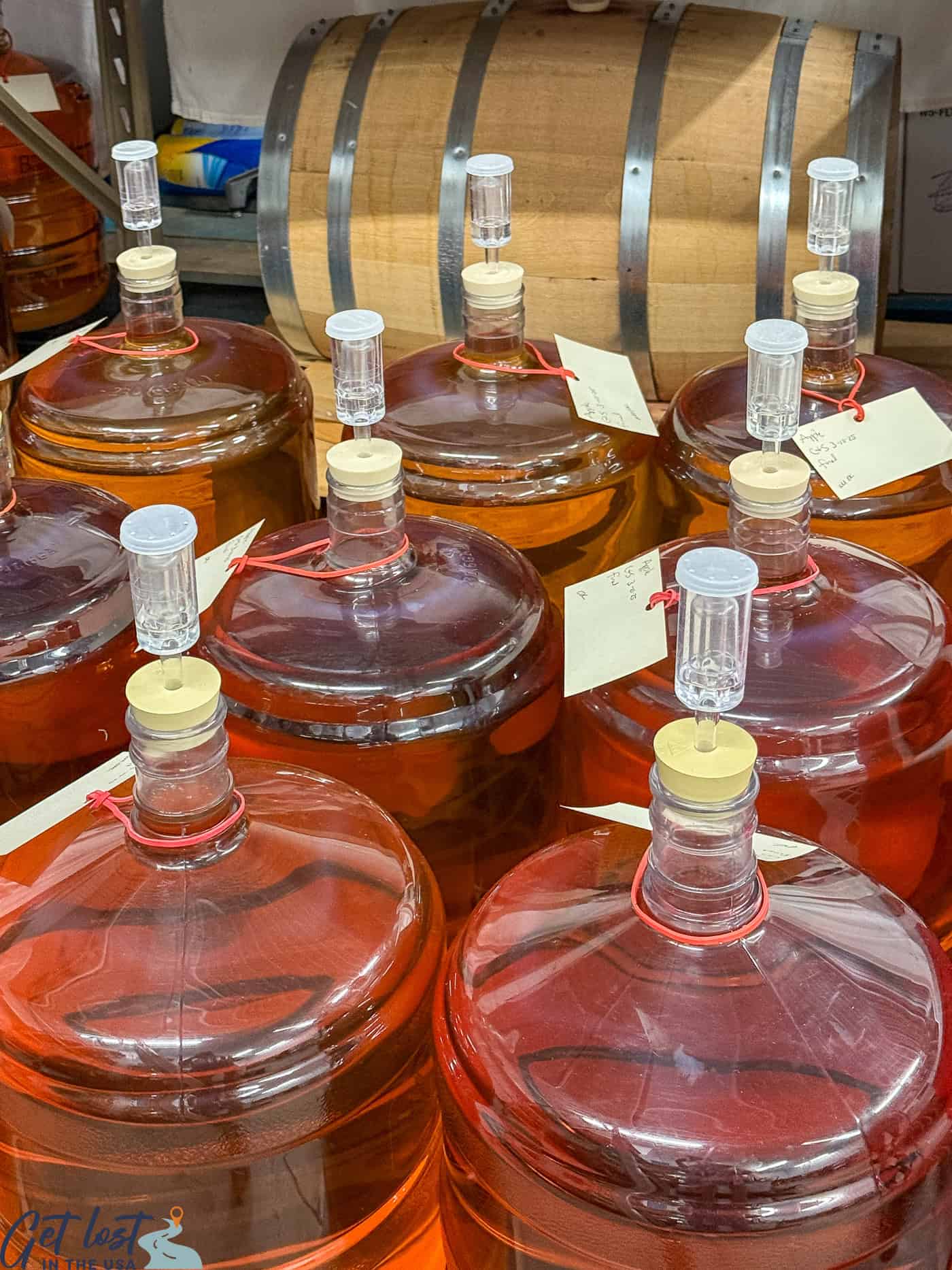
The result is a mix of drier reds—like Red Silk (Alicante) and Red High Heels (a Merlot, Cab, Shiraz blend)—alongside popular fruit wines such as Hump Day Happiness (blackberry and grape) and Strawberry Rhubarb. Sangrias and slushies add to the summer lineup.

Each February, right after the Super Bowl, the winery hosts a blind tasting where experimental wines (sometimes zucchini or tomato) are put to the test by visitors. The best-loved flavors occasionally make it into seasonal or limited releases.
The winery was founded by Dave and Pam Kruger, but Pam now runs it solo after losing her husband, keeping the operation moving forward with a mix of grit and neighborly warmth.

WW Homestead Dairy (Waukon)

I’d heard Waukon was home to the “Cheese Curd Capital of Iowa,” and as someone who fell in love with cheese curds on trips to Door County and Green Bay, Wisconsin, I couldn’t pass it up. WW Homestead Dairy has built its reputation on fresh, squeaky curds, but that’s just the start of what they do.

The creamery is run by three owners with a combined 90 years of dairy experience, and they turn out curds daily along with small-batch cheeses, cottage cheese, butter, and more than 30 flavors of ice cream, all made from cream-line milk sourced just down the road.

The café menu features grilled cheese sandwiches, milkshakes, malts, and fruit smoothies, with ice cream available in cones, bowls, sundaes, or even flights. Judging by the steady stream of people while I was there, it’s clearly a local favorite.
I couldn’t resist the Fat Cow Sundae: vanilla ice cream piled with brownie chunks, chocolate chips, hot fudge, whipped cream, and the cherry on top. It did not disappoint.
I had hoped to meet the owners and sample more of their lineup, but they were away for a family emergency. Even so, I was happy to cool off in the A/C and savor every bite of that sundae.


Where to Eat in Allamakee County
I tried three restaurants in Lansing and honestly enjoyed them all; here’s the rundown. If I had to pick a favorite, it’d be Safe House Saloon, but every meal was solid. Just a heads-up: parking on the river side of the railroad tracks for Coffee on the River and Shep’s Riverside Grill is super tight and kind of a hassle (ask me how I know). Your best bet is to park on Main Street and take the short walk across Front Street and the tracks to get there.
Coffee on the River

I’m not sure what I loved more about Coffee on the River—the food or the building itself. Housed in a repurposed 1868 grain elevator, this cozy coffee shop and restaurant keeps all the charm and character of its historic roots. It’s so cool inside!

I’d heard breakfast at Coffee on the River is a must, but since I was staying at a B&B with breakfast included, I swung by for lunch instead and opted for the cool comfort of the indoor seating—though the back deck, with its view of the Mississippi and the bridge, was definitely tempting.
I ordered the Twisted Wedge Salad, a BLT-inspired creation that hit all the right notes. Baby tomatoes, smoky bacon, and herb-buttered croutons? Salad heaven.

Shep’s Riverside Bar & Grill

After a morning kayaking the Mississippi River, I stopped at Shep’s Riverside Bar & Grill for a late lunch. The vibe was laid-back and local—guests can sit in the bar, main dining room, or out on the patio. I went for the A/C and grabbed a spot inside, where a few groups were playing cards and having a blast.
I was in the mood for a solid burger, and the Island Burger with fries hit the spot. Juicy, flavorful, and exactly what I needed.

Safe House Saloon

It might still be called a saloon—a nod to its early tavern roots—but these days it feels more like a speakeasy-style gastropub, where craft beer and creative food steal the spotlight. Even the bathrooms lean into that old-time character, complete with quirky pull-chain toilets that flush from above.
Safe House Saloon is known for its thin-crust tavern-style pizza, which I fell in love with at first bite. But before we got there, we kicked things off with bruschetta and Capone dippers.


The bruschetta comes piled with housemade pesto (seriously, it’s so good), fresh diced tomatoes, and red onion. The Capone dippers are Safe House’s spin on garlic bread meets breadsticks—two layers of pizza crust brushed with garlic butter, loaded with cheese, sliced into strips, and served with ranch or marinara for dipping.
Now, about that pizza… We went all in and ordered the Calypso, the Pizza Al Pastor, and the Meat Lovers. The Calypso leans Mediterranean, the Al Pastor brings a sweet-and-spicy carnitas-style twist, and the Meat Lovers is exactly what it sounds like—an all-out celebration of meat. From the starters to the pies, everything hit the mark.

Where to Stay in Allamakee County

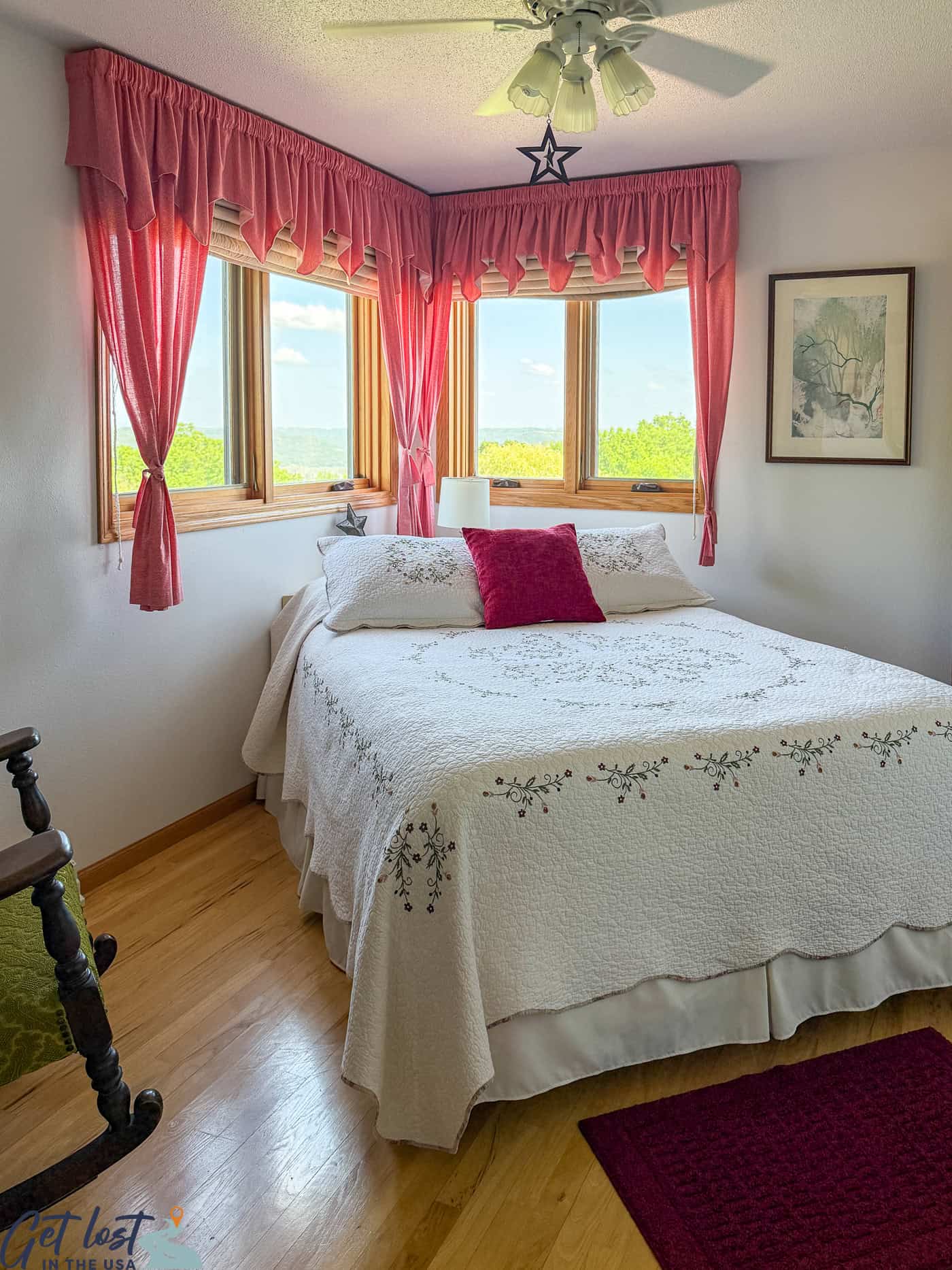
I stayed two nights at Point of View B&B and loved it. The owners, Dianne and Andrew, are the kind of hosts who make you feel instantly at home. Each morning, Dianne and I had our little routine: she’d have her breakfast while I sipped on the fresh glass of iced tea she brewed just for me. (I’m not much of a breakfast person, so iced tea was my “special order.”) We’d sit and chat for a while, and honestly, those visits ended up being one of my favorite parts of the stay.
The countryside setting and my guest room were wonderful too. I stayed in the Shooting Star bedroom, which had a cozy little bed nook I instantly loved. Andrew’s artwork fills the house, and they even invited me into his studio to see more of it.
On my last morning, Dianne took me on a little adventure to her friend’s garden, and it felt like stepping into another world. Inspired by Japanese design, the space was filled with texture and layered greenery, with subtle shifts in color. Walking the winding paths was a quiet, peaceful bonus to my stay at her B&B.


Point of View really lived up to its name—it gave me a fresh perspective on what a bed and breakfast can be. Between the cozy spaces, Andrew’s artwork, and those morning chats with Dianne, I left with the best memories. If you’re planning a trip to Allamakee County, I can’t think of a lovelier place to stay.

Final Thoughts
My few days in Allamakee County were full of surprises—from paddling quiet backwaters to standing among ancient mounds and exploring small river towns. It’s a corner of Iowa that feels both unexpected and welcoming, and I’d go back in a heartbeat.





Leave A Reply!