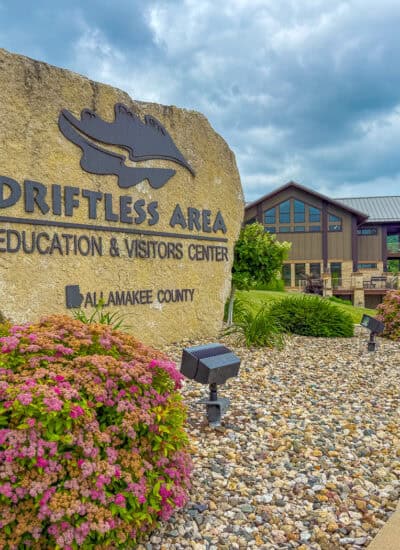
Before visiting Allamakee County, Iowa, I didn’t know much about the Driftless Region. That’s why one of my first stops was the Driftless Area Education & Visitor Center in Lansing. Built on a limestone bluff overlooking the Mississippi, the three-story center introduces visitors to the region’s geology, wildlife, and cultural history.

I worked in partnership with Allamakee County Economic Development & Tourism, for my trip to the Driftless Region, but I was on a solo road trip, so my experiences are mine alone.
About the Driftless Region
The Driftless Region covers about 24,000 square miles across parts of Minnesota, Iowa, Wisconsin, and Illinois.
During the last Ice Age, glaciers reshaped much of North America, but not here. Tough bedrock near Lake Superior forced the ice sheets to flow around it, leaving no “glacial drift” (the debris and sediment glaciers usually drop behind).
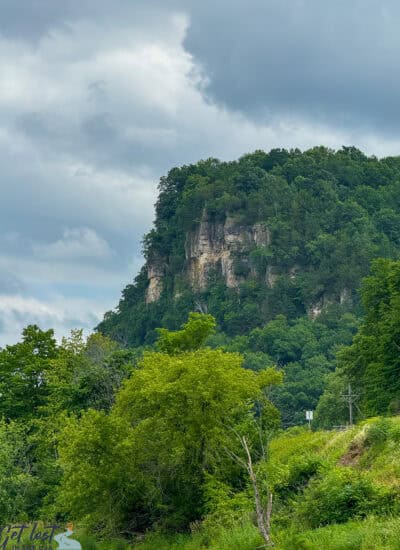
That’s why this landscape looks so different from the flat plains nearby. Instead, it’s all rolling hills, rugged limestone bluffs, and winding waterways. The Mississippi River cuts right through, creating some of the most dramatic scenery in the Midwest.

What’s Inside the Driftless Area Education & Visitor Center?
Right inside the door, a massive photo map of the Driftless Region grabbed my attention. It’s a striking bird’s-eye view of how the Mississippi weaves through the middle of it all.
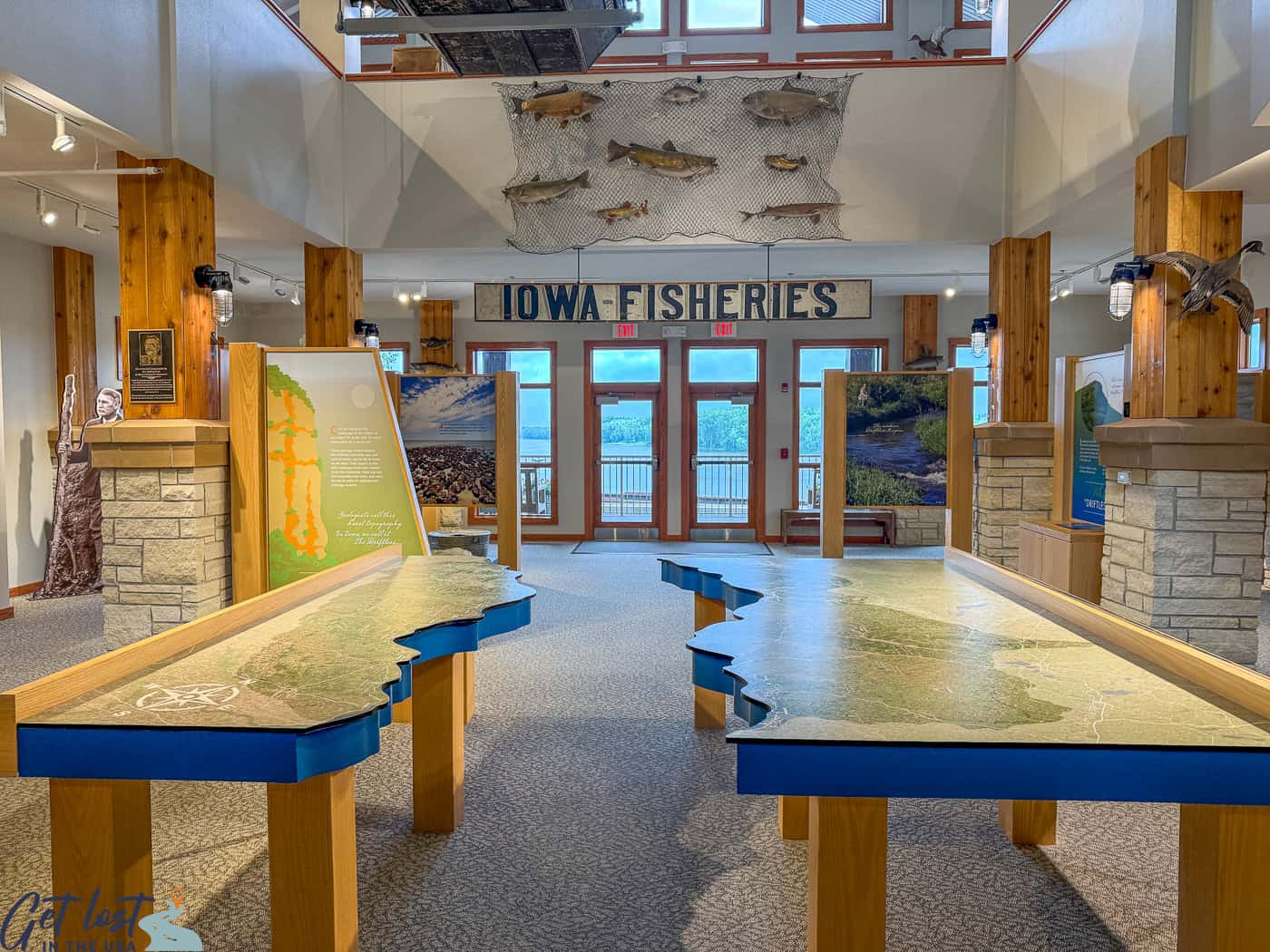
Main Floor Exhibits
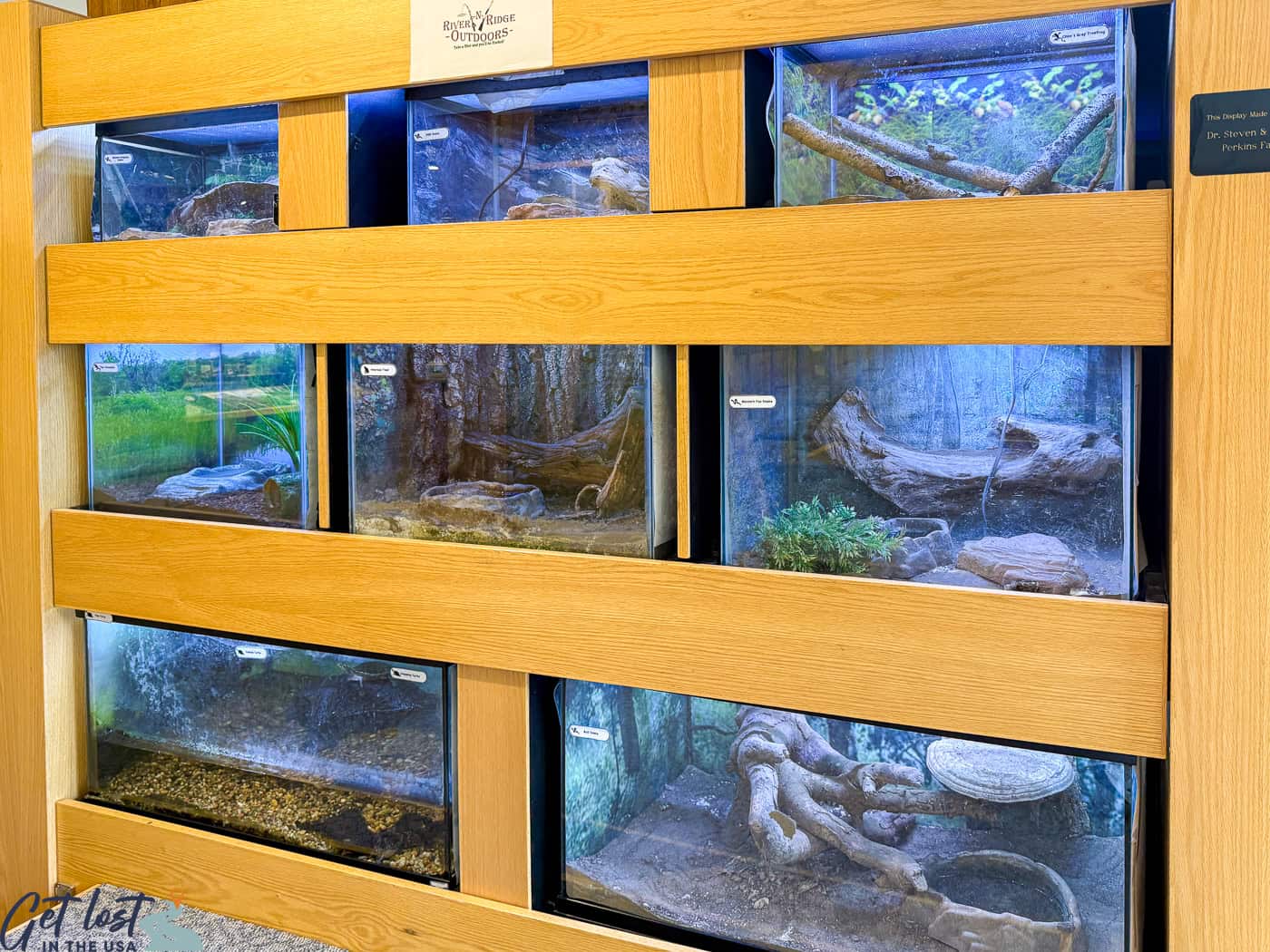
The main floor highlights the geology and ecology of the Driftless Area, with exhibits that span from the roots of Iowa’s archaeology and preservation efforts to the native wildlife of the region, displayed both in live reptile and amphibian tanks and as traditional mounted specimens.
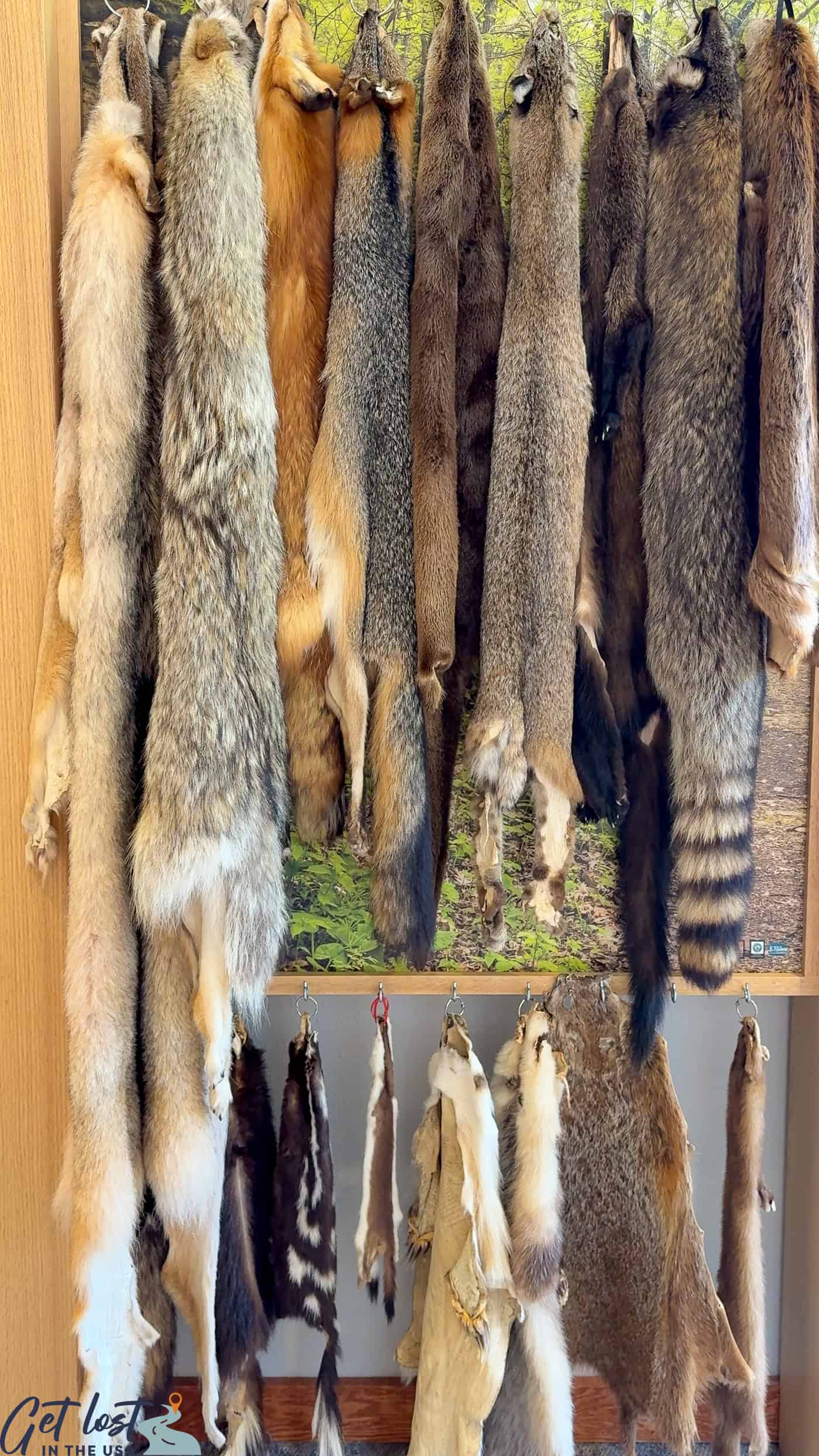
One surprise highlight? The animal pelts. At first glance, I was taken aback, but I ultimately found the exhibit fascinating. Each full pelt made it easy to compare size, color, and texture. Super educational, and something kids would definitely enjoy.
Upper Level Exhibits
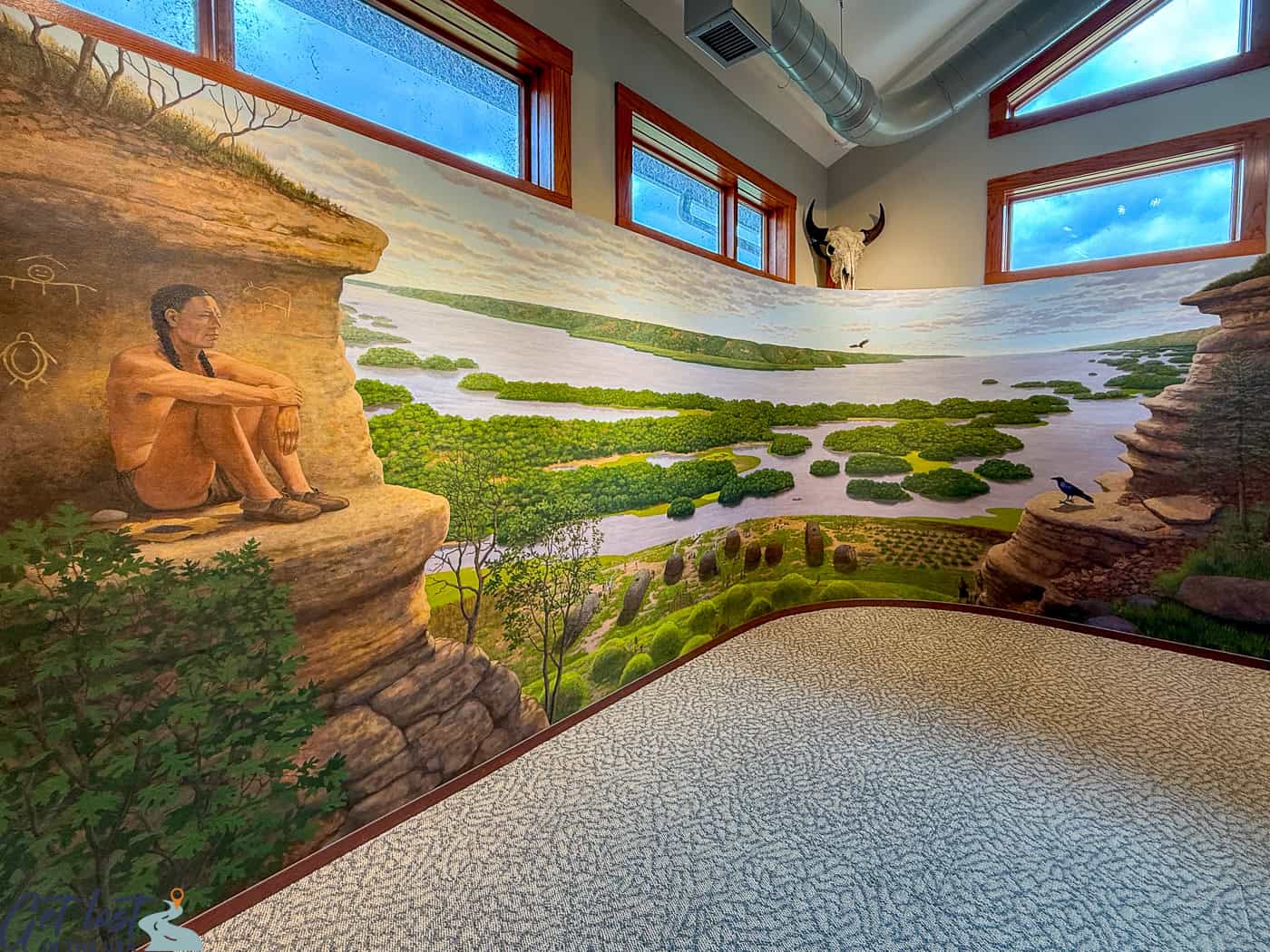
Upstairs focuses on history and culture. It starts with how Native Americans lived closely with the river, then shifts to how fishing, hunting, and travel evolved with new tools and technology. The river, though, is always at the center.
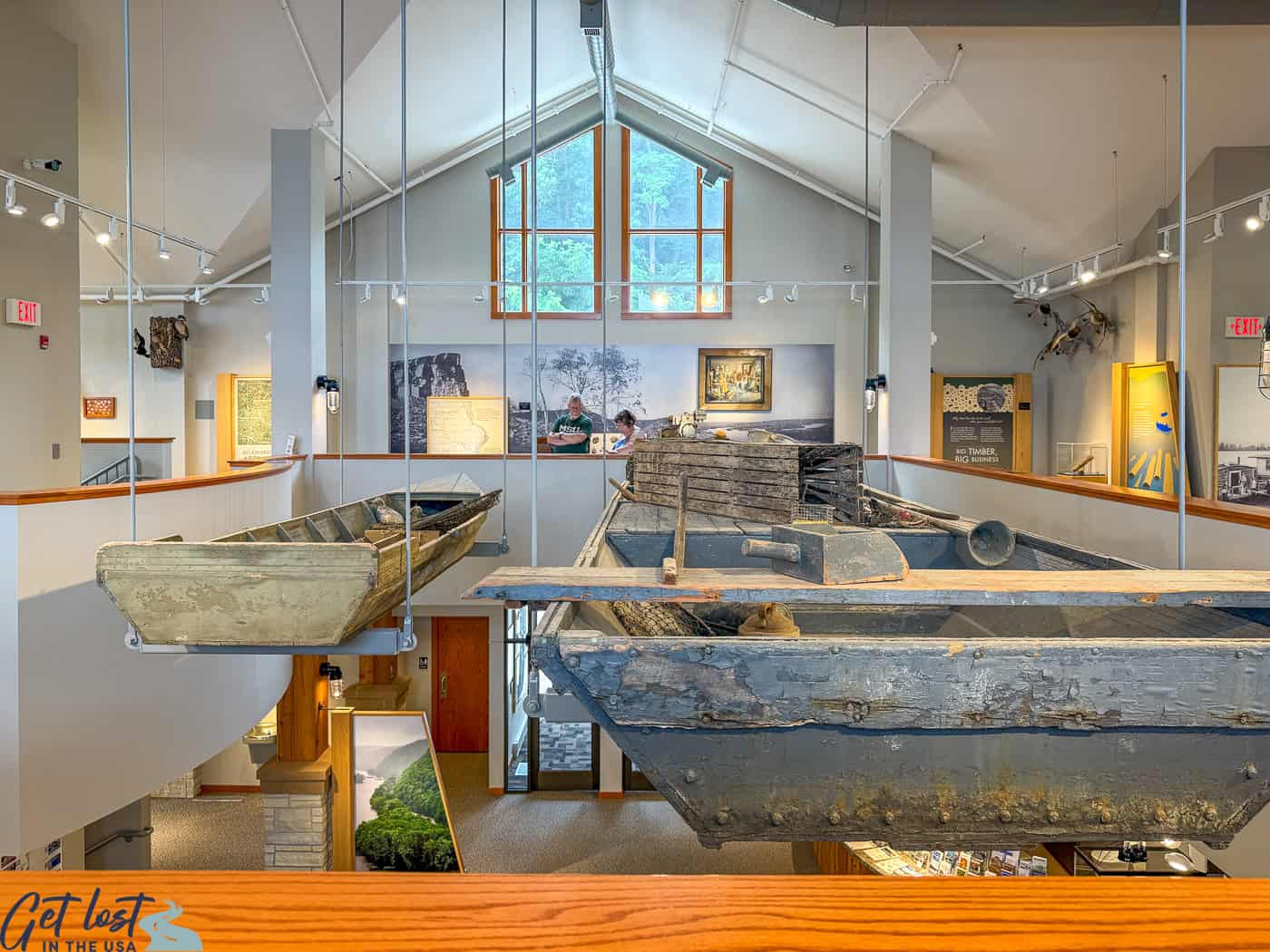
I loved the exhibit on early ice shanties. The wood and canvas huts were mounted on skis, allowing them to be pulled across the ice and set up in under a minute. For transportation, flat-bottomed boats were fitted with motorized “scratchers” to help them glide over the frozen surface.


The mussel button industry was equally fascinating. In 1897, the Lansing Button Factory opened, and buttons became so popular that local bars even accepted them as payment. The industry eventually outpaced lumber, though it severely depleted mussel populations, leading to strict harvesting rules.


Lower Level
Downstairs, I found an aquarium stocked with Mississippi River fish like bass, bluegill, and long-nose gar. I watched Mysteries of the Driftless here, a 28-minute film that really tied the whole story together. You can ask at the front desk if you want to see it too.
Mississippi River Views

Both the main and upper floors open to decks overlooking the Mississippi. The panels out there are worth checking out—one explains the vessels that travel the river, another spotlights peregrine falcons, the fastest animals on Earth. I didn’t see one, but they’re often spotted diving at incredible speeds in the area.

Final Thoughts
If you’re planning a trip to Allamakee County or anywhere in the Driftless Region, make sure the Driftless Area Education & Visitor Center is on your list. It tied history, geology, and river life together, giving me a new perspective on the region.
Know Before You Go
- Address: 1944 Columbus Rd, Lansing, IA 52151
- Hours: M–F 8:00 – 4:30, Sat–Sun 12:00 – 4:00. Check the official website before visiting; seasonal hours may vary
- Admission: Free
- Extras: 28-minute film Mysteries of the Driftless shown on request
- Accessibility: Elevator available to all floors; viewing decks accessible
- Restrooms: Yes
- Gift Shop: Yes
- Tips: Start on the main floor to get a feel for the wildlife and geology, then head upstairs for history and culture. Don’t miss the river-view decks!
- Website





Leave A Reply!