When I visited Effigy Mounds National Monument in northeast Iowa, I was already familiar with its cultural significance and its animal-shaped mounds. Still, reading about something and standing in the middle of it are two very different things. As a bonus, it’s also a beautiful spot to hike, right in the heart of Iowa’s Driftless Region.
This guide focuses on the North Unit—the most accessible area from the visitor center and home to some of the park’s best-known trails and mounds. I’ll share what the experience was like, along with a few tips and highlights to help you plan your own visit.

I worked in partnership with Allamakee County Economic Development & Tourism, for my trip to the Driftless Region, but I was on a solo road trip, so my experiences are mine alone.
Visitor Center Experience
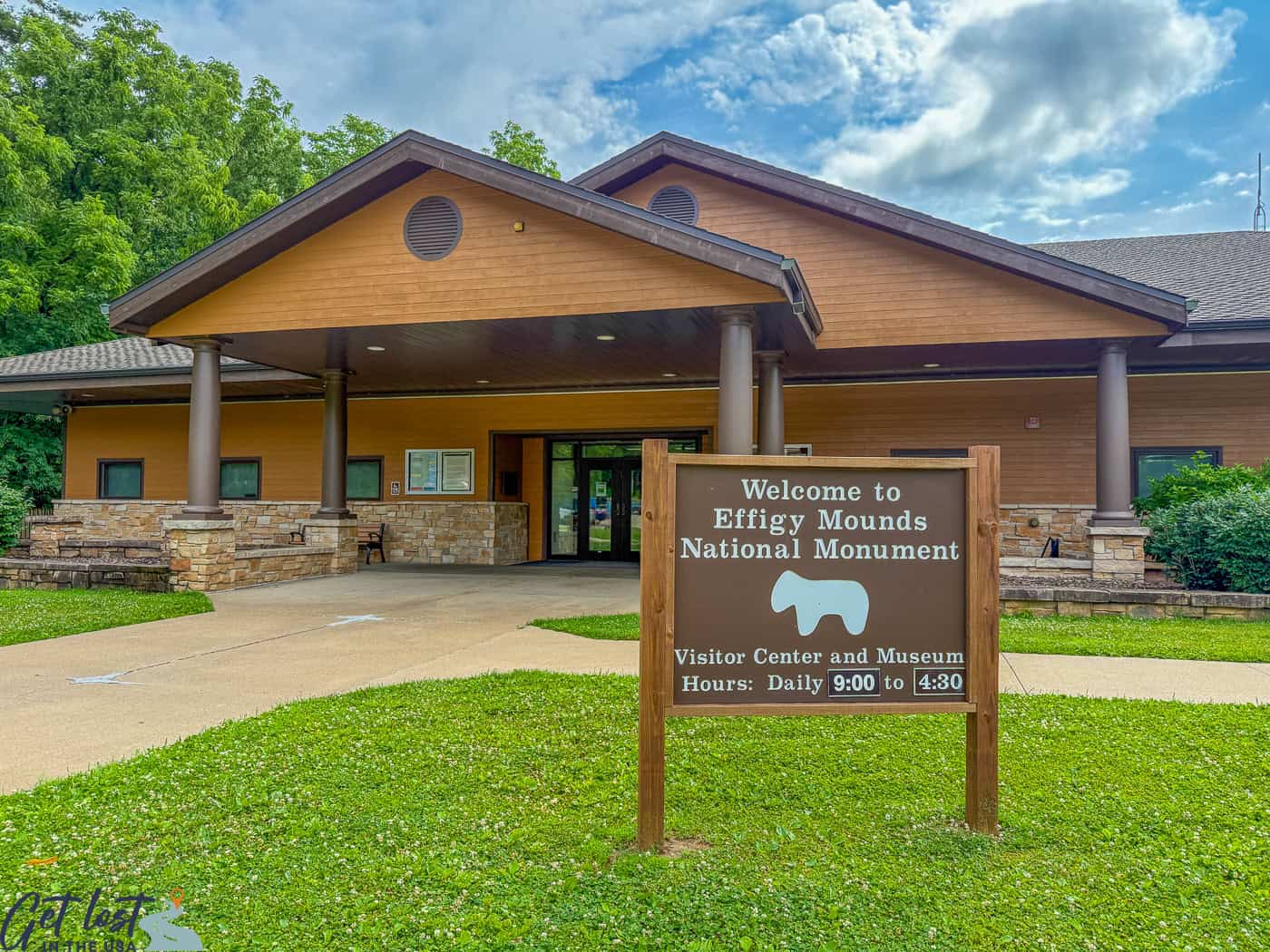
I usually start with the visitor center exhibits before hitting the trails—because if I wait until after, I know I’ll be too tired to take anything in. So that’s where I began at Effigy Mounds.
The museum is small but packed with interesting information—from Native American artifacts to explanations of the different mound types, plus insight into how they’re studied and preserved..

Mounds Closest to the Visitor Center
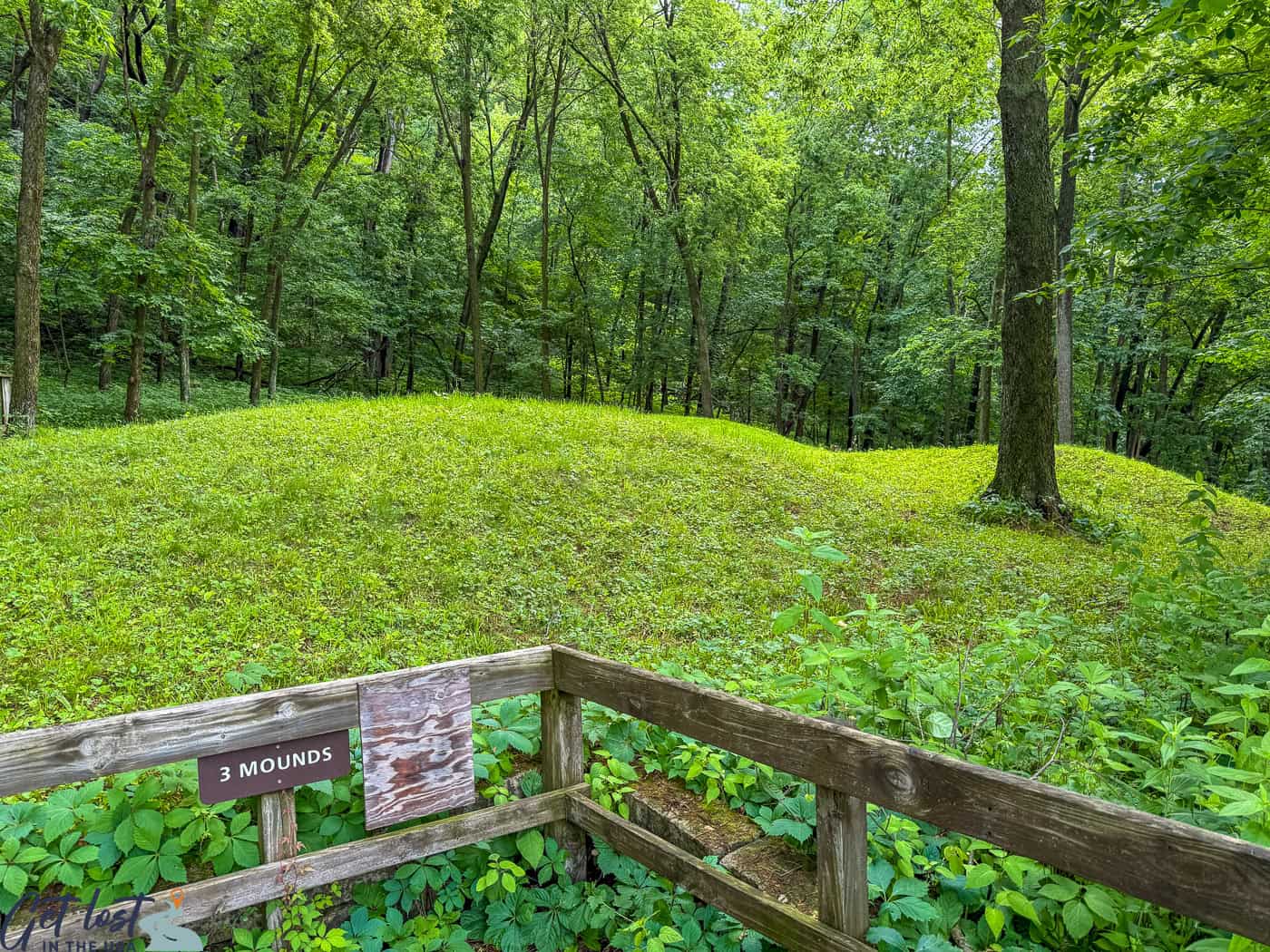
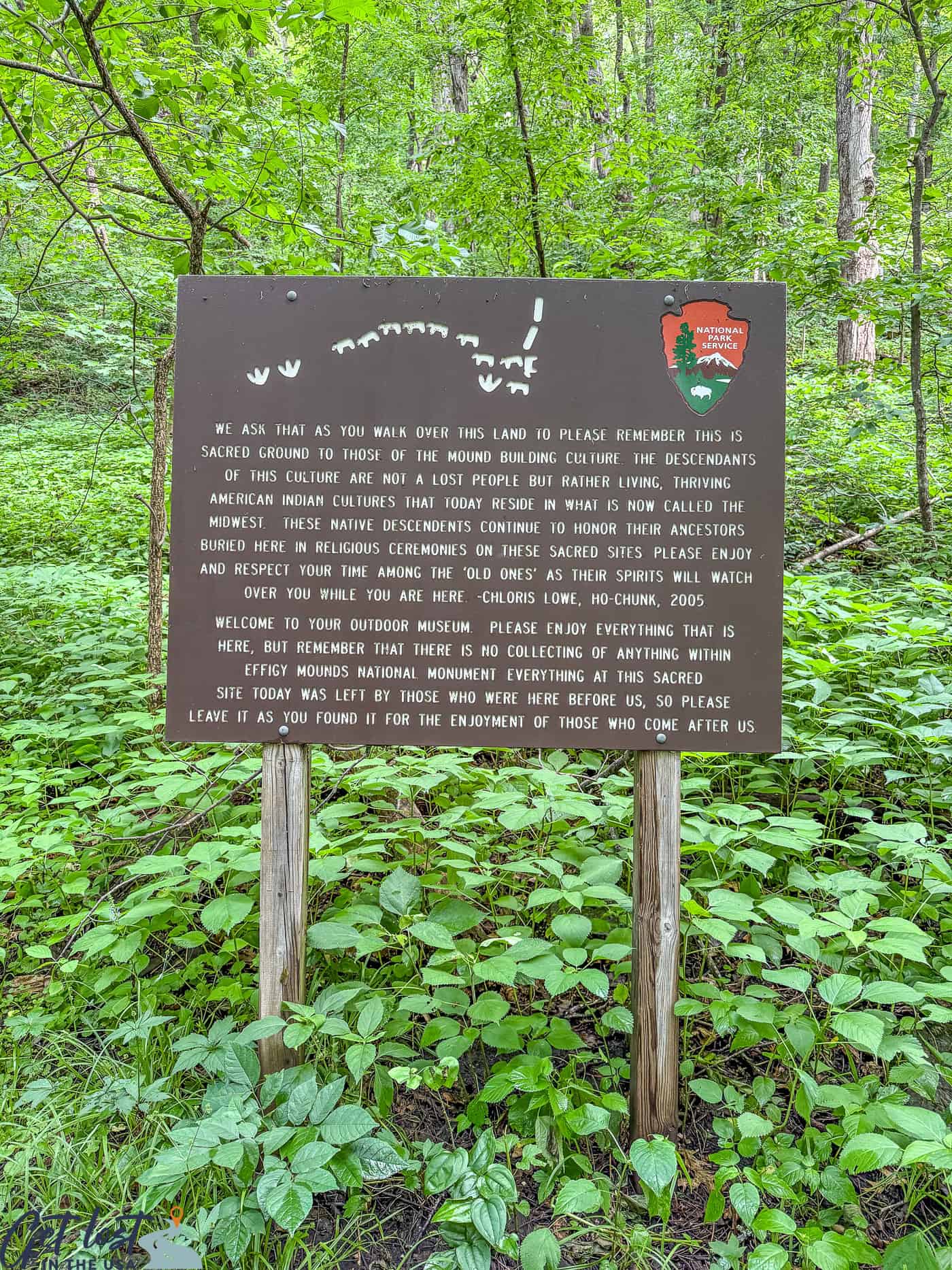
If you’re not up for a long hike but still want to see some of the mounds, there are three located by the visitor center. There’s also a sign nearby reminding visitors that this is sacred ground and to leave no trace.
Hiking the Trails
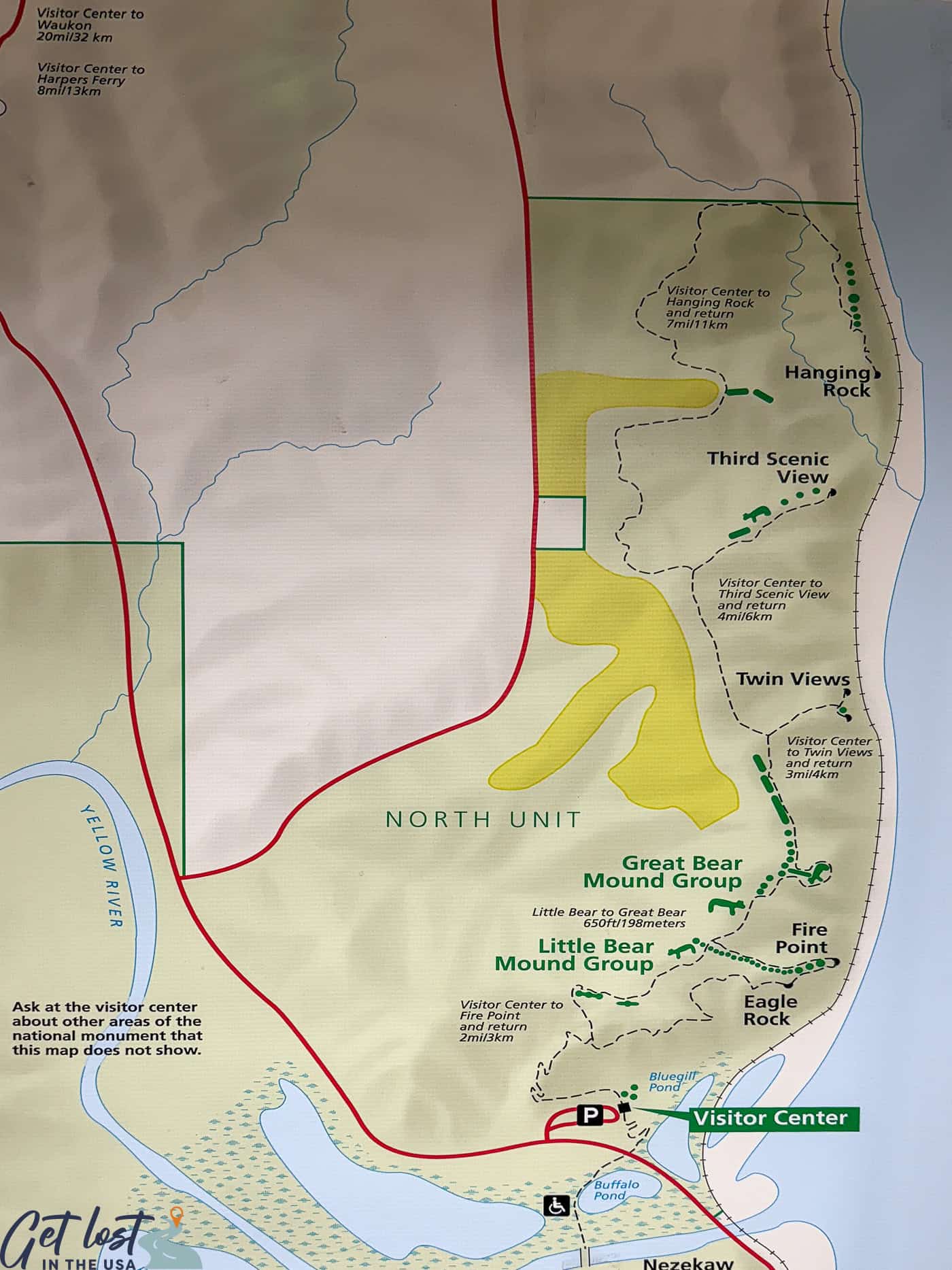
It’s always a good idea to have a trail map with you—either a paper copy or just a quick photo on your phone. There’s a kiosk right outside the visitor center with a big map that shows all the main loops and side trails, so snap a pic before you head out.
Fire Point Trail

The Fire Point Loop Trail is the most popular trail in the park. (That being said, we only crossed paths with two other groups during my visit.) It’s about 2 miles long and mostly a woodchip path, starting with a steady uphill climb (elevation gain 350 feet) with switchbacks—nothing too intense, but enough that you’ll want decent shoes with good grip.
I wore my go-to hiking boots and brought trekking poles, which definitely helped on the incline. Once we reached the bluffs where the mounds are, the path leveled out.
As we hiked, I loved spotting a few blooming plants and even caught a deer bounding across the trail in front of us. In summer, the trail is lush with greenery and plenty of shade. Spring brings wildflowers, and fall lights up the bluffs with vibrant color.



Before reaching the effigy mounds, we passed a group of burial mounds made up of linear and conical shapes. I learned from the ranger that the soil used to build them wasn’t just taken from the immediate area; it was carried up from the Mississippi River and other spiritually significant places. Early excavations revealed this, though that kind of digging was stopped in the 1970s out of respect for this sacred indigenous site.

Effigy mounds are ceremonial, and the first one we came across was Little Bear Mound. At ground level, it was hard to recognize—the shape has softened over time due to erosion and compaction, and it blends into the landscape more than you’d expect.
The park lets the grass grow taller on the mounds by mowing the surrounding area twice a year, which helps a little. Still, without the ranger pointing out the head and legs, I wouldn’t have spotted the outline.

We continued along the trail toward Twin Views and came to the Great Bear Mound. Like Little Bear, it was hard to recognize—especially from the trail. The ranger pointed out the head, legs, and body, helping me piece it together. You can sort of see where the legs come down in the photo, but I never would’ve figured it out on my own without her help.

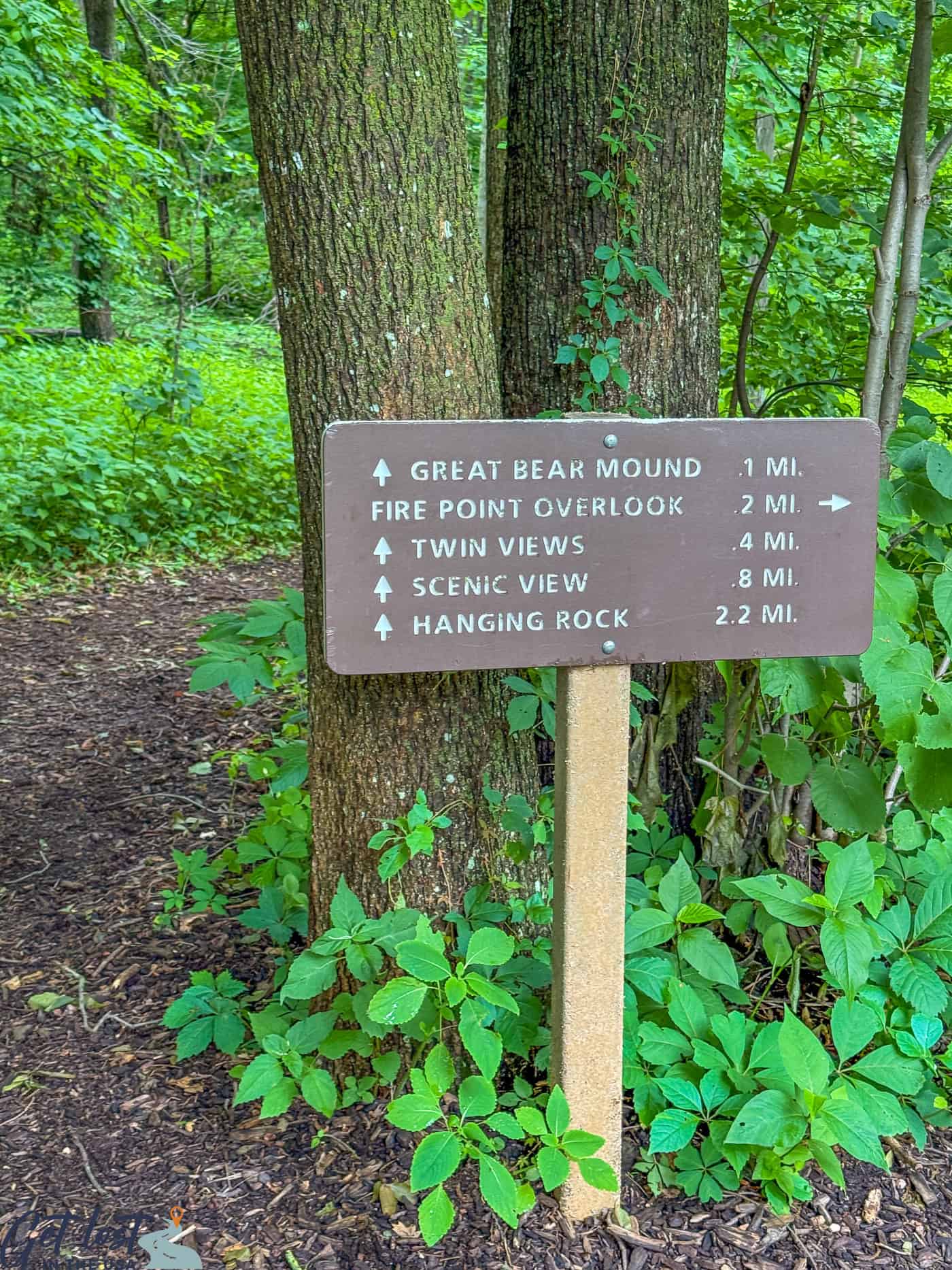
From Great Bear, you can continue about 1 mile to reach Twin Views, or 2.5 miles more for the full hike to Hanging Rock. We opted to hike toward the Fire Point Overlook.
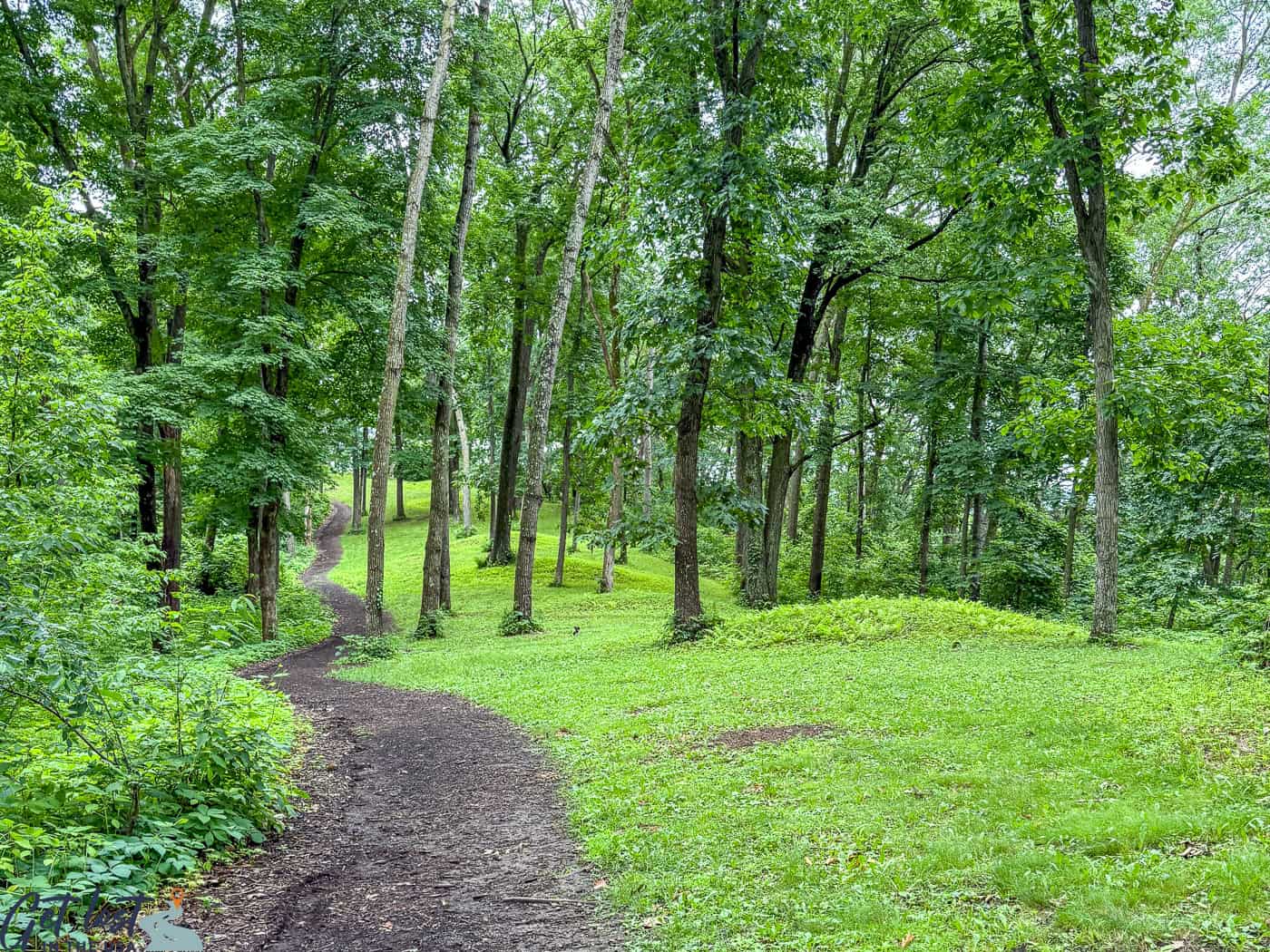
The trail took us alongside the String of Pearls—a line of 21 conical mounds that stretches toward the Mississippi River and two scenic overlooks. If you walk this section, be sure to turn around now and then; I thought the mounds stood out more when looking back.

The last mound in the string of pearls stands at the bluff of Fire Point Overlook. This one rises quite a bit above ground level and overlooks the river. There’s also an interpretive sign here that illustrates how the burial mounds were made.

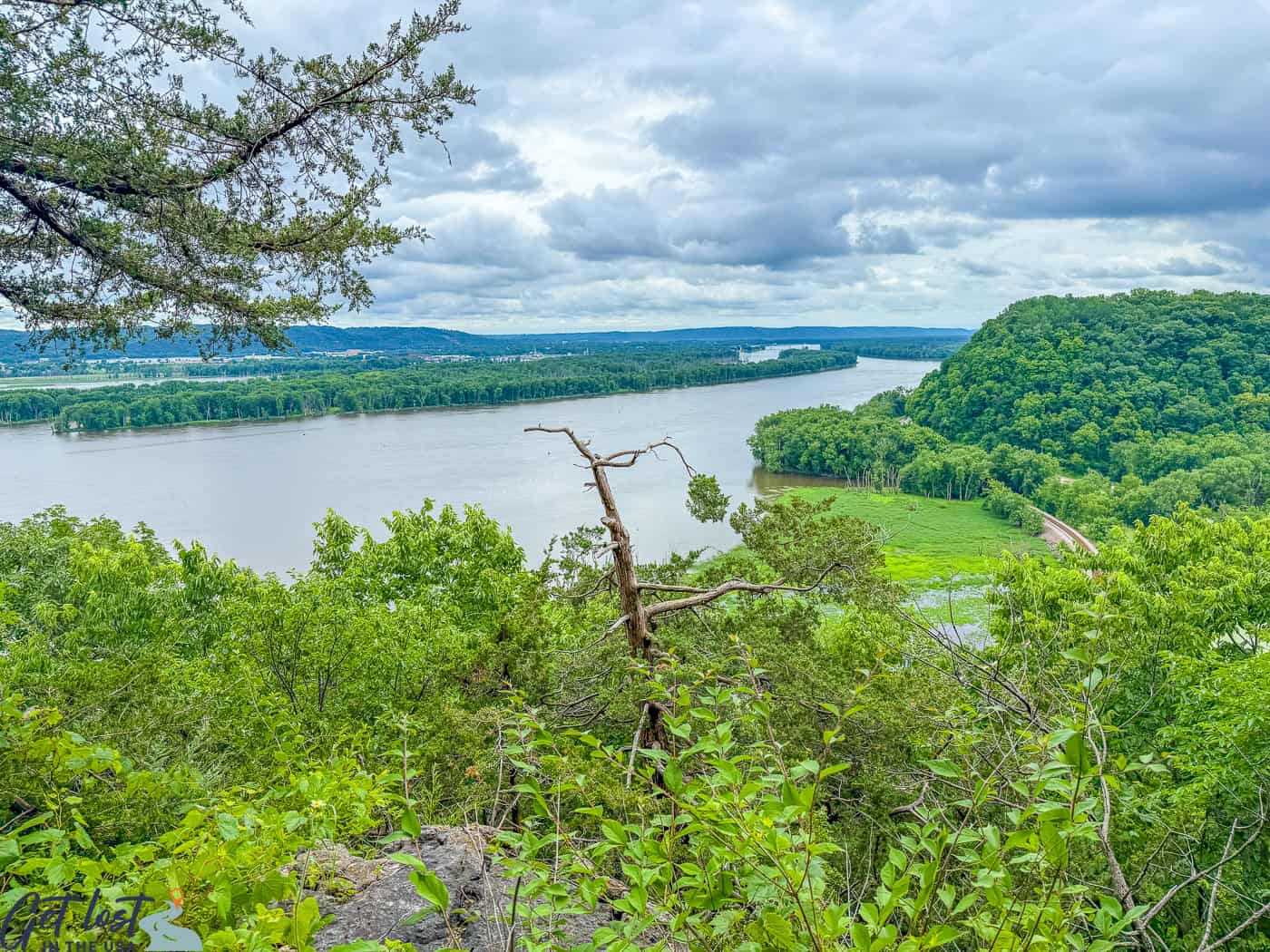
The Fire Point Overlook had an incredible view of the Mississippi River looking out toward Wisconsin. I loved how the many small “islands” made the river look more like a lake. It’s one of the things I’ll remember most about the Iowa Driftless Area.

After soaking in the view at Fire Point, we continued on to the second overlook, Eagle Rock. The vegetation was pretty thick, but I could still catch a glimpse of the pond by the railroad and the South Unit of Effigy Mounds in the distance. Eagle Rock is also a great spot to look for bald eagles, especially between November and March when they’re nesting.
After that, we headed back to the visitor center, retracing our steps down the switchbacks—way easier going downhill!
Other Hikes at Effigy Mounds National Monument
Yellow River Trail: Also in the North unit, this accessible 1-mile round-trip boardwalk hike leads into the wetlands and is a great spot to see waterfowl and other birds.
South Unit: The South Unit’s trails lead through hardwood forest and restored tallgrass prairie, with highlights like the Marching Bear Group (ten bear and three bird mounds), a pond and two scenic overlooks. There’s parking about half a mile south of the visitor center at the day-use area. The Marching Bear trail is around 4 miles round trip with a 350-foot elevation gain—it’s a tougher hike than Fire Point, since there aren’t any switchbacks.
Sny Magill Unit: This area is about 12 miles south of the visitor center, right along the Mississippi River. It’s not shown on the park brochures, but you can ask for directions at the visitor center. There are 106 mounds—bears, birds, and conicals, packed so closely they’re nearly overlapping. If the river’s running high, the access road can flood, so it’s worth checking water levels before heading out.
Guided Hikes: From Memorial Day to Labor Day, rangers usually lead hikes on the Fire Point and Yellow River trails, mostly on weekends. There are also occasional pop-up events—anything from spear throwing to pottery demonstrations. If you’re hoping to catch a ranger-led hike, it’s a good idea to call ahead and check the schedule.
Final Thoughts
Originally, I had planned to check out the South Unit and hike to the Marching Bear Group—the largest cluster of effigy mounds in the park. But after chatting with a ranger (and hearing how soggy the trail was after recent rain), I decided to stick with the North Unit. Honestly, I’m glad I did. Next time I’m in the Driftless Region, I’ll definitely make time for the South Unit. But for a first visit, the North Unit offers a good introduction—quiet trails, a mix of burial and effigy mounds, and some really beautiful views.







Leave A Reply!