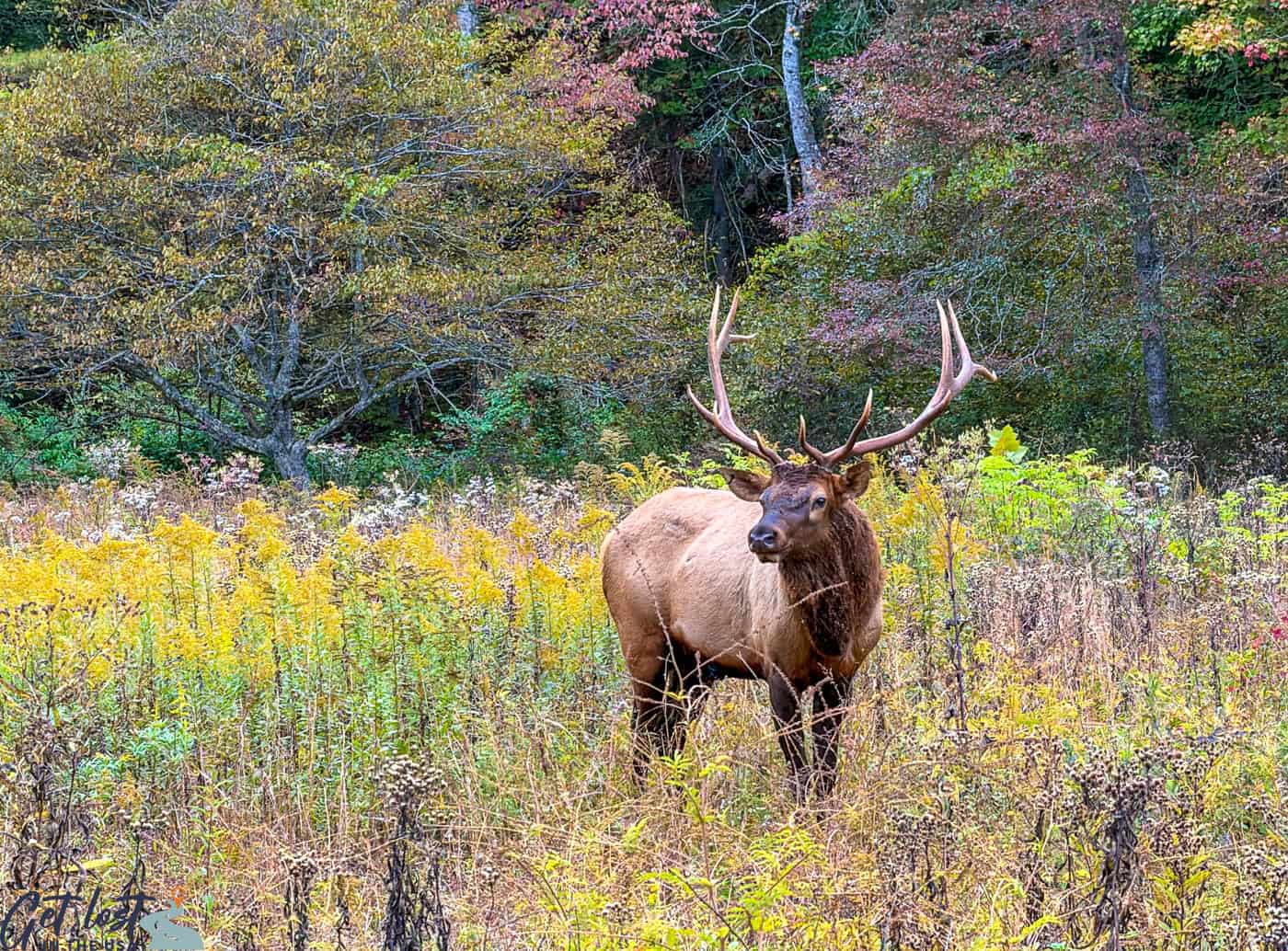
I don’t need much convincing to go watch wildlife, so during my recent Haywood County media trip, I was thrilled to go see elk in Cataloochee Valley. The valley is on the North Carolina side of Great Smoky Mountains National Park, and spoiler alert: it was the best elk viewing experience I’ve had so far!
Getting to Cataloochee Valley
From Waynesville, it took us about 50 minutes to reach Cataloochee Valley. We took Cove Creek Road, a narrow, winding route with a long gravel stretch and lots of sharp curves. If you’re prone to motion sickness like I am, it can be a lot.
Some sections were so narrow that we had to take turns with oncoming cars, and one blind hairpin turn was particularly nerve-racking. On both the drive in and the drive out, a vehicle came around that bend before we could see it coming. It was a little scary, so take it slowly and be ready to stop for other cars.
My Experience Watching Elk in Cataloochee Valley
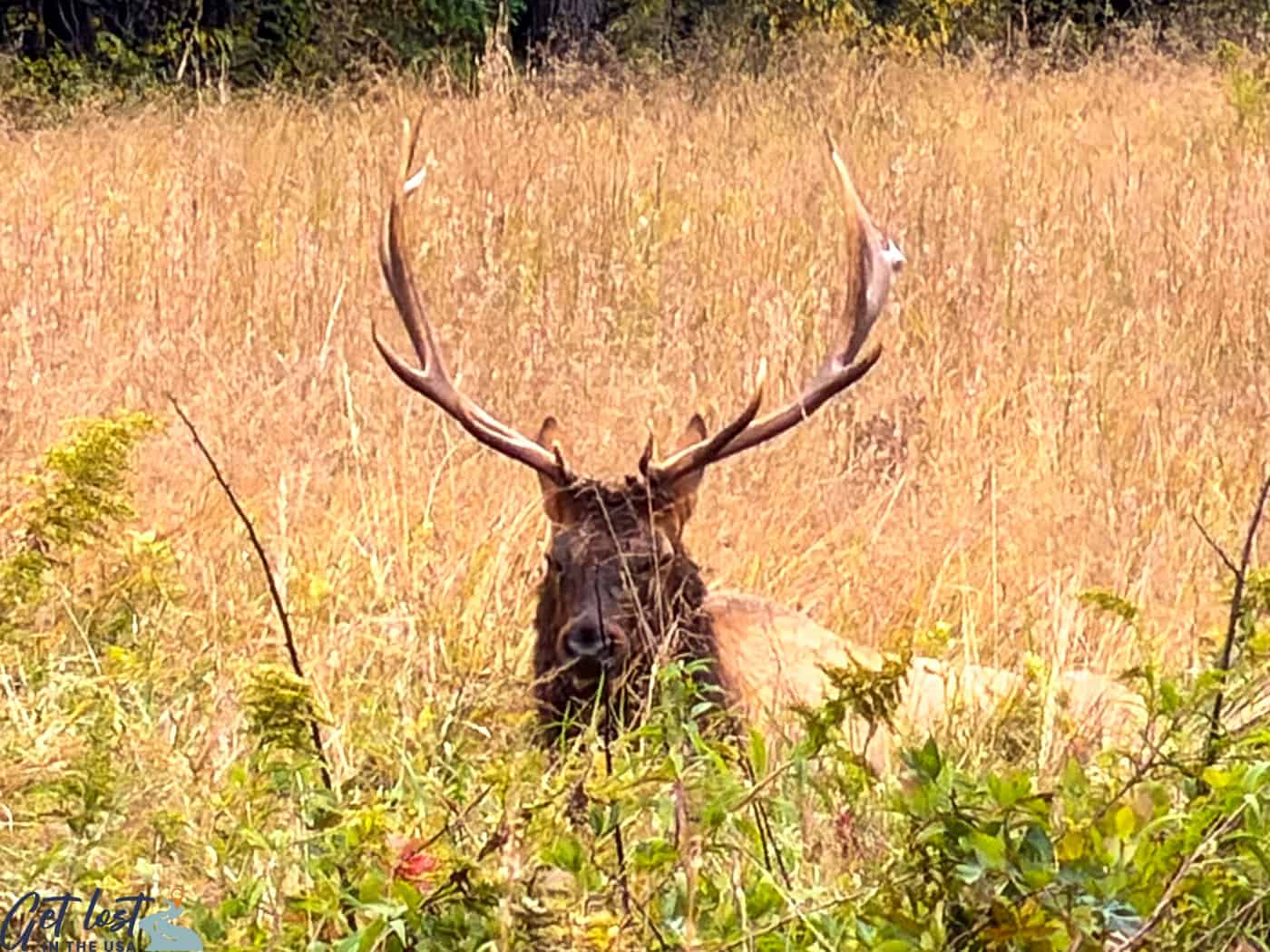
We knew the elk were nearby when we saw all the cars lined up along the roadside. They were grazing farther out in the fields, and the bull was sitting down, keeping watch over his harem of female elk, called cows.
We watched for a while, then decided to explore some of the valley’s historic buildings (more on that later) and check back in with the elk on our return.
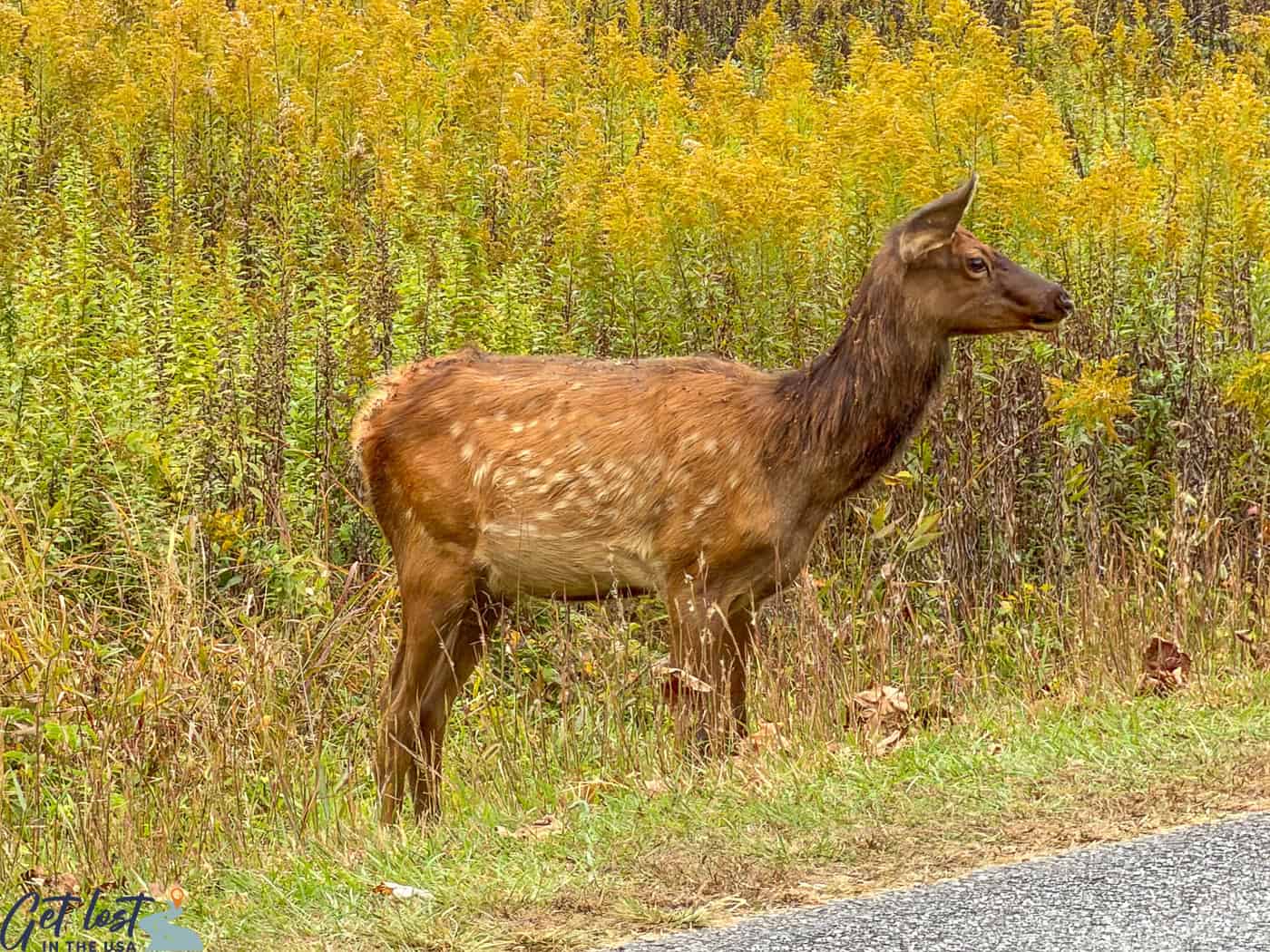
When we got back, they were much closer to the road, so we got quite the show that night. The bull was on his feet, moving among the cows and keeping a close eye on the spectators. The cows didn’t seem bothered by people at all. We even spotted a calf that still had its spots!
I watched from outside the car at first, but when the elk came closer, it was a little scary, and I jumped back inside and filmed through the window with a zoom.
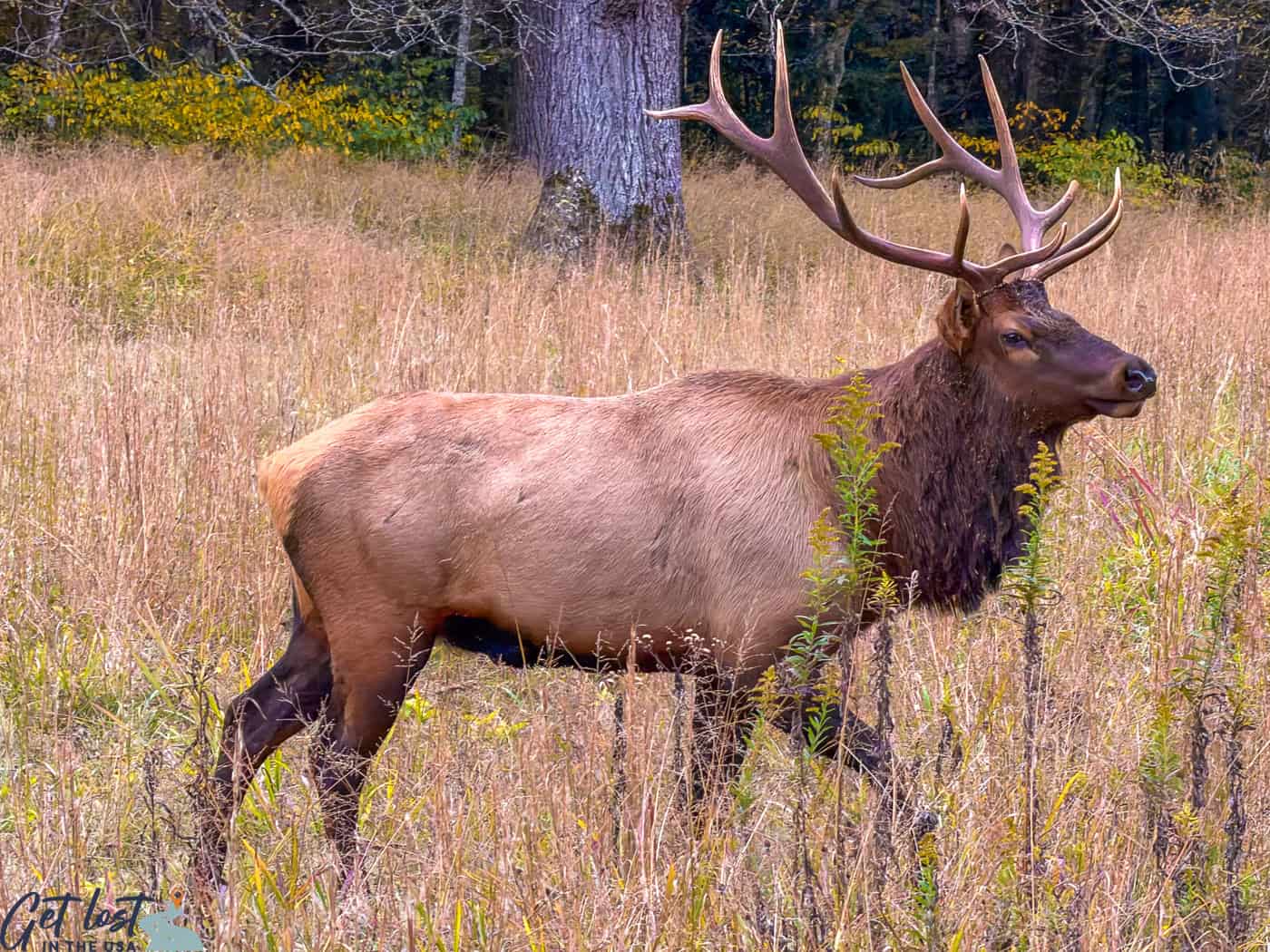
At one point, the bull approached the road and seemed to warn the people standing too close. Then he crossed the road and looked like he might head into the forest for the night. I thought he might bugle and call his ladies to follow, but he turned around and came back.
I’d heard bugling during my elk-watching experience in Clearfield County, Pennsylvania, and hoped to hear it again. No such luck, but I did hear grunts and murmurs. The elk had been farther away during my Pennsylvania visit, so getting such a good look at them here made up for the lack of bugling.
We stayed for a good 45 minutes on that second stop, and I could’ve kept watching, but we had dinner reservations back in Waynesville.
Give the Elk Their Space
As much as I enjoyed watching the elk, some of the people nearby were upsetting to watch. Several walked far too close to the animals along the edge of the road, and the bull seemed uncomfortable with their presence.
The people in the truck ahead of us were grilling food in the truck bed, and we could see the elk sniffing the air. One cow walked right up to the truck, and a man inside snapped his fingers to shoo her away. But the food had drawn her over in the first place. I don’t think people should be cooking or even eating if it pulls them away from grazing and brings them up to vehicles.
These are unpredictable wild animals, and getting too close is dangerous, especially during the fall rutting season when bulls can become more aggressive.
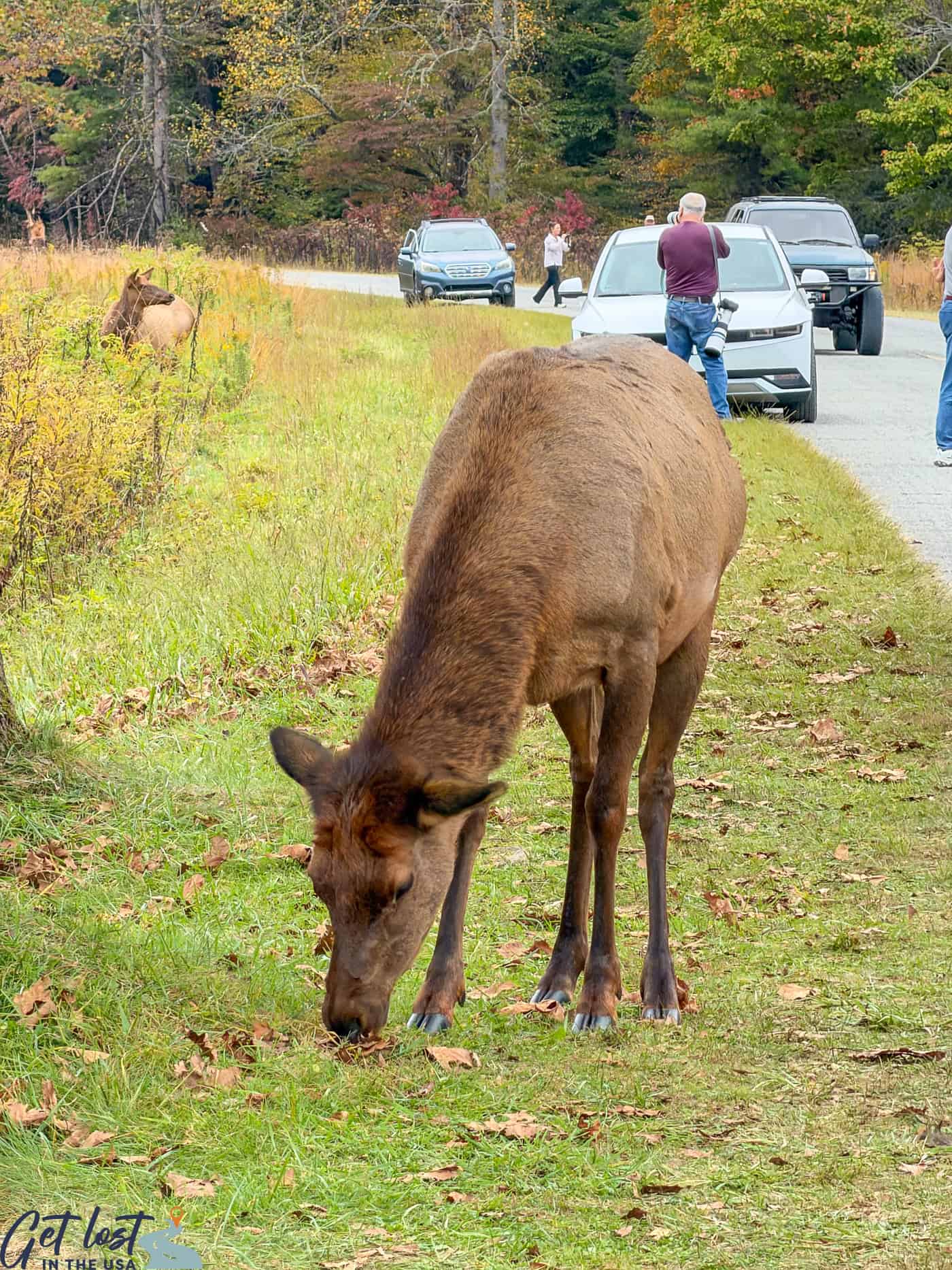
Stay at least 75 feet (25 yards) away, as required by current park rules. Getting closer is illegal, and you could be fined and arrested. Give them even more room if your presence affects their behavior. If an elk stops eating or changes its route because you’re nearby, you’re too close, even if you’re beyond the minimum distance.
A few other rules to keep in mind:
- Stay out of the fields. Watch from the roadside and use binoculars, a zoom lens, or a spotting scope for a closer look.
- Never feed the elk. Keep food and scraps secured so the animals can’t help themselves.
- Leave antlers where you find them. Removing elk antlers from the park is prohibited.
- Don’t use wildlife calls or spotlights. Let the elk go about their business without trying to get a reaction.
I could see and film plenty from the car without getting any closer. I just wish everyone had backed off and let the elk do their thing.
How Elk Returned to Cataloochee Valley
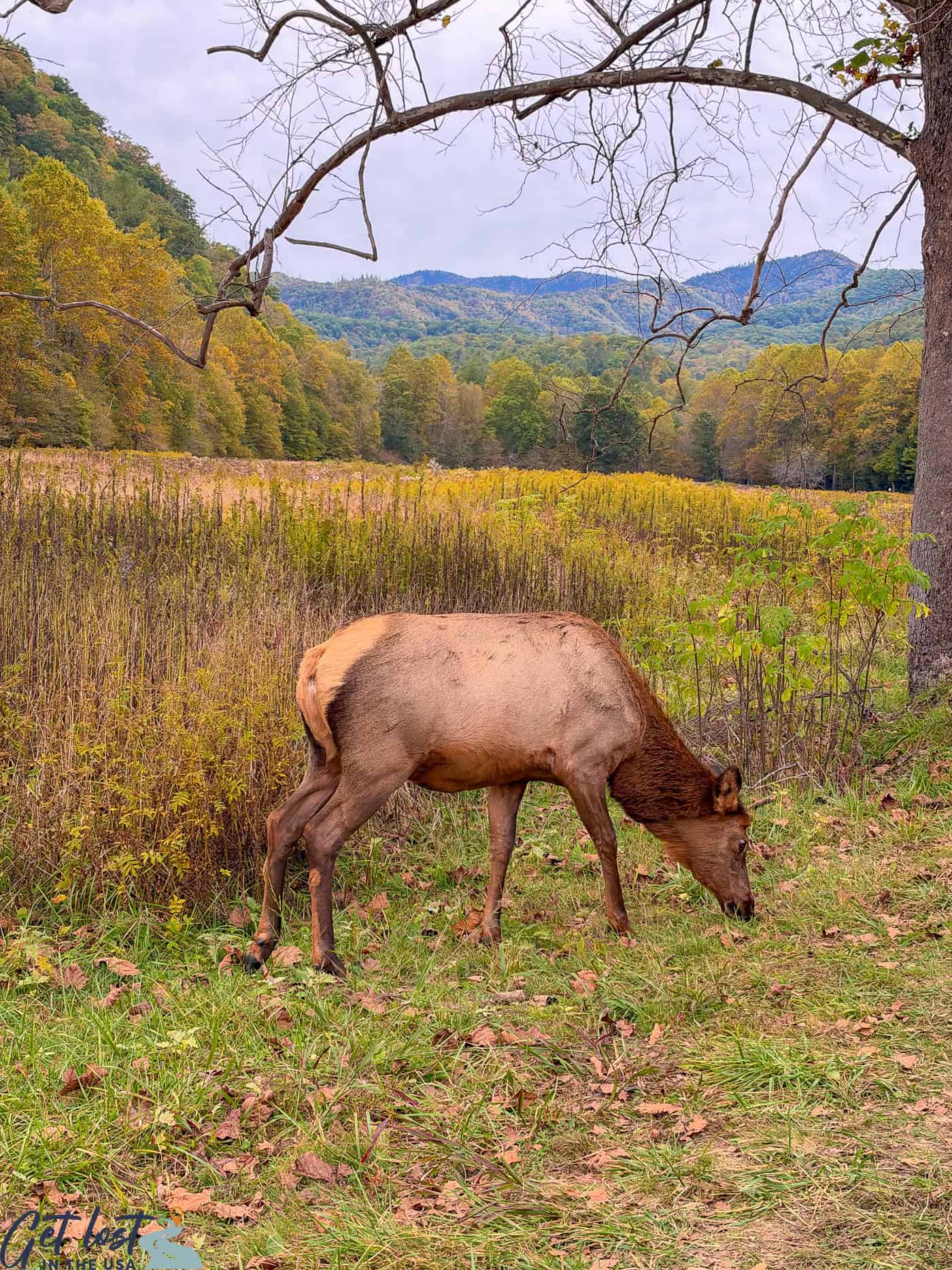
Elk used to live in the southern Appalachians, but overhunting and habitat loss wiped them out. In 2001, the National Park Service started bringing them back, releasing 25 elk from Land Between the Lakes in Kentucky into Cataloochee Valley.
Another 27 came from Elk Island National Park in Alberta, Canada, the following year. Those first 52 elk got the population started, and they’ve since spread beyond the valley. According to the National Park Service, about 270 elk now live in western North Carolina, with roughly 150 spending at least part of the year in Great Smoky Mountains National Park.
The Overlook and Historic Buildings in Cataloochee Valley
Cataloochee Valley Overlook
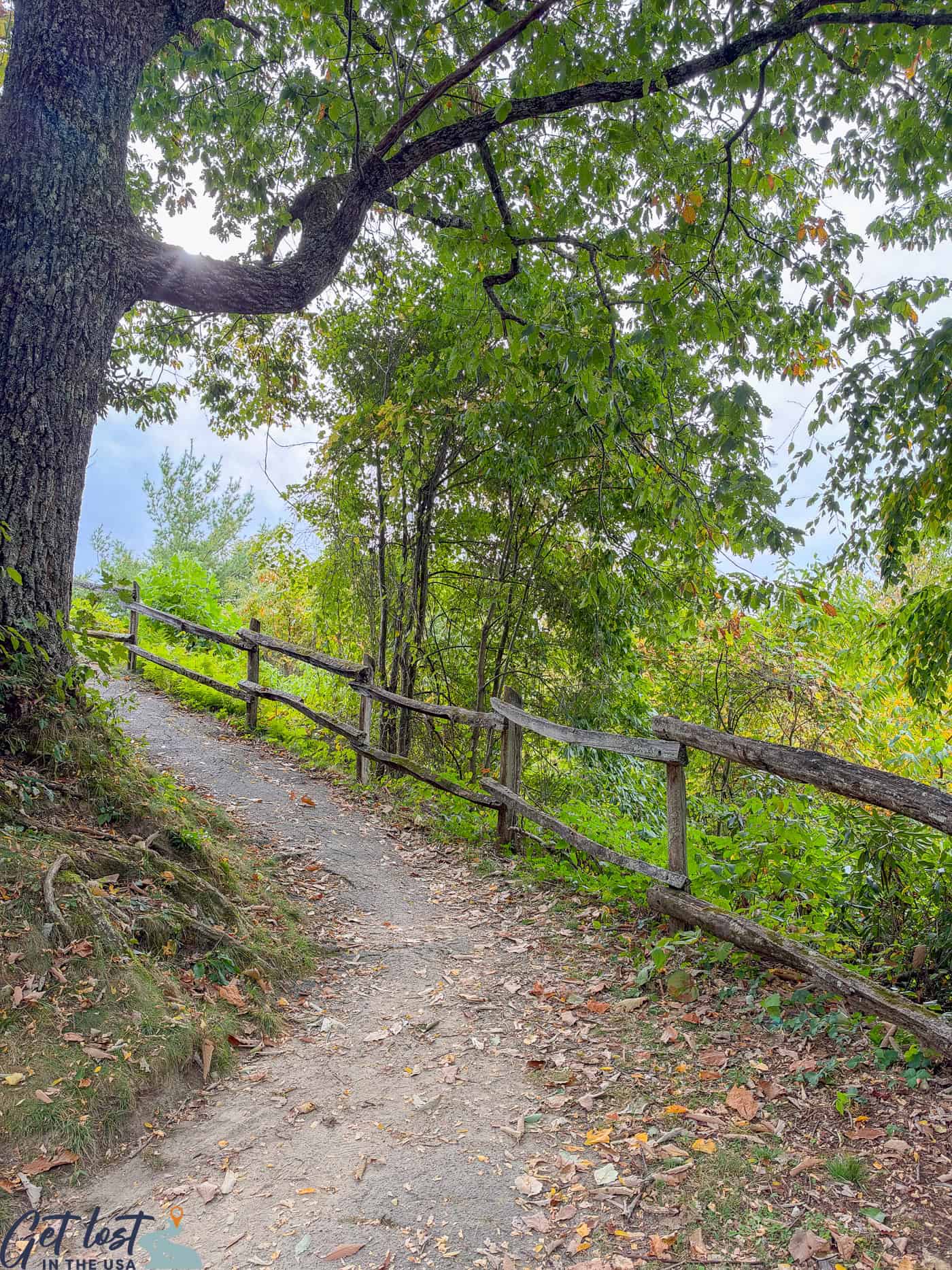
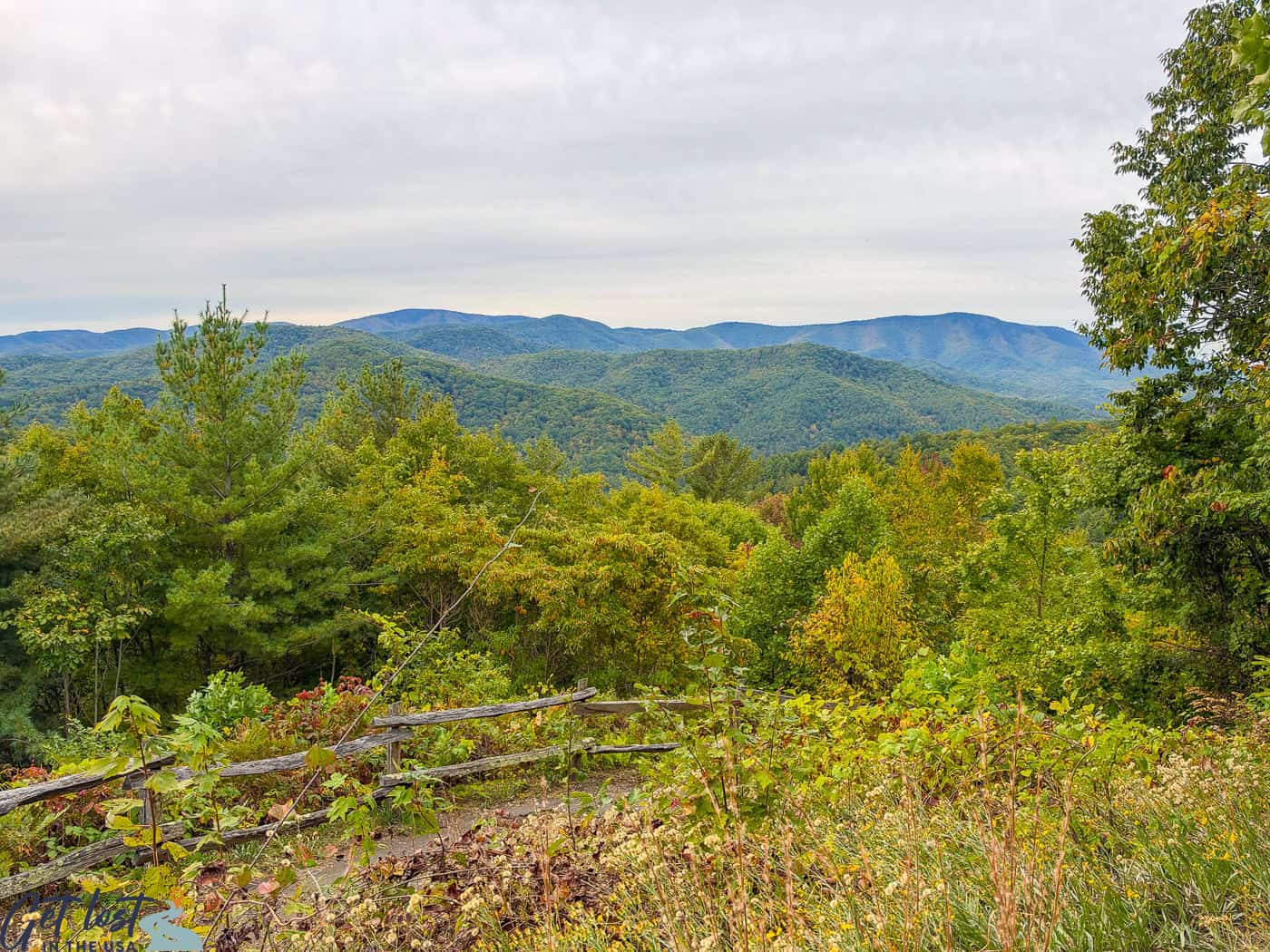
Before heading down into the valley to look for elk, we stopped at Cataloochee Valley Overlook for a view of the surrounding mountains.
Palmer Chapel and Beech Grove School
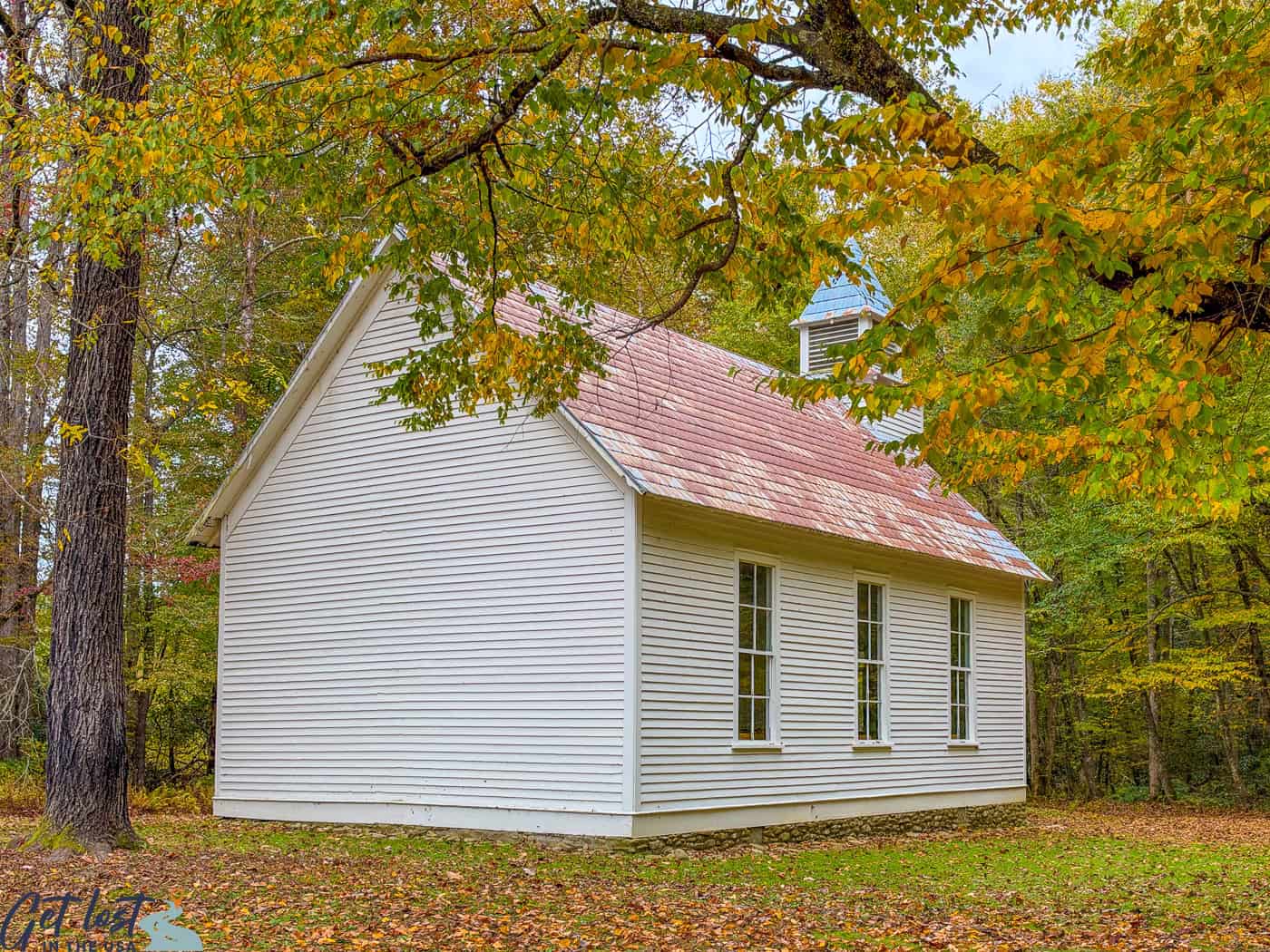
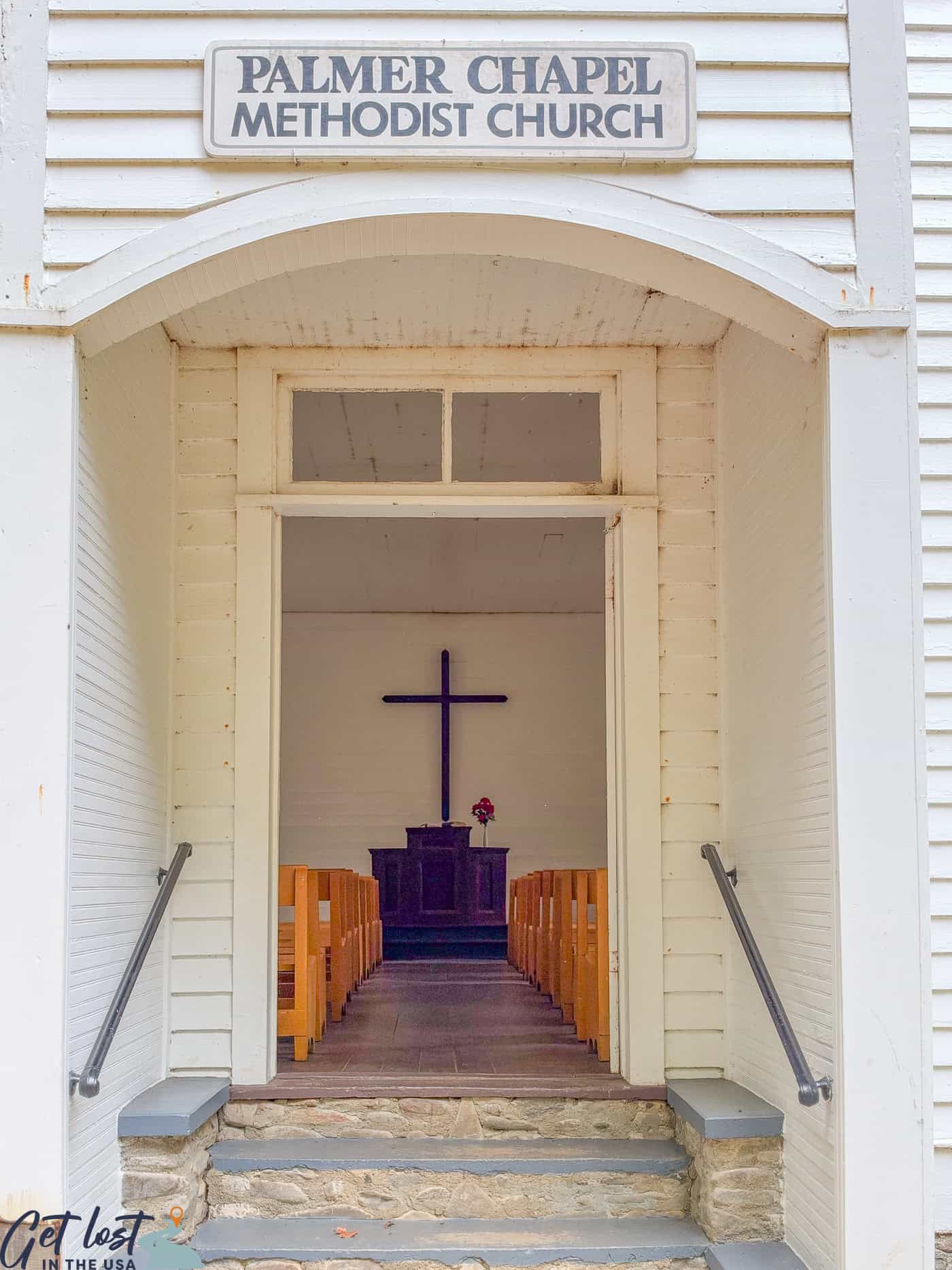
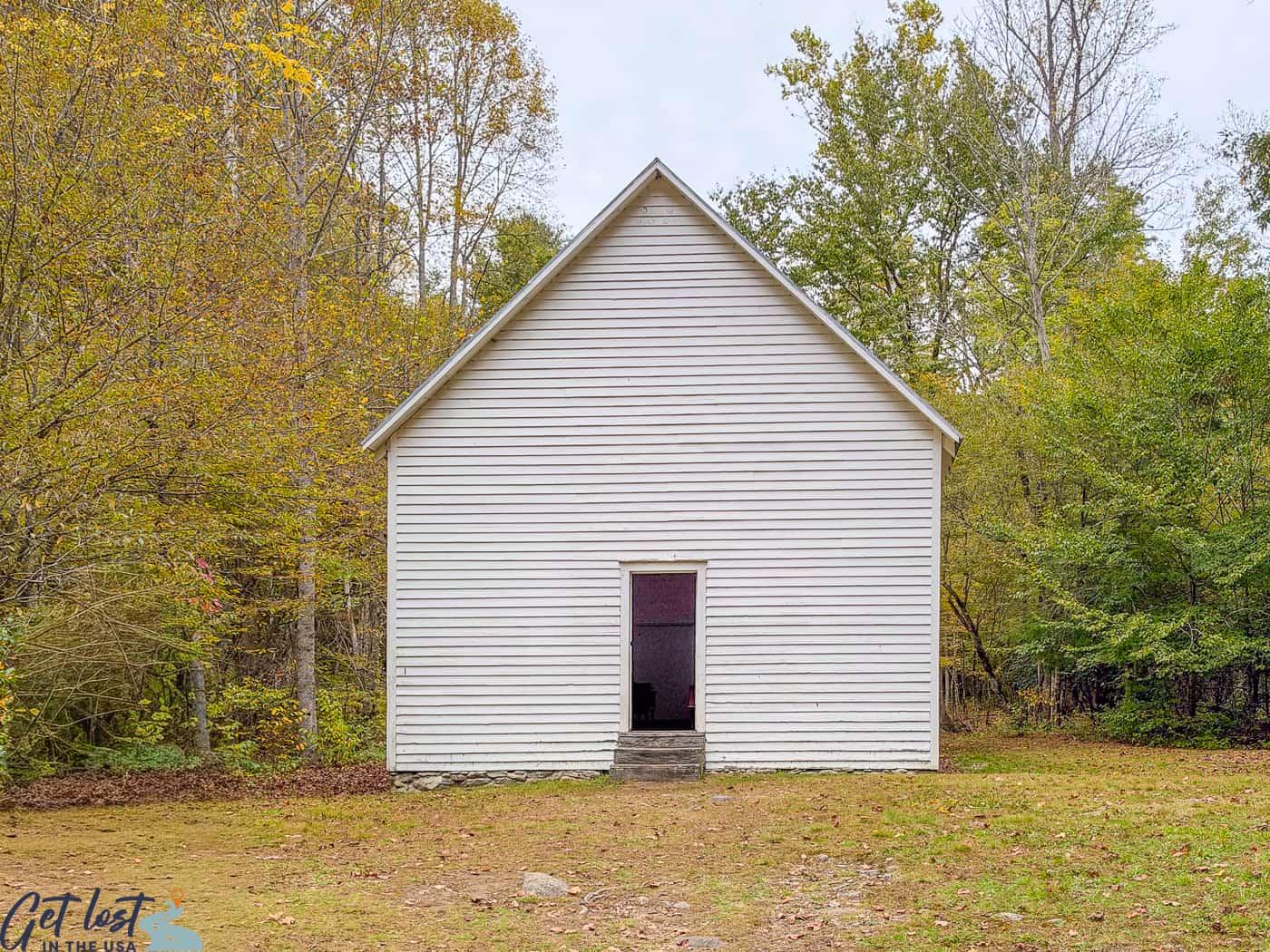
Between our two rounds of elk watching, we stopped at Palmer Chapel and Beech Grove School, two buildings that remain from the community here before it became a national park.
There are other historic sites in the valley, including Palmer House, Caldwell House and Barn, and Steve Woody House, but we didn’t have time to see those on this visit.

Tips for Seeing Elk in Cataloochee Valley
- Go early or late. The park recommends early morning or evening, when elk are generally more active.
- Give yourself time. If the first field is empty, look at other fields along the open valley road. The elk may be in the woods, though, so there’s no guarantee you’ll see them.
- Get a parking tag. You’ll need one if you park for more than 15 minutes. Daily tags are $5, and weekly tags are $15. You can buy one online in advance, but you’ll need to print it and display it in your vehicle. There’s also a tag machine at Cataloochee Valley Overlook. Check the park’s parking information for other purchase locations and details.
- Don’t block traffic. If you stop along the valley road to watch elk, leave enough room for other vehicles to pass.
- Download an offline map. We didn’t have cell service in the valley, so I recommend saving a map before heading in to help you find your way there and back.
- Check for closures before you go. Take a look at the park’s current road closures, especially after severe weather.
Final Thoughts
Seeing the elk in Cataloochee Valley was one of my favorite wildlife experiences, even without the bugling I’d hoped to hear. I’m already planning to go back! Next time, I’ll get there earlier to explore more of the historic buildings, then leave the evening open for the elk.



Leave A Reply!