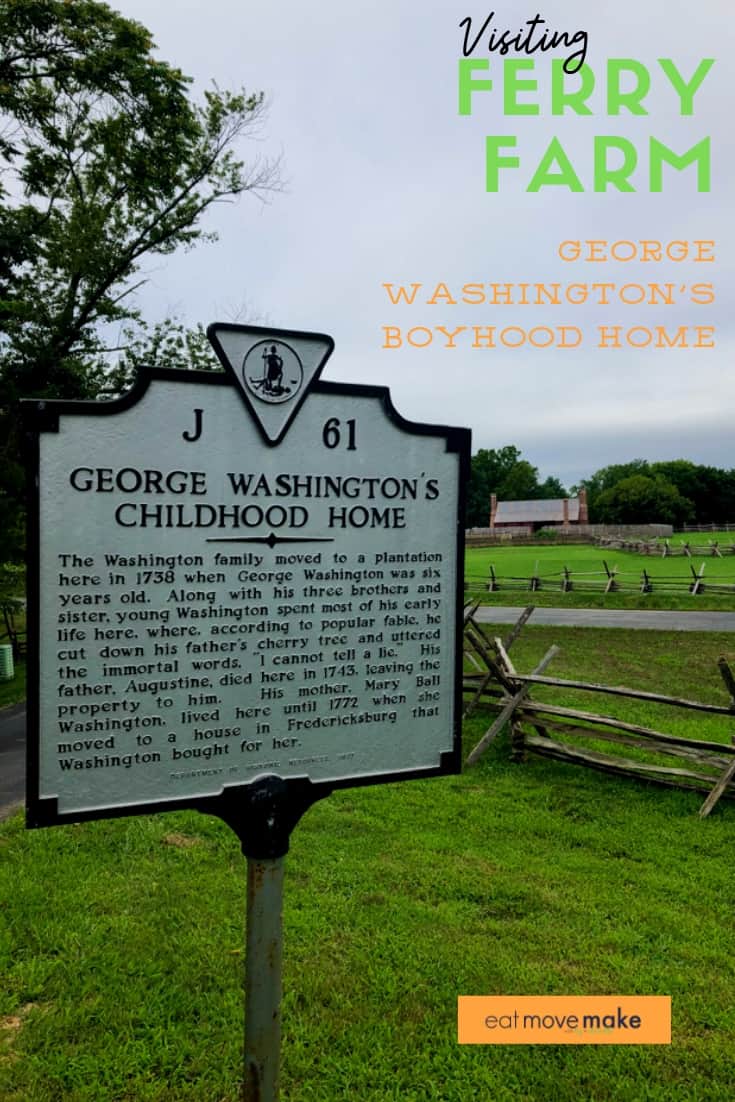
I cannot tell a lie. One of the highlights of my hosted trip to Fredericksburg, VA was a visit to Ferry Farm – George Washington’s boyhood home from age six to age twenty-two.
We’ve all heard the tale of George chopping down a cherry tree, right? If it were true, it would have happened at Ferry Farm. It’s also where he threw a stone across the Rappahannock River and copied down the Rules of Civility. A lot happened at Ferry Farm!
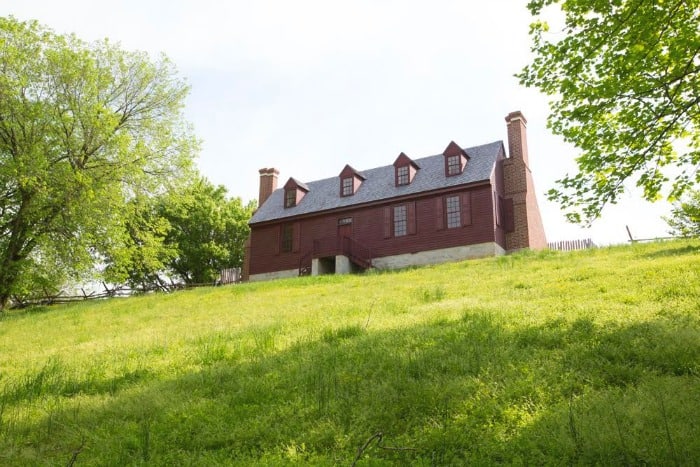
The framework of the family home was discovered in 2008 after an exhaustive archaeological search spanning decades. Now the Washington farmhouse has been reproduced as a living history museum for all ages to explore.
When you arrive at Ferry Farm, enter the visitor center where you’ll purchase tickets and receive an iPad with a guide to the property. The GPS-driven app provides historical tidbits, maps and details based on where you choose to wander on the grounds, but there are 11 official stops.
Be sure to peek in the archaeology lab to see their work. The exhibit panels explain the current project.
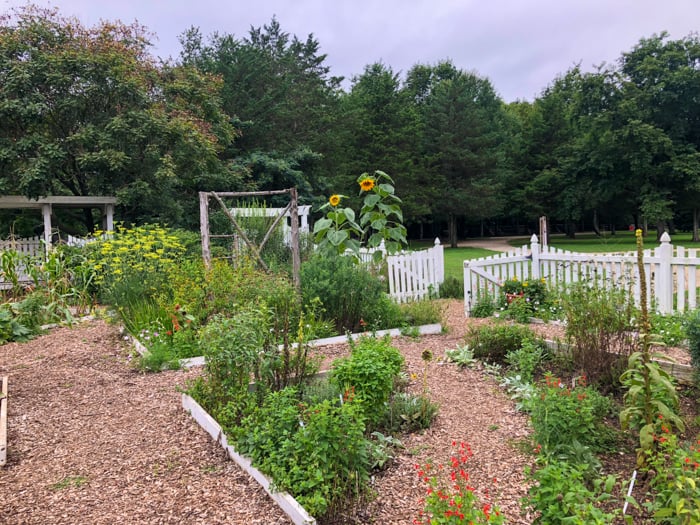
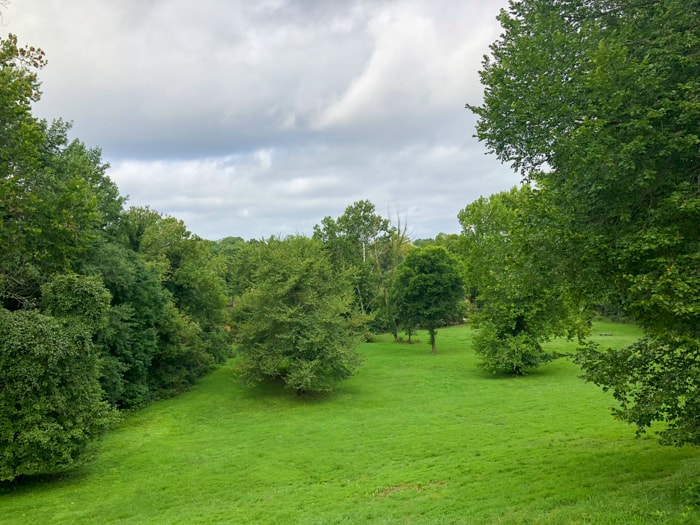
Once outdoors, you can follow the app trail stops, explore the demonstration gardens, stroll the old ferry road, enjoy one of the many hiking trails, or do some bird watching.
When you’re ready to see the Washington house, a tour guide will escort you, but you’re free to touch, pick up or sit on anything in the house. It’s fully interactive so have fun (and bring the kids!)
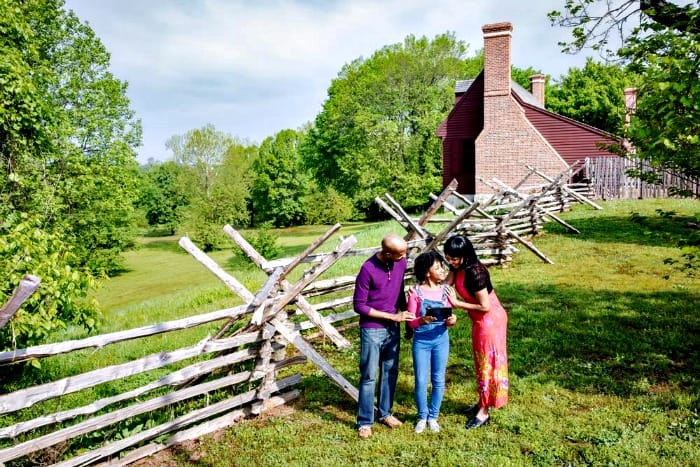
As was the custom at the time, the home’s front entrance faced the river. Since it was built on an escarpment, it was visually stunning and most impressive to anyone who viewed it from the other side of the river.
Tip: Go to City Dock to snap a photo of the house!
The home was built in the 1720s but the Washingtons moved in in 1743, adding a wing and repairing the roof. It was probably the most expensive house in the county.
INSIDE THE FERRY FARM HOUSE
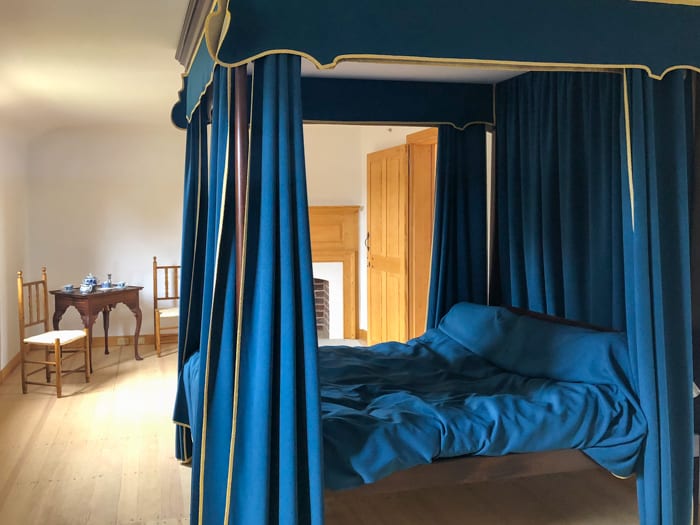
The first room I visited was the primary bedchamber where they would have entertained guests. It was considered private space but the Washingtons didn’t use it that way.
There was a tea table with a tea set and a very showy bed covered in stylish, expensive textiles imported from Europe.
Hop on the bed and close the curtains around you! It’s encouraged!
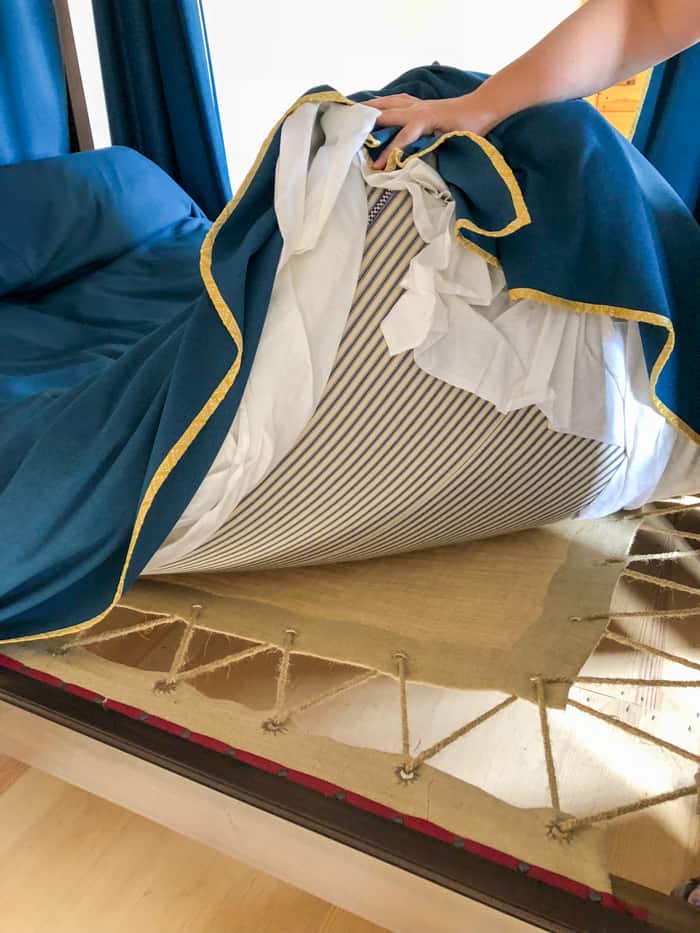
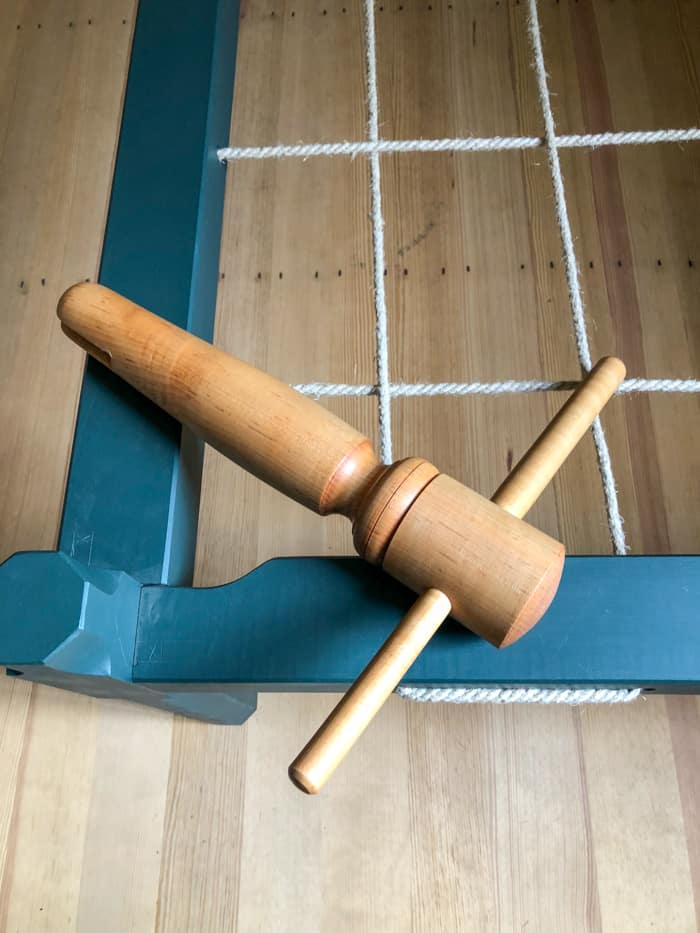
The bed had a sacking bottom with lacing that needed to be tightened with a bed key each night. The sacking was covered with a straw-filled tick, a feather tick, a couple of sheets and then linen was wrapped around the whole thing.
On top were a coverlet, feather pillows, and a big bolster pillow since they often slept sitting up in that time period.
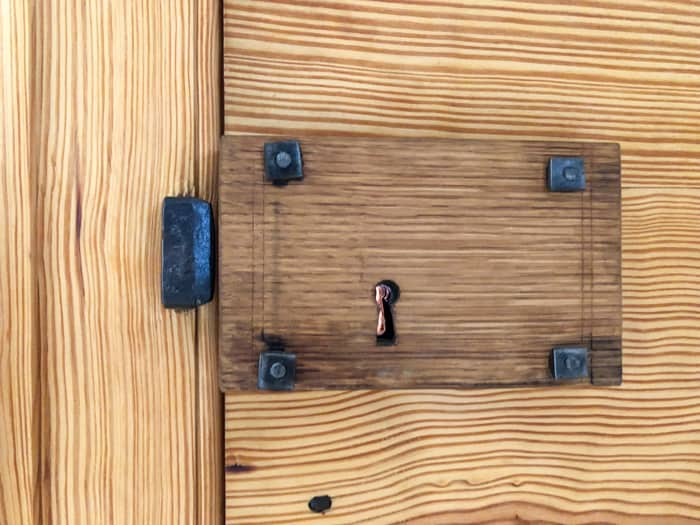
Take a look at the wooden door lock in the master bedchamber and notice how it differs from other locks in the home.
Moving into the public space, you’ll see more formality in the architecture and furnishings. The oak was specially cut to appear more exotic looking and wood trim ran the length of the entire room.
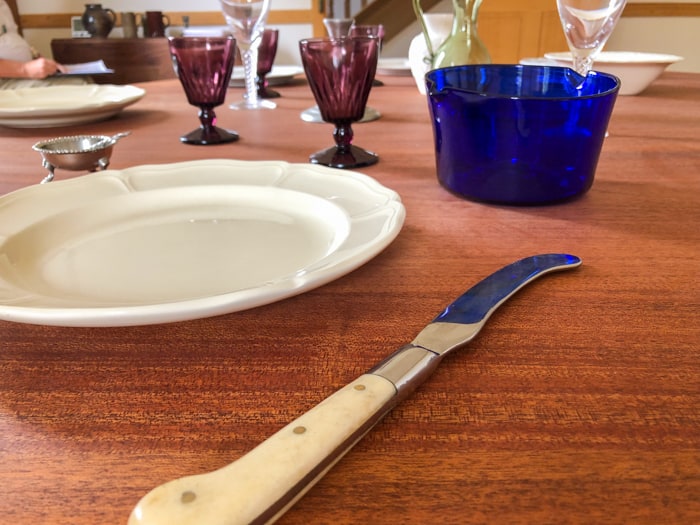
The dining room was the largest room of the house and served as a gathering place for meals and a place to bed down guests. Because of Ferry Farm’s location on the river and near King’s Highway, travelers passed by constantly, so they always had guests.
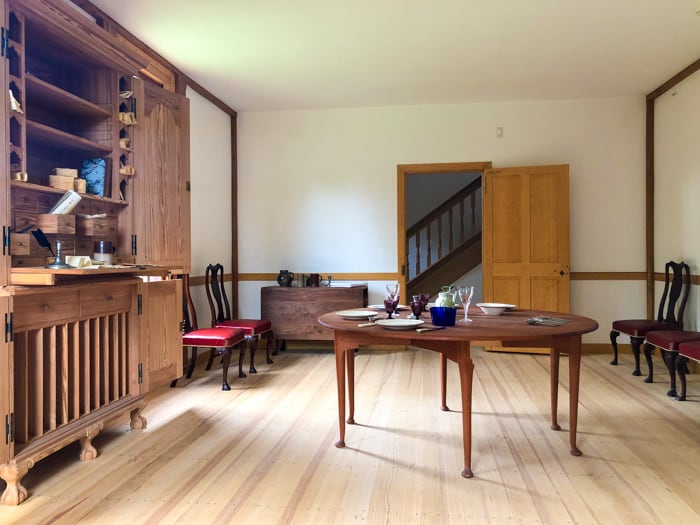
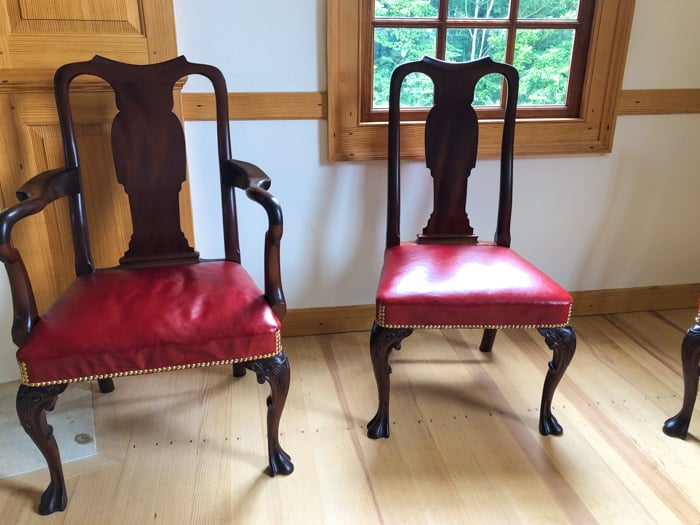
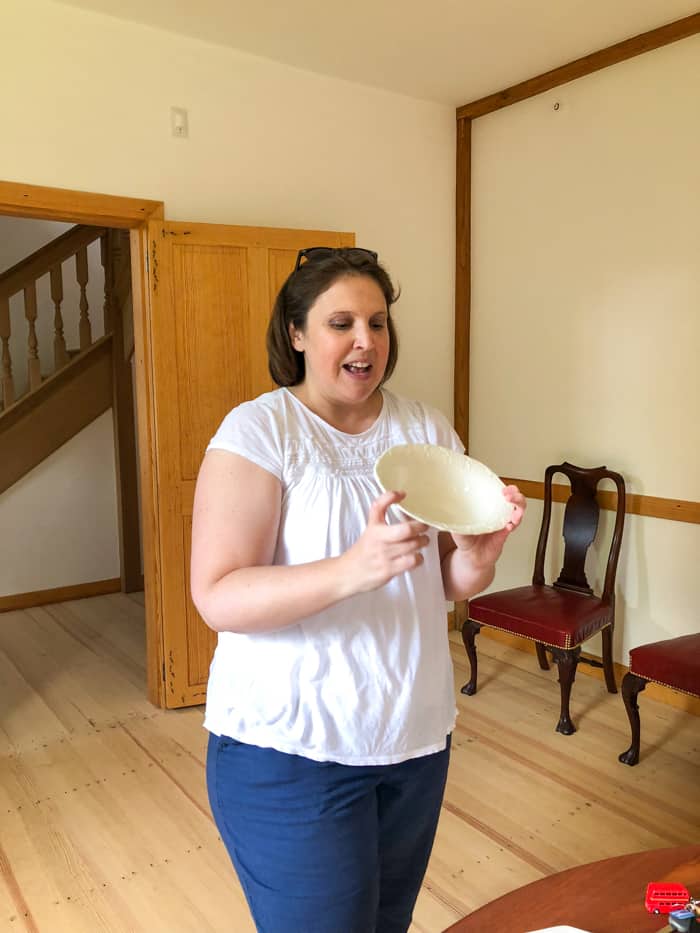
Three-fourths of a million artifacts have been found on the property and all of the glassware and serving dishes are based on fragments found in the midden (garbage pit).
More on the midden later…
Also, George’s father had written out nearly all the contents of the home so it was a huge help in the re-creation process.
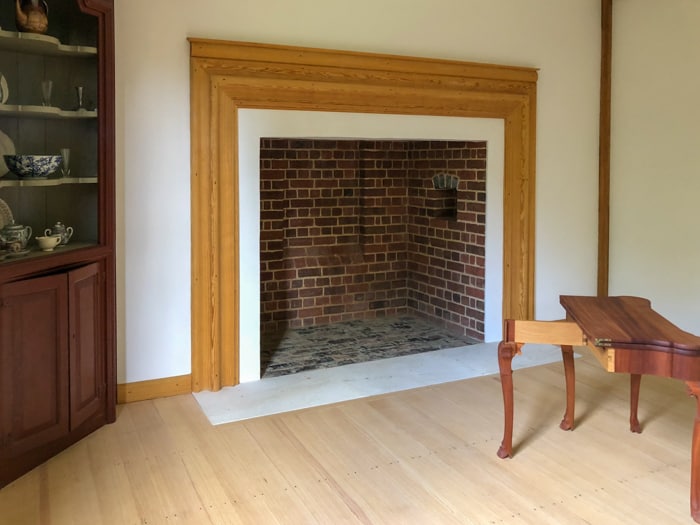
The parlor had a corner cupboard built into the house and on display, you’ll see a number of ceramics with glue holding broken pieces together. Can you believe the original artifacts with glue survived all those years?
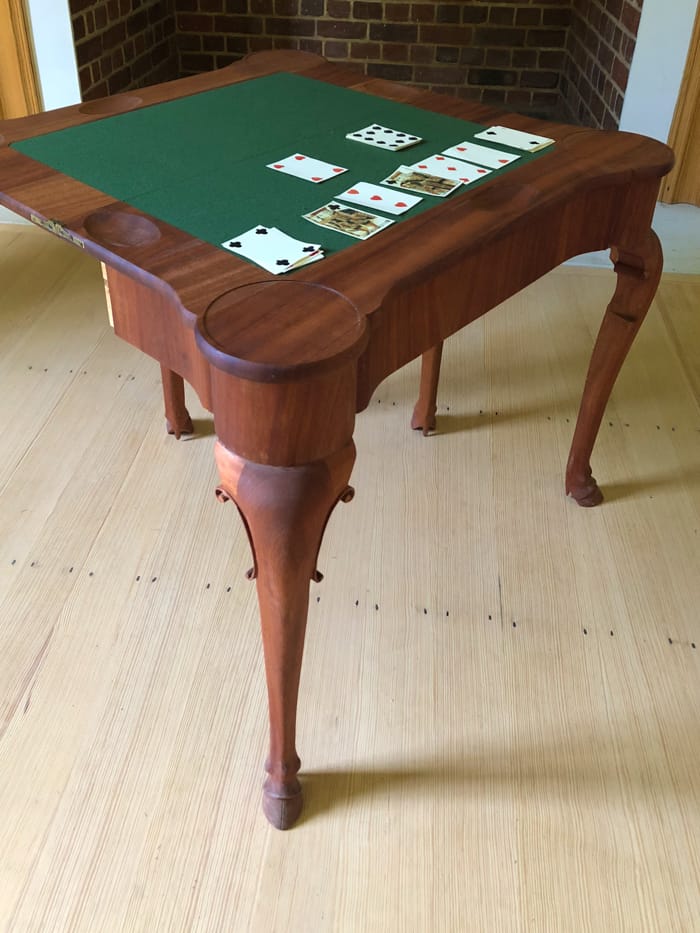
Also of interest in the parlor was a hinged gaming table with hooved legs.
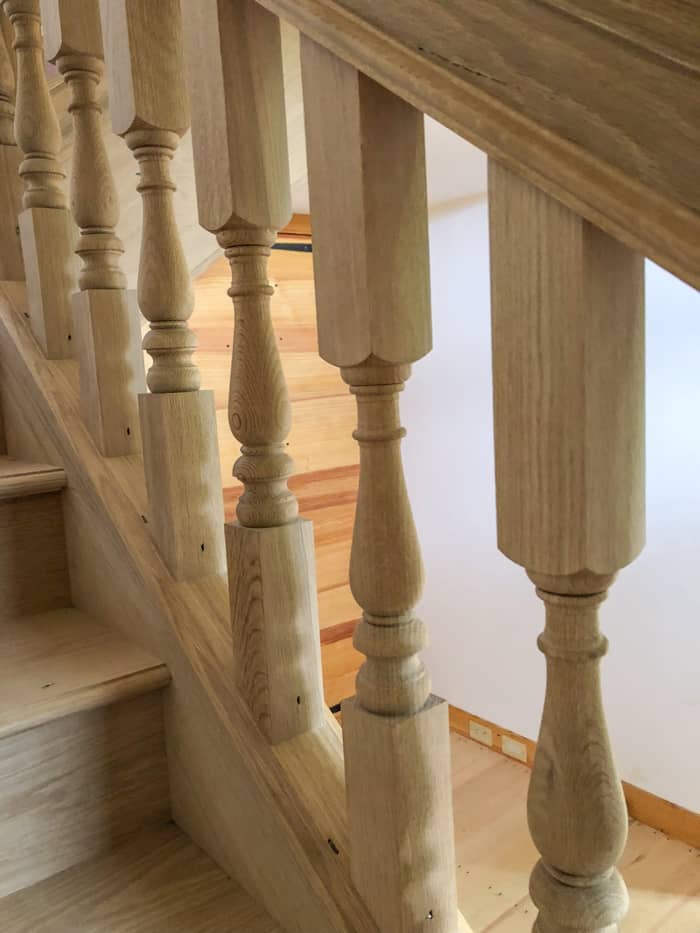
The railing leading to the upper floor was made out of a single piece of wood. It’s exquisite!
Upstairs were sleeping chambers, not kids’ bedrooms like you might expect. Kids usually didn’t have bedrooms or even beds; they slept where there was space and when guests were there, that was usually the floor.
There were three beds and two or three people slept in each one. Social hierarchy would determine whether you got a bed or the floor.
Although it seems uncomfortable, both of the rooms had fireplaces giving off heat so it was probably a pretty pleasant place to sleep.
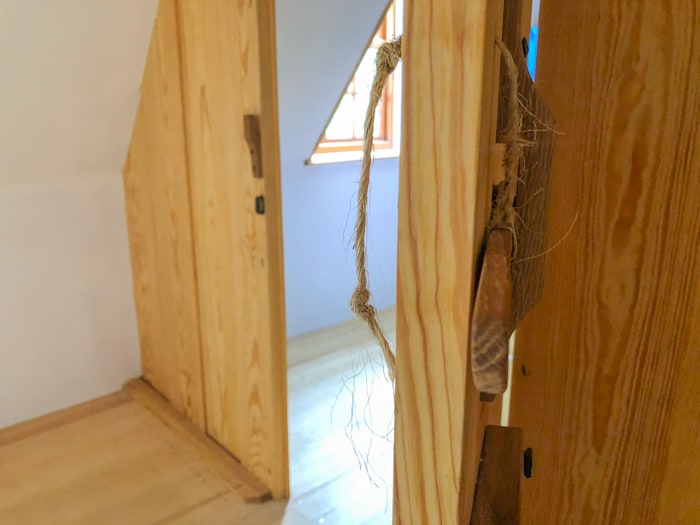
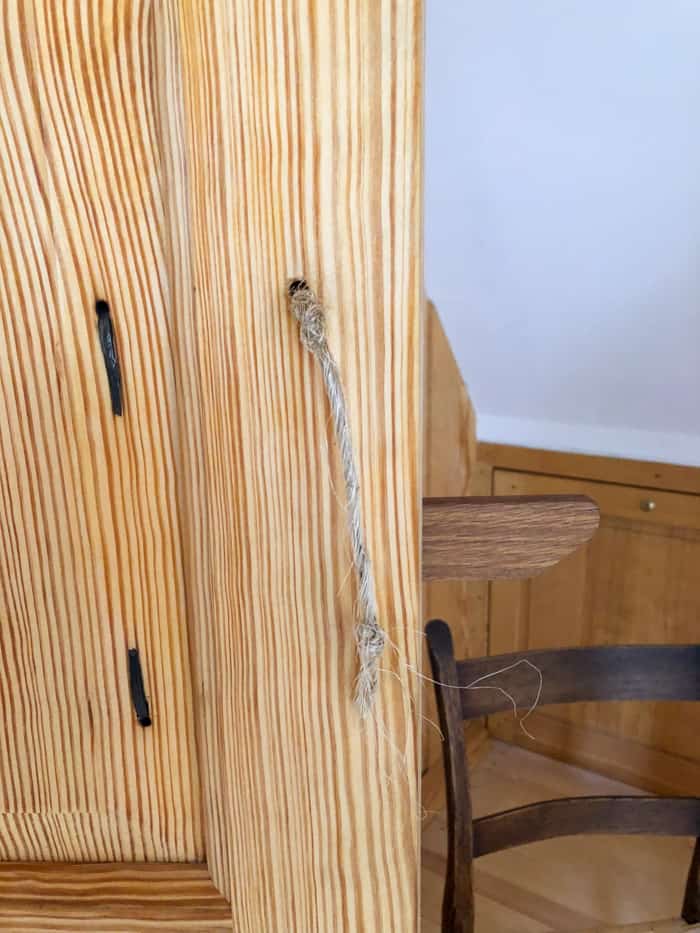
Remember the wooden door lock in the primary chamber? Here you’ll find ropes and wooden latches instead.
A sugar box would hold big loaves of sugar. It was an expensive commodity bought in big loaves and kept under lock and key. They’d chip off what they needed and lock it back up.
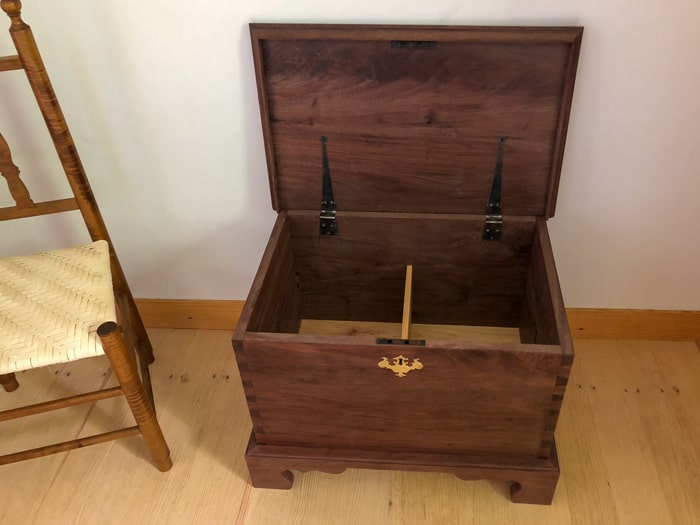
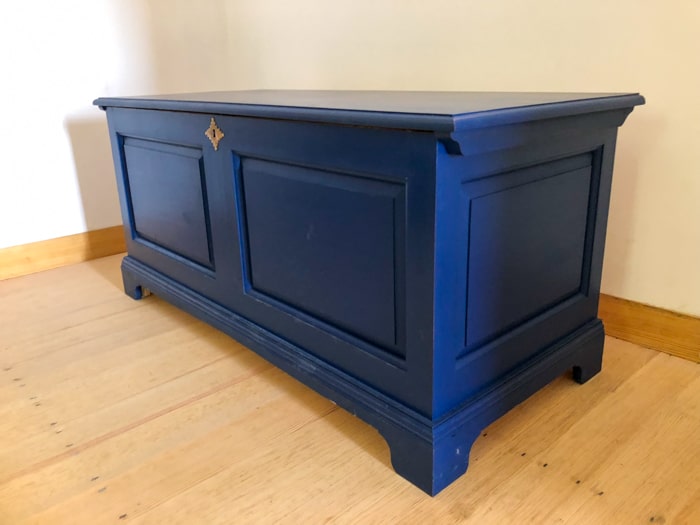
You may notice there wasn’t a lot of storage in the house. They really didn’t have a lot of possessions – just clothes, but they did have a blanket chest to store bedding and candles.
It was painted with a coat of red primer and a top coat of blue to give it the highly valued look of indigo.
FERRY FARM FOUNDATION
For the reconstruction, they made the foundation border the same way it was done in the 18th century. Large boulders were broken apart for the blocks and oyster shells were burned for days to make lime for the mortar.
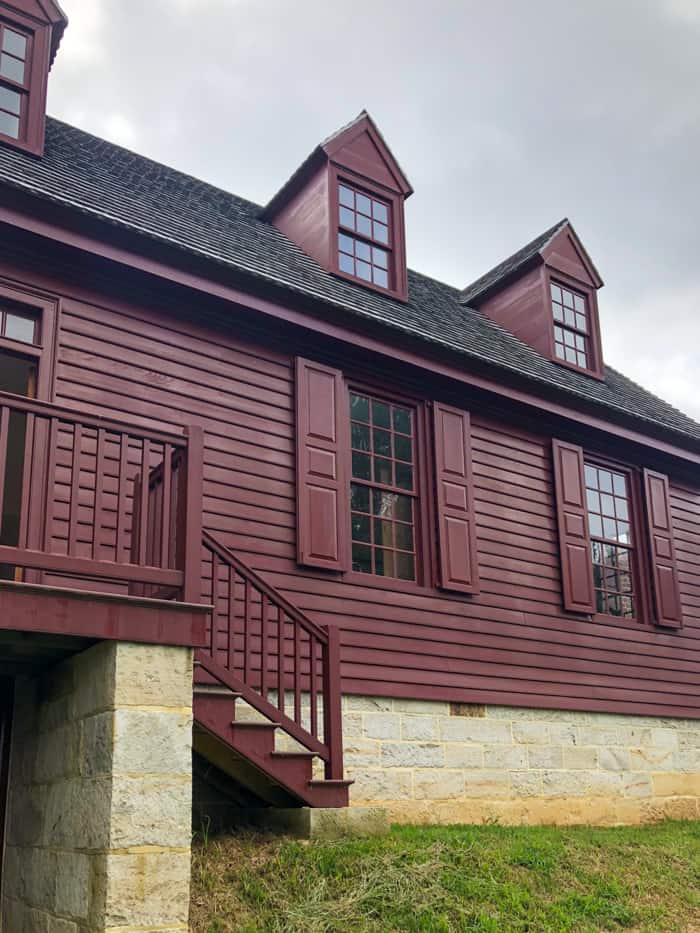
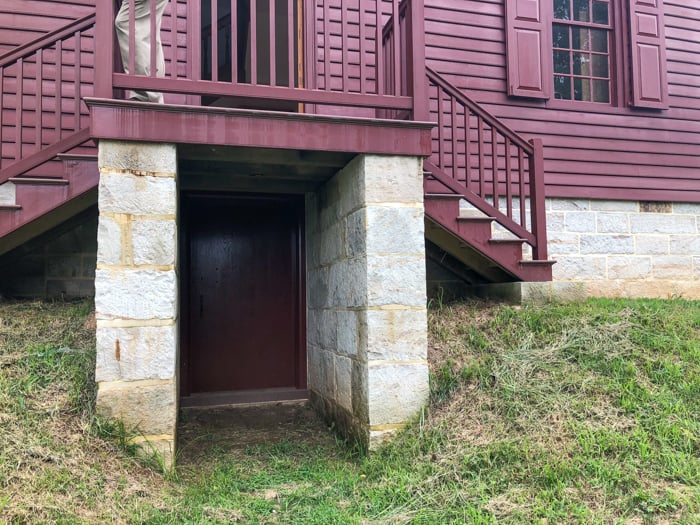
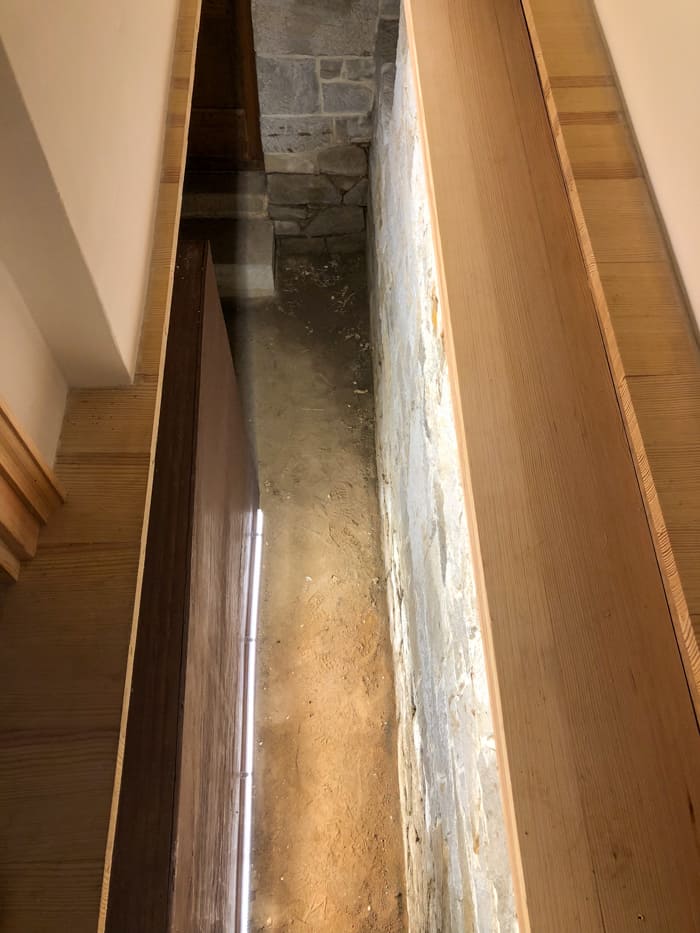
The house is built directly over the archaeological remains of the original house. You can look down into it from above through a protective glass barrier.
The floor and the stone on the bottom are original. The area where the mortar turns white is where the rebuild began.
There’s a huge box of unexcavated dirt remaining in the cellar for future generations to learn from. Perhaps advanced techniques will yield something current approaches can’t.
FERRY FARM MIDDEN
In the 18th century, they opened windows or doors to throw their garbage out so a wealth of artifacts was found in the midden.
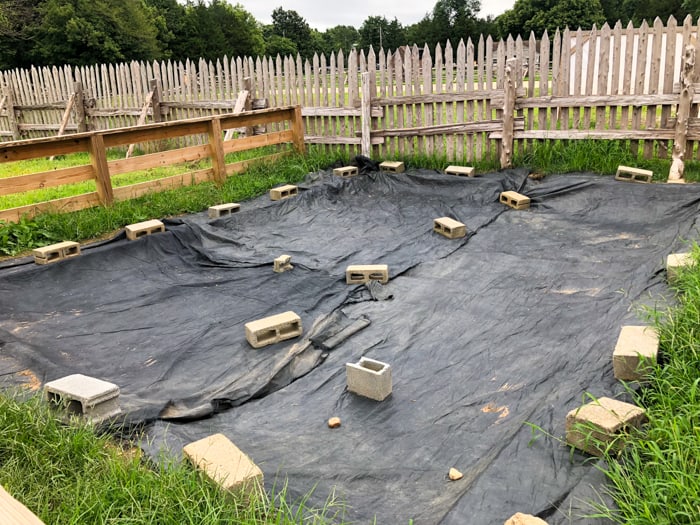
Plans are underway to fill the midden with “trash” again for a better visual understanding of what it would have looked like. Most of the gentry had given up eating wild animals by then, but the remains of raccoons, squirrel, fish and possums were found in the midden.
Since the family went through a huge financial struggle, hunger probably led to all the varmint eating. That, and the fact they had four boys who were trapping, shooting and fishing all the time.
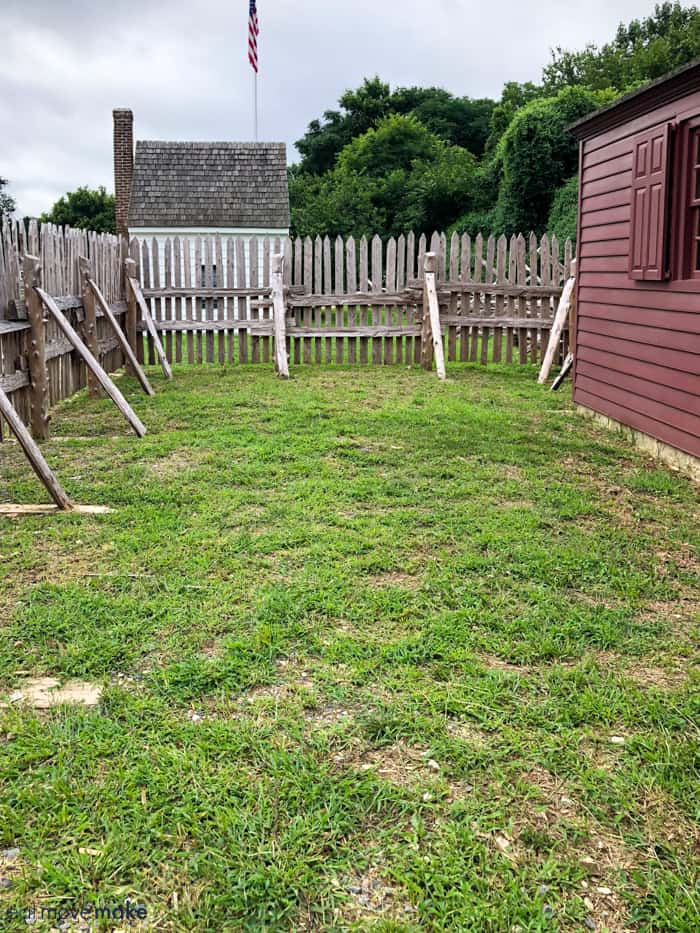
If you’re wondering about their water source, you’ll be able to get a look at the spring from the ravine – one of the 11 stops on the iPad tour.
As new discoveries are made with the archaeological dig, more details will be added to the home, so it’s likely you’ll find something new with every visit you make to Ferry Farm.
This hidden gem is often overshadowed by nearby historic Kenmore, but it’s every bit as fascinating, possibly more so. Don’t miss it!





Leave A Reply!